Secrets to storing apples for the winter in a cellar or basement
A bountiful fruit harvest brings joy to gardeners. Fresh apples from your own garden will replenish your vitamins throughout the winter. Not all gardeners know how to preserve their harvest over the winter. Improper storage will lead to losses, which will ruin your mood. You can store fresh apples in the cellar until spring if you follow our tips. This article will provide you with the information you need.
Content
Is it possible to store apples in a cellar?
The cellar is the best place for storage. Apples are preserved freshness Several months after harvesting, the cellar needs to be prepared for storage: clear out debris, ensure air circulation, and ensure favorable temperature and humidity.
Optimal temperature and humidity
Storage life depends on storage conditions. Apples emit ethylene gas during storage, which causes the fruit to ripen faster. Ethylene levels should be reduced and optimal temperature and humidity should be selected. High humidity will protect the fruit from shriveling and drying out. Apples store well at temperatures between -1 and +4°C.° C, air humidity 85–95%.
Early varieties with thin skins can withstand higher temperatures.
When to store apples
Harvest time depends on the variety:
- winter varieties ripen in September-October and ripen further during storage;
- summer species are harvested in July-August;
- autumn varieties – in August-September.
Winter and late-ripening varieties are left for long-term storage until spring.
After harvesting, defective specimens are discarded. The fruits are kept in a cold place for 2–3 weeks to detect any hidden defects. They are then inspected again and transferred for long-term storage to a cool, ventilated place at a temperature of -1 to +4°C.°.
There is a misconception that fruits should be immediately stored for winter.
Methods for storing apples in the cellar
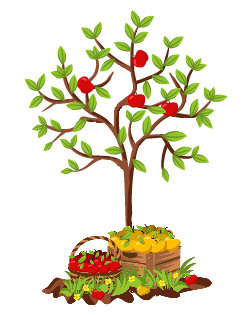 Various methods are used to store apples:
- in boxes;
- in bags;
- on shelves;
- in paper;
- in the ground or in the sand;
- in bags.
In the boxes
Used for containers:
- wooden boxes;
- containers;
- cardboard boxes.
Line the bottom of the container with paper or fabric. Place the apples, stems intact, loosely in the first row. Place fabric or paper on top, forming a second row.
In bags
Each plastic bag contains 1–2 kg of apples. The contents of the bag:
- make cuts for air circulation;
- the bags are tied with a rope;
- are placed on shelves.
Store at a temperature of +1…- 1° C.
The method is not suitable for storage of the Antonovka variety.
On the shelves
The racks are disinfected, dried, and covered with paper or burlap. The apples are arranged on the racks with their stems facing upward. Space is maintained between the fruits for ventilation. If multiple layers are used, thick cardboard is placed between them.
On paper
To insulate and absorb excess moisture, each fruit is wrapped in paper and placed in boxes in several layers. Napkins, paper towels, and plain white sheets are also used.
In low humidity storage facilities, paper is lubricated with odorless oil.
Do not use newspapers! The paint contains heavy metals.
In the ground or in the sand
Apples are stored in the ground or in sand.
In the ground
At a temperature not lower than +5° A hole half a meter deep is dug in the ground. The bottom is lined with spruce and juniper branches and twigs. Bags of apples are placed in the hole, covered with spruce branches, and covered with soil. Leaves are added on top for insulation.
In the sand
Sand is preliminarily: disinfected, calcined, dried, sifted.
Place a 10 cm layer of sand on the bottom of the container. Arrange the apples loosely on top, spacing them out. Cover with sand, and add a second layer. Cover the container with a lid.
In bags
After harvesting, fruit that has begun to spoil is removed within two weeks. Healthy fruit is placed in bags and tied with string. The bags are kept indoors until frost sets in. When temperatures drop to freezing, the bags are moved to a cellar or basement. In May, the harvest is stored in fridge.
What is the best way to store apples in a cellar?
 There are different ways to store apples:
- the fruits are poured into boxes;
- boxes with fruits are placed in a plastic bag;
- tied with twine on top.
This method preserves moisture. Fruits stay juicy for a long time, ripen quickly, but don't shrivel. Polyethylene allows carbon dioxide to pass through and oxygen to block.
What is the best way to store it?
Any container can be used as a container for winter storage, but it must be clean and durable.
How to preserve apples until spring
Apples will last until spring if you follow the basic rules:
- Store the appropriate varietyNot all varieties retain their flavor and nutritional properties for long. Summer and autumn varieties will keep in the cellar for up to two months at 0 degrees Celsius. Winter varieties will keep for seven months at 4 degrees Celsius.° Sour varieties will last longer than sweet ones. Fruit from trees grown in clay and loamy soils keeps better. Winter and late-winter varieties are best for storage.
- Harvesting correctlyPick the fruit, stems and all, in clear, dry weather. Protect from mechanical damage. Begin harvesting from the lower branches. Apples harvested from the sunnier sides of the tree's crown have the best shelf life.
- Sorting applesSelect healthy fruits with stems and a natural waxy coating for storage. Sort by size and variety. Shelf life depends on the variety, so different varieties are stored in separate boxes. Overripe large apples have a shorter shelf life and emit ethylene. This gas promotes rapid ripening of smaller fruits. Medium-sized, undamaged apples store better.
Avoid temperature fluctuations. Don't move fruit from cold to warm areas and back again.
How to store with vegetables
Apples are stored in a separate room or the basement is divided into sections. During storage, the fruit releases a gaseous growth regulator, ethanol, which accelerates ripening. The fruit absorbs foreign odors. Storing them with vegetables is not recommended:
- potatoes sprout quickly when planted next to apples, and apples gain starchiness from potatoes;
- The proximity to cabbage, garlic, onions, and carrots gives the fruit an unpleasant smell.
Preparation for storage
Before bringing in the fruits, the cellar is prepared for storage:
- whitewash the walls with mortar copper sulfate (add 1.5 kg of lime and 150 g of copper sulfate to 10 liters of water);
- provide ventilation;
- check the waterproofing of walls and ceilings;
- The height of the room must be at least 2 m, then condensation does not accumulate.
Excessive humidity is reduced with potassium chloride or fine lime. The solution is spread to absorb moisture.
What varieties are suitable?
Winter varieties are stored:
How to properly prepare apples
Fruits are treated against rot and diseases:
- a cloth is soaked in glycerin and the fruits are wiped;
- keep for a minute in a 4% solution of calcium chloride, then dry;
- immerse in an alcohol solution of propolis for a few seconds;
- treated with a weak solution of potassium permanganate;
- disinfect with ultraviolet light for 20–30 minutes.
Before consumption, processed fruits are thoroughly washed with soap.
Proper harvesting, sorting fruit before storage, creating suitable conditions, and periodically removing spoiled stock will help reduce cellar losses. Don't forget about undesirable storage near vegetables. Maintaining proper temperature conditions is crucial.