Sinap Orlovsky apple tree: characteristics of the variety and care
| Color | Greens |
|---|---|
| Ripening season | Autumn |
| Size of apples | Average , Large |
| Taste | Sweet and sour |
| Crown type | Tall tree |
| Shelf life | Average shelf life |
| Application | Fresh , For recycling |
| Winter hardiness | High winter hardiness |
| Fruiting age | Up to 5 years |
 History of origin and regions of growth
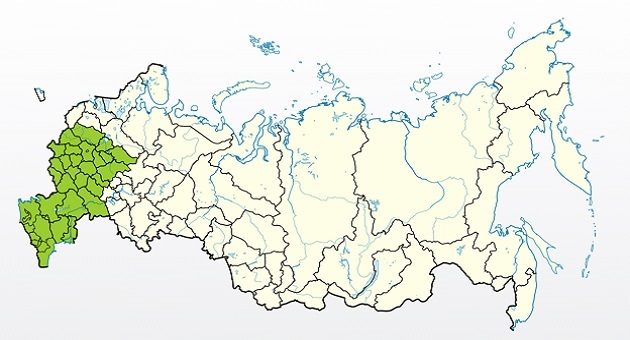
Growing regions
- Middle zone.
- Leningrad region.
- Middle Volga region.
- North Caucasus.
- Crimea.
- Some northern regions.
- Moscow region.
Origin
The apple tree was bred at the experimental station of the I.V. Michurin All-Union Research Institute of Horticulture in the village of Zhilina (Oryol Oblast). The cultivar's creators were Nina Glebovna Krasova, Taisiya Andreyevna Trofimova, Evgeny Nikolaevich Sedov, and Vasily Korneevich Zayets. It is believed that the hybridization took place between the Pamyat Michurin and Sinap Severny varieties in 1955.
The first application for inclusion in the elite variety wasn't received until 1979. It was then officially submitted for variety testing, which lasted ten long years. In 1989, Sinap Orlovsky was included in the State Register of Breeding Achievements and zoned for the Northwestern, Central Black Earth, Middle Volga, and Central regions.
Content
Description of the Sinap Orlovsky variety
 Orlov apple trees have always been known for their excellent tolerance to low temperatures, and Sinap is no exception. It easily tolerates even severe frosts, while remaining early-bearing and highly productive. The tree requires no special care, doesn't require frequent watering or fertilization, grows well in a variety of soils, and exhibits no periodicity, producing consistently good harvests each year.
The fruits of the Sinap orlovskyi tree are large and beautiful, attractive in appearance, delicious, and aromatic. They are easy to transport and store, but are also suitable for processing. Due to their large size, these trees are recommended for private cultivation, but are also suitable for commercial production.
Apples: What do they look like?
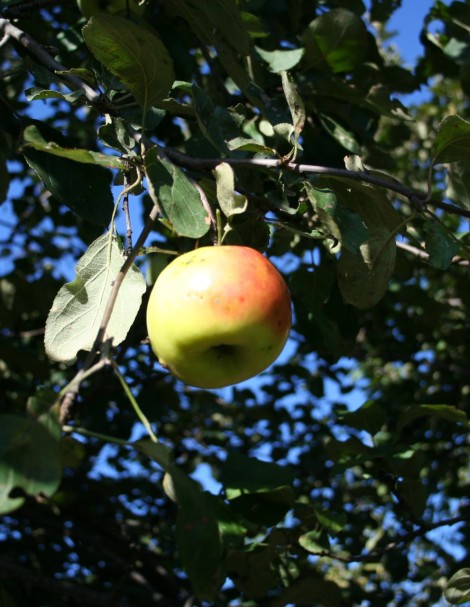
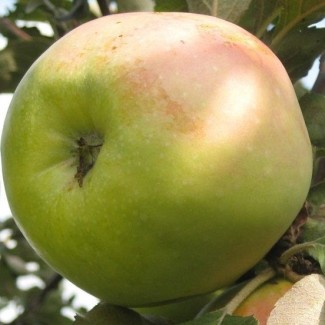
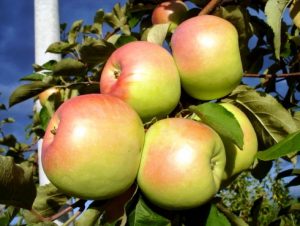 The fruits are medium to slightly larger than average in size, sometimes large in some years and under certain conditions. They average 140-180 grams, but can reach as much as 220-270 grams. The shape is generally round, rounded-conical, but can be somewhat elongated, slightly cylindrical. The ribbing is smooth but slightly visible near the apex; the surface is smooth, sometimes slightly tapered near the stalk, or completely symmetrical.
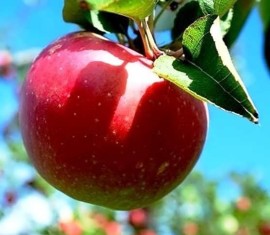
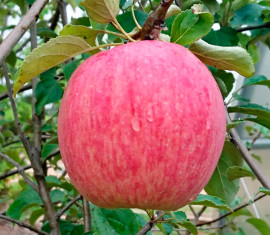
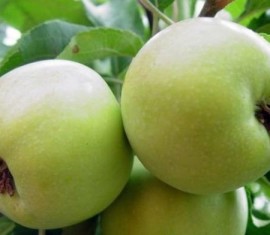
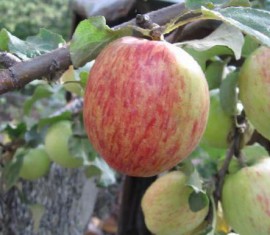
The skin is dense, elastic, strong, and somewhat firm, but not thick. When fully ripe, it becomes covered with a colorless, oily, waxy coating, almost invisible to the naked eye but easily felt by the touch. The base color is green or greenish-yellow, occasionally with a slight honey or lemon tint. The blush is bright red, very diffuse, and translucent, visible only on the sunny side, occupying approximately 15-20% of the surface. Subcutaneous punctures are large and relatively few in number, but are clearly visible on the surface due to their light, whitish-green hue. Experts recommend analyzing the following indicators to accurately assess the chemical composition of the fruit:
- P-active substances (catechins) – 193.9 milligrams.
- Ascorbic acid (vitamin C) – 13.6 milligrams.
- Fructose (total sugars) – 9.6%.
- Pectins – 14.2%.
- Titratable acids – 0.53%.
The Sinap Orlovsky apple has a very pleasant texture. It's fine-grained, fairly dense, crisp, easy to bite into, not spiky, but tender and very juicy. It has a greenish-lemon or slightly creamy hue, sometimes with a yellowish tint. The apple's flavor is considered table-quality, harmonious, and balanced, scoring 4.4-4.7 on the official 5-point tasting scale.
Sinap Orlovskaya apple tree: characteristics
Crown and root system
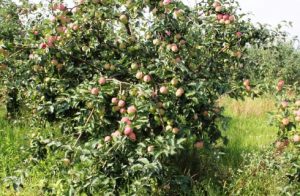 This is a vigorous tree, capable of reaching 7-9 meters without pruning on a vegetative standard rootstock., and sometimes even much larger. However, most owners prune it so that it does not grow beyond 4.5-5 meters. The crown is branched, moderately dense, rounded or rounded-oval. In old age, it can become spreading, broadly oval, weeping, or somewhat drooping. The shoots are at right angles to the main, central conductor, with their tips pointing upward. The shoots are covered with rough, gray or grayish-brown bark prone to cracking. Fruiting occurs on rings, fruiting twigs, and spears.
The leaf blade is dense, leathery, obovate, slightly elongated, and long-pointed. They are glossy, coarsely nerved, wrinkled, with a serrate-serrated edge, dark green or deep emerald in color, with a tomentose or pilose-tomentose pubescence on the underside. The root system is deeply rooted, with or without a central taproot, depending on the rootstock. It is branched and adapted to seeking water in the soil.
Productivity and pollination
The tree is generally considered medium-yielding due to its relatively tall height. However, even on dwarf and semi-dwarf varieties, the apple yield decreases slightly.
On average, one mature Sinap Orlovsky tree can produce approximately 140-180 kilograms of delicious apples annually. With proper, comprehensive care and favorable weather, this figure can be increased by 15-20%.
Like most cultivated apple trees, Sinap is self-sterile or conditionally self-sterile. This means that a few apples may ripen even without pollinators, but their numbers will be negligible. To ensure a full harvest, varieties with suitable flowering times should be planted within 150-200 meters.
Winter hardiness and disease resistance
This apple tree's hardiness isn't exceptionally high, but it's significantly above average, which is typical for almost all Orlov varieties. Sinap can tolerate temperatures down to -27-29°C, even without shelter. The trees don't tolerate sudden temperature fluctuations and high humidity, but with proper winter preparation, they'll survive without significant damage, and even if damaged, they'll quickly recover.
Apple trees have average resistance to scab and other fungal, bacterial, and even parasitic threats. In particularly wet years, they can be heavily and rapidly attacked, requiring several years of recovery. Scab Not only the leaves but also the fruits themselves are affected. Regular preventative treatment is necessary to minimize the risk.
Rootstocks and subspecies
Sinap orlovsky is itself a subspecies and has no distinct varieties. However, it can be grown on various rootstocks. Moreover, the tree's properties can vary significantly depending on these. For example, vegetative rootstocks provide a longer active lifespan, up to 45-50 years or more, but also tall growth and a large crown. Dwarf and semi-dwarf varieties shorten the tree's lifespan, but still ensure compact growth and abundant production of large fruits. Dwarf trees are somewhat less winter-hardy than standard varieties.
Features of growing Sinap orlovsky
 Landing
 Landing
Basic conditions
- This variety prefers highly permeable, airy, and fertile soils. However, with good, regular loosening and fertilization, it will grow in almost any soil, from dense, rich black soil to light sandy-podzolic soil.
- Choose a sunny site so the trees receive light for most of the day. In the shade, they will grow, but they will be weak and will bear fruit poorly.
- The location should be sheltered from strong north winds, but well ventilated. Waterlogging in the crowns will lead to the development of fungi and other diseases.
- Groundwater shouldn't be too close to the surface at the planting site, especially when using wild rootstocks. If Sinap's roots reach the water, they will simply rot.
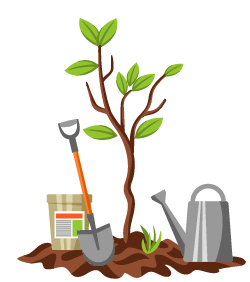
- The holes are dug in advance, at least 3-4 weeks before planting. They should be at least 60-70 centimeters deep and up to 1 meter in diameter. Fertilizer should be placed at the bottom, followed by soil or drainage, and then filled with water. Leave them to steam, uncovered.
- You should immediately drive in stakes or planks to tie up the seedlings so that they are not uprooted by the wind during the first winter.
- Leave at least 4-5 meters between trees for standard rootstocks and 2-3 meters for dwarf rootstocks. This will make harvesting and maintenance much easier.
- The grafting site (root collar) should always be at least 7-10 centimeters above the soil surface when planting. If the tree roots higher, the rootstock's properties will be compromised.
- Place the seedling on a drainage trench, carefully spreading out the roots so they don't bend or become crushed. Cover them with soil, ensuring no air pockets remain, which could lead to rot. Firmly tamp the roots with your feet, but not too hard. Water with 35-40 liters of water, and apply mulch to retain moisture.
Landing dates
Sinap orlovskii is a hardy and resilient plant, so it tolerates any planting time, whether spring or fall. Three- or four-year-old, robust seedlings from the nursery can be transplanted into the soil in late September or mid-October. Young one- and two-year-old trees are best planted in the garden in late March or early April, after the soil has warmed completely. If you miss the fall planting deadline, you can plant the trees at a 45° angle until spring.
Tree care
 Tree care
Protection from frost and pests
To protect trees from winter frost, especially young saplings, you can wrap them in a tent-like structure, wrapping them in fabric from the ground up. However, this is unlikely to work with larger trees, and they don't need such insulation. It's sufficient to wrap the trunk with roofing felt, tar paper, burlap, or old tights at the base. Spruce branches, soil, straw, hay, and well-dried leaves can be piled on the roots.
Applying various aromatic, pungent-smelling, and repellent materials, such as fuel oil, grease, lard, old, rancid drying oil, or even sunflower oil, is effective against rodents. In the fall, the trunk should be cleaned with a stiff brush to prevent insects from settling in the bark. Then, whitewash it with lime to repel any insects that are just about to attack the tree. Whitewashed trees also look much neater and cleaner.
Loosening the soil, watering: proper agricultural technology
Dig around the tree trunk twice a year, in early spring and in the fall after the leaves have fallen. This should be done carefully to avoid damaging the surface roots. Hoeing can be done more frequently, loosening the soil and providing more oxygen to the roots; approximately 4-7 times per season is sufficient. You will need to remove weeds, shoots from other plants, root suckers, rotting plant matter, and fallen leaves from under the apple tree. All of this can lead to the development of diseases, particularly fungal ones.
Young trees will need to be watered fairly frequently, up to 3-4 times a month in the absence of natural precipitation. If it rains, count 7-10 days before the next application. Fertilizer can be added immediately with the water, but not until 3-4 years after planting. Until then, the apple trees will be sufficiently supplied with the previously established fertilizer.
Pruning: simple crown shaping
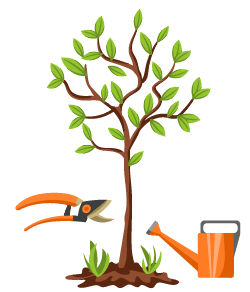
The best options for Sinap are a rounded, sparsely layered, oval, or broadly oval crown shape. Seedlings usually arrive from the nursery with the beginnings of a tree's formation. If not, pruning begins in the first year, removing all branches and leaving two or three skeletal branches, which are then maintained in a regular pattern. All shoots protruding vertically, as well as those growing inward, are pruned.
Sanitary pruning involves pruning all diseased, broken, or dead shoots. It's best to do this when the tree isn't flowing, in the fall or spring. All cut areas must be treated, otherwise the tree will become severely stressed. This is the optimal time to do this. garden pitch, but you can also use water-based paint or even swamp paint.
Diseases and pests
- Powdery mildew.
- Scab.
- Moniliosis.
- Black crayfish.
- Hawthorn.
- Aphid.
- Leaf roller.
- Scale insect.
Ripening and fruiting of Sinap orlovsky
The beginning of fruiting
 The beginning of fruiting
The timing of the first fruiting varies depending on the growing region, but not significantly. The rootstock used can also influence this time. Dwarf and semi-dwarf varieties will produce their first fruits as early as 2-3 years after planting in open ground. With vegetative rootstock, you'll have to wait a little longer, until around 4-5 years. Don't expect large harvests right away—that's a fairy tale—but you'll definitely get 2-8 kilograms in the first few years.
Flowering time
The buds of the Sinap orlovskii tree are pink, sometimes even red, but they open into slightly pinkish flowers. They appear on the branches as early as late April, but they don't begin to bloom until mid- to late May. After a cold winter and a long, rainy spring, the tree may delay flowering until early June, but this is rare. The flowers are large, fragrant, and clustered in inflorescences. The blooming period lasts 12-16 days.
Fruiting and growth
The variety produces green mass quite quickly, adding 45-60 centimeters before fruiting begins. After the apples begin to ripen on the vines, the rate of growth slows slightly, but not significantly. Fruiting increases gradually, reaching its peak only at 9-12 years. Rootstock, climate, and other external factors also play a significant role here.
Apples begin to ripen as early as late September, but they are often not picked then. They ripen sequentially, from the lower branches to the upper ones, until mid- or even late October. They can hang on the branches for a long time, but strong winds can knock them down. The easy separation of the stem from the branch is a good sign for the harvest. Apples can be transported long distances, and they can be stored in a cellar or special refrigerator until mid- or late spring. The fruits are suitable for fresh eating or processing.
Why do apples fall?
- Weather.
- Frosts.
- Pests or diseases.
- Overripe.
What to do if it doesn't bloom or bear fruit
- Protect from the cold.
- Limit or activate watering.
- Eliminate insects.
- Cure diseases.
Top dressing
- Manure.
- Compost.
- Superphosphate.
- Mineral and nitrogenous complexes.
- Ammonium nitrate.
Share your own experience with the Sinap Orlovsky apple tree variety so that even novice gardeners have no questions about cultivating these trees.