Apple tree 'Anise scarlet': characteristics of the variety and care
| Color | Reds |
|---|---|
| Ripening season | Autumn |
| Size of apples | Average |
| Taste | Sweet and sour |
| Crown type | Tall tree |
| Shelf life | Low shelf life |
| Application | For recycling , Fresh |
| Winter hardiness | Average winter hardiness |
| Fruiting age | Up to 5 years |
 History of origin and regions of growth
Growing regions
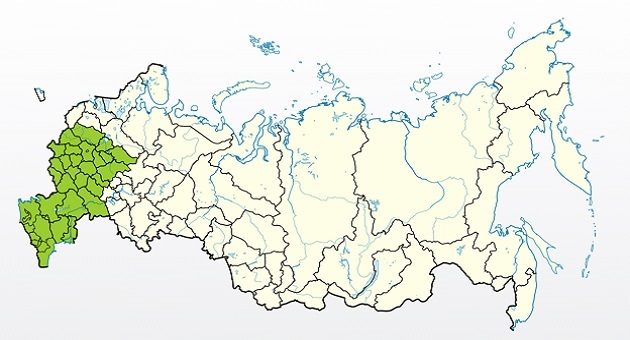
- Crimea.
- Middle zone.
- Leningrad region.
- North Caucasus.
- Moscow region.
Origin
This is one of the ancient late-summer varieties, considered native to the Volga region. In this region, it occupied an important place in gardens in the twentieth century. Because it is an ancient variety, its exact origins are unknown. Some scientists claim it is a somatic mutant or clone of another Anise—the striped Anise.
Scarlet anise has many other names: morocco, red, velvet, crimson.
In 1938, the first application for inclusion of this apple tree in the State Register of Breeding Achievements was submitted. However, confirmation and registration only occurred almost ten years later, in 1947. Officially, the variety is zoned for the Volga-Vyatka, Northwestern, and Volga regions. In reality, it is easily cultivated throughout almost all of Russia, except for the Urals, Siberia, the Far East, and the Far North.
Content
Description of the Scarlet Anise variety
 This variety is one of the few old ones that has retained its popularity today. It possesses numerous virtues that have prevented newer apple trees from displacing it from Russian orchards. It is extremely long-lived, its yield is high, and its environmental sustainability rivals that of many other varieties. The trees are undemanding, requiring little in the way of soil, fertilizer, or watering, and are tolerant of pollution.
The fruits of the scarlet anise are beautiful, aromatic, and delicious. They are rich in nutrients. They can be transported over long distances and even preserved for some time in refrigerator or in a regular cellar. The disadvantages include the apples' small size and susceptibility to diseases, especially fungal ones. This variety is recommended for cultivation in individual farms and commercial plantings.
Apples: What do they look like?
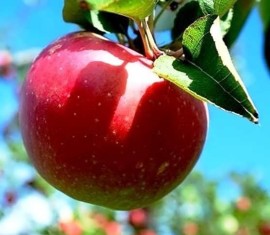
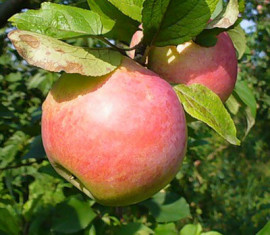
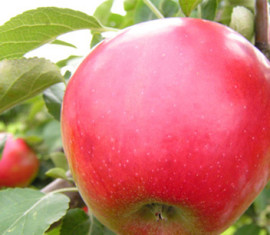
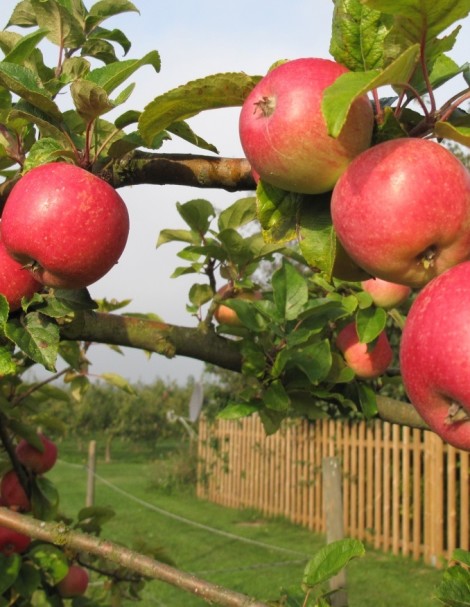
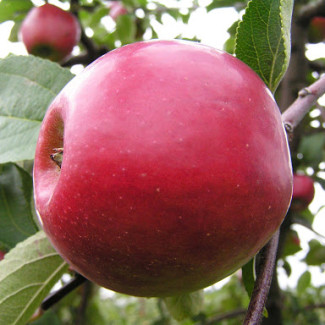
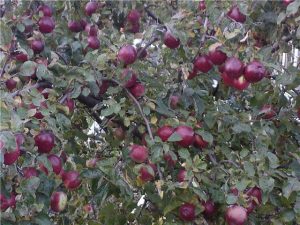 The fruits of this variety of anise are typically medium or slightly smaller in size. They grow to 85-110 grams, occasionally slightly larger, but generally smaller. The apples are round, uniform, slightly flattened along the central axis, often turnip-shaped, tapering toward the calyx. The ribbing may be visible or smooth, and there is no lateral seam.
The fruit skin is smooth, glossy, even, and highly shiny. It is quite dense, strong, and elastic, but not thick or brittle. Its primary color is light green, sometimes slightly yellowish or lemon-colored. The blush occupies approximately 65-80% of the surface and ranges from scarlet, bright red, dark red, almost burgundy, or deep red, diffuse and uniform, without stripes or streaks. Subcutaneous punctures are numerous; they are medium-sized, light, and clearly visible. When ripe, the fruit becomes covered with a dense, bluish-silver waxy coating. To understand the chemical composition, it is necessary to examine several indicators:
- P-active substances (catechins) – 116 milligrams.
- Ascorbic acid (vitamin C) – 6.2 milligrams.
- Total sugars (fructose) – 9.7%.
- Pectins (fiber) – 7.8%.
- Titratable acids – 0.56%.
The apples have medium-dense, fine-grained flesh with a very pleasant texture, snow-white or slightly light green in color. It is juicy, crisp, piercing, and refreshing. The flavor is considered a dessert apple; it is balanced, sweet and sour, and harmonious. According to professional tasters, it scores 4.7-4.8 points out of a possible 5.
Apple tree Anise scarlet: characteristics
Crown and root system
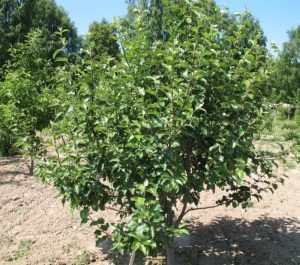 The variety's "wild" ancestors gave it a powerful and large crown. The tree is considered tall and can easily grow up to 6-7 meters, and sometimes even up to 9-10The shape of the tree at a young age is usually highly oval or pyramidal, with medium or low density. Branches are of medium thickness, curved, geniculate, directed upward, and set at right angles to the conductor. They are covered with light-brown or brown bark, smooth, and pubescent. The apple tree bears fruit on spurs and rings.
The leaves are medium-sized, flattened, but can be slightly wavy. They are light green or green, matte, with rough ribbing, a short-pointed tip, and finely serrated, crenate, and serrated margins. The root system is deeply rooted and branched, adapted to support a large tree and to seek moisture and nutrients in the soil.
Productivity and pollination
The variety is undoubtedly considered high-yielding.
A single mature tree trunk, fully formed and in its prime for abundant fruiting, can yield at least 250-300 kilograms of apples per season. In the most fruitful years, this figure can increase to 350-400..
Scarlet anise is completely self-sterile, so unless there's another apple tree nearby that blooms at the same time, it won't produce fruit. Therefore, it's best to provide pollinators within 60-120 meters.
Winter hardiness and disease resistance
Apple trees have good frost resistance. In temperate continental climates, they can withstand temperatures down to -27-32°C with virtually no damage. However, if the cold weather persists, buds and shoots may be damaged. Therefore, it is undesirable to leave the tree unprepared for winter or uncovered. This variety is intolerant to drought and extreme heat, requiring regular and timely watering.
The variety is relatively resistant to scab, rarely being attacked, only during years of severe epiphytotics, and even then, mostly on the leaves. However, it can be severely affected by other fungal infections. Powdery mildew – the main enemy of the variety, as well as parasitic infestation. Preventive spraying should be carried out in a timely manner.
Rootstocks and subspecies
The tree itself is a subspecies and has no distinct subspecies. It is grown on various rootstocks, acquiring some unique qualities and properties that have virtually no effect on the fruit. The seedlings themselves are often used as rootstocks, imparting stability and the ability to forage for nutrients in the soil.
Features of growing scarlet anise
 Landing
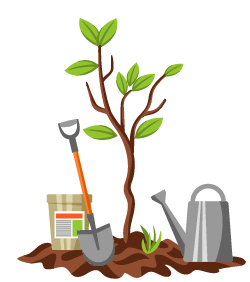 Landing
Basic conditions
- It's best to choose dry, elevated sites for apple trees, where the groundwater level doesn't rise higher than 2 meters. Otherwise, the roots may rot and the trees will die.
- A sunny, well-ventilated area is also essential. In the shade, anise trees fail to thrive; they become spindly, stunted, and often even die. The frequency of fungal infections, which thrive in damp, stagnant air, depends on the canopy's ventilation. It's important to strike a balance here, as drafts can also kill trees.
- It's not necessary to dig holes in advance; 2-3 weeks before planting is sufficient. Ideally, they should be 80-90 centimeters deep and up to 1 meter in diameter. Add soil and fertilizer to the bottom, then add drainage, water, and leave uncovered.
- It's best to buy seedlings from reputable sellers or from nurseries. They usually arrive fully prepared for planting in the garden. Inspect the tree in the evening, trim off any dry or broken roots, and soak it in water for 5-8 hours.
- When planting, the grafting site, known as the root collar, should remain at least 8-12 centimeters above the surface to prevent roots from growing higher. If this happens, the rootstock's properties will be lost.
- Stake or trellis supports are dug in immediately when digging the holes. If they are also placed on the north side, they will protect the trees from frost and cold winds in winter.
- Place the tree on a drainage pile with its rhizome, straighten the shoots, sprinkle with soil (from the top layer), lightly tamp and water, mulch the surface with chopped grass or sawdust, compost, manure, humus.
Landing dates
Trees are more delicate than the parent variety and are less susceptible to frost, especially if the frost lasts for a long time. It's important for young apple trees to avoid freezing immediately after planting, so it's best to plant them in the spring, in late March or early April. By then, the soil will have warmed up completely, and the threat of frost will be less of a threat. In warm, temperate regions, trees can be planted in late September or early October, after the leaves have fallen.
Tree care
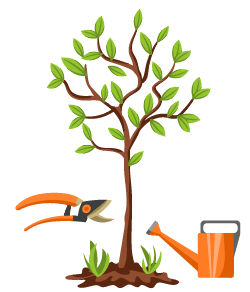 Tree care
Protection from frost and pests
To protect trees for the winter, especially young ones, they can be completely wrapped in agrofibre or tarpaulin, like a tent. However, this won't cover large mature trees. Instead, the trunks can be wrapped with available materials, and the root area can be covered with spruce branches, straw, or piled with soil. Needless to say, all of this should be completely removed before the sap begins to flow in the trunks in the spring.
Whitewashing trees with lime is effective against insects, significantly improving the appearance of the garden. Commercially produced pesticides, available in gardening stores, are recommended for prevention. To prevent hungry hares and other rodents from eating the bark and tender young shoots during the winter, apply lard, tallow, grease, fuel oil, or various commercially available products to the trunks.
Loosening the soil, watering: proper agricultural technology
The area around apple trees requires digging twice a year. In early spring, the soil is loosened to ensure adequate moisture and oxygen penetration to the roots. In the fall, the area is cleared of debris, fallen leaves, and rotting fruit, and the soil is tilled again. During the growing season, the top layer of soil can be gently turned with a hoe or mattock. Over the years, the area can be seeded with herbs or regular lawn grass. This will ensure natural aeration and suppress weed growth.
Apple trees are watered on a ten-day schedule. This means that if there's been no rain for ten days, you can apply water (25-40 liters per trunk, twice a day). This schedule can be maintained for the first 8-10 years. Mature trees can be watered less frequently, 5-8 times per season when there's no rain. It's convenient to dilute fertilizer with water and apply it along the crown's projection, which is approximately the area occupied by the roots.
Pruning: simple crown shaping
The tree is not prone to excessive density, so after the first pruning in the year of planting, the gardener won't have much work to do. It's important to maintain natural branching and remove branches that don't serve a purpose, meaning those that won't bear fruit (those growing inward or sticking up vertically). The optimal shape for this tree is sparse, cup-shaped, or sparsely tiered.
Don't forget about sanitary pruning. In the fall, remove all broken and dry shoots to prevent them from needlessly draining the tree's sap. It's important to seal the cuts after any pruning to reduce stress on the tree. You can use... garden var, clay, oil and water-based paint, or at least ordinary soil.
Diseases and pests
- Cytosporosis.
- Rust.
- Pit rot.
- Powdery mildew.
- Black crayfish.
- Scab.
- Rust.
- Scale insect.
- Leafhopper.
- Green aphid.
- Hawthorn.
Pollinator varieties
- July Chernenko.
- Autumn striped.
- Anise.
- Borovinka.
- Yandykovskoye.
- Champion.
- Welsey.
Ripening and fruiting of scarlet anise
The beginning of fruiting
 The beginning of fruiting
Anise apples begin bearing fruit approximately 4-5 years after planting. Don't expect a bountiful harvest, but you can get a few kilograms of apples. The largest fruits ripen on young trees, reaching 100-140 grams, but then they become noticeably smaller.
Flowering time
Scarlet anise has a medium blooming season. It begins blooming in early, mid, or even late May, depending on the growing region and weather conditions. The flowers are large, densely covered with branches, and have a powerful, pleasant fragrance. They are cup-shaped, composed of elongated, concave petals of pale green or snow-white.
Fruiting and growth
Trees grow very quickly, reaching 45-70 centimeters in height per year. As fruiting season approaches, this rapid growth ceases, but the apple tree still grows 35-45 centimeters. Until full maturity, the tree bears fruit annually. By the 8th or 9th year, the harvest becomes full-fledged, but fruiting cycles also occur. The fruits become smaller, but this does not affect their taste.
Apples ripen differently in different regions. For example, in the Upper Volga region they are considered winter apples, while in the Lower Volga region they are a summer variety, ready for harvest in late August or early September. It's best to pick them immediately after they reach marketable ripeness, which is indicated by a thick waxy coating; otherwise, they may fall off. It's best to transport apples in crates rather than loose. They don't have a very long shelf life, approximately 45-60 days in a special refrigerator. In a cellar, scarlet anise will keep for no longer than a month.
Top dressing
- Peat.
- Superphosphate.
- Humus.
- Bor.
- Calcium.
- Manure.
- Compost.
- Ammonium nitrate.
Why do apples fall?
- Wind, frost, rain, hail.
- Overripe.
- Pests or diseases.
What to do if it doesn't bloom or bear fruit
- Limit or increase watering.
- Eliminate insects.
- Cure diseases.
- Feed.
- Transplant to a sunny place.
Leave a review of the Scarlet Anis apple tree variety so that even a novice gardener can receive useful information firsthand.