Borovinka apple tree: characteristics of the variety and care
| Color | Reds , Striped |
|---|---|
| Ripening season | Autumn |
| Size of apples | Average , Large |
| Taste | Sweet and sour |
| Crown type | Average tree height |
| Shelf life | High shelf life |
| Application | Universal variety |
| Winter hardiness | High winter hardiness |
| Fruiting age | Up to 5 years |
 History of origin and regions of growth
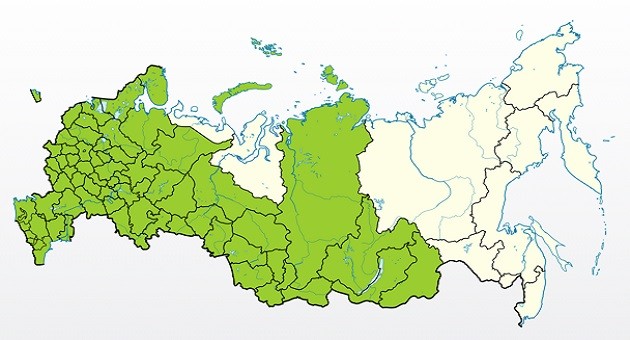
Growing regions
- Northern.
- Northwestern.
- North Caucasian.
- Central.
- Middle Volga.
- Volga-Vyatka.
- Lower Volga.
- East Siberian.
- West Siberian.
- Ural.
Origin
The exact history of this variety's origin is unknown, so it is generally considered to be a product of so-called natural selection. This is an ancient Russian variety, certainly over 150 years old. The first mentions of it can be found in the works of the renowned Russian botanist and forester Andrei Timofeevich Bolotov, dating from the late eighteenth and early nineteenth centuries.
According to Bolotov, the name Borovinka (as entered in the State Register of Varieties) or Borovina refers to an apple grown in a pine forest, that is, the fruit of a wild apple tree. Over its long history, this variety has acquired many other names from various countries: Borovitskaya, Borovichka, Duchess of Oldenburg, Kharlamovsky Naliv, Kharlamovka, Bravina, and Bravinskoye.
At the beginning of the twentieth century, Russian agrobiologist Mikhail Vasilyevich Rytov wrote that by the end of the eighteenth century, the apple tree had spread throughout Western Europe, from where it had already reached North America, and in particular, the United States and Canada.
Content
Description of the Borovinka apple tree variety
 Thanks to its consumer qualities and exceptional ease of care, Borovinka quickly spread throughout Europe, and then successfully "crossed" the ocean to America and even Australia. These apple trees are quite resistant to various diseases and consistently produce good harvests from a young age, making them recommended not only for small home gardens but also for commercial intensive orchards.
Apples: color, size, weight
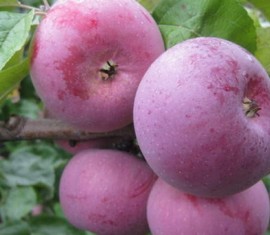
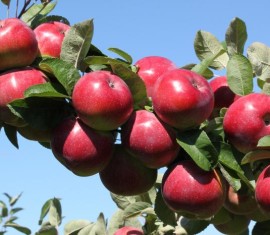
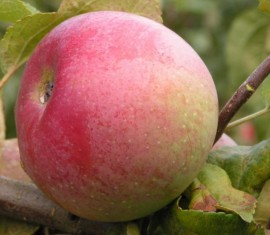
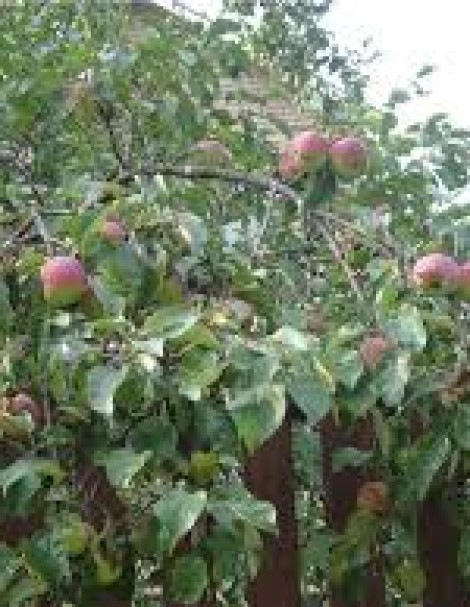
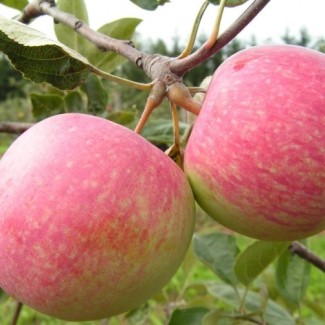
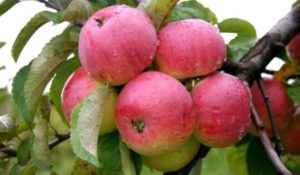 Borovinka fruits are usually medium to slightly larger than average in size, weighing 80-100 grams. They are round, typically regular in shape, and lack noticeable ribbing.
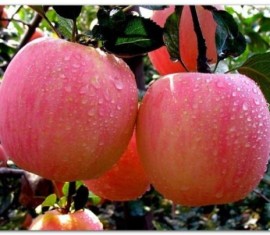
Apple skin is smooth, glossy, and light green or almost yellow. It may be covered with a mottled, striped pink blush, which occupies a small area (no more than 45-50%). Light subcutaneous spots are clearly visible on the surface. The chemical composition of apples can be characterized by the following indicators per 100 grams of product:
- Catechins (P-active substances) – 125 milligrams.
- Ascorbic acid (vitamin C) – 15.3 milligrams.
- Total sugars (fructose) – 11.5%.
- Titratable acids – 0.87%.
- Pectins (fiber) – 15.6%.
The flesh is greenish, turning lemon-yellow when ripe. It's slightly firm and coarse, crisp, and can be slightly crumbly and coarse-grained. The taste is sweet, but with a characteristic tartness. Most gardeners rate it a 4.05 out of 5.
Mackintosh apple tree: characteristics
Crown and root system
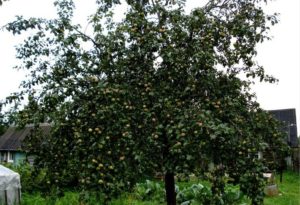 The Borovinka tree is considered medium-sized and, without pruning, usually reaches a height of about 4-5 meters. Crown It has a round or even spherical shape and can become spreading in old age, occupying an area of up to 5 square meters. The skeletal branches are quite sparse, extending from the main trunk at an acute angle. The shoots are most often dark brown, but may darken and turn brown over time.
The leaves are slightly elongated and oval, with a pointed tip that sometimes curls into a spiral. They are dark green, often with a beautiful graphite sheen, leathery, and pubescent. The apple tree's root system is quite extensive, and the presence of a central taproot depends entirely on the rootstock used.
Productivity and pollination
The variety is distinguished by stable annual fruiting of up to 85-115 kilograms from one tree.
However, starting in its third or fourth decade, the tree can begin bearing fruit every other year. The maximum recorded yield reaches 220 kilograms, although, for example, the Borovinka cannot compare to the outstanding Antonovka.
This apple tree is considered self-sterile. This means that without cross-pollination by other varieties, no apples will be produced. Experienced gardeners recommend planting apple trees near apiaries, as the scent of the blossoms is not very strong and pollinating insects may not detect it.
Winter hardiness and disease resistance
Borovinka is a winter-hardy variety, as it can easily withstand temperatures down to -22-28°C. If provided with reliable shelter, the apple trees can survive even at -35-40°C. Therefore, it can be grown practically anywhere in our country.
The apple tree's disadvantage is that it has no particular resistance to any apple diseases or pests. It is very susceptible to scab, powdery mildew, fruit rot, it is readily eaten by aphids and leaf rollerHowever, with timely preventive measures, all this can be avoided.
Subspecies and rootstocks
There are several varieties of the Borovinka variety, each with its own characteristics.
| Subspecies | Description |
| Creeping (creeping) | Borovinka lends itself well to cultivation on such rootstock. However, it needs to be trained to a standard-less form, which will allow the tree to be protected from severe frosts during the winter. This makes it possible to grow Borovinka in the harsh conditions of the Far North, in Siberia and in the Far East with their short summer. |
| Red | This subspecies is distinguished by its large blush and fruits weighing an average of 100 grams. It is particularly resistant to low temperatures and, most importantly, is very rarely affected by scab and powdery mildew. |
| Akulovskaya | This subvariety is widespread in the Volga region and the Don region. Its frost resistance is somewhat lower than that of the original variety, but this is compensated for by its mid-season ripening period. The fruits are typically green with a very slight blush. A disadvantage is its particular susceptibility to powdery mildew and scab, as well as other fungal infections. |
| Pineapple | This variety is distinguished by its winter ripening period and longer shelf life. The average fruit weight is 100-120 grams, and they are yellow-green with a light, translucent pink tint. They have a pleasant sweet-sour flavor and are remarkably resistant to scab. |
| Altai | Typically grown on a medium-sized rootstock, it reaches 3-5 meters in height. The tree's crown is pyramidal, and the fruit is usually medium-sized. They have a pleasant sweet-and-tart flavor and a more powerful aroma than other varieties. It has average resistance to low temperatures and diseases. |
Features of growing Borovinka
 Landing
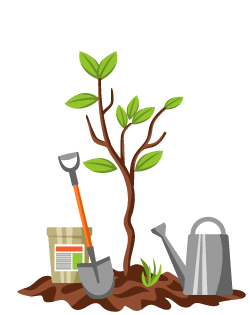 Landing
Key Features
- Both sunny and shady areas are suitable for planting. Borovinka doesn't really care where it grows; it easily tolerates shade from taller trees.
- Soil The soil should have a low acidity level. If it's unavailable, it can be reduced with lime. The variety thrives in loam and black soil, but will also grow without problems in properly fertilized sandy soil.
- Planting holes are prepared at least 2-3 weeks in advance. Dig holes 70 centimeters deep and 1 meter in diameter. Mix some of the soil with fertilizer and return it to the ground, then add 20-30 liters of water.
- Place a drainage layer at the bottom of the hole. Gravel, broken brick, or even nutshells can be used. A layer of 10-15 centimeters is sufficient.
- Stake stakes are driven into the ground on the north side to support the seedling. They should not be removed for three years.
- Before planting, the tree can be immersed in a bucket of cool water for 4-6 hours to allow the roots to become saturated with moisture.
- The seedlings are covered with soil, tamping it down firmly but not too tightly. After planting, it's customary to water them with 20-40 liters of water.
Particular attention should be paid to the height of the root collar. Ideally, for the boletus, it should protrude 20-30 centimeters above the soil surface.
Landing dates
It's best to plant two- or three-year-old seedlings in open ground. This can be done in the spring before bud break, around early to mid-April. However, you can also plant Borovinka in the fall after the leaves have fallen. The key is to allow at least three to four weeks before the first frost.
Protection from frost and rodents
To protect tender young seedlings from frost, it's essential to take a series of preparation measures. This primarily concerns watering, which must be stopped at least four weeks before the first frost. Otherwise, the tree won't have time to prepare, and the sap flow in the trunk can lead to frostbite and death. The easiest way is to surround the trunk with spruce branches, straw bundles, or hay, but you can also wrap it with foam rubber, roofing felt, or roofing felt.
You can protect the bark of young apple trees from pest damage by simply whitewashing them with lime in the fall. Whitewash the trunk and several lower skeletal branches. Coating the trunks with lard or grease, and treating with suitable chemicals, also helps repel rodents.
Tree care
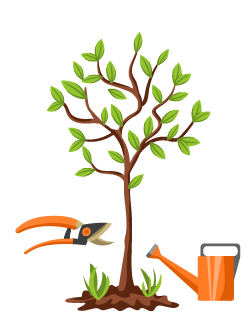 Tree care
Loosening the soil, watering: proper agricultural technology
Like any apple tree, the Borovinka prefers airy, yet nutrient-rich soil. Therefore, the soil around the trunk should be loosened regularly. At the same time, it's a good idea to remove root suckers, shoots from other shrubs and trees, and weed out any weeds.
Trees of this variety don't tolerate drought well. Therefore, when the weather is dry, it's essential to water them regularly, once a week, with 30-40 liters of water. Ideally, this should be done in two doses: morning and evening. It's also recommended to mulch the area around the trunk, for example, with chopped grass, manure, or compost. This will help retain moisture longer and prevent weed growth.
Pruning: simple crown shaping
The first formative pruning is performed immediately after planting. The main trunk is trimmed back by exactly one-third, and the scaffold branches are shortened by 5-7 centimeters. Be careful not to remove more than a third of the apple tree's branches at one time, otherwise the tree may become diseased from stress and even die. In the future, the crown, which tends to become dense, will need to be regularly thinned out in the fall or spring, removing excess shoots.
Sanitary pruning involves removing all damaged, diseased, or dead branches. It's best to immediately seal the cut areas with water-based paint or garden varnish. Make sure that sap flow in the trunk has either not yet begun or has already stopped during pruning.
Pollinators
- Folder.
- Cinnamon Striped.
- Red anise.
- Antonovka.
- Astrakhan red and white.
Reproduction
- Growing from seeds.
- Grafting by cuttings and buds.
Diseases and pests
- Scab.
- Powdery mildew.
- Fruit rot.
- Green aphid.
- Leaf roller.
- Flower beetle.
Ripening and fruiting of the Borovinka apple tree
The beginning of fruiting
 The beginning of fruiting
By the second year after planting a seedling in open ground, you can see flowers and then fruit. However, these will be sporadic, and formally, fruiting begins in the third or fourth year, when you can harvest 5 to 15 kilograms of sweet and sour apples.
Flowering time
Like most apple trees, Borovinka blooms in May. However, the timing may vary slightly depending on the growing region, from the beginning to the end of the month. It produces fairly large, pale pink blossoms with a distinctive, but not overly strong, fragrance. The trees finish blooming very quickly, in just 3-4 days.
Fruiting and growth
This variety is known for its abundant fruiting throughout its life cycle. A full harvest of up to 100 kilograms can be harvested from a single tree as early as 6-8 years. Apples ripen in southern regions by the end of August, but in the north, they can take until mid-September. The tree itself grows only slightly. In a single growing season, it can gain no more than 8-10 centimeters. Therefore, pruning shouldn't require much effort.
Apples can be stored until February under any conditions, but to ensure they last until spring without losing their quality, they need temperatures below 1°C and high humidity (up to 85-90%). The fruits are laid out in a single layer in wooden crates, sprinkled with sawdust.
Top dressing
- Humus.
- Manure.
- Compost.
- Mineral fertilizers.
What to do if it doesn't bloom or bear fruit
- Check for pests.
- Check for any diseases.
- Ensure timely watering.
- Check if there are pollinators in the area.
- Thin out the crown.
Why do apples fall?
- Overripe.
- Natural phenomena (hail, rain, wind).
- Pest damage.
- Diseases.
- Lack of moisture.
Please share your thoughts on Borovinka in the comments so other gardeners can try it out and draw their own conclusions.