Cinnamon Striped Apple Tree: Variety Features and Care
| Color | Striped , Pink |
|---|---|
| Taste | Sweet and sour |
| Crown type | Tall tree |
| Shelf life | High shelf life |
| Application | Universal variety |
| Fruiting age | From 5 years old |
 History of origin and regions of growth
Growing regions
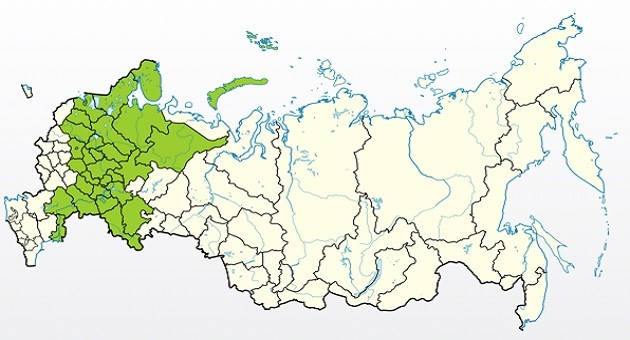
Cinnamon striped is included in the State Register for several regions:
- Middle Volga.
- Central Black Earth.
- Volga-Vyatka.
- North-West.
- Northern.
Moreover, it grows in almost any region of our country, feeling quite comfortable.
Origin
Scientists believe this variety arose through natural selection. Its age is estimated at approximately 200-250 years. The first detailed description of the variety appears in the book "Complete Gardening" by the renowned Russian writer and gardening researcher Vasily Alekseevich Levshin, published between 1805 and 1808, and in his work "Manager or Practical Instruction in All Parts of Agriculture" in 1810. However, a more detailed description can only be found in the work of pomologist Krasnoglazov, dated 1848.
Interestingly, several Cinnamon Striped apple trees grew on the Yasnaya Polyana estate, where the great Russian writer Leo Tolstoy lived and worked for a long time. It is believed that this variety is mentioned in Anton Pavlovich Chekhov's world-famous work, "The Black Monk." This apple tree has a number of popular names, both historically and still in use today: Korichnevka, Korichka, Korichnevoye, and Korichinka.
Scientists classify this variety as early autumn, meaning it begins to bear fruit in the first part of September.
Content
Description of the Cinnamon Striped apple tree variety
 Another ancient Russian apple variety that has survived several centuries virtually unchanged and is still considered popular is the Cinnamon Striped. The tree boasts enviable winter hardiness and is even listed in the State Register for the Central Black Earth and Volga-Vyatka regions. Its high yield and subtle yet powerful fruit aroma make it a favorite in any garden, whether large or small.
Apples: color, size, weight
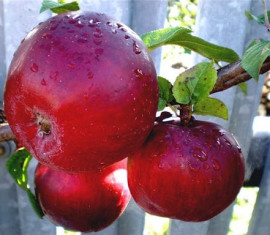
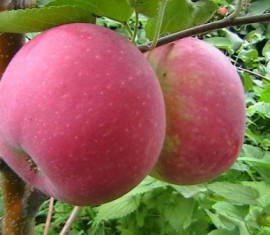
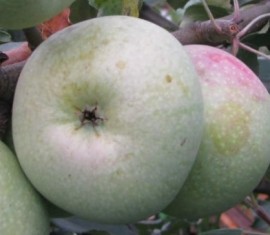
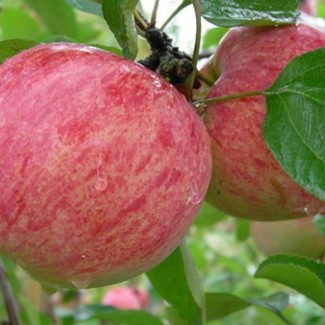
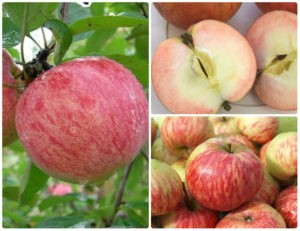 The fruits of the Cinnamon Striped apple are usually medium or even smaller than average in size. They are turnip-shaped and strongly flattened. Sometimes they have slight, barely noticeable segmentation, but they cannot be considered fully ribbed. The skin is fairly dense and thick, making it easy to transport. It is smooth and shiny, green or yellowish-green, covered with a reddish-brown striped blush on the sunny side. Subcutaneous spots are predominantly white, but difficult to see. The apples can be characterized by their chemical composition per 100 grams of product:
- P-active substances – 131 milligrams.
- Vitamin C (ascorbic acid) – 4.9 milligrams.
- Total sugars (fructose) – 10%.
- Fiber (pectins) – 9.4%.
- Titratable acids – 0.54%.
The flesh of these apples is crisp, firm, and mostly yellow or white, with a slight pinkish tint beneath the skin. It has a sweet and sour flavor, is tender, and possesses a distinctive cinnamon aroma, which is particularly prized by gardeners. The tasting score is 4.75-4.88 out of 5.
Apple tree Cinnamon striped: characteristics
Crown and root system
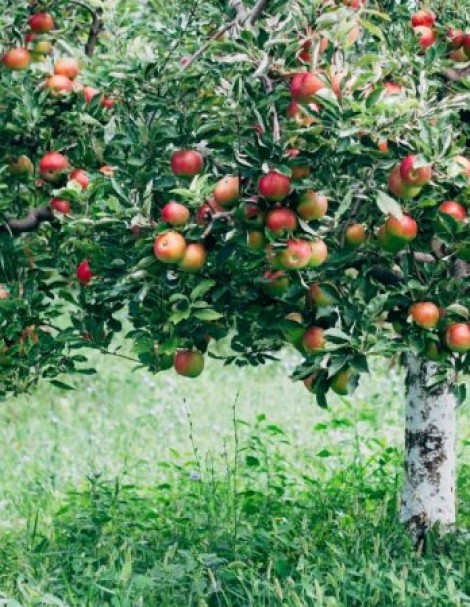
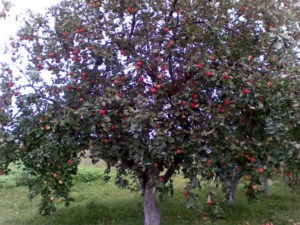 Ethe tree is considered medium- or vigorous, which largely depends on timely and correct pruning and rootstock (4-7 meters)When young, it has a broom-shaped or broadly pyramidal crown, due to branches growing at an acute angle to the trunk. For the first 10-15 years, the Cinnamon Striped grows rapidly upward, then becomes spreading, almost weeping. The branches are long, elastic, bare at the base, with dark gray or brown bark. The leaves are quite sparse, elongated, pointed, dark green, slightly pubescent, and not shiny.
The size of the crown and root system depends largely on the rootstock, which is most often dwarf or semi-dwarf. The skeletal branches grow at an acute angle, which often leads to them breaking off during fruiting. The tree can cover an area of 6-9 meters in diameter, and its roots spread out over several dozen meters. The Cinnamon Striped will undoubtedly become the largest and most impressive tree in almost any location.
Productivity and pollination
The variety's yield is considered high, although with very high-quality care, even in good years, no more than 150-170 kilograms of fruit can be harvested (for comparison, 300 or more kilograms are harvested from Antonovka).
If there is an apiary not far from the garden, no more than half a kilometer away, then the yield can double.
The Cinnamon Striped apple tree is self-sterile. This means that if there are no other varieties within 150-200 meters, you will likely not get a harvest. Therefore, it is customary to plant this variety near other varieties to ensure cross-pollination. The apple tree begins bearing fruit quickly, but a full harvest is unlikely before 12-14 years. The average lifespan of a tree is 50-70 years, but older fruiting specimens have been known.
Winter hardiness and disease resistance
These apple trees are considered very frost-resistant. They easily withstand harsh winters, even when temperatures drop to -37-40°C. During the unusually harsh winters of 1978-1979, the plants remained undamaged, and in subsequent years they produced fruit almost as well as before.
Subspecies and rootstocks
The variety is mainly grown on vegetative rootstock, but in some cases you can find cuttings, grafted onto dwarf, semi-dwarf, and even creeping rootstocks. There are no key characteristics other than crown height, which can range from half a meter to three meters. However, there are several varieties of Cinnamon Striped that are worth learning more about.
| Subspecies | Description |
| Blue or smoky | This subspecies differs from the common striped variety only in the color of the fruit's skin. Their bright red stripes merge into a single blush with a bluish, waxy hue. |
| New | This variety produces larger fruits (100-130 grams) and is considered a late-autumn variety, as the apples don't ripen until late September. However, their shelf life barely extends to early to mid-February, after which they lose their flavor and characteristic aroma. The trees are less susceptible to scab and other diseases. |
| Pineapple | This variety produces the largest fruits of all the subspecies (150-180 grams), which have lost their stripes. The apples are covered with a dark red blush and a light waxy coating. The flesh of these fruits is more tender and grainier than that of their parent, but there are some drawbacks. Although they hold tightly to the branches and do not fall off, the flavor of the fruit deteriorates significantly if not picked in time. The average shelf life of these fruits does not exceed a month. |
Features of growing Cinnamon Striped
This variety is so common that acquiring seedlings shouldn't be a problem. They are sold at exhibitions, in specialized nurseries, and by private breeders. It's best to choose the second and third options, as at exhibitions there's a risk of purchasing trees grown in southern regions, which would cause them to lose some of their exceptional winter hardiness.
 Landing
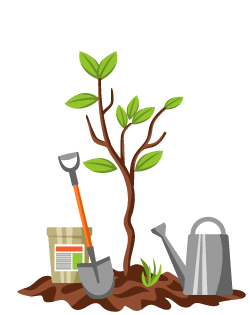 Landing
Key Features
- Ideally, choose fertile, moderately moist soil for planting the Cinnamon Striped Apple. With regular fertilizing and watering, it can even be planted in sand. The most important requirement is the absence of high groundwater or open bodies of water in the immediate vicinity. In such areas, the root system often begins to rot, and the tree dies. If there is no other option, you can cut off the apple tree's access to groundwater by placing a piece of slate flat on the bottom of a hole 1-1.25 meters deep.
- The variety should be planted in a sunny location; in the shade, the fruits will become small and sour. Good ventilation is also a good idea to avoid disease. scab it won't be easy.
- Between Cinnamon and other trees, regardless of species or variety, the distance should be no less than 3-4 meters.
- Standard holes for apple trees are dug, 60-80 centimeters deep and up to a meter in diameter. If necessary, drainage (gravel, broken brick, or nut shells) is added to the bottom.
- The root collar of the Cinnamon should protrude above the soil surface by at least 5-7 centimeters.
- If the seedling was not purchased with a root ball, it would be a good idea to remove about 85-90% of the foliage during planting. This will give the tree more energy to root, which it will save by maintaining the foliage.
- Immediately after planting, apple trees are watered with 10 liters of water and mulched with chopped grass and manure (preferably horse manure).
Two-year-old seedlings are better suited for planting in open ground than larger, taller three-year-olds. They have a much better survival rate, and they survive their first winter more easily.
Landing dates
Apple trees of this variety thrive when planted in both fall and spring. After leaf fall, it's best to plant at least 3-5 weeks before the first frost, otherwise the tree may not have time to establish roots. Spring planting should be done in April or no later than mid-May. The key is for the ground to have completely thawed after the winter frosts, as timing varies greatly by region.
Protection from frost and rodents
No special wintering precautions are necessary; even young first-year saplings easily withstand severe frosts. However, in northern regions, many prefer to wrap the trunks of young trees with straw bales, spruce branches, foam rubber, or roofing felt. Mulching the trunk area with horse manure is also helpful; this will also help the apple tree survive the harsh winter.
To protect apple trees from pests, rodents, and insects, spray them with appropriate chemicals regularly, regularly whitewash the trunk with lime, and lubricate it with lard or grease. A fine wire mesh wrapped around the trunk can be a good defense against hungry hares, but it will require a soft backing, otherwise the trunk will inevitably be damaged.
Tree care
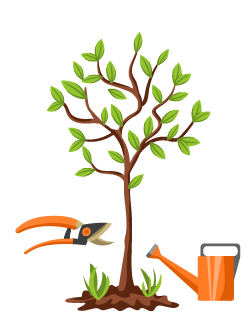 Tree care
Loosening the soil, watering: proper agricultural technology
The cinnamon-striped trumpet prefers airy soil, so loosening the soil will only benefit it. Twice a year, dig around the trunk regularly, removing weeds, root suckers, and other tree shoots. You can loosen the soil with a hoe a few times, but this is not necessary.
In summer, apple trees are watered approximately once a week or ten days, depending on the weather. Watering is done in two stages:
- In the morning at dawn 10 liters of water.
- In the evening after sunset another 10 liters.
The quality of watering directly affects the yield, not in the current season, but in the following one. Between July and August, the tree sets flower buds for the following year. Therefore, if it lacks moisture, you will harvest significantly fewer apples next year. Typically, watering is halved in August and stopped completely by October. This gives the tree time to prepare for winter.
Pruning: simple crown shaping
Any pruning of this variety is recommended to be done in early spring, before the sap begins to flow, rather than in the fall. This way, the apple tree can better withstand stress. It's a good idea to treat all cut areas with garden pitch or at least water-based paint.
Careful, accurate pruning is the key to a good harvest. Furthermore, it helps regulate the sugar content of the fruit, as well as its size, while also protecting the trees from disease.
- FormativeThe first pruning is done immediately upon planting. This involves shortening the trunk and all lateral branches by one-third. A "ring cut" is acceptable, meaning the complete removal of all shoots up to the first fork. This is a shock pruning and can kill the tree, so even experienced gardeners hesitate to perform such a procedure.
- SupportiveThis type of pruning is done as needed. First, all branches that reach the ground are trimmed. Second, the tree is thinned regularly. crownYou only need to leave 1 branch out of 3.
- SanitaryThis is done periodically as needed. All damaged, dry, and diseased branches are cut off.
- RejuvenatingTo prevent the tree from aging too quickly and significantly extend its lifespan, starting from the 15th to 20th year, 2-3 mature branches should be removed to allow the young ones to develop.
When pruning any type of tree, remember not to remove more than a quarter of the tree's branches at a time, otherwise it can cause significant stress on the apple tree. At best, it will reduce fruit production for the next few years, and at worst, it will die.
Pollinator varieties
- Folder.
- White filling.
- Grushovka Moscow.
- Borovinka.
Reproduction
- Grafting (rootstock) by buds or cuttings.
- Growing from seeds.
- Layers (clones).
Diseases and pests
- Fruit rot.
- Powdery mildew.
- Scab.
- Cytosporosis.
- Root cancer.
- Apple leafhopper.
- Red fruit mite.
- Leaf roller.
- Codling moth.
- Red and green aphids.
Ripening and fruiting of the Cinnamon Striped apple tree
The beginning of fruiting
 The beginning of fruiting
With proper care, the first apples from this variety can be harvested as early as 4-5 years after planting, but the yield will be meager, meaning you'll only be able to count them one by one. Only from the 6th or 7th year can you expect a more or less decent harvest. With poor care, you'll have to wait at least 10 years for fruiting.
Flowering time
This factor depends on the region where the Cinnamon Striped apple is grown. However, on average, its ripening time is virtually the same as other apple trees—approximately early, mid, or late May. The plant's flowers are large, very fragrant, and pale pink, and can attract a large number of pollinating insects to the garden.
Fruiting and growth
Young trees produce small crops for up to 10-12 years, after which they finally begin to increase their fruitfulness. Growth is primarily observed in height in those apple trees that have not yet reached their peak. After this point, the trees continue to grow their crowns laterally.
This often confuses gardeners. Seeing an apple tree stubbornly strive for height, they plant other trees near it, but this is a mistake. Once an apple tree reaches a certain height, it will develop lateral branches, shading other plants. However, its foliage is sparse, so strawberries, currants, or even raspberries can be grown between the trees, provided they don't overgrow the trunk circle.
Top dressing
- Humus.
- Humus.
- Urea.
- Superphosphate.
- Ammonium nitrate.
What to do if it doesn't bloom or bear fruit
- Check for diseases or pests.
- Prune and thin out the crown.
- Transplant to a drier area with airy soil.
- Stop watering.
Why do apples fall?
- Excess moisture.
- Natural phenomena.
- Pests.
- Excessively dense crown.
- Diseases.
Please leave your feedback on the cinnamon stripe in the comments to share your experiences with other gardeners.