Apple tree Antey: characteristics of the variety and care
| Color | Reds , Pink |
|---|---|
| Ripening season | Autumn |
| Size of apples | Large |
| Taste | Sweet and sour |
| Crown type | Average tree height |
| Shelf life | High shelf life |
| Application | Universal variety |
| Winter hardiness | High winter hardiness |
| Fruiting age | Up to 5 years |
 History of origin and regions of growth
Growing regions
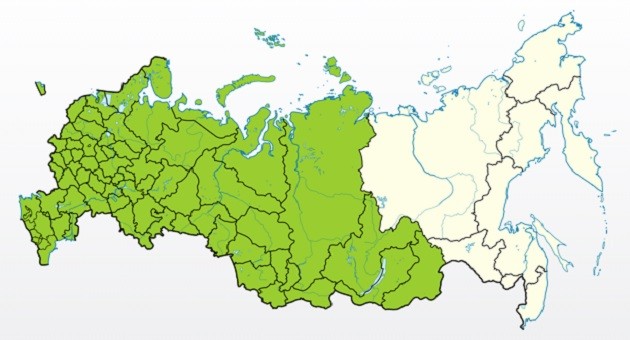
Thanks to its high frost resistance, the Antey variety can be grown in virtually any region of our country, including the Far East and Siberia, as well as in Belarus, Kazakhstan, and Ukraine.
Origin
Work on developing this variety began in the late 1980s by a group of breeders from the Belarusian Research Institute of Pomology, led by G.K. Kovalenko. Experiments were conducted to develop a variety capable of withstanding extremely low temperatures and undemanding growing conditions. A hybrid of the Newtosh and Babushkino varieties, as well as a winter-hardy variety called Belorusskoe Malinovoye, were used as the starting points.
From 1991 to 1994, the variety was distributed to various farms for testing, and in 1996, it was added to the State Register as an elite variety for Belarus. Gardeners appreciated its productivity and consistently high yields, so it quickly spread throughout the former Soviet Union.
Content
Description of the Antey apple tree variety
 No garden, large or small, can function without winter apple trees. The Antey variety produces large, aromatic fruits with excellent consumer qualities, and, with proper care, can easily store until the following summer. These trees bear fruit well every year, and their productivity makes them suitable for intensive orchards.
Apples: color, size, weight
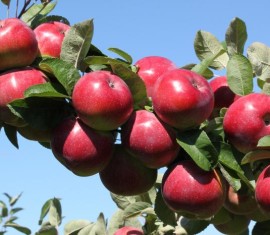
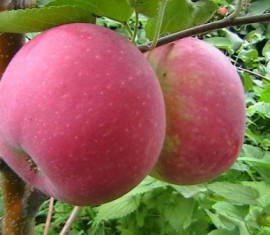
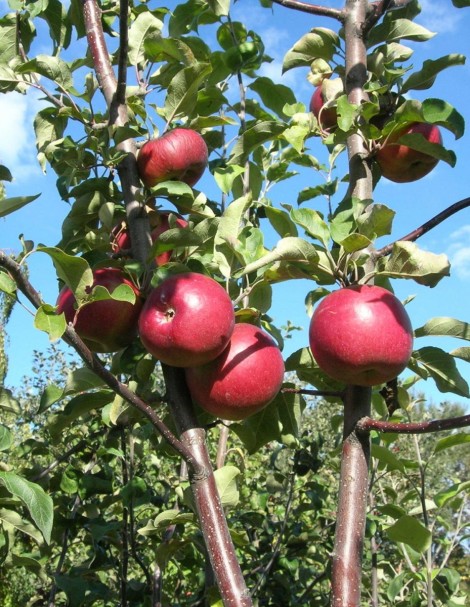
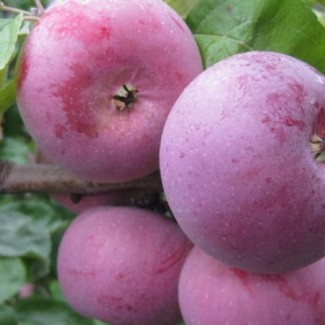
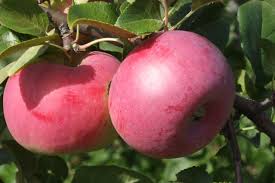 The fruits of this apple tree are typically large, weighing up to 180-200 grams each. Even under relatively unfavorable conditions (under- or over-watering, shade, spring frosts), they do not become small. They are most often round or round-conical, with subtle ribbing, and can be slightly flattened.
Apple skin is very dense and green, but as it ripens, it develops a beautiful red or even burgundy blush, covering approximately 65-80% of its surface area. It has a light waxy coating, giving the fruit a bluish tint. The chemical composition can be characterized by the following indicators per 100 grams of product:
- P-active substances (catechins) – 120 milligrams.
- Ascorbic acid (vitamin C) – 20.2 milligrams.
- Total sugars (fructose) – from 9.3 to 10.9%.
- Titratable acids – 0.65%.
- Pectins (fiber) – 13%.
The Antey apple's flesh is very dense, juicy, and crisp. It has a sweet-tart flavor and a slightly greenish color. The fruit's aroma is distinct, bright and candy-like. The apples' appearance received a 4.7 out of 5 points, and their flavor received a 4.3, owing to their rather tart nature.
Apple tree Antey: characteristics
Crown and root system
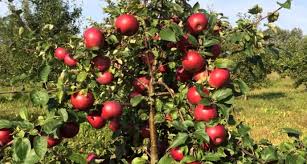
The tree is considered medium-sized, as it can grow to a maximum of only 3-4 meters without pruning. Crown Typically, it has an oval-pyramidal, rounded shape. It is of medium to below-average density, producing few branches. It is quite compact in area, reaching no more than 3.5-4 meters in diameter.
Young branches are brown and shiny, but may crack and turn brown over time. The leaves are oval, with a slightly serrated edge and a pointed tip, dark green, smooth, leathery, and may have a light downy underside. The apple tree's rhizome is branched, allowing it to seek moisture over large distances. The presence of a central rhizome depends entirely on the rootstock used.
Productivity and pollination
It is believed that Antey is a high-yielding apple tree, but only among winter varieties.
No more than 50-70 kilograms can be harvested from a tree per year, while from Antonovka, for example, the harvest can reach 300.
However, due to the size of the apples, which are all exactly the same, as well as the original sour taste, the variety is very popularly grown.
Antey is a self-sterile variety. This means that if there are no other apple trees within 150-200 meters, there will be no harvest. Therefore, it is common to alternate this tree with other trees in orchards. To maximize fruiting, it's a good idea to establish an apiary in the garden; the presence of numerous pollinating insects will help maximize yields.
Winter hardiness and disease resistance
The variety is truly winter-hardy, allowing it to be grown even in fairly harsh conditions. At temperatures down to -28-30°C, the trees won't even require additional shelter. Therefore, Antey is recommended for growing in northern regions, such as beyond the Urals.
The variety's resistance to various apple diseases is considered average, but it can easily become infected scab, which will be very difficult to eradicate. Any fungal infections pose a danger to these apple trees. The trees respond well to preventative measures, so it makes sense to properly care for them, avoid excessive moisture, regularly remove fallen leaves and fruit from under them, and treat them with appropriate chemicals. Pest resistance is also average.
Subspecies and rootstocks
To achieve the best results, gardeners grow Antaeus on different rootstocks, ultimately producing new varieties, sometimes with completely different qualities.
| Rootstocks | Peculiarities |
| Dwarf | The 62-396 rootstock is used to grow this subspecies. As a result, the trees grow to no more than 2 meters in height, significantly simplifying harvesting and maintenance. Fruit on these apple trees reaches 250-300 grams in weight, and otherwise, care is no different from standard care. |
| Semi-dwarf | This option is also quite acceptable, but there are practically no differences from the original tree, other than a maximum height of 2.5-3 meters. They also bear fruit reliably, produce beautiful large fruits, are unpretentious, but are often susceptible to scab. |
| Columnar | This is one of the few varieties that can be grown on columnar rootstock. This offers particular advantages, as the tree can be grown without lateral scaffold branches. This significantly simplifies harvesting and significantly increases the compactness of the garden. At the same time, all the essential qualities of the variety remain the same, which are especially prized by gardeners. |
This is one of the few varieties that can be grown on columnar rootstock. This offers particular advantages, as the tree can be grown without lateral scaffold branches. This significantly simplifies harvesting and significantly increases the compactness of the garden. At the same time, all the essential qualities of the variety remain the same, which are especially prized by gardeners.
There are no creeping rootstocks specifically for Antey. However, many enthusiasts have attempted to create such subspecies to grow the variety in the Far North. Interestingly, many experiments were successful, with enviable harvests being achieved in Ukhta, Ust-Ilimsk, and Irkutsk.
Features of growing Antey
Plants of this variety are undemanding in care and are able to survive even in rather harsh conditions, so you won’t have to put in much effort to obtain good harvests.
 Landing
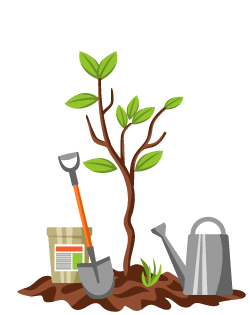 Landing
Key Features
- Well-lit areas are usually chosen for apple trees, since shade from taller trees or building walls can slow down their growth.
- Antey doesn't like high groundwater, and its roots can rot if constantly exposed to it, killing the entire tree. Therefore, if there's little choice, simple drainage work can be done. When water is very close, dig a 1.5-meter hole, lay a sheet of slate or a layer of roofing felt at the bottom, then cover it with soil and plant the apple trees. This will prevent the roots from accessing the water. However, often, simply adding broken brick, gravel, or nutshells to the hole is sufficient.
- You will have to monitor the soil acidity, since a pH level above 6.6-7 is detrimental to apple trees of this variety.
- Dig the holes for Antey in advance. It's best to do this in the fall if you plan to plant in the spring, or at least 3-4 weeks in advance if planting in the fall. The holes should be 1 meter in diameter and 80-90 centimeters deep. Place a mixture of soil and fertilizer at the bottom and add 2-3 buckets of water.
- It is optimal to leave a distance of 3-4 meters between trees in the garden.
- It is enough to leave the root collar 2-3 centimeters above the soil surface.
- Special stakes are immediately dug into the ground to support the apple tree. These stakes can be removed no earlier than three years after planting.
- When filling the seedling with soil, you can compact it quite tightly; the tree is not at all afraid of this.
- After planting, the apple tree needs to be watered with 30-40 liters of water.
Before planting in open ground, all seedlings must be immersed in water for 6-8 hours, regardless of whether the rhizome is dry or not.
Landing dates
The tree is easy to grow, so it can be planted either in the spring, before the buds open, or in the fall, after the sap has stopped flowing. However, autumn is still the best time. Then the apple tree devotes all its energy to developing its root system rather than building up its foliage. The key is to plant it after the leaves have fallen, but at least 4-5 weeks before the first frost.
Protection from frost and rodents
No special measures are required to protect the tree from freezing temperatures. The tree already tolerates frost well. However, in the first year, it wouldn't hurt to cover the area around the trunk with spruce branches, hay, or straw bales.
To protect the bark of young trees from hungry rodents during the winter, it's best to coat the trunks with lard or grease. Insecticide treatments and autumnal whitewashing of trunks and skeletal branches with lime will also help repel insects.
Tree care
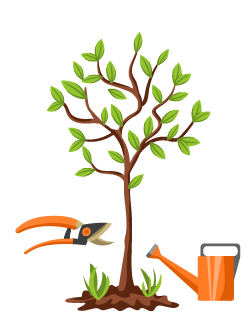 Tree care
Loosening the soil, watering: proper agricultural technology
Regularly hilling and digging the area under the apple tree is practically all that's required for its normal growth and fruiting. You'll also need to remove weeds, young root shoots, and shoots from other trees that will rob the tree of nutrients.
Watering is only necessary during truly dry weather, when natural precipitation hasn't fallen for more than ten to twelve days. On such days, you can pour two buckets of water in the morning and evening, then wait another ten days before watering again. Regularly mulch the soil with horse manure, compost, and chopped grass.
Pruning: simple crown shaping
To shape the crown, pruning is done in the fall, after the leaves have fallen. Here are a few simple and easy-to-follow tips to consider.
- All skeletal branches that you leave should be located as far apart from each other as possible, preferably in tiers.
- The central trunk should always be slightly taller than any of the branches. Therefore, when cutting them back by a third, make sure the main stem still stands tall.
- Likewise, all higher order branches should be slightly longer than lower ones.
It's important to remember that pruning too many tree branches at once isn't a good idea. Ideally, no more than one-third of the tree's branches will be pruned, otherwise the tree will become severely stressed and may even die. It's best to limit pruning to a quarter of the branches, which will ensure a painless process.
In the fall, you can also perform sanitary pruning of the tree, removing all diseased, dried, or damaged branches. All cut areas are sealed with garden pitch or painted with water-based paint.
Pollinators
- Saffron pepin.
- Welsey.
- Autumn striped.
- Anise.
Reproduction
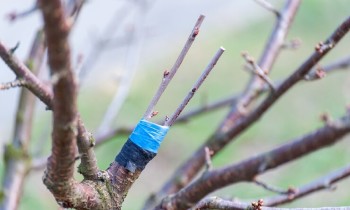
- Grafting by cuttings or buds.
- Layers (clones).
- Growing from seeds.
- Rooting by cuttings.
Diseases and pests
- Powdery mildew.
- Fruit rot.
- Scab.
- Leaf roller.
- Flower beetle.
- Green aphid.
- Codling moth.
Ripening and fruiting of the Antey apple tree
The beginning of fruiting
 The beginning of fruiting
These apple trees begin bearing fruit very early, and already in the first year, you can see blossoms and even a few apples. From the second or third year, the tree begins to actively increase its yield. During these years, it is common to harvest 5-15 kilograms of juicy, beautiful fruit.
Flowering time
Apple trees begin blooming, depending on the region, from mid-May to the very end of May. They bloom for quite a long time, lasting 14 days. They produce abundant, beautiful, fleshy flowers of white or white-pink color with numerous stamens.
Fruiting and growth
By the fourth or fifth year of life, an apple tree begins to produce its maximum yield, despite the tree's slow growth rate of only 5-12 centimeters per year. Ultimately, you can harvest up to 70 kilograms of large, juicy apples, which store very well for at least six months. If you provide them with suitable conditions, such as a well-ventilated cellar, you can preserve the fruit until the next harvest.
When apples begin to ripen on the branches, it is recommended to treat the trees with preparations containing calcium.
Top dressing
- Organic and mineral fertilizers are added immediately after flowering.
- During the period of apple formation, the soil is fertilized again with organic matter and minerals.
- After harvesting in the fall, you can apply complex fertilizers to restore the balance of nutrients in the apple trees and prepare them for winter.
What to do if it doesn't bloom or bear fruit
- Stop watering.
- Transplant.
- Check for pests or diseases.
- Perform pruning.
Why do apples fall?
- Pests.
- Diseases.
- Excess moisture.
- Natural phenomena (hail, wind, rain).
- Exhausted soil.
- Increased soil acidity.
Share your thoughts on Antea in the comments so other gardeners can learn from your experience.