Belarusian Raspberry Apple Tree: Variety Features and Care
| Color | Reds |
|---|---|
| Ripening season | Autumn |
| Size of apples | Average |
| Taste | Sweet and sour |
| Crown type | Average tree height |
| Shelf life | Average shelf life |
| Application | For recycling , Fresh |
| Winter hardiness | High winter hardiness |
| Fruiting age | Up to 5 years |
 History of origin and regions of growth
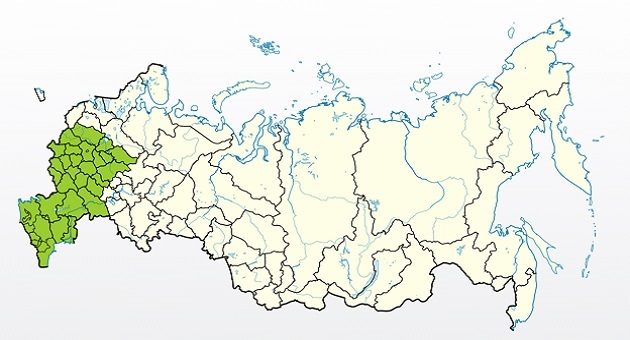
Growing regions
- Crimea.
- Volga-Vyatka region.
- Middle zone.
- Leningrad region.
- North Caucasus.
- Moscow region.
Origin
We owe the development of this variety to the Belarusian State Unitary Enterprise "Institute of Fruit Growing," specifically to the plant breeders V.G. Kovalenko and G.K. Kovalenko. The new apple tree was created by hybridizing the Antonovka apple and the rare Lavfam variety around the 1980s. In 1988, it was officially zoned in Lithuania, and in 1991, it was included in the State Register of Varieties and Tree and Shrub Species of the Republic of Belarus.
The apple tree is not yet included in the Russian list of breeding achievements and is not zoned in our country. However, for almost two decades, it has been grown in temperate climates, both south and north of it, and is particularly widespread in the Novgorod region.
Content
Description of the Belarusian Raspberry variety
 This fast-growing, hardy Belarusian variety immediately caught the fancy of domestic gardeners. The trees are compact, attractive, and have neat crowns, taking up little space in the garden, making them suitable for growing in limited spaces. They are quite winter-hardy, undemanding in terms of soil and care, and environmentally friendly. These apple trees regularly produce impressive harvests without resting, have a decent lifespan, and are moderately disease-resistant.
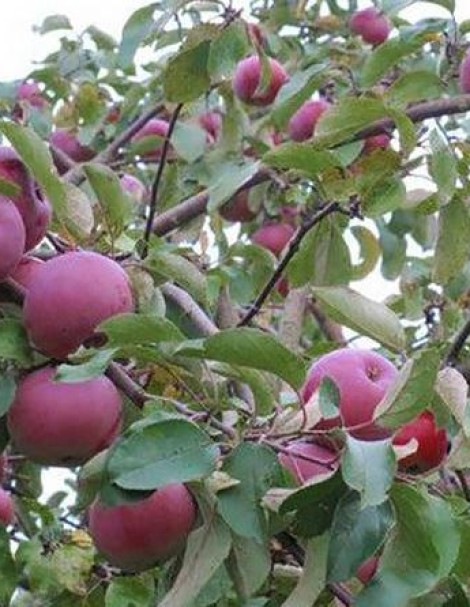
The fruits ripen on the tree, becoming large, attractive, and rosy-brown, with a distinctive, recognizable aroma. They are very tasty, keep well, and transport well over long distances. This variety is recommended for planting in small gardens.
Apples: What do they look like?
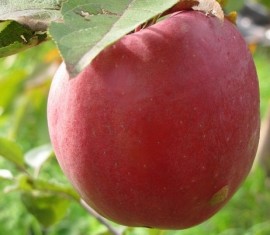
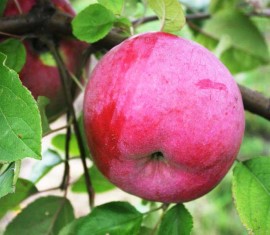
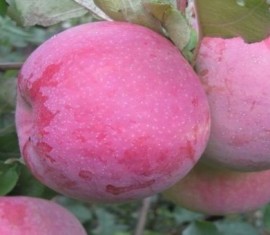
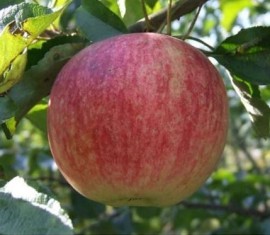
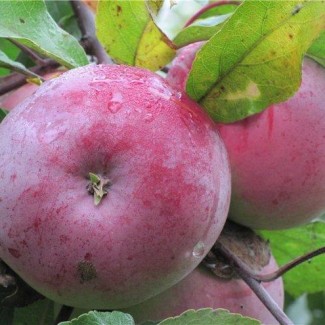
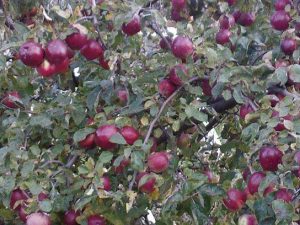 The fruits are predominantly symmetrical, uniform, round or flattened. They are medium to larger in size (140-170 grams), but can sometimes grow larger (up to 200-250 grams). They are uniform, with slightly noticeable ribbing and no lateral seam.
The Belarusian Raspberry has a thin yet strong, elastic, and dense skin. It is smooth and highly shiny, and when fully ripe, may have a visible waxy coating of a silvery-blueish hue. The skin's base color is greenish-yellow or light green, but it is not particularly visible, as it is 55-80% hidden under a dense, speckled, translucent-spotted, and diffuse blush of a bright crimson or purple-crimson hue. A few small, light-gray-green, subcutaneous spots are barely visible on the surface. The following information on the chemical composition of the fruit will be useful for specialists:
- P-active substances (catechins) – 270 milligrams.
- Ascorbic acid (vitamin C) – 18.4 milligrams.
- Total sugars (fructose) – 10.8%.
- Pectins (fiber) – 8.2%.
- Titratable acids – 0.52%.
The apples have a pleasantly fine-grained flesh, very juicy, crisp, and prickly, yet quite tender. Its color can be pure white or slightly creamy, and the aroma is intense. It is distinctive, pleasant, and quite recognizable. The flavor is considered dessert-like, harmonious, and balanced, with a pleasant sweet-and-sour balance. Professional tasters rate it at 4-4.3 points for both appearance and taste.
Belarusian Raspberry Apple Tree: Characteristics
Crown and root system
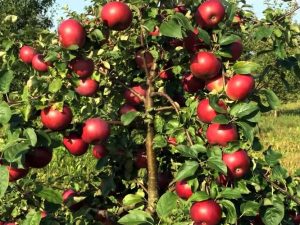 It is a medium-sized tree that can grow up to a maximum of 4-5 meters.The crown has a clearly defined round or broadly oval shape, moderate density, and branches are positioned at an acute angle to the conductor. However, they rarely split due to their high fusion rate. The branches are medium-thick, geniculate, and long, covered in cherry or reddish-brown bark. This variety produces mixed fruiting: on ringlets, spears, and fruiting shoots.
The leaf blade is typically large, flattened, highly glossy, and shiny. The leaves are leathery, dense, and wrinkled, with a rough nervation; a slight felt-like pubescence may be visible on the back. The leaf color is dark green or rich emerald, the tip is short-pointed, and the margins are serrate-crenate. The root system is moderately to better than average in depth, and can sometimes be taproot, but is mostly fibrous and highly branched.
Productivity and pollination
The trees are generally considered to be of average yield, although for many the results leave much to be desired.
With timely and regular care, a ten-year-old tree can yield no more than 45-60 kilograms of apples per season. At standard planting density, this yields an average of no more than 150-180 centners per hectare..
The Belarusian Raspberry is completely sterile, so it absolutely needs outside pollinators, otherwise it won't produce any apples. These should be planted no further than a hundred meters from the tree trunks, otherwise the yield will decline proportionally to the distance from the pollinators.
Winter hardiness and disease resistance
Trees of this variety are hardy and resilient to temperatures as low as -29-32°C. They tolerate cold well, provided they are properly prepared for winter and covered promptly. Prolonged cold spells or sudden temperature fluctuations may cause bud damage, but they recover well. Within just one year, the tree is fully restored and bears fruit without any changes.
The tree is not particularly susceptible to diseases, but here fruit rot can seriously threaten the harvest. Cytosporosis, parasha and powdery mildew It usually develops due to a lack of preventative treatments during years of severe epiphytotics and high humidity. If fungicide and insecticide spraying is carried out promptly, there is no risk of serious consequences.
Rootstocks and subspecies
The Belarusian raspberry tree doesn't have its own varieties, but it can be grown on various rootstocks. This can result in the tree developing some unique characteristics, which in no way affects the fruit's flavor, size, or quality.
Features of growing Belarusian raspberry
 Landing
 Landing
Basic conditions
- Sunlit sites are recommended for all apple trees, and especially for the Belarusian Raspberry. It thrives in full sun; it grows poorly in the shade, produces poor fruit, and the resulting apples are sour, small, and tasteless.
- It's important to choose the right location, free from drafts, which can cause irreparable damage to the apple tree, for example, in winter. However, stagnant air in the crowns is also unavoidable. A balance is required, and this is not easy.
- The tree thrives in airy, permeable, and fertile soils, but not excessively so. Black soil will need to be enriched with river sand and clay, but sandy loam and loam are suitable on their own.
- Groundwater levels must be strictly monitored; they should not rise above two meters. If apple trees are planted in overly wet areas, on a ridge, or near a river, pond, or stream, the roots may rot, resulting in the death of the tree.
- Preparing the holes in advance is important because they need to be left to cure for a certain period of time. Ideally, 80x90x1000 cm holes should be dug the season before planting, but in a pinch, 2-4 weeks of curing will suffice.
- A layer of soil mixed with fertilizer is placed at the bottom of the holes, then drainage is added, and the entire thing is filled with water. The holes should not be covered with anything; they must be left in the open air.
- A distance of 4-5 meters should be left between trees to prevent adult trunks from clashing with their roots and crowns.
- The root collar should protrude at least 7-10 centimeters above the surface when planting. If the soil settles after the first watering, the gap will prevent the tree from establishing roots higher.
- It's a good idea to immediately dig trellises, planks, or stakes into the holes to tie the seedlings to. It's best to position them on the north side of the trunks to provide additional protection during frost.
- The tree is placed in a hole on drainage, covered with soil, compacted, watered with 45-50 liters of water, and the surface is mulched.
Landing dates
Belarusian raspberry can be planted in either spring or fall; there's little difference. Therefore, it's best to choose a warm, dry day in March-April or September-October, before the sap starts to flow. The harsher the climate in the planting region, the better the spring planting, when the soil has already warmed up completely under the early sun.
Tree care
 Tree care
Protection from frost and pests
Already at the end August All watering and fertilizing should be completely stopped to allow the tree time to stop the sap flow in its trunks. Then, the tree trunks are cleared of debris, and the trunks are wrapped in cloth, burlap, roofing felt, roofing felt, and even old tights. Straw, hay, or spruce branches are thrown over the roots. Young trees can be wrapped in a tent-like covering.
Tree trunks are coated with grease or lard to prevent rodents from eating the tender bark and young branches during the winter. To repel insects, trees are whitewashed with lime twice a year. This will not only give the trees a neat appearance but also repel pests that have hidden for the winter near the rhizomes or in bark crevices.
Loosening the soil, watering: proper agricultural technology
In the garden, it's common to dig around apple trees in the spring and fall, but sometimes just one dig is enough. At the same time, remove all debris, dry leaves, and rotting fruit from the area around the tree trunks, and prune off shoots from other plants, root suckers, and weeds. During the growing season, you can gently loosen the soil with a hoe, for example, the day after applying water.
It's best to water the Belarusian Raspberry tree regularly, ensuring the root zone never dries out completely. It's crucial not to overdo it, as excessive moisture will also be detrimental. You can use the ten-day rule: water every ten days when there's no rain. After rainfall, count down the ten-day period and water the trees again.
Pruning: simple crown shaping
Apple trees aren't prone to overgrowth, but it's essential to establish the correct growth direction and form a skeleton of branches. The ideal shape for this is a sparse or sparsely layered tree. You can create a pyramidal, oval, or even spherical tree; these trees are very flexible and tolerant. The main thing is to avoid cutting more than a third of the green mass at one time.
In the fall, perform an inspection and a sanitary cleaning. All broken, diseased, or damaged shoots, as well as dry ones, are cut off. Cut carefully with a saw; small branches can be trimmed with pruning shears. The cut areas are lubricated. garden pitch or paint.
Pollinator varieties
- Titovka seedling.
- Raika.
- Saffron pepin.
- Teremok.
- Professor Sprenger.
- Antonovka.
- Ranetki.
Diseases and pests
- Scab.
- Cytosporosis.
- Fruit rot.
- Cancer.
- Powdery mildew.
- Scale insect.
- Fruit hyacinth.
- Moth.
- Green aphid.
- Leafhopper.
- Hawthorn.
Ripening and fruiting of the Belarusian raspberry
The beginning of fruiting
 The beginning of fruiting
The trees are fairly early fruiters, but this rate depends largely on the growing region. In their native habitat, they begin bearing fruit in the third or fourth year, while in temperate climates, it's only in the fourth or fifth. Further north, the period can be significantly longer. Therefore, you won't have to wait long for fruit, although the variety won't produce a large amount, yielding a few kilograms at most.
Flowering time
The apple tree opens its pink buds in mid-May, when a huge variety of apple trees are in bloom. Therefore, pollinators are virtually unaffected. The flowers themselves are large, fragrant, and a delicate pink or white-pink hue. The process lasts at least 12-14 days.
Fruiting and growth
The Belarusian raspberry tree grows at a moderate rate, gaining approximately 35-45 centimeters per year. It reaches its optimal size fairly quickly and gradually increases its yield. Full harvests can be harvested as early as 10-12 years. It's important to understand that the average fruiting period is only 30-40 years, so you'll need to be quick to reap all the benefits.
Harvesting maturity occurs at the end of September, when all the fruit is ready to be picked and stored. Consumer maturity occurs a little later, after about a month of storage. In a regular cellar, the fruit will keep well until April, and in a special cellar refrigerator They can be stored until May. They transport well; they can be transported in bulk if the journey isn't too long, but it's better to ship them in boxes with two or three layers.
Top dressing
- Superphosphate.
- Humus.
- Peat.
- Calcium.
- Manure.
- Compost.
What to do if it doesn't bloom or bear fruit
- Limit or increase watering.
- Eliminate insects.
- Cure diseases.
- Feed.
- Transplant to a sunny place.
Why do apples fall?
- Wind, frost, rain, hail.
- Overripe.
- Pests or diseases.
Leave a review of the Belorusskoye Malinovoye apple tree variety so that even a novice gardener can receive useful information firsthand.