Apple tree VEM-souvenir: characteristics of the variety and care
| Color | Reds |
|---|---|
| Ripening season | Autumn |
| Size of apples | Average |
| Taste | Sweet and sour |
| Crown type | Average tree height |
| Shelf life | Average shelf life |
| Application | Fresh , For recycling |
| Winter hardiness | High winter hardiness |
| Fruiting age | Up to 5 years |
 History of origin and regions of growth
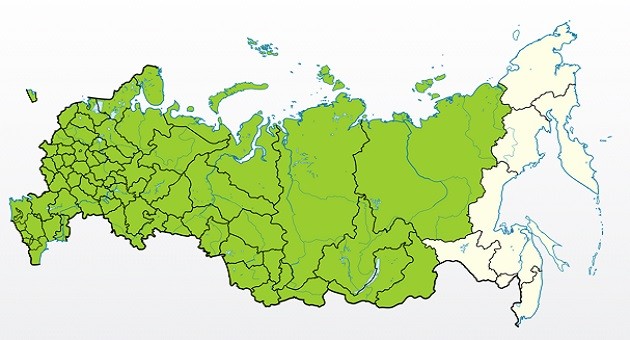
Growing regions
- Crimea.
- Volga-Vyatka region.
- Middle zone.
- Siberia.
- Leningrad region.
- Ural.
- North Caucasus.
- Moscow region.
Origin
Scientists at the Sverdlovsk Horticultural Breeding Station of the Russian Academy of Agricultural Sciences are developing frost-resistant apple trees that are tolerant of variable weather conditions, as well as those with genetic immunity to scab (VM gene). Leonid Andrianovich Kotov, a renowned pomologist, is rightfully considered the creator of the VEM-Souvenir variety.
The apple tree was first submitted for testing in 2001, when it was grafted onto Persianka and Progress seedlings. Since 2003, the seedlings have regularly participated in autumn exhibitions. No applications have yet been submitted for inclusion of the VEM-Souvenir variety in the State Register of Breeding Achievements, nor has it been officially zoned. However, the tree has already spread throughout the European part of Russia, the Urals, Siberia, and even the Far East.
Content
Description of the VEM-souvenir variety
 Immune varieties are highly valued by gardeners in many regions, for example, those with consistently high humidity. This promotes the development of fungi in general and scabies In particular, and very valuable, the new apple tree contains the VM gene, which protects it from four races. The tree itself is compact and undemanding, adapting to virtually any growing conditions and is undemanding regarding soil and care. The apple tree bears fruit regularly and abundantly, without resting.
The VEM-Souvenir variety produces beautiful fruits, both visually and flavorfully. They are attractive, aromatic, and have excellent marketability. The downsides include poor shelf life and small size. This variety is recommended for cultivation in small home gardens and for commercial purposes.
Apples: What do they look like?
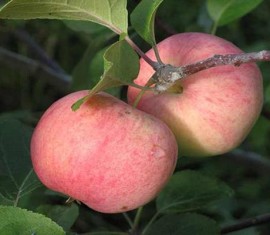
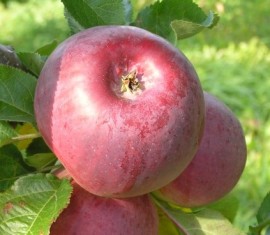
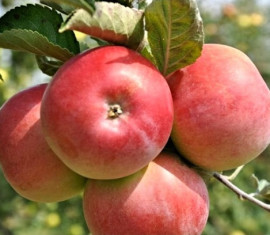
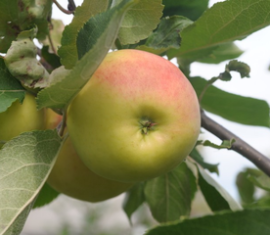
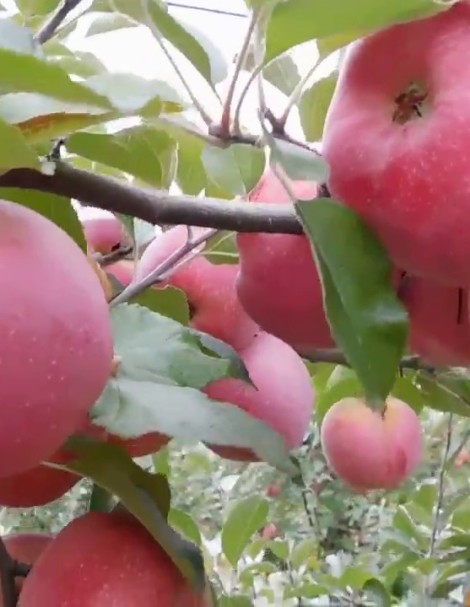
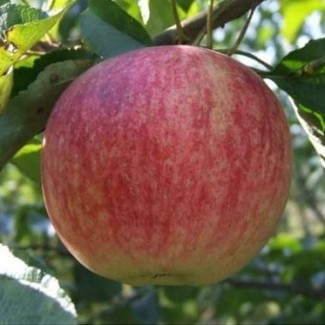
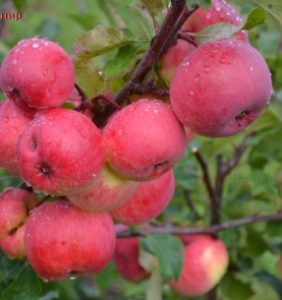 All VEM varieties produce fruits of medium or slightly larger size, and Souvenir is no exception. They can grow to 95-130 grams in weight, occasionally slightly heavier in favorable years. The shape is generally round, sometimes spherical, but more often flattened or flattened-round. The ribbing can be clearly visible or smoothed. The fruits are generally symmetrical, even, uniform in size, and lack a lateral seam.
The skin is dense and elastic, but quite thin and susceptible to mechanical damage. It is smooth, shiny, and even. Its basic hue is light green-yellow, greenish, or light yellow when ripe, and may have a slight bluish-silver waxy coating. The blush appears as streaks, specks, and stripes, as well as diffuse spots, with a crimson-red or slightly pinkish hue. It can cover up to 65-80% of the surface and merge into a solid red color, giving the apples a very picturesque appearance. Subcutaneous punctures are numerous, but due to their darkish, gray-green hue, they are difficult to see. The chemical components are most easily assessed using the following sample data:
- P-active substances (catechins) – 243 milligrams.
- Ascorbic acid (vitamin C) – 20.6 milligrams.
- Total sugars (fructose) – 12.3%.
- Pectins (fiber) – 9.2%.
- Titratable acids – 0.52%.
VEM-souvenir apples have yellowish or creamy flesh, sometimes with a distinct lemon tint. It's fine-grained, very juicy, has a pleasant texture, is crisp and breaks easily, and has a strong spicy aroma and a balanced and harmonious classic sweet and sour flavor. On the official 5-point tasting scale, these apples score approximately 4.5-4.6 points.
Apple tree VEM-souvenir: characteristics
Crown and root system
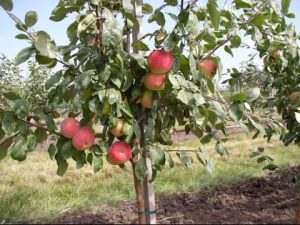 The apple tree is considered to be of medium size, but it can easily be classified as a natural semi-dwarf. The maximum height of the tree is 4-4.5 meters, however, most owners prefer to limit it to 3-3.5 meters with careful pruning. The tree's shape is most often pyramidal or spindle-shaped, but over the years it can become somewhat disheveled and spreading. Branches are medium-thick, oval or round in cross-section, long, straight or slightly curved, covered with green or greenish-brown bark, without pubescence. Fruiting is mixed, meaning on spears, rings, and fruiting shoots, every 2-3 years.
The leaves are medium-sized, oval, slightly elongated, leathery, glossy, and shiny with coarse ribbing. They are light green or deep green, long-pointed, and can form a boat-shaped leaflet. Their margins are doubly serrated and crenate-serrate. The root system is moderately developed, deep, and on most fibrous rootstocks, has numerous small offshoots.
Productivity and pollination
This tree is considered to be a stable and regular fruit-bearer with average results.
One mature VEM-souvenir tree can yield at least 75-95 kilograms of fragrant small fruits per year. Considering the tree's compact size, this yield can be considered quite good..
VEM is completely self-fertile and doesn't require any nearby apple trees with suitable flowering times to produce fruit. However, many experienced gardeners say the yield can be increased by 15-25% if such trees are available nearby.
Winter hardiness and disease resistance
The new variety's frost resistance is truly high. It tolerates temperatures down to -28-32°C without problems, but severer and longer frosts may cause slight bud damage, although the tree recovers quickly. However, in colder regions, proper preparation and timely winter protection are essential.
The variety is immune to four races of scab, so they don't pose a threat to apple trees. Regarding the fifth and final race, scientists have different opinions. However, given that the apple tree is primarily intended for cold northern regions, fungus Prefers a warm and humid climate and is not particularly dangerous. Preventative treatments are used to treat other diseases of various etiologies.
Rootstocks and subspecies
The VEM-souvenir doesn't have its own varieties, at least not yet. It can be grown on various rootstocks, the most popular being semi-dwarf and dwarf varieties. There's no columnar or creeping variety, so when purchasing, such descriptions should immediately alert you, as they're likely a lie.
Features of growing VEM souvenirs
 Landing
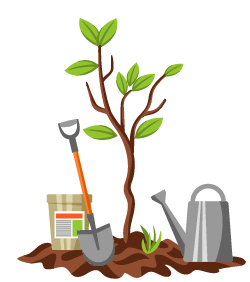 Landing
Basic conditions
- Select sites with good ventilation, as stagnant air can lead to disease. However, you'll also need to ensure there are no drafts, otherwise the trees could die within the first year after planting.
- Ideally, the location where the apple tree souvenir will grow should be sunny for most of the day. Otherwise, the apple tree may refuse to bloom, and you won't get any fruit.
- This variety thrives in airy, permeable, and fertile soils. Loam and sandy loam, fertilized and loosened regularly, are the best options. However, trees can even be planted in rich black soil or rocky slopes, provided they are properly prepared.
- The groundwater level is not very important, since trees do not penetrate the soil with their roots very deeply, but if the groundwater level is higher than 1.8 meters, then it is better to make an artificial embankment and plant the trees in it.
- Planting holes are prepared in advance, approximately 4-7 months in advance, or even longer. However, if there are no other options, they can be dug 2-4 weeks in advance. Dig holes up to 1 meter in diameter and 80-90 centimeters deep. Add minerals or organic matter to the bottom, then a 25-30 centimeter drainage layer, then fill with water (35-50 liters). There is no need to cover the holes for soaking.
- It's a good idea to immediately drive trellises or stakes into the holes for support. Ideally, place them on the north side of the trunk; this will also provide protection from cold winter winds.
- Leave approximately 3-4 meters between trees and 4-5 meters between rows. This will make it easier to harvest fruit and tend to the garden.
- The grafting site of the seedling should be left at least 5-8 centimeters above the soil surface to prevent the roots from growing higher when the soil settles. Otherwise, the rootstock's properties will be lost.
- The drainage material is raked into a pile in the hole, the tree is placed on it, the rhizome is straightened, covered with soil, and compacted. To further retain moisture, the surface is usually mulched with any available material.
Landing dates
Frost-tolerant trees can be planted in either spring or fall. They thrive equally well if timed correctly. In the former case, it should be late March or early April, when the soil has warmed and the risk of frost has passed. In the latter case, it's best to choose a warm, dry day in late September or early October, when frost is still a long way off, but the leaves have already fallen.
Tree care
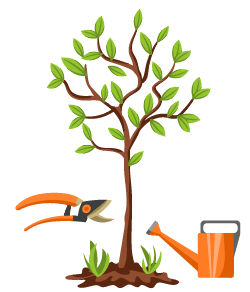 Tree care
Protection from frost and pests
Young seedlings must be wrapped for the winter. It's best to wrap the youngest trees using a tent-like method, such as agrofibre, burlap, tarpaulin, or other similar materials. Older trees can be wrapped in roofing felt or tar paper, and the root zone can be covered with spruce branches, hay mats, or straw bales.
Whitewashing tree trunks with a thick solution of ordinary lime works well to repel insects, but using commercially available products is not only possible, but also necessary. To prevent tree pests like hares and mice from gnawing, you can coat the trunks with a thick layer of rendered animal fat, fuel oil, or grease.
Loosening the soil, watering: proper agricultural technology
The VEM souvenir prefers well-fluffed, moisture- and air-permeable soil. Therefore, it's a good idea to dig around the trunk twice a year. At the same time, clean it out, removing weeds, plant shoots, root suckers, and other debris. During the growing season, you can hoe the soil an additional 5-8 times, especially on the second day after applying water, even with fertilizer. This will prevent the soil from compacting into a tight ball and will always remain loose.
Watering This variety can be watered as needed, as it won't tolerate overly dry soil for long. Simply ensure it's always slightly moist, but not excessively so. Mixing fertilizer with water is also convenient, but don't do this until 3-5 years after planting, as the soil already contains the fertilizer added during the hole preparation.
Pruning: simple crown shaping
The variety doesn't exhibit any particular tendency to overcrowd, so pruning is relatively straightforward. Pruning begins early, in the first year. Only the central basal branch and a few skeletal branches are left. Then, simply maintain their proper branching, removing shoots that protrude upward, grow inward, cross, or run parallel.
In the fall, a thorough cleaning of the apple trees is usually done, with a careful inspection. All broken, dry, and diseased branches should be removed, as these will drain sap unnecessarily. Wounds (cuts) should be sealed. garden pitch or paint.
Pollinator varieties
- Snowy Calville.
- Cinnamon striped.
- Glory to the victors.
- Summer striped.
- Saffron pepin.
- White filling.
- Candy.
- Melba.
Diseases and pests
- Cytosporosis.
- Pit rot.
- Powdery mildew.
- Scale insect.
- Green aphid.
- Hawthorn.
Ripening and fruiting of the VEM souvenir
The beginning of fruiting
 This variety is considered very early-bearing, as the first flowers appear in the first or second year. However, it's best to pluck them completely, as they are likely barren flowers, and the tree will expend a lot of energy and effort on them. The first harvest can be collected as early as the third or fourth year, yielding several kilograms of fragrant, small, yet delicious, and beautiful fruits.
Flowering time
There are no exact dates when the VEM souvenir apple tree begins to bloom. Blooming can occur at different times in different regions, from early to late May. The flowers are large and very beautiful, with a powerful, pleasant, slightly spicy scent. The petals are oval, delicate, fleshy, light pink or snow-white, and densely cover the branches, making the tree very decorative.
Fruiting and growth
The variety reaches its final form extremely quickly, in just a few years, due to its rapid growth rate of 45-60 centimeters per year. Yields also increase quite rapidly, but gradually, increasing each year. Thus, by the age of 8-120 years, a full harvest of fruit can be achieved.
VEM-Souvenir apples ripen early. They're ready for consumption as early as mid-September. However, experts recommend picking the harvest 1-2 weeks before consumer maturity. This way, they'll last longer without losing their flavor. They're usually stored in a special container. refrigerator You can store the fruits until the end of January or the beginning of February, and in the cellar until about the New Year.
Top dressing
- Peat.
- Superphosphate.
- Humus.
- Bor.
- Calcium.
- Manure.
- Compost.
- Ammonium nitrate.
What to do if it doesn't bloom or bear fruit
- Limit or increase watering.
- Eliminate insects.
- Cure diseases.
- Feed.
- Transplant to a sunny place.
Why do apples fall?
- Wind, frost, rain, hail.
- Overripe.
- Pests or diseases.
Leave a review of the VEM-Souvenir apple tree variety so that even a novice gardener can receive useful information firsthand.