Bryansk Aloe apple tree: characteristics of the variety and care
| Color | Reds |
|---|---|
| Ripening season | Autumn |
| Size of apples | Large |
| Taste | Sweet and sour |
| Crown type | Average tree height |
| Shelf life | Average shelf life |
| Application | For recycling , Fresh , Storage |
| Winter hardiness | High winter hardiness |
| Fruiting age | Up to 5 years |
 History of origin and regions of growth
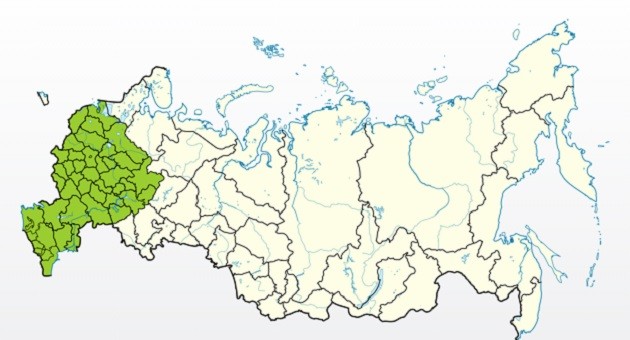
Growing regions
- Crimea.
- Middle zone.
- Leningrad region.
- North Caucasus.
- Moscow region.
Origin
Another clone of the Bryanskoye apple variety, developed by the renowned breeder and contemporary of ours, Alexander Ivanovich Astakhov, in collaboration with Maina Vladimirovna Kanshina. The work was conducted very recently, so all hybrids of this variety are considered new. The varieties used in the breeding were Pobeditel, Antonovka, Delicious Golden, and the hybrid form SR0523.
In 2012, an application was submitted to include the Bryanskoye Aloe subvariety in the State Register of Breeding Achievements. It was accepted in 2015, and the apple tree received official zoning for the Central Region.
Content
Description of the Bryansk aloe variety
 One of the Bryansk group apple varieties gets its name from its beautiful, uniformly colored, large, bright red fruits. The trees differ somewhat from the parent variety, although they have inherited winter hardiness, undemanding soil and care, and tolerance to difficult growing conditions. They are quite compact, rounded, with small, compact crowns, beautiful, and bear fruit regularly, without a break for dormancy.
The fruits are truly unusual, large and beautiful, as if made of plastic. They have a unique flavor with dense pinkish flesh, a strong aroma, and high levels of chemical composition. Variety Bryansk Aloe is intended not only for small home gardens, but also for intensive industrial planting.
Apples: What do they look like?
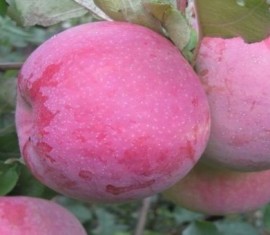
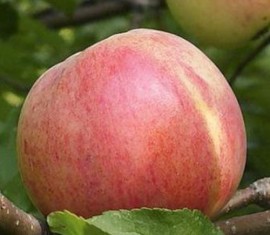
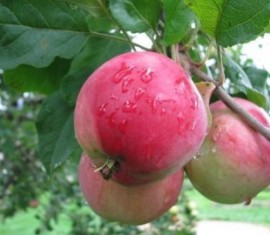
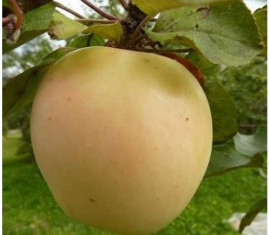
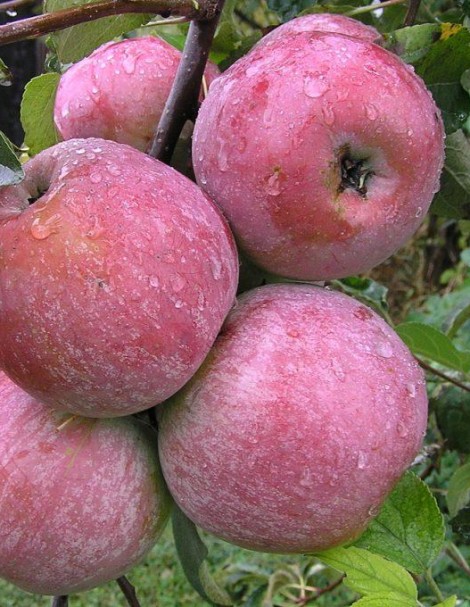
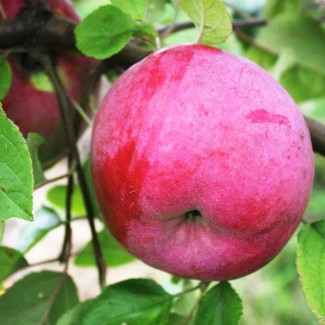
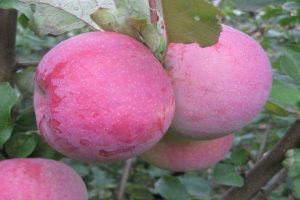 The fruits of the Bryansk Scarlet variety are predominantly large, sometimes even very large. They grow to approximately 150-200 grams, but with proper care and flowering regulation, they can reach as much as 190-300 grams. Their shape is round, sometimes slightly flattened along the central axis, smooth, uniform, and generally symmetrical; the fruits are uniform in size with slight variations. The ribbing is barely noticeable and very smooth.
The fruit's skin is medium-thick, firm, and elastic, but not thick or brittle. It has a green or golden-green base color, almost completely hidden by a bright, rich, and beautiful scarlet blush. When ripe, a dense, bluish-silver waxy coating appears on the apple's surface. Subcutaneous punctures are few and far between; they are small, gray-green, and barely visible on the skin surface. Experts recommend assessing the basic chemical composition of apples based on the following parameters:
- P-active substances (catechins) – 325 milligrams.
- Ascorbic acid (vitamin C) – 10.6 milligrams.
- Total sugars (fructose) – 8.7%.
- Pectins (fiber) – 14.2%.
- Titratable acids – 0.31%.
The dense, crisp, fine-grained, juicy, and prickly flesh has a bright, pleasant flavor and a strong apple-spicy aroma. It's snow-white, but small red veins extend from the skin, giving it a pink or raspberry hue. These fruits receive a 4.7 rating for appearance and flavor on a professional 5-point scale.
Bryansk Aloe apple tree: characteristics
Crown and root system
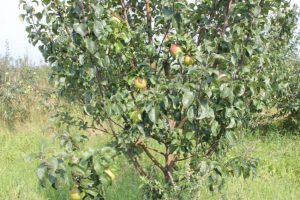 The trees are classified as fast-growing, medium height.They can stretch without shaping to about 4-5.5 meters., sometimes somewhat larger. The crown is brightly rounded, compact, and moderately dense. Branches are medium thick, straight, and rounded in cross-section, extending from the conductor at an obtuse angle, close to a right angle, and are not prone to splitting. They are covered with brown or fulvous-brown bark with medium-intensity pubescence. Aloe bears fruit on simple rings and spurs.
The leaves are numerous, densely arranged, large, elongated, oval-ovate, and moderately rugose. Leaf coloration is green, rich green, or emerald green. They are short and pointed, with a twisted tip. The margins are serrated, crenate, and heavily serrated. The root system is medium-deep, mostly fibrous, but on some rootstocks it may be taproot, with numerous small offshoots.
Productivity and pollination
The variety is considered high-yielding, and quite rightly so, since with proper care it can produce truly significant harvests.
A mature Bryansk Scarlet tree can easily yield approximately 180-220 kilograms of beautiful, aromatic fruit per year. On average, with standard planting density in intensive orchards, the yield is approximately 300-320 centners per hectare..
The variety is self-fertile, like the parent tree. Therefore, external pollinators (apple trees with suitable flowering times) are not necessary to produce apples. However, experienced gardeners note that having such pollinators within 70-120 meters of the tree significantly increases the variety's yield. Additionally, it is common practice to spray the trees with sugar syrup during flowering and to bring mobile apiaries to the plantings in the spring.
Winter hardiness and disease resistance
This variety was specifically bred to withstand the harsh Russian climate, so its frost resistance is exceptional. Even frosts down to -28-35°C, lasting no more than two weeks, cannot damage the trunks. However, if the cold weather persists, not only the buds but also the wood can be damaged, so proper protection is essential.
Trees have genetic immunity to scab, determined by the Vm gene and polygenes inherited from their parents. However, other diseases, especially parasites, can pose a serious threat to trees. Therefore, it's important to devote sufficient time and effort to preventative treatments and sprays.
Rootstocks and subspecies
The variety itself is a subspecies, developed relatively recently. It doesn't yet have any distinct varieties. Bryansk aloe can be grown on a variety of rootstocks. This will impart some unique characteristics to the trees, but will have virtually no effect on the fruit. For example, apple trees grown on dwarf varieties grow more compactly and begin bearing fruit as early as two or three years after planting.
Features of growing Bryansk scarlet
 Landing
 Landing
Basic conditions
- Planting seedlings requires careful site selection. It must meet all requirements. The trunks must have unobstructed sunlight. If you grow aloe in the shade, you'll likely end up with stunted shoots that won't bloom or bear fruit.
- Groundwater depth is crucial for this subvariety. It should be no deeper than 2.2–2.5 meters, otherwise the apple tree's roots will reach it and rot.
- Drafts can seriously damage young trees. However, crown ventilation must remain high. Therefore, the planting site must be chosen very carefully to maintain a balance.
- Most experienced gardeners prefer to prepare the site for garden plantings three to six months in advance. To do this, they dig holes 60-80 centimeters deep and approximately 90-100 centimeters in diameter. The bottom of these holes is filled with fertile soil, additionally mixed with fertilizer, then more soil or a drainage layer, and everything is filled with clean water. There is no need to cover the prepared plants.
- It's customary to leave 4-5 meters between trees in a row, and 5-6 meters between rows. This will significantly simplify both standard maintenance and fruit harvesting in the future.
- Stake stakes, or even better, trellises for tying up the trees, should be dug or driven into the prepared holes immediately. If they are located on the north side of the tree, they will also provide additional protection from frost in the winter.
- Select seedlings very carefully, from reputable or trusted sellers. They should be strong, with a thick trunk and a well-defined root collar, with a minimum of broken or dried out shoots. It's best to prune off any damaged parts, and lightly seal the cut areas with tar.
- Soak apple tree rhizomes in warm water for 4-7 hours before planting.
- Rake the drainage material into a single pile in the center of the hole. Place the tree on it, straightening the rhizome so that the shoots don't bend. Cover with soil, compacting it with your hands or feet, but not too hard. The key is to avoid leaving air pockets or voids near the roots, which can lead to rot. Water the young trees with 45-60 liters of water, and mulch the surface thoroughly.
Landing dates
Bryansk aloe is a versatile variety that thrives equally well when planted in spring or fall. In warmer climates, it doesn't matter when you transplant the apple trees into the garden, but in harsher regions, spring planting is preferable. In the fall, it can be difficult to predict the first frost, and the tree may begin to develop in damp, warm weather, which inevitably leads to its death in winter.
Tree care
 Tree care
Protection from frost and pests
The variety was developed to be frost-resistant, but it still can't withstand low temperatures for long periods. Therefore, it will need to be prepared for winter in a timely and thorough manner. First, you need to... August Reduce the amount of water, and by early September, completely eliminate it. Bundles of hay or straw, dry leaves, spruce branches, and even rake the soil in severe cold weather onto the roots. All this will have to be removed in early spring, so don't overdo it. Small young trees can be covered with a tent-like covering, for example, with agrofibre or even tarpaulin.
Whitewashing apple tree trunks with a thick lime solution isn't just for aesthetics. It also helps repel insects that nest in cracks and broken bark. This is a simple and safe method, but sometimes it's not enough, so regular insecticide spraying is advisable. To prevent rodents from eating the bark during the winter, trunks are often coated with grease or fuel oil, as well as other pungent, unpleasant-smelling substances.
Loosening the soil, watering: proper agricultural technology
Digging around the tree trunk is fine once or twice a year; more than that is not necessary. This should be done carefully, about a third of the way down the spade, to avoid damaging the small roots. In the summer, the soil should be regularly and gently loosened, especially the day after watering. In hot weather, the soil can form a tight lump that is difficult to break up. Dry leaves, weeds, debris, rotting fruit, and other debris should also be promptly removed from under the trunk.
Young seedlings need to be watered frequently and regularly. It's best if the soil around the roots never dries out completely. Therefore, it's a good idea to follow the 10-day rule. This means that if there's no precipitation, water once every ten days, and if it does rain, count the same ten days from that date. Fertilizer and other nutrients are usually added along with the water, but not until three to four years after planting.
Pruning: simple crown shaping
Formative pruning is carried out regularly, starting in the first year after planting. The tree is flexible, so it will adapt to almost any shape. However, tiered and open-tiered varieties typically produce larger fruits. In early spring, branches that thicken the tree, protrude upward, cross, or run parallel are pruned.
Sanitary pruning is most often left until late autumn, after the leaves have fallen. Then, all dry, broken, or diseased branches are removed. All cut areas must be treated to reduce stress on the tree.
Reproduction
- Cuttings.
- Budding.
- Cloning.
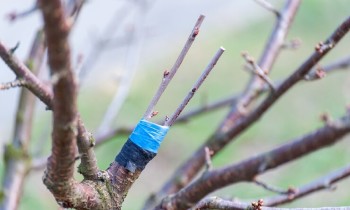
- Kidney grafting.
Pollinator varieties
- Idared.
- Antonovka ordinary.
- Elstar.
- Delicious golden.
- Gala.
- Gloucester.
- Golden Vladimir.
Diseases and pests
- Bacterial burn.
- Cytosporosis.
- Powdery mildew.
- Rust.
- Apple moth.
- Scale insect.
- Glass-box.
- Hawthorn.
Ripening and fruiting of Bryansk scarlet
The beginning of fruiting
 The beginning of fruiting
This variety is very fast-growing and early-bearing. Therefore, even on tall rootstocks, it begins bearing fruit as early as 3-4 years after planting. Dwarf varieties can begin producing apples as early as 1-2 years, but it's best to pluck the first blossoms at this point to allow the tree to develop roots and foliage. The first harvests aren't particularly abundant, yielding only a few dozen fruits, but the situation soon improves.
Flowering time
The Bryanskoye Aloe apple tree can bloom at completely different times in different locations. Climate and weather conditions also influence bloom times. In most cases, the trees are well-suited for many late-fall and winter varieties, so finding pollinators shouldn't be a problem. Around the second half or towards the end of the month, large, pink buds open into very delicate, large, and fragrant, almost snow-white flowers. This process lasts at least 12-16 days.
Fruiting and growth
Like all Bryansky subspecies, trees of this variety grow quite quickly. Within a year, they can easily exceed 55-70 centimeters in height before fruiting begins. Once the apples begin to ripen, this growth rate may slow by no more than a third. Therefore, by the 8th or 9th year, they reach the height they will have for the rest of their active life. Even then, a full harvest can be harvested.
As early as mid-September, but more often by the end of the month or even by early October, apples become ready for consumption. Technical and consumer ripeness occur simultaneously. They cling tightly to the branches, so they only fall after frost. They can be transported in boxes, no more than 2-3 layers deep, sprinkled with sawdust or sand. They can be stored in a cellar until approximately the end of December, and in a special refrigerator, sometimes even until the end of February. Later, the apples become soft and crumbly, losing their rich flavor and juiciness.
Top dressing
- Eggshell.
- Humus.
- Bor.
- Manure.
- Compost.
- Superphosphate.
- Copper.
- Mineral and nitrogenous complexes.
- Ammonium nitrate.
What to do if it doesn't bloom or bear fruit
- Wrap up for the winter.
- Limit or activate watering.
- Eliminate insect infestation.
- Cure diseases.
Why do apples fall?
- Strong wind, hail, rain.
- Pests or diseases.
- Freezing.
Share your own experience with the Bryanskoye Aloe apple tree variety so that even novice gardeners have no questions about cultivating these trees.