Braeburn apple tree: characteristics of the variety and care
| Color | Reds |
|---|---|
| Ripening season | Autumn |
| Size of apples | Large |
| Taste | Sweet and sour |
| Crown type | Average tree height |
| Shelf life | High shelf life |
| Application | Universal variety |
| Winter hardiness | Average winter hardiness |
| Fruiting age | Up to 5 years |
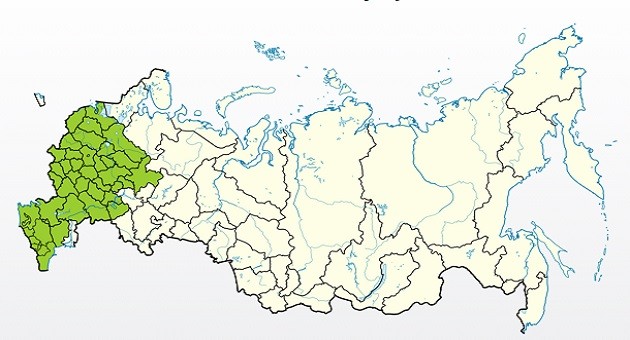 History of origin and regions of growth
Growing regions
- European part of Russia.
- Moscow and Moscow region.
- North Caucasus.
- Leningrad region.
- Crimea.
- Southern regions.
Origin
No other New Zealand apple has achieved such global popularity as the Braeburn apple variety. It is believed to have been developed through open pollination of the previously known Lady Hamilton variety. It was bred back in 1952, and then arrived in the UK and the United States in the mid-1960s. The apple tree then traveled to Europe for several more years, and only arrived in the Soviet Union in the early 1980s.
Content
Description of the Braeburn variety
 This variety has become popular with gardeners worldwide not only for its beautiful fruit appearance and flavor. It is also loved for its early maturity, high yields, long shelf life without losing quality, excellent transportability, and long fruiting season. Braeburn is recommended for growing in intensive commercial farms as well as in small home gardens.
Apples: What do they look like?
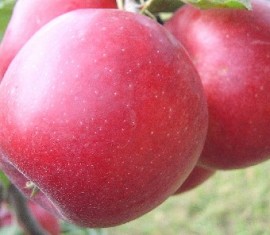
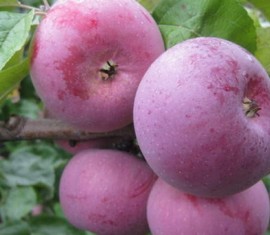
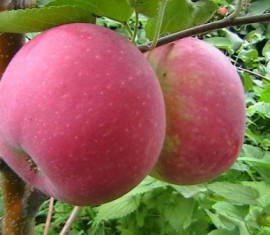
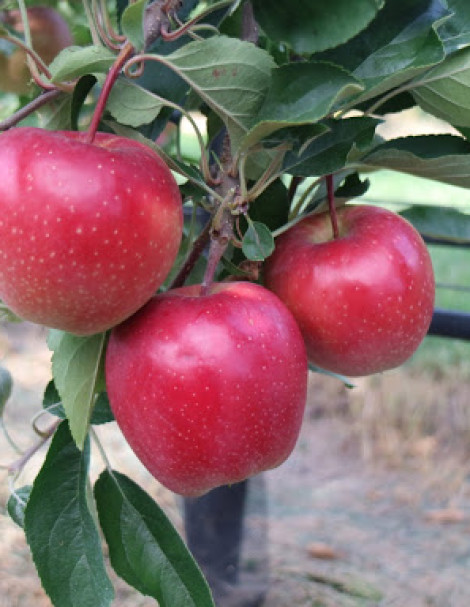
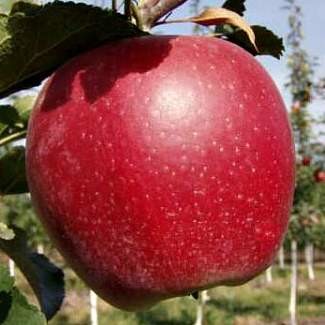
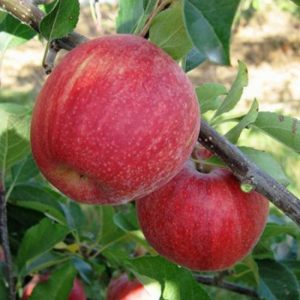 The fruits are classified as large to very large. They grow to approximately 250-280 grams in weight, and can sometimes reach 290-350 grams. They are generally irregular in size, round or round-conical, slightly elongated, and sometimes distinctly cylindrical. The ribbing is clearly visible near the calyx and smoothed out throughout the rest of the fruit; there is no lateral suture.
The skin is firm but of medium thickness, elastic, and even slightly hard and brittle. It has a greenish or greenish-yellow hue, fading to whitish. The blush is red, dark red, sometimes pinkish or raspberry-red, and may develop a dense waxy coating during ripening. This coating is dense, spotted, and mottled, typically covering more than 85-90% of the surface. Subcutaneous dots are light, small, few in number, evenly spaced, and clearly visible. Professionals recommend assessing the chemical composition based on the following parameters:
- Sugar (fructose) – 11.7-12.9%.
- Ascorbic acid (vitamin C) – 16.8 grams.
- Pectins (fiber) – 11.2-13.6%.
- P-active substances – 236-242 milligrams.
- Titratable acids – 0.34%.
The flesh is firm, has a very pleasant texture, is crisp, breaks away easily, is finely grained, and is very juicy. It has a slightly creamy or lemony hue, and a sweet and sour taste with a distinct sweet-wine undertone. It is considered a dessert-like, harmonious, and balanced fruit. A tasting score of 5 out of 5 points speaks for itself.
Braeburn apple tree: characteristics
Crown and root system
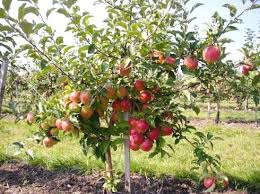 This is a medium-sized tree, reaching a height of 4-6 meters without formative pruning.The crown is loosely dense, rounded or rounded-oval, and over the years can become broadly oval or even drooping and spreading. Branches are of medium thickness and length, extending from the trunk at right angles, covered with smooth bark of brown or brownish-green color, and bear fruit in mixed colors.
Apple tree leaves are medium-sized to large, covering branches incompletely, leaving bare patches. They are elongated, lanceolate, green, rich green, or dark green, short-pointed, leathery, dense, and glossy. The undersides may be slightly pubescent, more felt-like than velvety. The root system is robust and branched, often fibrous, but may also be taproot, depending on the rootstock. It is well adapted to the search for water and nutrients.
Productivity and pollination
The tree is considered a high-yielding, early-bearing variety, although its performance is far from the standard Antonovka.
One Braeburn variety can yield approximately 90-130 kilograms of aromatic and delicious fruit per season. With proper care, timely watering, fertilizing, and proper agricultural practices, the yield can be increased by a third, and sometimes even doubled..
The variety is diploid, meaning it's essentially self-fertile, making it a good pollinator for suitable apple trees. However, experienced gardeners believe that the presence of external pollinators increases tree fertility by at least 45-55%. It's a good idea to use mobile apiaries during flowering and spray the trees with honey and/or sugar syrup.
Winter hardiness and disease resistance
The New Zealand apple tree couldn't possibly have become particularly susceptible to frost, as winters in its native land are quite harsh and, most importantly, variable. Braeburn easily tolerates periods of freezing temperatures alternating with thaws several times within a week, and frosts as low as -20-25°C are practically unaffected. However, apple trees still need to be protected for the winter, as stress can lead to a decrease in yield, if not the death of the trees.
The variety is quite resistant to scab, cytosporosis, fire blight, and powdery mildew, although it has no genetic immunity. It can be attacked by mites and other insects native to our region. This requires regular and timely preventative spraying with insecticides and fungicides.
Rootstocks and subspecies
It has no subspecies, but can be grown on various rootstocks. It grows best on semi-dwarf and dwarf varieties, as these produce larger fruits that ripen earlier. However, Braeburn also performs well on other varieties. There are no columnar or creeping subspecies.
Features of growing Braeburn
 Landing
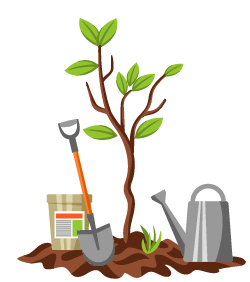 Landing
Basic conditions
- It's best to plant an apple tree in an open area, well-lit by sunlight for most of the growing season. While it thrives in full sun, in the shade it often becomes susceptible to disease, becoming very weak and spindly, and often failing to produce buds, bloom, and, consequently, fruit.
- The location should be well-ventilated, but free of drafts. Strong winds often cause tree death in the first year after planting.
- Groundwater should not be closer than 2.2-2.24 meters to the surface, otherwise the tree will inevitably reach there with its roots and begin to rot.
- There are no special soil requirements. Braeburn grows well in sand, rocky mixtures, loam, and sandy loam. Rich and heavy chernozems are best "diluted" with washed river sand and a third of clay.
- You need to dig holes for the tree 6-9 months before planting, but if they are done 4-6 weeks before, you can also count on success.
- They dig holes 70-80 centimeters deep and 80-95 centimeters in diameter, put fertilizer on the bottom, and fill the drainage with water (35-45 liters).
- Leave at least 4.5-5 meters between trees to ensure they have ample space when mature, and 5-5.5 meters between rows. This arrangement will greatly simplify tree care and harvesting.
- It is worth driving stakes into the holes immediately for tying, but they can be removed no earlier than 3-4 years after the start of fruiting.
- Always root collar remains above the soil surface during planting, or all the qualities of the rootstock will be completely lost.
- Place the seedling on a pile of soil or drainage layer, spread the rhizome, cover with soil, and compact it thoroughly. Create a 10-12 cm mound of earth around the edge of the hole, and pour water (35-40 liters) inside. The surface mulch.
Landing dates
Braeburn is considered winter-hardy, so it can be planted either in the spring, once the soil has warmed up completely, or in the fall, after all the leaves have fallen. However, spring planting is more suitable for the tree and has a better survival rate. If you purchased seedlings in the fall, you can plant them at a 45° angle, cover them, and wait until spring, then transplant them to their permanent location.
Tree care
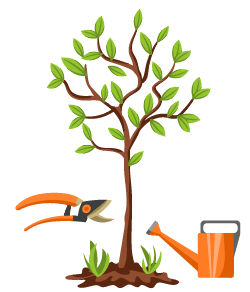 Tree care
Protection from frost and pests
You won't need to take any special frost protection measures with the Braeburn; it can handle fairly low temperatures on its own. However, to clear your conscience and properly prepare for winter, watering should be reduced from August onward and stopped entirely in September. The trunks can be wrapped in burlap, roofing felt, old tights, or agrofibre, and the roots can be covered with spruce branches, straw bales, or dry grass.
To repel insects, trees are sprayed with insecticides and the trunks are whitewashed with lime twice a year. Grease, lard, fuel oil, and other pungent and unpleasant-smelling substances are effective against hungry rodents.
Loosening the soil, watering: proper agricultural technology
You can dig around the tree several times a year, for example, in early spring and late fall. This should be done carefully to avoid damaging the rhizome. Hoeing the soil around the tree is also acceptable more frequently—6-9 times per season, as needed, removing weeds and root suckers. The most advanced practitioners take a more sophisticated approach: sow lawn or herbaceous grasses around the tree and lay sod around the trunk. This will ensure natural aeration and prevent the soil from compacting into a solid lump.
Watering Young trees need watering fairly frequently, up to 1-2 times a week in dry and hot weather. Later, the frequency can be reduced to 2-3 times a month. It's common to feed and fertilize apple trees immediately with water. In early spring, mineral fertilizers are applied to the roots, and in the fall, they are dug in with manure.
Pruning: simple crown shaping
The Braeburn tree's crown is sparse and often comes from the nursery already formed into a single central conductor and 2-4 skeletal branches. If growing the tree from seed, it's also good to stick to this pattern, with branches spaced far apart and shorter than the main trunk. All that's left to do is trim them later. spinning tops, upward-growing shoots, as well as inward-protruding shoots, and remove dry, damaged, and diseased ones. Rejuvenation can be carried out as early as 15-18 years, removing 2-3 mature shoots at a time to allow new ones to develop.
Reproduction
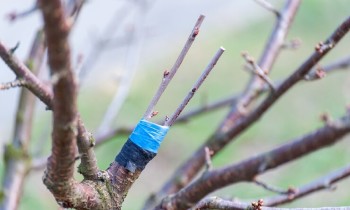
- Grafting.
- Rooting.
- Layers.
- Growing from seeds.
Diseases and pests
- Powdery mildew.
- Scab.
- Green aphid.
- Fruit rot.
- Bacterial burn.
- Scale insect.
- Codling moth.
- Leaf roller.
- Hawthorn.
Ripening and fruiting of Braeburn
The beginning of fruiting
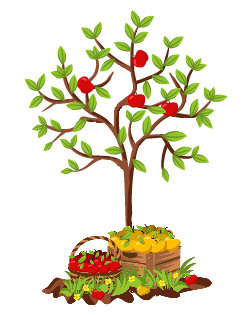 The beginning of fruiting
This is a fast-growing tree, and you can start enjoying the fruit as early as 2-3 years after planting. While the 4-6 kilogram yields are hardly considered full-fledged, they're certainly enough to give you a taste of these unique apples. However, many gardeners recommend picking the blossoms and harvesting the fruit only in the 4-5 year, when they'll already weigh approximately 10-13 kilograms. The decision is yours.
Flowering time
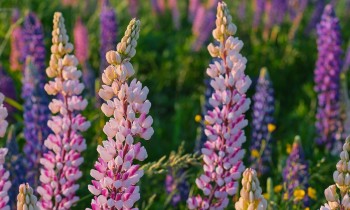
Braeburn blooms on average, around mid-May. However, depending on the weather, climate, and general regional conditions, it may bloom slightly earlier or later. The flowers are large, pink, delicate, and very beautiful, with a powerful fragrance, gathered in small clusters of 7-9.
Fruiting and growth
Before fruiting, the tree grows very quickly, gaining 50-70 centimeters in height per season. However, once the apples begin to ripen, the growth rate slows, reaching only 25-45 centimeters. Therefore, the yield increases gradually, not very quickly. Only after 10-12 years does fruitfulness reach its full potential, and the maximum number of apples can be obtained closer to 14-15 years.
The fruit ripens in mid- to late September, reaching its technical maturity. They can fall to the ground if left unripe for too long, so it's best to pick and store them early, rather than waiting for this. Consumer maturity doesn't occur at this time; you'll have to wait until around early February. However, this is well worth it, as the apples will keep their quality and properties intact until the next harvest.
Top dressing
- Mineral complexes.
- Peat.
- Superphosphate.
- Compost.
- Manure.
- Chicken manure.
- Humus.
- Ammonium nitrate.
- Humus.
What to do if it doesn't bloom or bear fruit
- Inspect for diseases or pests.
- Organize timely regular watering.
- Fertilize.
- Transplant to a more suitable location.
Why do apples fall?
- Natural weather disturbances.
- Pest damage.
- Various diseases.
Share your own experience with the Braeburn apple variety so everyone can get to know it and get maximum yields with minimal effort.