Elstar apple tree: characteristics of the variety and care
| Color | Reds |
|---|---|
| Ripening season | Winter |
| Size of apples | Average |
| Taste | Sweet and sour |
| Crown type | Average tree height |
| Shelf life | Average shelf life |
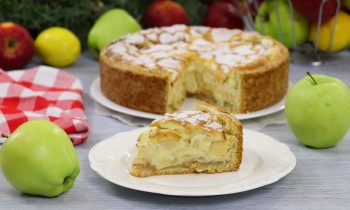
| Application | Fresh , For recycling |
| Winter hardiness | Average winter hardiness |
| Fruiting age | Up to 5 years |
 History of origin and regions of growth
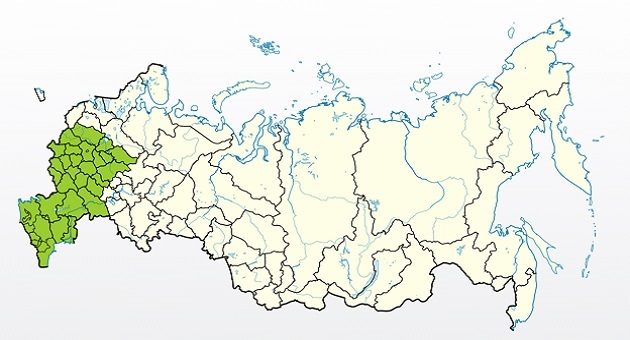
Growing regions
- Central Black Earth Region.
- Middle zone.
- Moscow region.
- North Caucasus.
- Crimea.
- Volga region.
Origin
It is believed that the apple tree was first developed in the mid-twentieth century, more precisely in 1954-1955, in the Netherlands. It was created by crossing the Ingrid Maria and Delicious Golden varieties. However, the first official records of this variety appeared only in 1972.
In our country, the Elstar apple tree was officially included in the State Register only in 2020. The application for inclusion was submitted by Sad-Gigant JSC, located in the village of Sovkhozny in the Slavyansky District of Krasnodar Krai. The apple tree was zoned for the North Caucasus region, although it can be grown in somewhat harsher conditions.
Description of the Elstar variety
 This medium-sized tree with a compact, rounded crown is well known to advanced gardeners in our country. It has been cultivated in gardens for two or three decades, after it was brought to us from Norway for an exhibition. Elstar is a fairly early fruiting tree, regularly produces abundant and generous harvests, is environmentally friendly, undemanding of soil quality, and requires little maintenance. Its major drawbacks include reduced winter hardiness and susceptibility to fungal infections.
The fruit on the tree is beautiful, rosy-sided, very attractive, and of high commercial and consumer quality. They are aromatic and delicious, transport easily, and store quite well in the cellar or refrigeratorRecommended for cultivation in intensive gardens and individual household plots.
Apples: What do they look like?
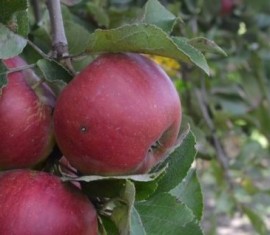
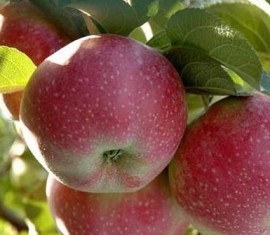
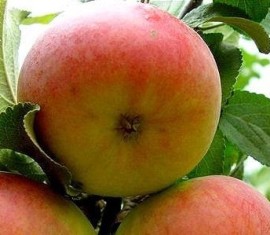
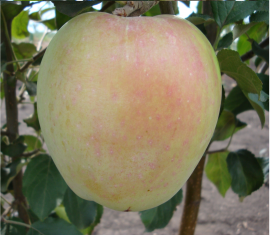
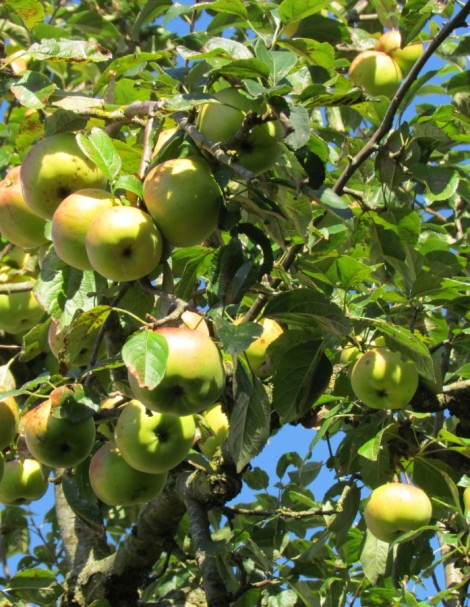
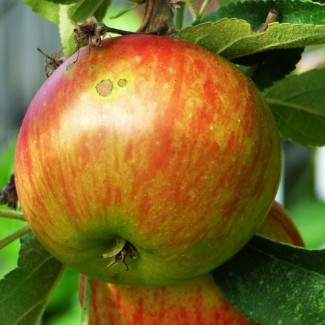
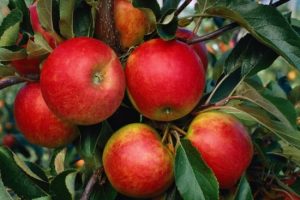 The fruits are medium-sized, reaching a maximum weight of approximately 140-180 grams, but only with proper and timely care. They are round or round-flattened, and can be symmetrical, spherical, or slightly slanted, uniform in size, sometimes even turnip-shaped. The ribbing is very smooth, almost imperceptible.
The skin is firm but not thick, elastic, durable, and offers good protection from mechanical damage. It is smooth, highly shiny, and dry. By the time it ripens, it may become covered with a waxy bloom of a bluish or silvery-gray hue. The base color is initially greenish-yellow, becoming yellow or golden as it ripens, and the apples can sometimes become plump, almost translucent. The blush is mottled and diffuse, with a speckled, streaky appearance, ranging from bright red to brownish or reddish-brown. Subcutaneous dots are small, grayish-green, and almost invisible on the variegated surface. Experts recommend assessing the chemical composition by examining the following data:
- P-active substances (catechins) – 249 milligrams.
- Ascorbic acid (vitamin C) – 10.6 milligrams.
- Fructose (total sugars) – 11.9%.
- Pectins – 16.2%.
- Titratable acids – 0.55%.
The apples have medium-density flesh, very crisp and prickly, yet tender, very juicy, and a pleasant texture. It is fine-grained and has a fresh, fairly strong aroma. The flavor is sweet and sour, leaning toward sweetness but with a distinct tartness. According to the State Register, the tasting score from professionals is exactly 5 out of 5 possible points.
Elstar apple tree: characteristics
Crown and root system
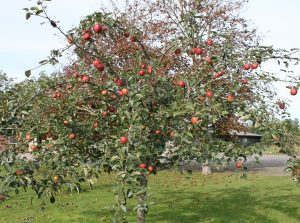
A medium-sized tree, rarely reaching 4.5-5.5 meters in height, sometimes reaching somewhat higher without formative pruning. The crown is initially oval, becoming more rounded with age, and then broadly oval, spreading, even drooping and weeping. The shoots are straight, thin to medium-thick, and directed upward, covered with smooth, pubescent bark of a brown or tan hue. Fruiting is concentrated on the ring shoots.
The leaves are medium to larger than average in size, and can be large. They are wrinkled, even corrugated, with a matte, felt-like surface, rounded, and long-pointed, with a tip that can curl like a propeller. The edges are serrate-crenate, serrated, and the backside is tomentose, with delicate nervation. The root system is extensive, vigorous, but superficial, shallow, and fibrous. It is less adapted to water-seeking than average.
Productivity and pollination
Elstar is considered a fruitful apple tree, although it will never be able to compare with the standard Antonovka.
In favorable years, thrifty gardeners harvest approximately 80-110 kilograms of high-quality, aromatic fruit from a single mature tree in its prime. However, in most cases, fruit yields do not exceed 480 centners per hectare at standard planting density..
The tree is relatively self-sterile; to produce good yields, it requires pollination with other varieties that bloom at the same time. However, up to 18-24% of the maximum yield will be produced even without pollination. The most advanced gardeners use mobile apiaries in the spring and spray the apple trees with syrup.
Winter hardiness and disease resistance
In temperate climates, this variety has a difficult time surviving. Gardeners will need to carefully prepare and cover it for the winter. If temperatures drop below -20-23°C for even a couple of days, the apple trees can suffer serious damage and even die. Therefore, they are better suited to warm and temperate regions, and grow well in Crimea and the Caucasus.
Elstars are clearly predisposed to fungal infections. At the slightest threat, if preventative measures aren't taken in time, they become infected. powdery mildew, scab, and other similar "charms." They are prone to disease, affecting leaves and fruit in a cascade, making them unsuitable for both fresh consumption and processing. Other apple diseases and parasitic attacks should also be avoided. This "delicacy" leads many gardeners to abandon cultivation of this variety.
Rootstocks and subspecies
Subspecies of this variety are not grown or sold anywhere in our country. There are no columnar or dwarf Elstar varieties. If you are offered something similar, it's best to refuse, as it's a deliberate scam. However, the variety can be grown on various rootstocks, imparting some unique characteristics that don't affect the quality or taste of the fruit.
Features of growing Elstar
 Landing
 Landing
Basic conditions
- Apple trees thrive in open, sunny spaces. They cannot grow in the shade; they become weak, spindly, and may stretch upward without developing lateral scaffold shoots.
- Elstar shouldn't be planted in a drafty area; the delicate and weak plant won't tolerate it. It won't thrive in areas where the air stagnates, such as sunken lowlands, and the risk of developing various diseases skyrockets.
- Groundwater level doesn't play a significant role, as the rhizome is shallow and unable to penetrate deep. As long as the water doesn't come closer than 1-1.5 meters to the surface, everything is fine. However, planting seedlings directly near lakes, rivers, streams, shallow wells, ponds, or canals is still undesirable, as this will prevent them from dying.
- Prepare planting holes at least 2-3 weeks in advance. Dig holes 60-70 centimeters deep and the same diameter, add fertilizer to the bottom, then drainage, and fill with 25-30 liters of water. Leave the holes uncovered.
- You can leave 3-4 meters between trees, and a little more between rows, to make it easier to pick apples.
- The grafting site (root collar) must always remain above ground level, otherwise the roots may grow higher, completely negating the rootstock's properties.
- It's common to drive stakes directly into the holes for tying. Orienting them north of the tree trunk not only provides support but also additional protection from frost and cold winds in winter.
- The drainage material is piled in the center of the hole, the seedling is placed on it, and the roots are spread out. It is then covered with soil, ensuring there are no voids that could lead to rhizome rot. The soil is compacted, watered, and the surface is mulched.
Landing dates
For the delicate Elstar, spring planting is the best option. Choose a time when the soil has warmed, the threat of frost has passed, but the sap has not yet begun to flow in the trunks. If the weather in your region is mild and predictable, you can plant the apple tree in the fall. Allow at least 4-5 weeks before the first frost to prevent the fragile young trees from dying.
Tree care
 Tree care
Protection from frost and pests
Even in mild conditions, with warm winters, special attention should be paid to covering apple trees for the winter. Small, young trees are best covered with a tent-like covering, while other trees should have their trunks wrapped in burlap, roofing felt, roofing felt, or bales of straw. A 15-25 centimeter layer of soil can be piled on top of the roots, along with spruce branches, straw, and well-dried leaves.
Trees are whitewashed with lime to repel insects that like to nest in cracks and broken bark. It's a good idea to clean the trunks with a stiff brush beforehand. Greasing the ghee with lard, fuel oil, or grease is effective against rodents. Commercially available products can also be used.
Loosening the soil, watering: proper agricultural technology
Dig around the trunk infrequently, only twice a year. This must be done with extreme caution, as the roots are close to the surface. Damaging them will cause severe stress to the tree. In between, lightly hoe the soil, especially after watering and after the moisture has dried out. Otherwise, the soil may compact into a tight ball and block oxygen from reaching the rhizome.
Elstar can be watered moderately, but it's best to avoid watering completely even when rainfall is fairly regular. The soil should be irrigated at least once every 10-12 days. This means that if rain doesn't fall at the scheduled time, the trees need to be watered. Various fertilizers and fertilizers are also added to the water and applied around the perimeter of the tree's crown for best absorption.
Pruning: simple crown shaping
This variety is easy to shape into any type of crown. Broom-shaped, cup-shaped, or sparsely tiered crowns are most suitable. The key is to keep the branches spaced sparsely and at varying heights. The standard tree lends itself well to pruning; however, it's important not to cut more than a third of the foliage at a time.
Sanitary pruning involves removing all broken, diseased, or damaged branches. Also removed are those growing inward, crowding the crown, or those sticking up vertically. These are useless; they usually don't produce fruit, but they do create unnecessary density. It's best to seal all cut areas immediately. garden pitch or even ordinary soil.
Reproduction
- Growing from seeds.
- Budding.
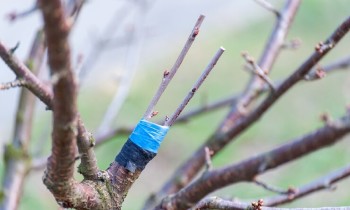
- Kidney grafting.
- Clones.
- Grafting by cuttings.
Pollinator varieties
- Antonovka.
- Logo.
- Gloucester.
- Idared.
- Delicious golden.
- Gold Crimea.
- James Grieve.
Diseases and pests
- Powdery mildew.
- Bacterial burn.
- Scab.
- Moniliosis.
- Cyosporosis.
- Black crayfish.
- Hawthorn.
- Aphid.
- Scale insect.
- Leaf roller.
Ripening and fruiting of Elstar
The beginning of fruiting
 The beginning of fruiting
The first flowers on young seedlings can be seen as early as one or two years old, and they can even bloom in a nursery. However, in most cases, these are barren flowers that are unlikely to develop into ovaries. Therefore, it's best to pick them immediately and wait until they're three or four years old before harvesting the first crop. It will only weigh 3-6 kilograms, but it's enough to give you an idea of the variety's characteristics.
Flowering time
The Elstar variety typically blooms mid-May or towards the end of the month. By late April, it begins to produce buds that appear dark red, burgundy, or even beetroot-colored. These blossom into large, fragrant, white-pink or soft pink flowers that densely cover the branches, making the tree very attractive.
Fruiting and growth
The apple tree grows at a moderate rate, adding only 25-40 centimeters per year. During the period before fruiting, it stretches more, then the rate slows down, but not significantly. Elstar prefers to increase its fruit production gradually, increasing the number of apples in small increments. By the age of 6-8, the tree can produce approximately 20-35 kilograms of aromatic fruit, but a full harvest will have to wait until the 13th to 15th year.
The fruit reaches technical maturity around the end of September, when it's customary to pick them from the branches and store them. This period can sometimes be delayed, so if harvesting is postponed until early or even mid-October, nothing serious will happen. Consumer maturity occurs approximately a month after cellaring, around mid-November, when the sugars in the fruit caramelize. Elstar transports well and stores for approximately 3-4 months, after which it becomes limp and crumbly, may taste bitter, lose its juiciness, and rot.
What to do if it doesn't bloom or bear fruit
- Transplant into the sun.
- Protect from drafts.
- Limit or activate watering.
- Eliminate pests.
- To stop diseases.
Why do apples fall?
- Weather phenomena.
- Early frosts.
- Pests or diseases.
Top dressing
- Manure.
- Compost.
- Humus.
- Superphosphate.
- Chicken manure.
- Mineral and nitrogenous complexes.
- Ammonium nitrate.
Share your own experience with the Elstar apple tree variety, so even novice gardeners have no questions about cultivating these trees.