Honey Crisp apple tree: characteristics of the variety and care
| Color | Reds |
|---|---|
| Ripening season | Autumn |
| Size of apples | Large |
| Taste | Sweet and sour , Sweet |
| Crown type | Average tree height |
| Shelf life | High shelf life |
| Application | Universal variety |
| Winter hardiness | Average winter hardiness |
| Fruiting age | Up to 5 years |
 History of origin and regions of growth
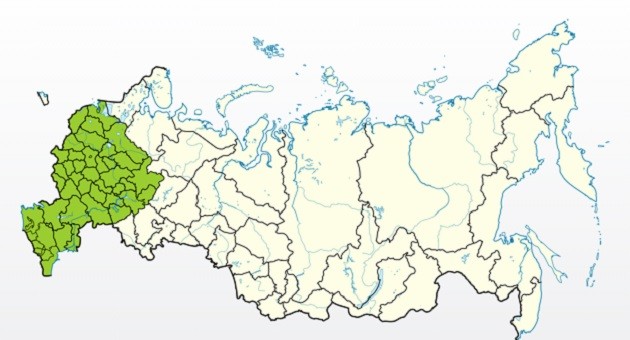
Growing regions
- Central region.
- North Caucasus.
- South-Eastern region.
- North-West region.
History of origin
Honey Crisp is an American-bred variety, developed in Minnesota in 1974. Two earlier varieties, Macoun and Honey Gold, were used in the selection. Thanks to its outstanding flavor and excellent shelf life, the variety immediately caught the attention of prudent American gardeners and consumers, quickly spreading throughout the country.
The name of the variety comes from two English words: honey, which literally means “honey,” and crisp, which translates as “crispy.”
In the late 1980s, the seedlings completed all experimental testing and were distributed worldwide. They first arrived in Western Europe, and then, by the late 1990s, the variety could be found in the collections of the most ardent gardeners in the CIS. In 2003, official testing began in Ukraine. Today, seedlings are available in many nurseries in Russia.
Content
Description of the Honey Crisp apple variety
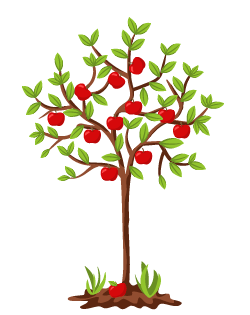 Late-season winter apples with a pleasant sweet flavor, strong aroma, and record-breaking shelf life are sure to please gardeners across Russia. The crisp flesh has become the variety's signature feature, but not everyone is yet willing to grow Honey Crisp in their own garden. However, this is a relatively easy-to-grow tree that requires little care and no special attention.
Apples: What they look like
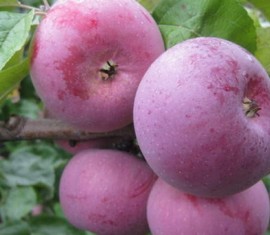
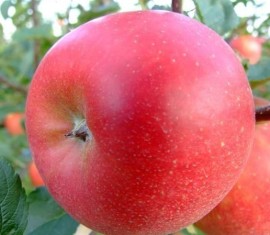
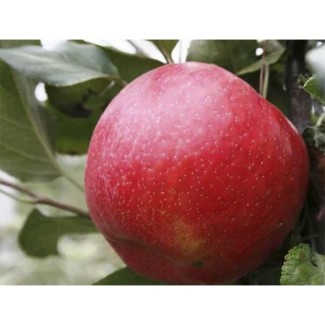
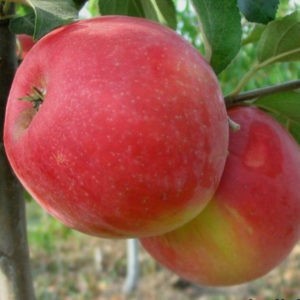 The fruits are predominantly large or even larger, easily reaching 180-240 grams. They are round, slightly elongated, equal-sided, and can be slightly flattened.
The skin is smooth, glossy, and shiny, fairly dense but not hard. When young, it can have a green tint, becoming honey-yellow and even golden as it ripens. A spotted, diffuse, bright red or brick-red blush also develops across the entire surface of the fruit. The chemical composition is characterized by the following set of indicators:
- P-active substances (catechins) – 198 milligrams.
- Ascorbic acid (vitamin C) – 11.2 milligrams.
- Total sugars (fructose) – 11%.
- Pectins (fiber) – 13.2%
- Titratable acids – 0.98%.
The flesh is predominantly light cream in color, but can have a yellowish tint. It is very crisp and brittle, easily breaking or chipping when bitten. The flavor is considered dessert-like, sweet, harmonious, and balanced, with a subtle apple tartness. The tasting score is 4.8 out of 5.
Honey Crisp apple tree: characteristics
Crown and root system
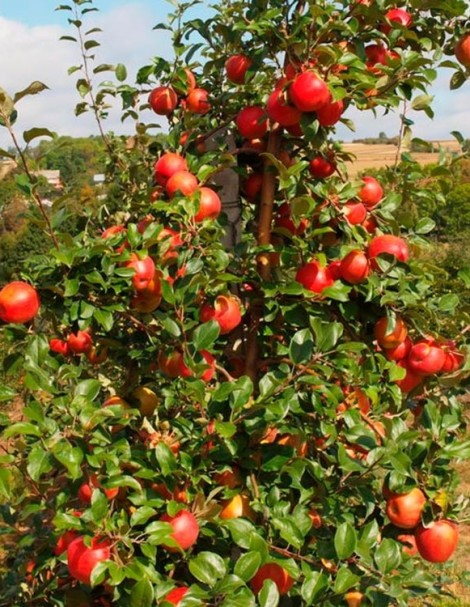
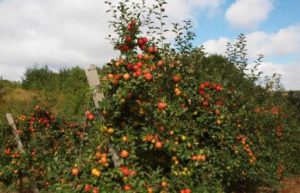 The variety is medium-sized, so it definitely won’t grow too tall, even without timely pruning. The maximum height of the tree is 4-4.5 meters. Cultivation on dwarf and semi-dwarf rootstocks is acceptable; these apple trees only reach 2.5-3 meters, significantly simplifying not only their care but also harvesting. The shoots are thin, long, and typically grow at an acute angle to the trunk.
Crown In its first years, the tree is spindle-shaped or pyramidal, prone to excessive crowding. For 5-7 years, the tree rapidly gains height, after which it begins to develop foliage. The bark is greenish-brown, like most apple trees, but may turn slightly brown and crack over time. The leaves are rounded, dark green, large, and smooth, but matte rather than glossy. They have a moderately serrated margin and a blunt tip. The rhizome is branched and superficial, with or without a central taproot, depending on the rootstock.
Productivity and pollination
Honey Chris's yield is average, even compared to other winter apple trees.
In the first few years, the yield is quite meager, but later, you can harvest up to 30-45 kilograms of aromatic and delicious fruit. The full harvest can only be collected in the 8th to 10th year, but by then, you'll have time to enjoy these unusual fruits repeatedly.
This apple tree is self-sterile, meaning you won't get any fruit if there are no other varieties within 50-150 meters. Experts recommend simply planting it in rotation with other varieties, ensuring there are suitable varieties for cross-pollination. Self-pollination may result in no more than 2-5% of fruit set. Artificial pollination is also a common practice.
Winter hardiness and disease resistance
This tree is considered highly resistant to low temperatures. It easily tolerates temperatures below -30°C when grown on a standard vegetative rootstock. Semi-dwarf and semi-dwarf varieties will reduce this resistance by half. Frost resistance also declines in dry years, during abnormally large harvests, and if the tree has been damaged by pests, diseases, or mechanical injuries.
Dangerous for most apple trees, scab The variety is almost never susceptible to disease, especially if preventative measures are taken promptly. Powdery mildew and other infectious fungal diseases can cause serious damage to the tree, so it should be treated with special preparations, and the root zone should be regularly cleared of fallen leaves, especially rotting fruit. Pests also readily damage Honey Crisp.
Subspecies and rootstocks
These apple trees can be grown on different rootstocks, and they retain all the characteristics of the parent variety. The only criterion that changes is the tree's height. Honey Crisp is not grown on the columnar rootstock, at least there is no official information on this yet.
Features of growing Honey Crisp
 Landing
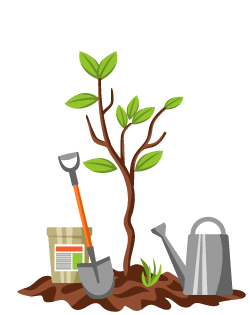 Landing
Key Features
- For planting this variety, choose sunny areas with good ventilation.
- Honey trees thrive in any soil, as long as it's not too acidic. A pH of 7 or higher can kill the tree before it even gets established.
- Planting holes should be prepared in advance, ideally in the fall. However, if you're planting apple trees in the spring, digging them 3-4 weeks in advance is sufficient. Remove some of the soil, mix it with compost, ash, or other fertilizers, and return it to the soil. Afterward, leave it outdoors.
- The optimal size of the holes is 80 centimeters deep and approximately 1 meter in diameter.
- Immediately before planting, add a 10-15 centimeter layer of drainage material to the bottom. Vermiculite, broken brick, nut shells, or gravel can be used.
- Before planting, seedlings can be soaked in water for a couple of hours to revive them. It's best to trim off any dried or damaged roots immediately with pruning shears.
- The root collar should protrude above the soil surface no more than 2-3 centimeters, otherwise this will slow down the first fruiting.
- It wouldn't hurt to dig stakes into the north side to support young trees. There's no need to remove them until they're 4-5 years old.
- The root system is covered with soil and compacted tightly, watered with 30-40 liters of water.
You should only purchase seedlings from specialized nurseries, where you can receive all the necessary information and accompanying documentation. The market is currently full of scammers offering inexperienced gardeners completely different varieties of plants, passing them off as elite ones, so you need to be extremely careful.
Landing dates
Everything depends on the type of root system of the planting material you're using. If your seedling is in a pot from which it doesn't need to be removed, you can plant it at any time during the growing season. If the root system is exposed, it's best to plant it in the spring before bud break or in the fall, immediately after the leaves have fallen. The survival rate is much higher in the latter case.
Pruning: simple crown shaping
It's not customary to prune Honey Crisp or fertilize it in the year of planting. Therefore, the first pruning will take place during the second year. You'll need to shorten the main shoot by a third. Lateral skeletal branches are cut even shorter, reflecting their tiered growth pattern.
In the future, all these steps should be repeated annually, adding to the plan the removal of vertically upward branches (sucker branches) or inward branches that significantly thicken the crown. Regular sanitary pruning will require removing all diseased, dead, rotten, or otherwise damaged branches.
Tree care
 Tree care
Loosening the soil, watering: proper agricultural technology
Apple trees don't require soil loosening, and they don't even require regular watering. However, if you weed, remove grass, shoots, and root suckers, it's a plus. Forced watering is definitely not necessary, but if the weather is dry, you can apply moisture once every ten days.
Pollinator varieties
- Gloucester.
- Delicious golden.
- Idared.
- Granddaughter of Askold.
- Everest.
Reproduction
- Growing from seeds (rarely).
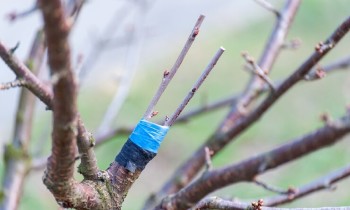
- Grafting by cuttings or buds.
- Layers (clones).
Diseases and pests
- Powdery mildew.
- Black crayfish.
- Scab.
- Green aphid.
- Flower beetle.
- Leaf roller.
- Codling moth.
Ripening and fruiting of the Honey Crisp apple tree
The beginning of fruiting
 The beginning of fruiting
The tree begins bearing apples very early, especially on vegetative rootstocks. Beautiful, large fruits can grow and ripen within the first year of planting. However, it's clear that this isn't a full harvest. By the third or fourth year, the tree can already yield 8-12 kilograms of fruit.
Flowering time
Depending on the planting region, weather, and climate, flowering may vary slightly in timing, but it always occurs in May. Ambient temperature plays a crucial role. The tree will only open its buds when the temperature outside is at least 15-18°C. This variety produces large, beautiful, and strongly fragrant flowers that bloom profusely on the branches. The blooming process itself can take one to two weeks, or even longer.
Fruiting and growth
Full harvests of up to 50 kilograms will take approximately 8-10 years, when the tree has fully caught up and begun to develop foliage. It grows very quickly, so it reaches its maximum height just by this time.
Apples begin to ripen around mid-September, but not all at the same time. Therefore, the harvest is usually done in stages. First, the apples located higher up and at the tips of the shoots are picked, followed by those located closer to the trunk and on the lower branches. You can tell when the apples are ripe by whether they separate easily from the stem. If you have to tug or pull at the fruit, it's not ready yet. Store the fruit in wooden boxes, sprinkled with sawdust, in a cool, well-ventilated cellar for 5-6 months.
Honey Crisp fruits are distinguished by the fact that even in spring they do not lose their characteristic crunch and density, and do not become loose.
Top dressing
- Organic fertilizers.
- Mineral complexes.
What to do if it doesn't bloom or bear fruit
- Stop watering.
- Transplant.
- Start watering.
- Check for pests or diseases.
- Perform pruning.
Why do apples fall?
- Excessive thickening of the crown.
- Natural causes (wind, rain, hail).
- Pests.
- Diseases.
Please share your thoughts on Honey Crisp in the comments below to share your experiences with other gardeners.