Gala apple tree: characteristics of the variety and care
| Color | Reds |
|---|---|
| Ripening season | Winter |
| Size of apples | Large |
| Taste | Sweet and sour |
| Crown type | Tall tree |
| Shelf life | Average shelf life |
| Application | Fresh , For recycling |
| Winter hardiness | Average winter hardiness |
| Fruiting age | Up to 5 years |
 History of origin and regions of growth
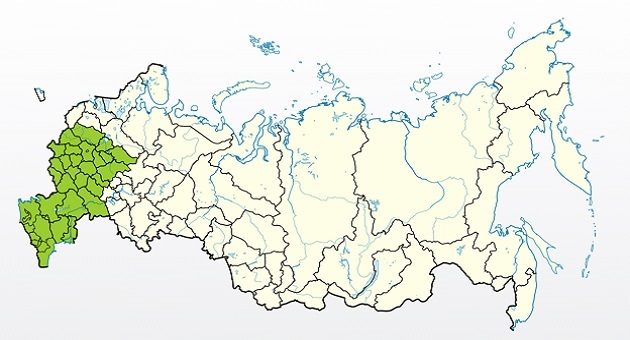
Growing regions
- Middle zone.
- North Caucasus.
- Crimea.
- Some northern regions.
Origin
There are several versions of the origin of this diploid apple variety, all of which are fully justified. According to the first, scientist and breeder J.H. Kidd developed the Gala variety in New Zealand as early as 1934; according to the second, it wasn't until 1957 or 1962. It is certain that the famous Delicious Golden and Kidd's own "brainchild," Kids Orange Red, were used as parent varieties.
The Gala variety had a long and difficult journey to reach our country. Around the mid-1960s, it was imported to the United States, Brazil, Canada, and European countries, where it steadily gained popularity. By the late 1970s, the apple trees were accepted for testing at farms in Ukraine, after which they were deemed suitable for cultivation in the steppe and forest-steppe zones. In 1993, Gala arrived in Russia. However, it was only added to the State Register in 2014, and then zoned for the North Caucasus region.
Description of the Gala apple variety
 It's no coincidence that this variety has become popular with gardeners, confidently ranking second in apple production worldwide. It's an easy-to-grow, medium-height tree whose shoots don't grow upward, but instead sag under the weight of the fruit, making it particularly easy to pick. The trees are prolific, producing delicious fruit quite early, and are undemanding and tolerant of growing conditions.
The apples themselves are beautiful, delicious, keep well, and can be transported even over long distances. Despite the small size of the fruit, which is considered its main drawback, the variety is recommended for growing both in private gardens and in intensive commercial orchards.
Apples: What they look like
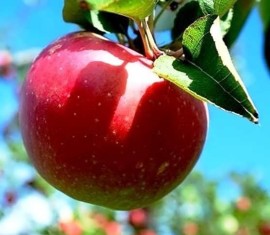
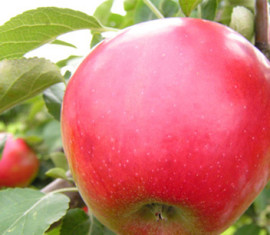
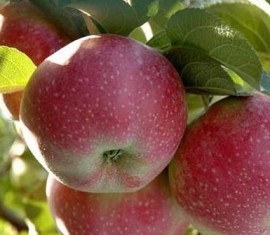
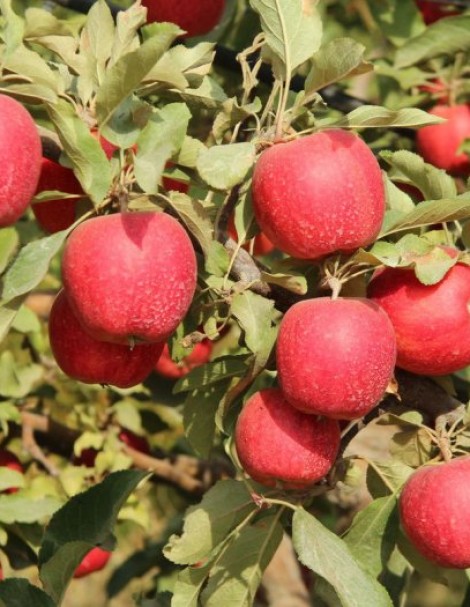
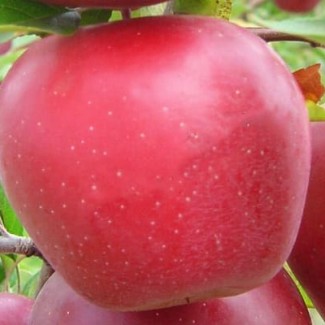
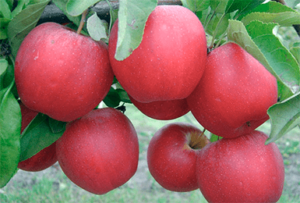 The fruits are medium to slightly larger than average in size, typically weighing no more than 110-160 grams. However, larger specimens, up to 170-200 grams, are not uncommon. They are irregularly shaped, round or round-conical, often turnip-shaped, and may be slightly flattened. Ribbing is subtle, particularly noticeable on the top of the apple.
The skin is green or yellow-green in color; it is dry, dense, glossy, and often coated with a loose waxy coating. The blush typically covers at least 65-95% of the surface, sometimes more. It is red-orange or crimson, with a blurred, streaky, and pale appearance. Subcutaneous spots are numerous, light-colored, and not very visible against the variegated surface of the fruit. The chemical composition is characterized by the following indicators:
- P-active substances (catechins) – 196 milligrams.
- Ascorbic acid (vitamin C) – 12.4 milligrams.
- Total sugars (fructose) – 11.2%.
- Pectins (fiber) – 7.9%.
- Titratable acids – 0.43%.
The fruit's flesh is firm and crisp, but not coarse or prickle-like. It's quite tender, with a medium- to coarse-grained texture. It has a slightly creamy or lemon-yellow hue. The flavor is sweet and sour, with a more pronounced acidity. It's considered a table apple, harmonious, and balanced. The aroma is caramel-nutty, characteristically apple-like. Professionals rate the fruit on a 5-point scale: 4.6 for flavor and 4.7 for appearance.
Gala apple tree: characteristics
Crown and root system
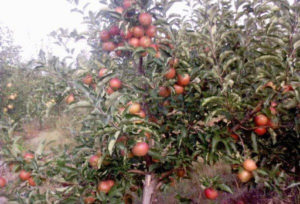 The tree is considered to be of medium height and unremarkable. On average, it grows without pruning to about 5-5.5 meters. With proper crown formation, the tree will grow much lower, making it easier to pick the apples. The crown is oval or broadly oval, becoming more drooping, spreading, and weeping over the years. The shoots are medium-thick, long, mostly straight, thin, and directed sideways rather than upward. The tree bears fruit on fruiting twigs and rings.
The leaves are medium-sized, dense, leathery, dark green or emerald, oblong-elongated, long-pointed, with a serrated, finely serrated, and wavy margin, matte, and often have a medium-density pubescence on the underside. The root system is branched, medium-deep, and may or may not have a central taproot, depending on the selected rootstock.
Productivity and pollination
Gala bears fruit every year, starting from about 4-5 years, and is especially respected for its early fruiting and regularity of harvests.
From one mature tree, good growers manage to harvest approximately 65-85 kilograms of aromatic fruit in just one season. With such "dinosaurs" as Antonovka ordinary, the variety has nothing to compete with, but it is worth making allowance for the small height of the trunk.
The variety is considered conditionally or partially self-fertile. A farmer will still get some apples even if there are no other apple trees of a different variety within 50-150 meters. Moreover, self-pollination rates are quite good – 73-87%. However, to ensure a 100% yield, it's best to interplant trees with those that bloom at the appropriate time.
Winter hardiness and disease resistance
Gala is considered to have good winter hardiness, but it's more logical to classify it as a moderately hardy tree. It can survive winters when temperatures drop below -29 to -32°C, but only if these periods are short. If frosts last more than 4 to 6 days, apple trees will likely die or be severely damaged. Therefore, it's important to take sufficient time to cover them for the winter.
Bacterial and black crayfish, powdery mildew and scab Trees don't often become infected. However, if they do become infected, not only the leaves but also the fruit are affected, making them unfit for consumption. Once the infection has begun, it's unlikely the tree will be cured, so fungicide treatments and other maintenance measures should be carried out promptly. It's also a good idea to spray the trees regularly against insect pests, which are also quite dangerous for the variety.
Rootstocks and subspecies
Gala is grown on a wide variety of rootstocks, which directly influences the quality of the fruit, its appearance, size, as well as the basic characteristics of the trees and their lifespan. For example, tall standard trees can bear fruit for 75-90 years, while dwarf trees only last 25-30 years. There are also a huge number of subspecies of the variety, some of which are worth exploring in more detail.
It's worth noting that work with this variety, including hybridization and cross-pollination, is ongoing. We'll likely see many new, unusual subspecies in the future. For example, work is underway on and testing columnar variants of Gala, dwarf varieties, and creeping varieties capable of withstanding even Siberian frosts.
| Subspecies | Description |
| Royal | It is considered the first subspecies to have mutated under environmental influences, cross-pollination, and was first discovered by horticulturist Tenroy Howe. |
| Red | As the name suggests, the fruits of this variety are predominantly red. They are slightly larger, rounded, and symmetrical, weighing up to 170-220 grams. They begin to bear fruit two to three years after planting, ripen around late summer, and can be stored until spring without losing their consumer or marketable qualities. |
| Galaxy | This subspecies is distinguished by a darker blush, which is less mottled, dense, and almost uniform. The fruits are usually flattened, and they are very juicy, aromatic, and sweeter. They typically weigh 140-170 grams, have a good shelf life, and ripen in early September. A dense waxy coating is clearly visible on the surface. |
| Mondial or Imperial | The Gala hybrid was discovered by George Mitchell, an experienced American gardener. The apples ripen in early September, growing to large sizes, weighing up to 180-230 grams. They have a thick, red or dark red skin, covered in a waxy coating that gives them a bluish tint. They have a more elongated shape and noticeable ribbing. |
| Cube | A development by domestic breeders from Krasnodar, this variety was developed in the early 21st century and was zoned for the North Caucasus region in 2007. The fruits are bright yellow, almost orange, with a crimson blush, growing to 170-190 grams, irregular, and symmetrical. The flavor is considered to be the most pleasant, sweeter, and dessert-like. |
| Natalie | Grown on a special rootstock, the apple trees grow shorter, are more resistant to low temperatures, and are not affected by prolonged cold spells. They have virtually all the fruit characteristics of the parent plants, but weigh no more than 130-150 grams. |
Features of growing Gala
 Landing
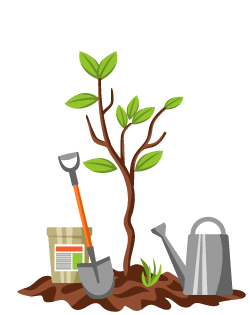 Landing
Basic conditions
- The apple tree prefers well-lit and ventilated spaces, but is not afraid of shade or stagnant air. It's very easy to grow, but it's best to protect it from drafts to prevent disease.
- The variety is completely undemanding when it comes to soil conditions, growing equally well in black soil, loam, and even sandy loam. It only dislikes excessively acidic soils; acidic soils can cause disease and even death.
- You can prepare the holes for the seedlings in advance of the season, in spring or fall, but if you haven't done so yet, 3-4 weeks in advance will be sufficient. To do this, dig a hole 50-75 centimeters deep and 85-90 centimeters in diameter. Place the topsoil (mixed with fertilizer) at the bottom, then add a drainage layer (5-15 centimeters), and fill with water.
- The distance between the holes should depend on the rootstock chosen. For large vegetative rootstocks, at least 4.5-5 meters should be left, while for dwarf rootstocks, 2.5-3 meters is sufficient.
- It's a good idea to immediately drive a stake or support into the center of the hole to support the seedling. This can be made of metal, wood, or plastic.
- The root collar must remain above the surface by at least 4-8 centimeters, so that the tree does not root above it, otherwise all the qualities of the rootstock will be lost.
- The tree is placed upright, held by the trunk, and covered with soil, gently shaking it to eliminate any possibility of air pockets. The surface is compacted, a ridge is created around the perimeter of the hole, 30-45 liters of water is poured inside, and the hole is mulched with sawdust or compost.
Landing dates
Both fall and spring planting options for Gala are perfectly acceptable. However, much depends on the growing region. In the south, when you plant the tree in the soil isn't important, but in harsher regions, it's best to choose a warm spring day in late March or early April, before the sap begins to flow in the trunks and the buds begin to open. closed root system can be moved into the garden at any time during the growing season.
Protection from frost and rodents
The tree is quite delicate and, as mentioned, doesn't tolerate frost very well. Therefore, it's important to wrap the trunks thoroughly with burlap, roofing felt, or other materials. It also helps to mound soil around the root zone in the fall, about 10-15 centimeters deep. Straw bales or dry grass mats can also be placed there; they also provide very effective frost protection. Young trees, dwarf and semi-dwarf varieties, are covered with a tent-like covering.
To protect the bark from being eaten by hungry mice and hares In winter, you can coat the trunk with grease or even regular rendered animal fat (lard). Whitewashing the trunks with regular lime in the spring and fall helps repel pesky insects.
Tree care
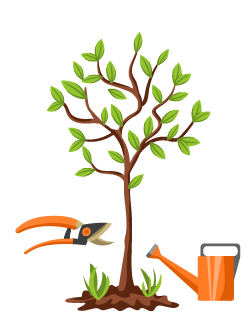 Tree care
Loosening the soil, watering: proper agricultural technology
Digging around the trunk should be done with extreme caution, especially for dwarf and semi-dwarf trees with shallow root systems. Hoeing the soil more frequently, several times per season. It's also important to remove root suckers, weeds, and shoots from other plants.
Watering 4-5 times per season is sufficient, and only in particularly hot and dry years. It's a good idea to time watering to coincide with bud development, flowering, and fruit formation and ripening. You can also feed or fertilize the trees along with water. A sufficient amount is 25-35 liters per mature tree.
Pruning: simple crown shaping
The variety itself isn't particularly prone to becoming dense, so regular pruning shouldn't be a problem. However, at first, starting in the second or third year, it's important to do everything correctly. This pliable tree can be shaped into virtually any type of crown: palmette, spindle-shaped, open-tiered (preferred), cordon, broom-shaped, or whorled-tiered.
Don't forget about sanitary pruning, which involves removing all dead, diseased, or damaged shoots. All cuts (wounds) should be treated with garden pitch or other suitable substances. If you don't have any on hand, you can simply rub the cut with bog oil.
Pollinator varieties
- Melrose.
- Eliza.
- Delicious red.
- Gloucester.
- Discovery.
- Elstar.
- Idared.
Reproduction
- Rooting cuttings.
- Grafting by buds and cuttings.
- Clones (offshoots).
Diseases and pests
- Powdery mildew.
- Scab.
- Black crayfish.
- Pit bitterness.
- Cytosporosis.
- Green aphid.
- Codling moth.
Ripening and fruiting of Gala
The beginning of fruiting
 The beginning of fruiting
The first few years, when you can taste the fruit and even preserve it for the winter—that is, the onset of fruiting—directly depends on the chosen rootstock on which the apple tree is grown. Gala apples on vegetative rootstocks may not begin bearing fruit until the fourth or fifth year, or even the sixth or seventh. Dwarf and semi-dwarf varieties are much more precocious and will produce an acceptable harvest as early as the third or fourth year. However, it's important to remember that they are extremely susceptible to prolonged low temperatures and sudden temperature fluctuations.
Flowering time
The tree begins to bloom late. Around the second half of May or at the very end of the month, the apple trees begin to bloom, and in poor weather, this can last until early June. This process lasts about 10-14 days, giving insects and wind time to do their work. Gala blooms profusely, producing large, fleshy, saucer-shaped, snow-white or slightly pinkish flowers that are intensely fragrant and densely covered with lids. Experienced gardeners even recommend thinning the inflorescences, leaving one in every two or three buds, to increase the size of the fruit.
Fruiting and growth
The tree grows quite quickly, gaining at least 35-55 centimeters per season. These are good results, and the plant will reach its full height by about 10-12 years. Fruit production also increases rapidly, and in just 2-3 years, a full 80-90 kilograms can be obtained under favorable conditions and weather.
Apples ripen late, in late September or even October, and it's not recommended to eat them right away. They're excessively dense and hard, but they hold tightly to the branches, and they fall off only in extreme cases. The harvest can be harvested in October and stored immediately, with consumption only possible after 30-45 days. The average shelf life is 3-5 months, after which the fruit should be fully processed.
Top dressing
- Chicken manure.
- Mineral complexes.
- Wood ash.
- Humus.
- Compost.
- Ammonium nitrate.
- Manure.
What to do if it doesn't bloom or bear fruit
- Provide moisture.
- Check for pests and diseases.
- Transplant to a sunnier location.
- Limit watering.
Why do apples fall?
- Natural factors.
- Pests.
- Diseases.
- They are very overripe.
Leave your feedback on the Gala variety to share your experience with other gardeners.