Chervonets apple tree: characteristics of the variety and care
| Color | Reds |
|---|---|
| Ripening season | Autumn |
| Size of apples | Large |
| Taste | Sweet |
| Crown type | Columnar tree |
| Shelf life | Low shelf life |
| Application | For recycling , Fresh |
| Winter hardiness | Average winter hardiness |
| Fruiting age | Up to 5 years |


 History of origin and regions of growth
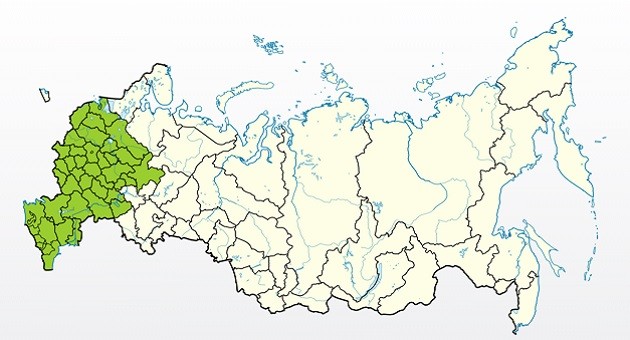
Growing regions
- Some northern regions.
- North Caucasus.
- Crimea.
- European part of Russia.
Origin
This columnar apple variety was developed by Viktor Kichina and his faithful companion, Nadezhda Morozova. The first KV82 seedling was bred in 1982 at an experimental station in Moscow regionThe American variety Vazhak, as well as the complex hybrid SR0523 (Melba red + Wolf River + M. atro sangujnea 80) and the scab resistance gene donor SR0523 were used as parent varieties.
All this unexpectedly yielded an interesting result. A new variety was developed, which by 1996 had already received its own name – Chervonets. It was sent for field trials, where it performed well and was classified as an elite variety, but an application for inclusion in the State Register was only submitted in 2005. In 2008, it was finally added to the list of breeding achievements and zoned for the Central Region. It has become most widespread in the Bryansk, Smolensk, Tula, and Vladimir regions.
Content
Description of the Chervonets apple variety
 Beautiful, fairly large, bright red apples immediately attract the attention of both professional gardeners and ordinary consumers. The Chervonets variety is prolific, early-bearing, and relatively resistant to various weather and climate conditions. Furthermore, it boasts immune resistance to scab.
The fruits have a truly pleasant flavor and are easy to transport, even over long distances. They keep well in the refrigerator or cellar for a long time, and are also quite suitable for processing. Recommended for large, intensive gardening operations, they will also be a real find for a small garden.
Apples: What they look like
 The fruits of this variety are considered large to very large, easily reaching 300 or even 350 grams in weight. They are round, but usually slightly elongated, can be turnip-shaped, smooth, with barely noticeable ribbing at the tips, and are of medium uniformity, meaning they can vary slightly in size on the same tree.
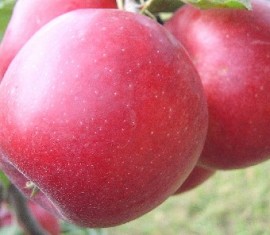
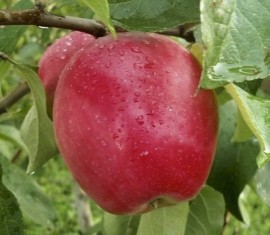
The fruit skin is dense, elastic, strong, and resistant to mechanical damage, but not thick. It has a greenish-yellow or golden-yellow hue, almost completely hidden by a deep, bright red blush, tinged with burgundy or raspberry red, and may be covered with a bluish, waxy, oily coating. Subcutaneous punctures are large, light gray with a light green tint, few in number, and clearly visible. The chemical composition is most easily assessed by the following indicators:
- P-active substances (catechins) – 234 milligrams.
- Pectins (fiber) – 9.7%.
- Sugars (fructose) – 13.2%.
- Titratable acids – 0.59%.
- Ascorbic acid (vitamin C) – 16.8 milligrams.
The flesh is snow-white, very crisp, crunchy, medium-firm, and finely grained. When fully ripe, it can have a slightly lemon-yellow or creamy hue, with fine scarlet veins beneath the skin, giving it a slightly pinkish tint. It is very juicy, with a dessert-like sweet and tart flavor, as well as a subtle but pleasant, characteristic aroma. Experts have given it a 4.6 out of 5 for flavor and a 4.8 for appearance.
Chervonets apple tree: characteristics
Crown and root system
 Columnar apple trees are usually considered natural semi-dwarfs and this variety is no exception.Chervonets grows to a maximum of 1.8-2.1 meters without formative pruning., making care and harvesting much easier than with tall standard trees. Sometimes, the trees may produce lateral shoots that need to be pruned in the spring or fall. The wounds are usually sealed with garden pitch, drying oil, or water-based paint. The tree's trunk is thick, covered with gray-brown or brown, sometimes slightly greenish, bark, pubescent in some areas.
The leaves of this variety are quite large, oval, elongated, and short-pointed, leathery, dense, glossy, and shiny. They have a finely serrated, serrated margin that can be wavy. They are a very rich, dark green color with delicate ribbing. The root system is medium-to-superficial, with a shallow depth, allowing this variety to be planted even in relatively close proximity to groundwater.
Productivity and pollination
It would be best to classify Chervonets as a medium-yielding variety, although compared to some other varieties it looks quite impressive.
A single mature tree can typically yield approximately 6-8 kilograms of sweet fruit per season, given favorable weather and good care. This means that at a standard planting density, a minimum of 85-100 tons per hectare can be harvested..
Chervonets is considered conditionally self-fertile. This means that some apples will ripen even if there is no suitable apple tree of another variety within 50-80 meters. However, in this case, the yield will be no more than 30-40% of the potential yield, so it is recommended to interplant the trees to ensure cross-pollination.
Winter hardiness and disease resistance
The variety's tolerance to low temperatures is considered average, but trees do not tolerate sudden changes and fluctuations, from frost to thaw, very well. Temperatures as low as -22-25°C can cause significant damage, with recovery taking a long time. If the wood freezes, they can even die. Therefore, it's important to pay close attention to all preparatory measures and properly cover the trees for the winter, especially in regions with harsher growing conditions.
Scab Chervonets is generally immune to disease due to its genetic immunity inherited from its parents. Powdery mildew is also very rare, but certain other diseases and insect pests can still damage the trees. Therefore, neglecting preventative measures is undesirable; it's better to treat the trunks with insecticides and fungicides in a timely manner.
Rootstocks and subspecies
This columnar variety has only recently appeared on the market, so it's too early to talk about its subvarieties, and it's unlikely that any will ever be developed. However, it can be grown on a wide variety of rootstocks, producing slightly different varieties. On seed rootstock, it will be slightly taller and the fruit slightly smaller, but it can withstand temperatures down to -25-27°C. Dwarf and semi-dwarf rootstocks can produce the largest apples, but at the cost of overall winter hardiness.
Features of growing Chervonets
 Landing
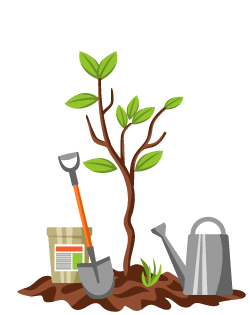 Landing
Basic conditions
- The variety needs to be planted in a location that receives plenty of sunlight, otherwise it will grow weak, produce little fruit, and the fruit itself may be sour, small, and few in number.
- Proper ventilation is important; trees should be protected from drafts, but at the same time well ventilated from all sides to prevent stagnant air.
- Chervonets thrives in any soil, from the rocky slopes of the Northern Caucasus to the fertile black soil of the Moscow region. The key criterion is a moderate acidity level, which can be adjusted with ordinary lime.
- Groundwater levels are only important when they are above 1.5-1.7 meters; otherwise, trees can be planted safely. It is not recommended to plant trees in pits and lowlands, in swamps, or directly near rivers and lakes.
- You can prepare the holes in advance, during the previous season, or a few weeks before planting Chervonets. To do this, dig holes 50-60 centimeters deep and 70-80 centimeters in diameter, fill the bottom with soil containing organic matter and minerals, cover with a drainage layer, and fill with water (20-25 liters).
- It's best to leave no more than half a meter between apple trees in a row, and about a meter between rows, but no less than 80 centimeters. This will ensure the trees receive adequate air flow and sun warmth.
- Root collar When planting, leave the rootstock at least 4-7 centimeters above the horizon. If the seedling roots higher, the quality of the rootstock will not affect the tree's further development.
- It's common to insert stakes or planks into the holes immediately so that the trees can be tied to them later. In larger gardens, row-long structures resembling hedges are commonly used. These are convenient for tying the trunks to protect them for the winter.
- Place the trees in the hole, spread the roots, and cover them with soil in layers, carefully compacting them using only your hands. Water them with approximately 15-25 liters of water, then mulch with chopped grass, sawdust, and manure.
Landing dates
It's best to plant trees of this variety in the spring, around the second ten days of April, when the soil has already warmed up completely. In this case, they show a good survival rate, almost 75-95%. However, autumn planting is also acceptable for Chervonets. Just be sure to find a suitable sunny day when frost is still at least 3-4 weeks away, but the leaves have already fallen. Seedlings with closed root systems can be transplanted into open ground at any time; growing in pots is also acceptable.
Tree care
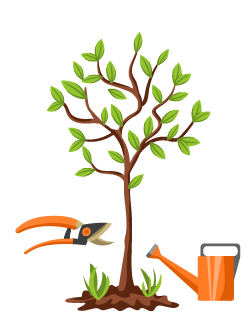 Tree care
Protection from frost and pests
All standard preventative measures are suitable for Chervonets. You should rake a 10-15 centimeter layer of soil over the roots, wrap the trunks with burlap or old women's tights, or cover the trees with a tent-like covering. The main thing is to remember to remove all this when spring arrives, otherwise the trees will struggle to grow and may refuse to bear fruit.
Rodents, which actively damage bark and young shoots in winter, are repelled by coating the trunks with pungent aromatic substances, such as grease, drying oil, fuel oil, or rendered animal fat. This gets rid of insects. whitewashing trunks with lime.
Loosening the soil, watering: proper agricultural technology
Soil aeration through loosening is beneficial for apple trees. Tilling the area around the trunk twice a year is just enough. Hoeing can be done 4-9 times a season as needed, preferably on the second day after rain or watering, to prevent the soil from compacting into a single, dense lump. While loosening, weed the soil to prevent it from robbing the tree of its nutrients.
Chervonets doesn't need to be watered frequently, but about once every ten days in hot, dry weather is appropriate. This is only if there's no rain; once precipitation does fall, the next ten-day period can be counted from there. Fertilizers and fertilizers are added along with watering. If possible, drip irrigation can be set up; it's very effective for an orchard.
Pruning: simple crown shaping
Columns don't require special pruning, but Chervonets sometimes produces side shoots, as mentioned earlier. This should be carefully monitored, and it's best to prune them in the spring rather than in the fall, when they've already drained some of the tree's energy, which impacts the yield.
Apple trees don't require any rejuvenation, as their active lifespan is already short, only 15-18 years from the start of fruiting. The trees themselves can grow for up to 50-60 years, but experienced gardeners often uproot the spent material and replace it with young trees in the 20th-22nd year.
Reproduction
- Rooting.
- Kidney grafting.
- Growing from seeds.
- Cuttings.
Diseases and pests
- Black crayfish.
- Bacterial burn.
- Green aphid.
- Codling moth.
- Scale insect.
- Hawthorn.
Ripening and fruiting of Chervonets
The beginning of fruiting
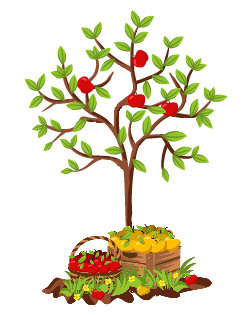 The beginning of fruiting
You can see your first flowers on a tree in the nursery during its first year, but it's best not to let them develop into apples. Then, you should completely remove all the few buds, and harvest the first crop only in the second or third year after planting in open ground. Even then, you can only harvest 1-3 kilograms from the apple trees, and only under favorable conditions.
Flowering time
Trees open their buds at the standard average time, that is, in the second half of May, and sometimes even in early June, when the weather is cold and rainy. After a frost, trees may delay blooming for a full month, blooming sparsely, and bearing little fruit. The flowers themselves are beautiful, fragrant, snow-white with a pink tint at the sepals, gathered in inflorescences of 7-9.
Fruiting and growth
Chervonets is considered a fast-growing tree, although compared to taller trees, its 18-25 centimeters of growth seem insignificant. However, its maximum height is not very high, so it reaches it very quickly. It also increases its yield exponentially, and by the fifth or sixth year, it will produce a full crop, yielding up to 6-8 kilograms of delicious, sweet fruit.
Apples ripen in mid-September, or by the end of the month in bad weather. It's important to pick them right away, but not because they might fall to the ground. They hold very firmly to the branches, but they can lose their flavor, becoming loose, sour, unpleasant, and even slightly bitter. The fruit transports well, but even in an ideal cellar, it can only store for 45-60 days, after which it must be fully processed.
Top dressing
- Humus.
- Superphosphate.
- Manure.
- Mineral complexes.
What to do if it doesn't bloom or bear fruit
- Check for pests or diseases.
- Transplant into the sun.
- Water.
- Fertilize.
Why do apples fall?
- Wind, hail, hurricane, rain.
- Pest damage.
- Diseases.
Please leave your feedback on the Chervonets variety, as many gardeners would like to grow similar varieties in their gardens.