
Apple tree Triumph: characteristics of the variety and care
| Color | Reds |
|---|---|
| Ripening season | Autumn |
| Size of apples | Average |
| Taste | Sweet |
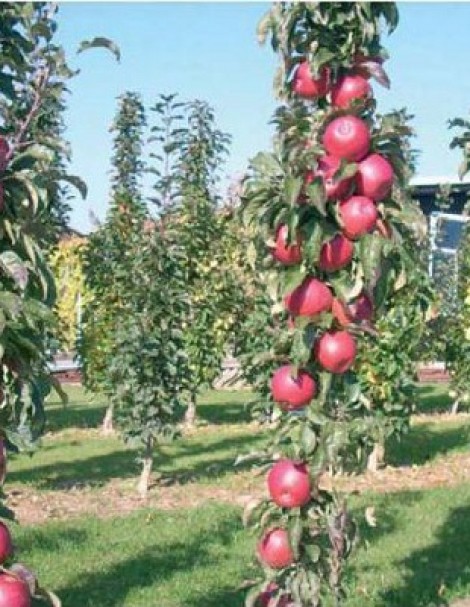
| Crown type | Columnar tree |
| Shelf life | Low shelf life |
| Application | For recycling , Fresh |
| Winter hardiness | Average winter hardiness |
| Fruiting age | Up to 5 years |
 History of origin and regions of growth
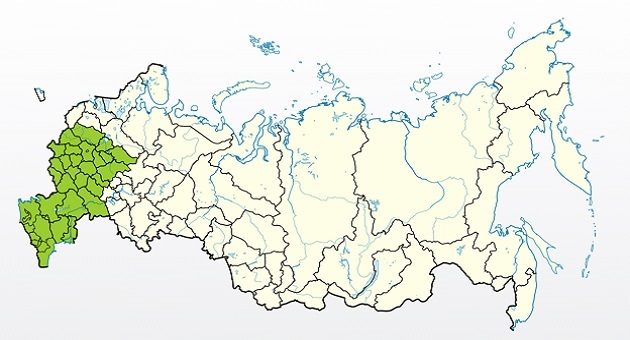
Growing regions
- Some northern regions.
- North Caucasus.
- Crimea.
- European part of Russia.
Origin
The first seedlings of this variety were recently obtained at the Moscow Region branch of the All-Russian Institute of Selection and Technology of Horticulture and Nursery. In 2005, modern Russian botanist and breeder Nadezhda Morozova, through open pollination of a columnar donor, which remains a secret, created a new hybrid, named Triumph for its outstanding qualities.
The apple tree was immediately sent to field trials, where it performed extremely well. In 2015, an application was submitted, and then it was decided to single out the variety as an elite variety, enter its full data into the State Register of Breeding Achievements, and zone it for the Central and Central Black Earth regions.
Content
Description of the Triumph apple variety
 These slender and beautiful semi-dwarf varieties immediately caught the eye of gardeners in our country. In just under a decade, the apple tree has spread throughout European Russia and far beyond. The tree is compact, takes up very little space in the garden, and is undemanding of soil, weather, and climate conditions. Triumph is quite prolific, and also has a high degree of resistance to all five races. scabies.
Despite its relatively low tolerance to prolonged cold temperatures and the fruit's poor shelf life, this variety has become a favorite among many Russian gardeners. Experts recommend it for small home gardens (pot cultivation is acceptable) and for intensive commercial gardens.
Apples: What they look like
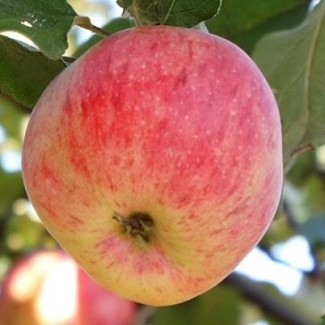
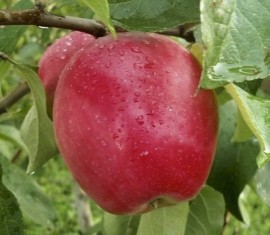
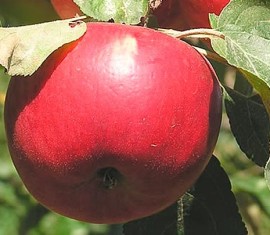
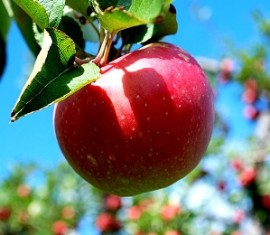
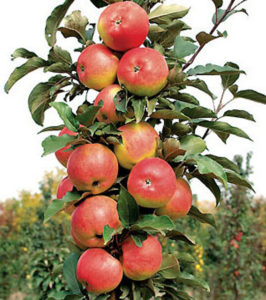 The fruit typically ranges in size from medium to large. Most apples weigh approximately 130-160 grams, but some reach 200-220 grams. They are flattened-round, even spherical, but sometimes they are very flattened, flattened along the central axis, and are generally uniform and smooth. Ribbing is subtle, smoothed, and barely noticeable.
The skin is medium-firm, slightly elastic, but quite fragile, green or yellowish-green in color, glossy, and shiny. It has a raspberry, bright red, or even beetroot-colored blush covering more than 75-95% of the fruit's surface. Subcutaneous punctures are few in number, light in color, large, evenly distributed, and clearly visible. The chemical composition is assessed using the following parameters:
- Sugars (fructose) – 16.4%.
- Titratable acids – 0.37%.
- Ascorbic acid (vitamin C) – 10.1 milligrams.
- Pectins (fiber) – 14.1%.
- P-active substances (catechins) – 189 milligrams.
At maturity, the flesh is firm, fine-grained, very juicy, and aromatic. It has a pleasant texture and is crisp, typically white in color, but can also have a slight lemon or creamy tint. The primary flavor is honey-sweet, but a characteristic slight tartness remains in the aftertaste. According to official data, the Triumph receives a tasting score of 4.6-4.7 out of 5 for appearance and flavor.
Apple tree Triumph: characteristics
Crown and root system
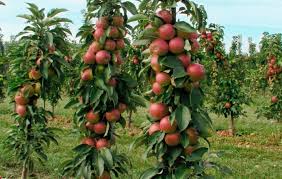 Professionals say that the apple tree is classified as a natural semi-dwarf, but it is more correct to consider it a compact columnar tree. The maximum trunk height is 1.7-2.1 meters without formative pruning.The tree grows as a single stem, covered in gray-green or greenish-brown, pubescent bark. Fruiting occurs on spurs and lances growing directly from the trunk.
The leaves are quite large, oval, elongated, and pointed. They are dense and leathery, dark green or sometimes emerald in color. They are shiny and glossy, with serrated edges, wavy, and can be curved downwards. Triumph's root system is shallow, making it unable to withstand harsh winters without special preparation and proper shelter.
Productivity and pollination
The variety is considered medium-yielding, but at the same time early-bearing, which is one of its main advantages.
Even with truly high-quality care and favorable conditions, a single mature tree will likely yield barely more than 4-7 kilograms of fragrant, unique, juicy fruit per season. At the correct planting density (20,000 trees), the yield per hectare will be approximately 8-10 tons of fruit..
Triumph is considered self-fertile, meaning it doesn't require other varieties for cross-pollination to produce a harvest. Experienced gardeners still recommend interplanting the trees to maximize yields. They also recommend using mobile apiaries and spraying the trunks with sugar syrup during flowering.
Winter hardiness and disease resistance
The issue of low-temperature tolerance is a pressing issue for apple tree owners, as the tree can barely withstand temperatures as low as -22-25°C. If such frost persists for more than a week, the trees can freeze deeply, right down to the wood. Therefore, in harsh regions, comprehensive measures to prepare for winter and cover apple trees with the utmost care are essential.
The variety exhibits good resistance to five races of scab, but can be susceptible to other fungal infections. Therefore, preventative fungicide treatments should not be completely abandoned, as in years of severe epiphytotics, not only the leaves but also the fruit can be affected. It's also unwise to risk insects; it's better to spray the apple trees with insecticides early than to suffer from the problem later.
Rootstocks and subspecies
The brand-new Triumph apple trees don't yet have any subvarieties. However, they are grown on a wide variety of rootstocks, which impart some additional, albeit minor, characteristics to the fruit. The most popular are M106, Mark, and 54-118 rootstocks. Trees on these rootstocks retain the main characteristics of the parent variety completely, though they may vary slightly in size and blush.
Features of growing Triumph
 Landing
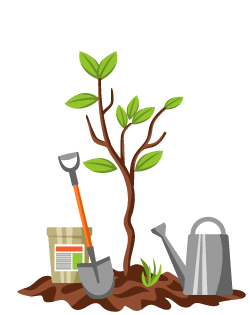 Landing
Basic conditions
- This variety thrives in open, sunny, and wind-blown areas. Avoid drafts, as this can lead to disease. Shaded trees grow weak, with thin trunks. If they do bear fruit, they produce only a few, very small, sour-tasting fruits.
- If the soil isn't acidic, it doesn't matter whether it's loam, black soil, or sandy loam. Even on the rocky Crimean slopes, trees grow very well and aren't fussy.
- The roots are located near the surface, so proximity to groundwater isn't critical. Even if the groundwater is 1.5-1.7 meters deep, Triumph simply won't reach it. However, planting it directly near a lake, river, or stream, in marshy areas, or in floodplain meadows is generally not recommended; it will likely die.
- The holes should be prepared approximately 3-4 weeks in advance, unless they were dug last season, as most experienced gardeners do. Add soil mixed with fertilizer to the bottom, add drainage on top, and then fill the hole with water without covering it.
- It's a good idea to immediately drive in stakes or planks to support the trees. Ideally, they should be positioned on the north side of the seedling. In larger gardens, these can be long, permanent hedges.
- Before planting, inspect the rhizome, cut off all dry or damaged shoots, and place it in water for 5-7 hours, or even overnight.
- There should be at least 70-80 centimeters between trees, and about 1 meter between rows.
- Root collarIf the properties of the rootstock need to be preserved, the tree should protrude 6-10 centimeters above the ground; otherwise, the tree will take root higher and the properties of the rootstock will be leveled out.
- Place the seedling directly into the hole, hold it upright, cover with soil, and compact it by hand, being careful not to leave any air pockets. Water with 25-30 liters of water, and mulch the soil surface to retain moisture.
Landing dates
Triumph can be planted in both spring and fall. Mid- to late-April, when the buds have not yet begun to open but the risk of frost has passed, is the best time. However, after the leaves have fallen, September-October is also a good time. The key is to allow at least 4-6 weeks before the first frost.
Tree care
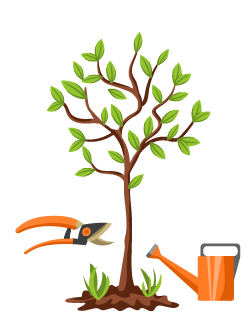 Tree care
Protection from frost and pests
Before wintering, it's important to stop watering promptly, otherwise the tree won't have time to slow down the flow of sap in the trunk and will freeze. This should be done no later than mid- to late September, depending on the region; the further north, the earlier. It's recommended to wrap the trunks with roofing felt, burlap, or a suitable fabric. The root area can be covered with spruce branches, straw bales, mats of dry leaves, and grass. The easiest way to cover the trees is with a tent-like covering, which will protect them from almost any frost.
It works well against insects that often breed in bark chips, cracks and hollows. whitewash Tree trunks in the fall and spring. To repel small rodents, such as mice, hares, or hamsters, use rendered animal lard, drying oil, grease, and even fuel oil.
Loosening the soil, watering: proper agricultural technology
Soil aeration is an important step in caring for Triumph, as the variety thrives on maximum oxygenation. Therefore, the area around the tree's trunk should be carefully tilled at least twice a year, and then hoeed 6-8 times per season as the tree grows. At the same time, remember to remove weeds, root suckers, shrub shoots, and other plants from around the tree, and rake up fallen leaves, especially fruit. All of these can cause disease.
Apple trees need watering, but in moderation. Ideally, drip irrigation should be used. If this isn't possible, 10-15 liters per mature tree can be applied every ten days, unless there's natural precipitation. It's best to divide the water into two portions, applying it morning and evening. It's also beneficial to fertilize the soil around the tree during this time. Mineral fertilizers are best applied in early spring and the first half of summer, while organic fertilizers are best left for the fall.
Pruning: simple crown shaping
Columnar apple trees rarely require pruning, typically only when a double trunk develops. The weaker shoot is then removed. The terminal bud will also need to be pruned if it was damaged during winter frosts. Sanitary procedures involve pruning lateral branches if they do appear, which is considered abnormal and quite rare. The variety requires no rejuvenation at all.
Reproduction
- Rooting.
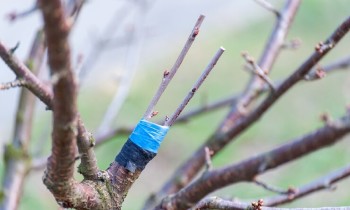
- Kidney grafting.
- Cuttings.
Diseases and pests
- Powdery mildew.
- Black crayfish.
- Green aphid.
- Codling moth.
- Scale insect.
Ripening and fruiting of Triumph
The beginning of fruiting
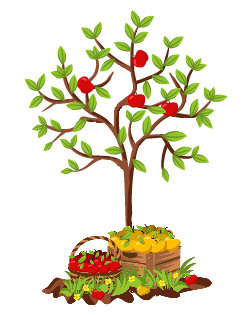 The beginning of fruiting
The variety is truly exceptionally early-bearing, with buds already beginning to open on one-year-old seedlings. However, it's recommended to pick them off immediately, and allow the buds to develop for the first time only in the second or third year. The first harvests will yield no more than a few fruits, so they can hardly be considered full-fledged, but they are certainly sufficient for a sample.
Flowering time
Like most autumn-ripening apple trees, Triumph begins blooming around the second half of May. However, much will depend on the climate of the growing region, the specific weather conditions of the year, and even the care provided. In some cases, the trees may not bloom until early June, but this is nothing to be alarmed about.
This variety produces beautiful, large flowers, gathered in clusters of 6-9. They densely cover the trunk, creating a decorative, exotic, and ornamental appearance. They are predominantly white, but can be slightly pinkish, saucer-shaped, with slightly ruffled petals, and are intensely fragrant. To promote compaction, it is recommended to thin the flowers by 35-45%.
Fruiting and growth
Triumph can safely be called a fast-growing tree, as it can easily reach 18-25 centimeters in a year, which is quite impressive for a columnar tree. After reaching its maximum height, the tree stops growing, making pruning much easier. Fruiting begins very quickly. By the fifth year, a full harvest can be harvested.
Apples ripen around the second half of September, but this is also influenced by climate and weather. Sometimes they can be picked as early as the 10th or 15th, but sometimes it's better to wait until early October. You can tell when they're ready for consumption by the characteristic bluish waxy coating that appears on the fruit. They can't be stored for very long; they can only be kept in the refrigerator or cellar for 30-45 days before losing their flavor, aroma, and consistency. However, they make amazing juices, preserves, and jams.
Top dressing
- Peat.
- Humus.
- Superphosphate.
- Chicken manure.
- Manure.
- Mineral complexes.
What to do if it doesn't bloom or bear fruit
- Check for pests or diseases.
- Transplant into the sun.
- Water.
- Fertilize.
Why do apples fall?
- Wind, hail, hurricane, rain.
- Pest damage.
- Diseases.
Please leave your feedback on the Triumph variety so that other gardeners can learn something similar from it to enhance their experience.


Comments
We planted a small 'Triumph' apple tree, and it bloomed in its fifth year. We then picked off all the flowers. In its sixth year, it was literally blooming, but somehow strangely, from the ground up the trunk and the entire crown. The apples aren't like the pictures, but are 1.5-2 cm in diameter. Why is that? Please explain!