Apple tree Daria: characteristics of the variety and care
| Color | Reds |
|---|---|
| Ripening season | Summer |
| Size of apples | Average , Large |
| Taste | Sweet and sour |
| Crown type | Average tree height |
| Shelf life | Average shelf life |
| Application | Fresh , For recycling |
| Winter hardiness | Average winter hardiness |
| Fruiting age | Up to 5 years |
 History of origin and regions of growth
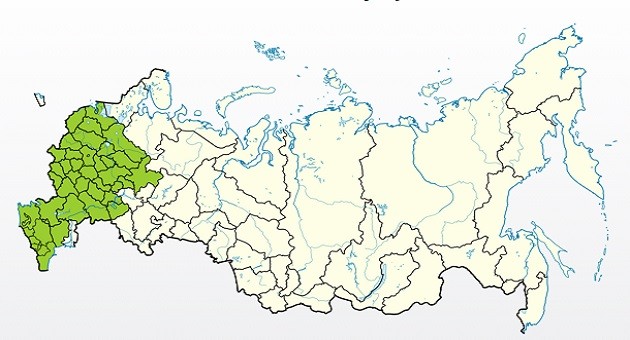
Growing regions
- European part of Russia.
- Moscow and Moscow region.
- North Caucasus.
- Leningrad region.
- Crimea.
- Southern regions.
Origin
Officially, no apple variety named Daria can be found in any registry. This is the name given in Russia to an American-bred apple tree, designated DA 6517 (an abbreviation for Department of Agriculture). In the United States, it isn't even considered a separate variety, but only an elite form.
Upon its arrival, gardeners immediately fell in love with it for its unique, unusual properties and qualities, so much so that they affectionately nicknamed it Daria, Dasha, or Dashenka. This elite variety first demonstrated its potential during variety trials in the Moscow region during the extremely cold winter of 1978-79. After that, it spontaneously spread far beyond the region.
Description of the Daria variety
 This high-yielding, early-maturing variety with a spur-type fruiting pattern is not officially registered in the State Register of Breeding Achievements or officially zoned. However, it is well known to gardeners in our country and is cultivated throughout European Russia and beyond.
The trees are medium-sized, require little space, are highly winter-hardy, undemanding of growing conditions, and are resistant to common apple diseases. The fruits produce large, high-quality fruits. They are easy to transport and store for long periods under appropriate conditions. Daria is recommended for small home gardens, due to the variety's specific characteristics, and for intensive farming.
Apples: What do they look like?
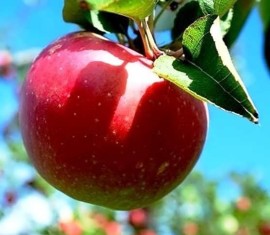
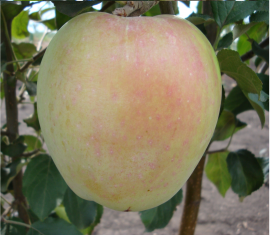
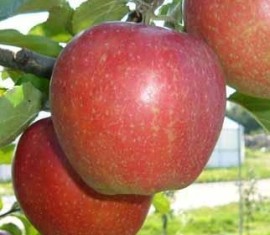
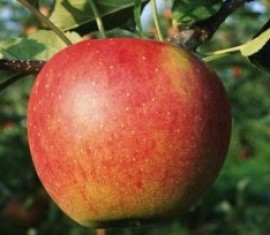
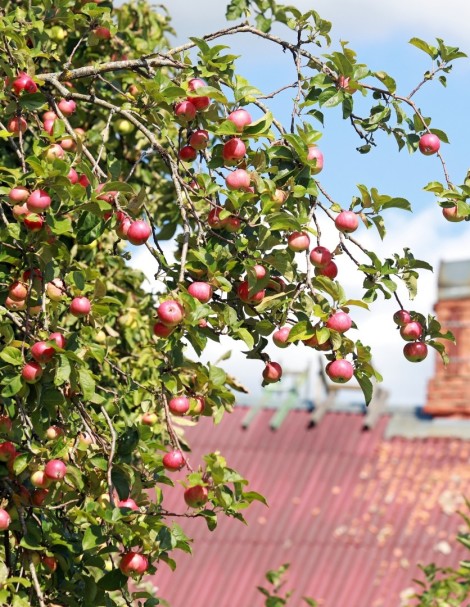
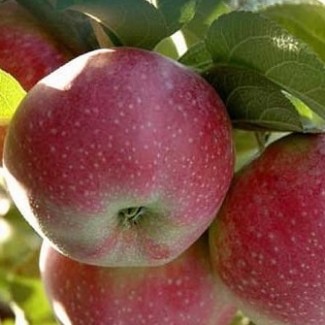
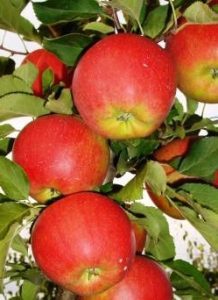 The fruits are medium-large or large, can be slightly uneven, round, and smooth. They average 130-160 grams in weight, but with proper care, they can reach 170-200 grams. They are regularly shaped, rarely slanted to one side or flattened, and grow in small clusters. The ribbing is almost imperceptible, and Dashenka has no lateral seam.
The skin is dense, smooth, highly shiny, and glossy. At maturity, it becomes covered with a thick, waxy, oily coating. Initially, it is green or light green, turning yellow or golden as it ripens. The blush is diffusely mottled, sometimes striped, speckled, bright red, crimson, or pinkish-red, and covers 45-70% of the surface. Subcutaneous spots are grayish-green, large, and quite numerous. The chemical composition is assessed using the following criteria:
- Sugar (fructose) – 11.9%.
- Ascorbic acid (vitamin C) – 13.8 grams.
- Pectins (fiber) – 11.8%.
- P-active substances – 242 milligrams.
- Titratable acids – 0.59%.
The flesh is firm, flakes easily when bitten, crisp, refreshing, delicate, and slightly prickle-like. It's white or yellowish, can have a lemony tint, and very juicy. The flavor balances a distinct sweetness with a distinctive tartness, making it a favorite among both those who enjoy a more tart flavor and those with a sweet tooth. It hasn't received an official professional tasting rating, but unofficially it scores 4.8 out of 5.
Apple tree Daria: characteristics
Crown and root system
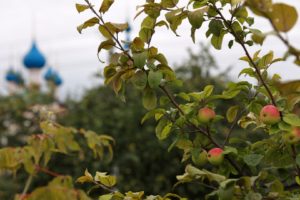 It is considered that the variety is of medium height, but it would be more logical to call it a natural semi-dwarf. The trees barely reach 3-3.5 meters. They rarely exceed this height even without additional formative pruning. The crown is rounded or oval, becoming more spreading over the years, and may even become weeping, with its straight, slender branches drooping almost to the soil surface. The shoots grow at an angle close to right angles and are covered with smooth, reddish-brown or brownish bark. It bears fruit on the rings, making it a spur variety.
The leaves are medium-sized or small, but very dense. They are leathery, smooth, shiny, very dense, and glossy, and may have a slight pubescence on the underside. The blade is most often flattened, but the serrate-crenate margin may be slightly wavy, with a short-pointed tip. The root system is medium-deep and fibrous, but sometimes, depending on the rootstock, may have a central branch.
Productivity and pollination
The variety is considered high-yielding, although due to its small height it cannot compare with leaders such as Antonovka.
In a single season, a Daria tree can yield at least 115-140 kilograms of tasty and well-storable fruit. With proper care, this yield can easily be increased by another third..
The tree is considered a diploid, meaning it's a completely independent, self-fertile variety, requiring no external pollinators to form and ripen fruit. However, experts say that if pollinators are present within 45-90 meters, tree fertility increases by 15-35%. Mobile apiaries can be brought to orchards during flowering, and the trees themselves can be treated with sugar and/or honey syrup.
Winter hardiness and disease resistance
Winter hardiness remains a question mark, but it's well known that the trees can withstand the harsh winters of the Moscow region or the freezing cold and variable climate of Leningrad. These challenges have virtually no impact on the following year's yield. On average, frosts of -25-27°C (-27°F) are no problem for Dashenka. With proper winter preparation and shelter, it can withstand even harsher conditions.
The variety is not afraid of powdery mildew and scab, like most other apple fungal and bacterial infections. However, if it grows in the shade, the leaves and branches can become covered with a grayish-black, sooty coating, which significantly weakens the apple trees and spoils the overall appearance of the fruit.
Rootstocks and subspecies
There are no known subspecies of this variety, but Daria can be grown on various rootstocks. Ideally, dwarf and semi-dwarf rootstocks produce compact trees and the largest fruit, while standard rootstocks produce the most winter-hardy varieties.
Features of growing Daria
 Landing
 Landing
Basic conditions
- When choosing a site, it's crucial to choose an open space, fully exposed to sunlight for most of the growing season. Trees in the shade are susceptible to disease, and even if they do bear fruit, the harvest is damaged by various diseases, and in most cases, they die while still young.
- Good ventilation is also very important for Dasha, as she has very dense foliage that needs to be properly ventilated to prevent the apple tree from getting sick.
- The depth of groundwater is unimportant as long as it doesn't reach very high above the surface. Therefore, it's not recommended to plant this variety near shallow wells, rivers and ponds, lakes and streams, in marshy areas, or even where spring runoff accumulates in the spring.
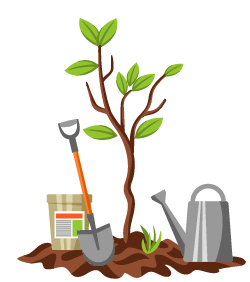
- Holes should be dug in advance, at least 3-4 weeks before planting. Those dug 6-8 months in advance, which is often done by gardeners, are ideal. Dig holes 60-80 centimeters deep and the same in diameter, fill the bottom with humus, manure, compost, chicken manure, wood ash, compost, or other organic matter of your choice, cover with a layer of soil, and add 35-40 liters of water. Leave the holes uncovered.
- Leave at least 3.5-4.5 meters between planting holes, as the trees don't tolerate crowding or shade. The distance between rows can be the same, or even greater, to give the apple trees ample space.
- Root collar The Daria seedling should remain 6-9 centimeters above the surface to prevent the apple tree from rooting higher. Otherwise, the rootstock's properties will be lost.
- It's a good idea to immediately dig a support beam or stake into the hole to tie the seedling to. If you position the stake on the north side, it will not only provide support for the young tree but also provide additional protection from the cold.
- Place the tree on the soil or drainage mat, spreading the roots out with your hands, ensuring they lie flat and free. Fill the holes with soil, compacting it well with your hands. Create an earthen bank around the hole, and pour 45-60 liters of water into it. mulch.
Landing dates
In warm climates, it makes absolutely no difference whether apple trees are planted in spring or fall. The main thing is that there's no sap flow in the trunks at that time. In colder climates, it's best to plant apple trees in spring, so that Daria can acclimate to the new conditions over the summer. Container-rooted trees can be planted at any time during the growing season.
Tree care
 Tree care
Protection from frost and pests
There's no reliable data, but many believe the variety carries a gene for scab immunity. At least, the trees haven't been affected by this disease for over forty years. They're rarely affected by other bacterial or fungal infections, but insects do occasionally damage them. However, if Dashenka does become ill, it won't be easy to cure. Therefore, it's better to take preventative measures rather than treat the trunks later.
To prevent young trees from perishing in the cold, all necessary steps must be taken. First, stop any watering Before the beginning of September, the trunks should be covered with burlap, agrofibre, tights, roofing felt, or any other material. Furthermore, their small stature allows for covering the trees with a canopy in harsher conditions, and the root area can always be covered with spruce branches or straw.
Loosening the soil, watering: proper agricultural technology
The trees are unpretentious, so when they are young, you can dig around the trunks twice a year, and then simply sow lawn grasses or spices around the rhizomes. Watering It's also advisable to water standard trees only during their active growth phase in youth and during extremely dry and hot weather. Then, 4-6 applications of water per season will suffice. Mature trees can take care of themselves, especially if they receive regular rainfall.
Pruning: simple crown shaping
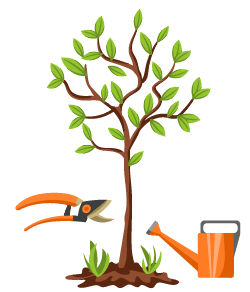
The tree's crown is moderately dense, but tends to be sparse, so a sparse, tiered form is most often developed. Branches are spaced at different heights, leaving the central trunk as the tallest. It's advisable to leave only two or three main skeletal shoots; this will simplify pruning once the apple tree begins to branch.
All damaged, broken, diseased, or dead branches should be pruned promptly; they will hinder the apple trees' development. Rejuvenation can be done starting in the 10th to 14th year. To do this, prune 2-3 older, mature branches, allowing new ones to grow.
Pollinator varieties
Reproduction
- Grafting.
- Rooting.
- Layers.
- Growing from seeds.
Diseases and pests
- Green aphid.
- Bacterial burn.
- Scale insect.
- Codling moth.
- Leaf roller.
- Hawthorn.
Ripening and fruiting of Daria
The beginning of fruiting
 The beginning of fruiting
This tree is so precocious that buds and flowers can be seen in its first year. However, allowing them to develop is not recommended, as this will slow the tree's growth and fertility in the future. Therefore, the first harvests can be collected in the second year, or even better, in the third or fourth year, when the foliage and rhizomes have become sufficiently established. At this point, you can harvest more than 10-13 kilograms of fruit.
Flowering time
The fruit ripens quite early, so the tree blooms as early as early May, and sometimes even as late April. If the weather is warm, the buds open earlier, but if the spring is rainy and damp, it may be slightly delayed. The flowers themselves are quite large and fragrant, sometimes pure white, but more often with a pinkish tint. They are gathered in inflorescences of 14-16, causing the ovaries to later develop into clusters.
Fruiting and growth
Trees grow faster than average, gaining 30-35 centimeters per year to reach a height of 1 meter. After reaching this limit, they slow down slightly, producing no more than 15-20 centimeters. Their yield increases at a similarly average rate, but the need to wait for a full harvest is more than offset by the long lifespan of the apple trees and the regularity of their fruiting. The trees do not take rest breaks; they bear fruit without any "vacations."
The fruit ripens as early as July, sometimes in the first half, sometimes in the second, depending on the climate and weather. Consumer maturity coincides with market maturity, and the apples can be eaten straight from the branches. They don't fall to the ground, so there's no need to rush the harvest. However, it's best to avoid over-ripening the apples, as this will negatively impact their shelf life. Typically, shelf life is 2-4 months, but in this case, it can be reduced to 3-4 weeks.
Top dressing
- Mineral complexes.
- Peat.
- Superphosphate.
- Compost.
- Manure.
- Chicken manure.
- Humus.
- Ammonium nitrate.
- Humus.
What to do if it doesn't bloom or bear fruit
- Inspect for diseases or pests.
- Organize timely and regular watering.
- Fertilize.
- Transplant to a more suitable location.
Why do apples fall?
- Natural weather conditions (wind, rain, hurricane, hail).
- Pest damage.
- Various diseases.
Share your own experience with the Daria apple variety so everyone can get to know it and get maximum yields with minimal effort.