Sunrise apple tree: characteristics of the variety and care
| Color | Reds |
|---|---|
| Ripening season | Summer |
| Size of apples | Average , Large |
| Taste | Sweet and sour |
| Crown type | Average tree height |
| Shelf life | Low shelf life |
| Application | Fresh , For recycling |
| Winter hardiness | Average winter hardiness |
| Fruiting age | Up to 5 years |
 History of origin and regions of growth
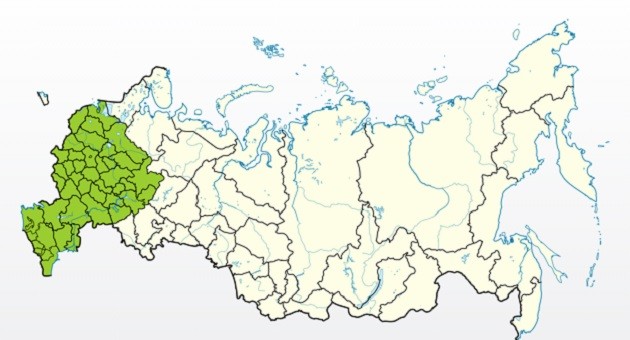
Growing regions
- Crimea.
- Pskov region.
- Middle zone.
- Astrakhan region.
- North Caucasus.
- Moscow region.
- Tver region.
- Leningrad region.
Origin
This apple tree was first developed in Canada by crossing the famous Golden Delicious, the McIntosh, and a third, unknown variety. It was developed around the end of the twentieth century and, by the beginning of the new millennium, had successfully begun its triumphant journey around the world.
This variety arrived in Russia relatively recently and is therefore not yet included in the State Register of Breeding Achievements. It has no official zoning, but can be grown throughout almost the entire central part of Russia, the south, the east, and even slightly north of the central regions.
Content
Description of the Sunrise variety
 One of the earliest new varieties, Sunrise immediately caught the eye of those who appreciate this type of apple tree. It is early-bearing and prolific, producing substantial annual harvests. The trees are heat-loving but can also tolerate frost. They are undemanding of soil, require little attention, regular fertilizing, and pruning, and are environmentally friendly. Sunrise is compact and space-saving, yet produces fruit regularly and abundantly.
The fruits are quite large, very attractive, and have high commercial and consumer qualities. They are juicy, aromatic, and very tasty, suitable for eating fresh and in processingThey transport well, but cannot be stored for long periods. They are recommended for individual cultivation and for commercial plantings for juice, dried fruit, preserves, and jam production.
Apples: What do they look like?
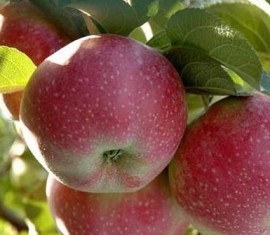
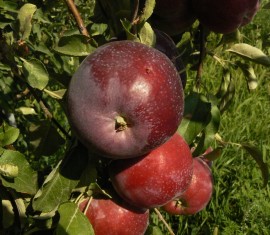
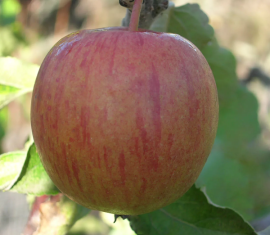
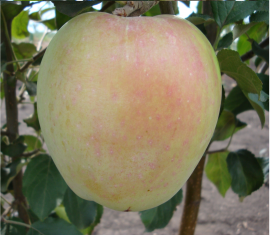
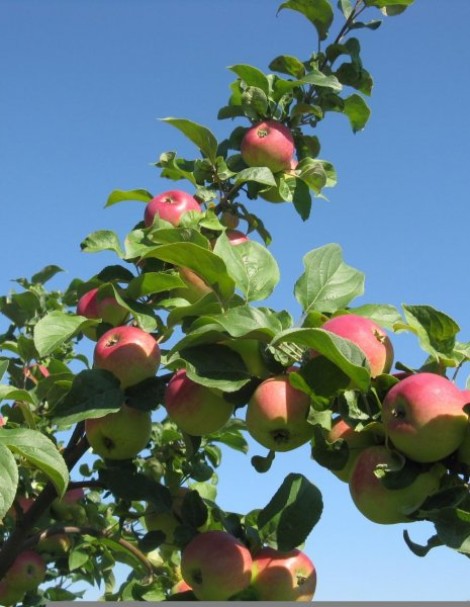
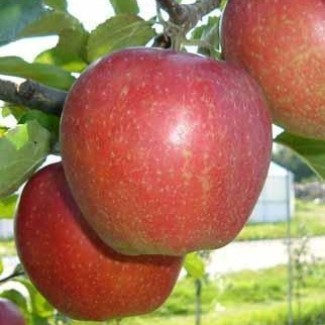
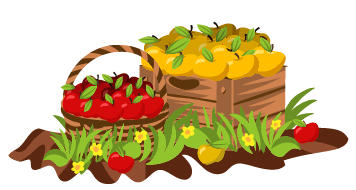
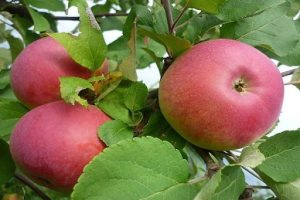 The fruits are medium to slightly larger in size, reaching approximately 180-200 grams in weight. In some years, they can reach 220-250 grams. Their shape is round, spherical, or slightly elongated, but not barrel-shaped.
The skin is dense but thin, easily split. The apples are smooth, uniform, glossy, and highly shiny. When fully ripe, they may have a waxy, oily bloom with a bluish tint. The base color is light greenish-yellow or greenish-white. The blush occupies more than half the fruit's surface and is crimson, raspberry-pink, or raspberry-red, blurred and spotted, speckled, rich, and dense. Subcutaneous dots are light, medium-sized, and numerous. The chemical composition can be easily assessed using the following parameters:
- P-active substances (catechins) – 142 milligrams.
- Ascorbic acid (vitamin C) – 12.1 milligrams.
- Total sugars (fructose) – 10.8%.
- Pectins (fiber) – 12.4%.
- Titratable acids – 0.37%.
Sunrise apples have a medium-firm, fine-grained flesh, are very aromatic, very juicy, have a pleasant texture, and are easy to break apart. They are considered balanced, dessert-like, tender, moderately crisp, and fresh. The flavor leans toward sweet, but has a pleasant apple tartness. According to professional tasters, these apples score 4.5-4.6 out of 5 for taste and appearance.
Sunrise apple tree: characteristics
Crown and root system
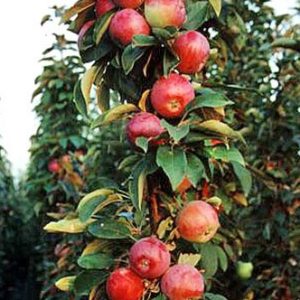 The trees are usually considered medium-sized, but it would be more logical to call them natural semi-dwarfs. They barely reach 2.9-3.2 meters in height without formative pruning.The crown is compact, rounded, even spherical, sometimes broadly oval, and can become spreading over the years. Branches extend from the main stem at a nearly right angle, are of medium thickness and length, rounded in cross-section, and covered with bark of a gray-green, gray-brown, or gray-brown hue.
The leaves are medium-sized or smaller than average, dense, glossy, shiny, and leathery. They are bright green or dark green, with short pointed tips and distinctly serrated, crenate, serrated, and wavy or boat-shaped margins. The root system is medium-deep, branched, and fibrous on most rootstocks, well adapted to seeking water in the soil.
Productivity and pollination
The variety's fertility is considered high, although it cannot compete with some winter varieties.
Under favorable weather and climate conditions and proper agricultural practices, a fully mature Sunrise tree can produce up to 150-180 kilograms of apples per season. With insufficient care or in unfavorable years, productivity can drop by almost half..
The tree is self-sterile, so don't expect a harvest if there isn't another early-blooming apple tree within 100 meters. Gardeners prefer to interplant varieties so they act as pollinators for each other, and spray them with sugar or honey syrup during flowering in the spring to further attract bees.
Winter hardiness and disease resistance
The tree's resistance to low temperatures is considered relative, meaning it can survive frosts down to -22-25°C without significant damage, but only if they don't last long. Therefore, before winter, it's essential to properly prepare and wrap apple trees; not only the buds but even the wood can be damaged by frost. Fortunately, they recover fairly quickly.
Sunrise has high field resistance to diseases of various etiologies, and from scabies The tree has genetic immunity. However, it's a good idea to regularly spray it preventatively and ensure that the fruit and leaves around the trunk don't rot, which often encourages fungal growth. Pests can also damage trees without treatment.
Rootstocks and subspecies
While no subvarieties of this variety are known, it can be easily grown on a wide variety of rootstocks. This will impart some unique characteristics to the standard trees, which have virtually no impact on fruit quality. The most popular is the dwarf or semi-dwarf rootstock MM106. The trees are less winter-hardy, but begin bearing fruit in the first year.
Features of growing Sunrise
 Landing
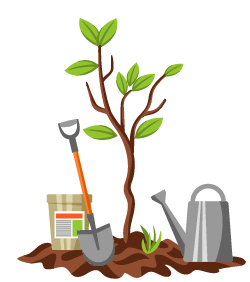 Landing
Basic conditions
- This is one of the most sun-loving apple varieties, so the planting site should be chosen so that it won't be shaded. In the shade, the seedlings will die in the first year, so don't risk it.
- The root system is quite deep, but not deep enough to monitor groundwater levels. Of course, Sunrise shouldn't be planted in a swamp or directly next to a lake, stream, or pond, but that's about it.
- The soils suitable for this variety should be airy, well-drained, and fertile, but all this can also be achieved artificially.
- It's best to prepare planting holes in advance so they have time to settle. To do this, dig 60-70 centimeters deep and up to a meter in diameter, then add fertilizer and drainage to the bottom, then fill with water. They should not be covered with anything; they should be left outdoors.
- If you want to preserve the qualities of the rootstock, the root collar should be left at a height of 6-9 centimeters above the surface.
- Staking points, such as planks, stakes, or trellises, should be driven directly into the holes to support the sapling. Position the tree on the south side, so the plank will provide additional protection from north winds.
- It is advisable to leave approximately 3.5-4 meters between trees to avoid conflict between crowns and rhizomes in the future.
- The drainage material is raked into a pile, the tree is placed on it, and its roots are spread out. The entire thing is covered with soil, compacted, watered, and mulched.
Planting dates
Despite the variety's tolerance to low temperatures, it's recommended to plant the trees in the spring, when the soil has warmed up well. This means waiting until there's no longer any risk of frost, but the buds have not yet begun to open. In the southernmost regions, Sunrise can be planted in the fall, but this is riskier, as early frosts can damage the immature trees.
Tree care
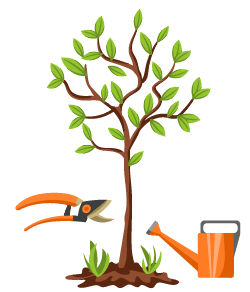 Tree care
Protection from frost and pests
After the leaves have fallen, the tree has undergone sanitary pruning, and the area around the trunk has been cleaned, carefully wrap each trunk with burlap, old tights, roofing felt, or tar paper. Young, small trees can be wrapped like tents. The root zone can be covered with bales of straw, mats of hay, spruce branches, or piled soil. Watering should be stopped immediately after harvesting to allow the trees time to prepare for winter.
Applying rendered animal fat, old drying oil, fuel oil, or grease to the trunks is effective against rodents. Commercially produced products are also available, they are inexpensive and sold in gardening stores. To prevent insects from settling in bark crevices, it's a good idea to whitewash apple trees in the spring and fall.
Loosening the soil, watering: proper agricultural technology
Apple trees require regular soil loosening. It's a good idea to dig twice a year, in early spring and fall. During the rest of the growing season, you can simply loosen the soil with a hoe or hoe; there are even special rakes. After each application of water, the soil should also be turned the following day, otherwise it will compact into a dense lump. At the same time, you can remove debris and weeds, root suckers, and shoots from other plants from under the apple trees so they don't interfere with their growth.
Trees are watered regularly only when young; as they get older, they require moderate watering. Just 3-5 applications of water during the driest periods is sufficient. It's common to dilute various fertilizers and fertilizers with water so they are absorbed more effectively by the apple tree.
Pruning: simple crown shaping
Pruning for this variety usually begins in the first year, otherwise it will be difficult to bring it into a relatively orderly state later. The central stem is cut back by a third, leaving two to three main branches. These should be placed at different heights. Afterwards, all that remains is to maintain the natural branching.
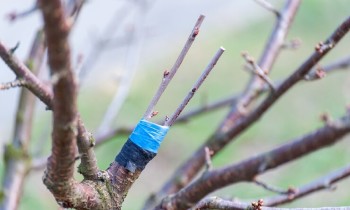
In the fall, a sanitary pruning is performed, removing diseased, broken, and dry shoots. All of these interfere with normal tree growth and negatively impact fruiting. Cuts must be sealed with paint or garden pitch, this will significantly reduce tree stress.
Pollinator varieties
- Kovalenkovskoye.
- Pyros.
- White filling.
- Everest.
- Julia.
- Golden Delicious.
- Mac.
- Folder.
Diseases and pests
- Cytosporosis.
- Powdery mildew.
- Black crayfish.
- Scale insect.
- Hawthorn.
- Green aphid.
Ripening and fruiting of Sunrise
The beginning of fruiting
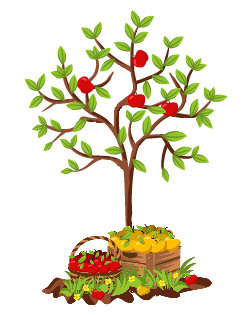 The beginning of fruiting
The first flowers can be seen on seedlings grown on dwarf rootstocks in the very first year. However, they should be picked immediately, preventing further development, especially since they are likely barren flowers. On standard rootstocks, the tree begins bearing fruit in the third or fourth year, which is also quite quickly. The first harvests are by no means abundant; a few dozen fruits at most, no more. But it's certainly enough for a sample.
Flowering time
Sunrise begins to bloom as early as late March or early April, so pollinators will need to be carefully selected. Most apple trees bloom much later. The flowers are large, mostly white, but can be slightly pinkish. They are fragrant and densely covered, making the tree very decorative at this time.
Fruiting and growth
The tree grows very quickly, reaching at least 45-60 centimeters in height per year. Therefore, it reaches its peak quite quickly. Fruit production also increases exponentially. By the sixth to eighth year, Sunrise can produce quite substantial, full-fledged harvests.
Apples ripen in late mid- to late July, but sometimes even earlier. In the coldest regions or after a long, drawn-out, cold, and wet spring, they may not ripen until early August, but this is very rare. These are the very first apples in the garden, ready to eat two weeks before the White Naliv. They transport fairly well, but if not picked in time, they can fall off, and they store for no more than 1.5-2 weeks.
Top dressing
- Superphosphate.
- Humus.
- Peat.
- Calcium.
- Manure.
- Compost.
- Nitrogen complexes (not in the first 3-4 years).
What to do if it doesn't bloom or bear fruit
- Increase watering.
- Remove insects.
- Cure diseases.
- Fertilize.
- Move to a sunny place.
Why do apples fall?
- Overripe.
- Wind, rain, hail, snow.
- Pests or diseases.
Leave a review of the Sunrise apple tree variety so that even a novice gardener can receive useful information firsthand.