Altai Rumyanoe apple tree: characteristics of the variety and care
| Color | Reds |
|---|---|
| Ripening season | Summer |
| Size of apples | Small ones |
| Taste | Sweet |
| Crown type | Average tree height |
| Shelf life | Low shelf life |
| Application | Fresh , For recycling |
| Winter hardiness | High winter hardiness |
| Fruiting age | Up to 5 years |
 History of origin and regions of growth
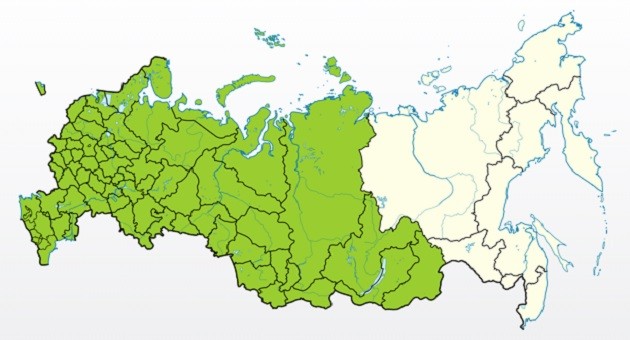
Growing regions
- Middle zone.
- Moscow region.
- Ural.
- Siberia.
- North Caucasus.
- Leningrad region.
- Crimea.
- Urals and Trans-Urals.
- Some northern regions.
- Far East.
Origin
The variety was developed at the Altai Experimental Horticultural Station (now the M.A. Lisavenko Siberian Horticultural Research Institute of the Siberian Branch of the Russian Academy of Agricultural Sciences) back in 1959, under the supervision of Mikhail Afanasyevich Lisavenko, an academician at the All-Union Academy of Agricultural Sciences, Doctor of Agricultural Sciences, and Professor. The following are considered the direct authors of the variety, who worked under the supervision of the renowned scientist:
- Kornienko T. F.
- Zhebrovskaya L. Yu.
- Grankina Z. A.
- Kalinina I. P.
To create the new hybrid, a seedling of Ranetka Severyanka was used, pollinated with a mixture of pollen from the old Bellefleur-Kitayka variety and the well-known Melba. The apple tree was named for its appearance and the region where it was grown. In 1973, its inclusion in official variety trials was first announced. However, it took 12 long years before the variety was added to the State Register and zoned for the West Siberian, Ural, and Far Eastern regions.
Content
Description of the Altai Rumyanoe variety
 Trees with compact, sparse crowns are a good investment for gardeners growing trees in harsh and unstable climates, such as the Far East or Siberia. Apple trees are distinguished by their enviable environmental resilience, easily withstand severe frosts, require little maintenance, and thrive in a wide variety of soils.
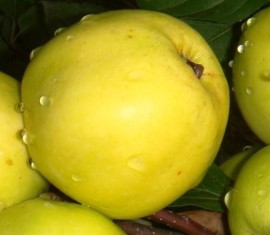
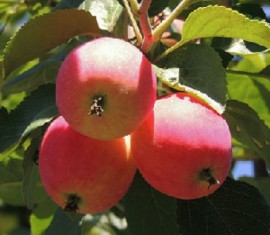
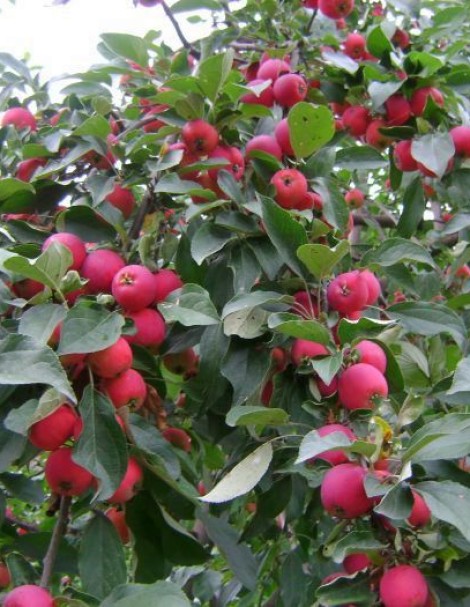
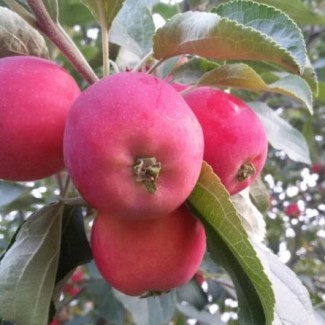
The apples are small but attractive, round, with rosy, bright sides. They possess high commercial and consumer qualities, are aromatic, juicy, and delicious. Despite their tendency to shed when overripe and poor storage qualities, they are recommended for cultivation in industrial intensive orchards of commercial farms and in private gardens.
Apples: What do they look like?
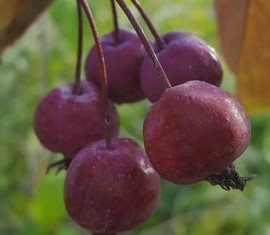
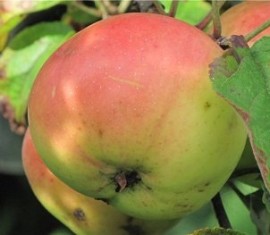
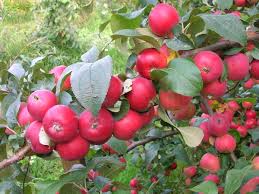 The fruits are medium-sized or smaller than average, sometimes small. They grow to approximately 55-95 grams in weight. In good years, with proper flowering management and high-quality care, they can reach 95-110 grams in weight. The apples are round, spherical, and occasionally slightly elongated or flattened. They are predominantly uniform, symmetrical, with subtle, barely visible ribbing and no lateral seam.
The fruit skin is dense, smooth, and highly shiny. When ripe, it may develop a waxy, oily coating of a bluish-silver hue. The base color is greenish-green, becoming creamy with a slight orange tint as it ripens. The blush consists of specks and streaks of bright red, burgundy, and carmine, covering 45-80% of the surface. Subcutaneous dots are numerous, grayish, and unobtrusive against the variegated skin. The chemical composition can be easily assessed using the following data:
- P-active substances (catechins) – 316 milligrams.
- Ascorbic acid (vitamin C) – 19.1 milligrams.
- Fructose (total sugars) – 14.7%.
- Pectins – 6.9%.
- Titratable acids – 0.97%.
The flesh is firm, has a pleasantly refreshing texture, is fine-grained, and very juicy. It has a distinct yellowish or creamy-lemon hue, is crisp, and has a sweet-sour flavor with a strong sweetness. Professional tasters rate the fruit 4.6-4.7 points for appearance and flavor.
Altai Rumyanoe apple tree: characteristics
Crown and root system
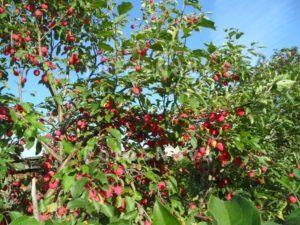 A medium-sized tree with a crown of the same size and low density, can grow up to 4-5.5 meters in height without formative pruningThe crown is initially pyramidal or oval, but over the years it becomes increasingly rounded, sometimes spherical, sometimes broadly oval, spreading, weeping, and drooping. The shoots are strong, knobby, curved, and geniculate, covered with bark of a brownish-gray or grayish-brown hue without pubescence. Fruiting is concentrated on the ring shoots.
The leaves are large, oval-elongated, ovate, dense, and leathery. The surface is matte, velvety, and smooth; the underside may have a felty pubescence. The blade is green or deep green, curved downward along the central axis, short-pointed, double-serrated, and crenate, with coarse nervation. The root system is deeply rooted, branched, and fibrous.
Productivity and pollination
Compared to Sverdlovsk and other northern apple trees, the Altayskoye Rumyanoe variety looks quite attractive. Therefore, it is considered a medium-yielding variety overall and a high-yielding variety for Siberia.
In one season, a good grower can produce approximately 95-110 kilograms of delicious fruit from a mature Altai Ruddy tree. Fruiting occurs annually, with no rest periods until the very end of its active life..
The variety is quite self-fertile, but not completely so. If there are no suitable apple trees nearby for cross-pollination, the yield will be at least 35-55%, which is quite good. However, experienced practitioners prefer to plant the trees interspersed, no more than 55-90 meters apart. They can be sprayed with sugar syrup during flowering, or mobile apiaries can be used.
Winter hardiness and disease resistance
Even in frosts down to -35-37°C that last for more than 3-4 weeks at a time, trees suffer minimal damage in most cases. They can withstand even much harsher conditions if properly cared for and protected for the winter.
To scab or powdery mildew, fruit rot or black crayfishApple trees have a high level of resistance. They have no genetic immunity, so this can be considered a true advantage of the variety. However, if they do become infected during years of severe epiphytotics, they recover very quickly.
Rootstocks and subspecies
No subspecies or subcultivars of the Altai Ruddy have yet been developed, but it can be grown on a wide variety of rootstocks. This can impart some unique qualities and properties to the variety. Dwarf, creeping, or columnar varieties do not exist, although a creeping crown can be formed by staking and pruning.
Features of growing Altai ruddy
Landing
 Basic conditions
 Basic conditions
- All fruit trees love sunlight, and this variety is no exception. Choose an open site for planting, one that receives good sunlight for most of the day. In the shade, this variety will grow and even flower and bear fruit, but yields will be reduced.
- It's good for the tree canopy to be well-ventilated, but drafts are unacceptable. Trees exposed to strong winds become sick and even die.
- Altai is undemanding when it comes to soil; it will grow just as well in black soil as it will in sand or loam. The main thing is to avoid excessive acidity or salinity.
- A groundwater depth of 2.2-2.5 meters will be optimal for a tree.
- Dig the holes at least 3-5 weeks before planting, but earlier is possible. Make a hole 50-70 centimeters deep and the same in diameter, add fertilizer to the bottom, add drainage or a layer of soil on top, and fill with 45-50 liters of water.
- Leave approximately 3.5-4 meters between holes, and 4.5-5 meters between rows is better. This will prevent mature trees from clashing with their roots and crowns in the future, and harvesting will be easier.
- If you didn't manage to plant the trees on time, it is acceptable to bury them at a 45° angle until spring.
- Planks or stakes are driven directly into the holes, to which the young trees are tied. They are placed on the north side to provide additional protection during frost.
- The root collar of the Altai Ruddy should always remain above the surface, approximately 5-8 centimeters. Remember to allow the soil to settle when planting to prevent the root collar from sinking deeper and the seedling from sending roots higher.
- Place the tree on a drainage platform or soil pile, spread the roots out by hand so they lie freely, cover with soil, and compact. Water with 35-45 liters of water, and mulch the surface.
Landing dates
The ideal time to plant this variety is in the spring, especially in the first ten days of March, before the sap begins to flow in the trunks. However, it's important to ensure the soil is well warmed, otherwise the tree may die. In warm southern regions, apple trees can be planted in the fall after the leaves have fallen. Trees with closed root systems (in pots, bags, or containers) can be transplanted into open soil at any point during the growing season.
Tree care
 Tree care
Protection from frost and pests
All standard winter preparation measures must be carried out promptly and efficiently. Trees are winter-hardy, but neglecting the rules can lead to unpleasant consequences, such as buds freezing during extreme cold. Therefore, the roots are covered with spruce branches, straw, hay, or even dry branches, the trunks are wrapped with roofing felt or burlap, and the trees are covered with a tent-like covering of agrofibre. Watering stop no later than the end August or early September.
Whitewashing the trunk with a thick lime solution up to the first branches will help repel insects. To prevent hares, mice, and hamsters from gnawing the bark and young branches in winter, you can coat them with lard, fuel oil, grease, and other similar substances with an unpleasant, pungent, and strong odor.
Loosening the soil, watering: proper agricultural technology
Like any tree, apple trees prefer moist, loose soil. Therefore, it's common to dig around the trunk twice a year, hoeing in between. It's important not to dig deeper than 8-10 centimeters, otherwise you could damage the rhizome. Don't forget to regularly remove weeds, shoots from other plants, and root suckers. Over time, you can sow herbs, grasses, and flowers around the trunk to provide natural aeration.
During the first year, watering should be done at least once every 10-12 days, unless there's rain. If rainfall occurs, the specified time is counted from that amount and watered again. For a mature tree, 35-40 liters of water, divided into two doses, morning and evening, is sufficient. Over the years, watering can be reduced to 5-6 times per season.
Pruning: simple crown shaping
The Altai tree's crown isn't very dense, and it's practically unprone to becoming overgrown. Therefore, pruning won't require any special effort. It's enough to initially, from the first year, create a sparse, tiered growth pattern, spacing the branches widely apart at different heights. Then, simply maintain the natural branching pattern by removing any shoots growing inward or upward.
Sanitary pruning of trees is carried out in spring and fall. It's important to promptly remove broken, diseased, or dead branches to prevent them from needlessly draining the tree's sap. After 15-19 years, rejuvenation treatments can be performed by pruning 2-3 mature shoots to encourage the development of new shoots.
Pollinator varieties
- Bellefleur the Chinese.
- Berry.
- Haste.
- Korobovka.
- Sinap northern.
- Arkad.
- Augusta.
- Terentyevka.
Reproduction
- Grafting by cuttings.
- Growing from seeds.
- Layers.
- Clones.
Diseases and pests
- Cytosporosis.
- Scab.
- Rust.
- Powdery mildew.
- Pit bitterness.
- Green aphid.
- Copperhead.
- Flower beetle.
- Codling moth.
- Scale insect.
Ripening and fruiting of the Altai ruddy
The beginning of fruiting
 The beginning of fruiting
The tree is considered early-bearing because the first buds can be found on its branches as early as the third or fourth year. In most cases, these are barren flowers and are recommended to be plucked immediately, but a few apples can already be picked for sampling. The first more or less acceptable fruiting occurs as early as the fourth or fifth year, when 3-6 kilograms of delicious, juicy apples can be harvested.
Flowering time
The period can vary from early or mid-May to the first ten days of June. This is directly influenced by climate, weather, care, and other external factors. The further north the apple tree grows, the later the budding period may be. The tree's flowers are large, beautiful, and intensely fragrant. They are cup-shaped, with delicate, snow-white or white-pink petals. The process lasts approximately 14-21 days, which is why the tree is considered highly ornamental.
Fruiting and growth
The tree grows very quickly before fruiting, growing 65-70 centimeters per season. After the fruit begins to ripen, the height shortens, but remains impressive – up to 45-55 centimeters. Therefore, the Altai tree can reach its maximum height very quickly, in just a few years. Fruitfulness also increases rapidly. By the 8th to 10th year, harvests are fully viable.
Apples ripen in mid- to late August in temperate climates. If the summer is cold or further north, they may linger until early to mid-September. You can tell when they're ripe by taste or by the bluish, waxy coating on the surface. They must be picked immediately, otherwise they'll fall off and be useless except for emergency processing. In a cellar, these fruits can last for a maximum of 45-60 days, after which the flavor deteriorates beyond repair, the flesh becomes limp and crumbly, and the appearance unappealing.
Top dressing
- Compost.
- Manure.
- Superphosphate.
- Ammonium nitrate.
- Chicken manure.
- Dolomite flour.
- Wood ash.
What to do if it doesn't bloom or bear fruit
- Inspect for diseases or pests.
- Limit or activate watering.
- Feed or apply fertilizer.
- Transplant to a sunny place.
Why do apples fall?
- Natural weather conditions (wind, rain, hurricane, hail).
- Pest damage.
- Overripe.
- Diseases.
Share your own experience with the Altai Rumyanoe apple variety so that any gardener can learn about it before planting and achieve maximum results.