Spartan apple tree: characteristics of the variety and care
| Color | Reds , Pink |
|---|---|
| Ripening season | Autumn |
| Size of apples | Average |
| Taste | Sweet |
| Crown type | Average tree height |
| Shelf life | High shelf life |
| Application | Fresh , For recycling |
| Winter hardiness | Average winter hardiness |
| Fruiting age | Up to 5 years |
 History of origin and regions of growth
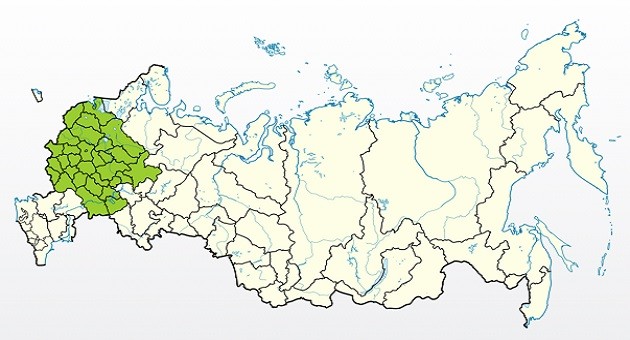
Growing regions
- Middle zone.
- Southern regions of the Black Earth Region.
- Eastern Volga region.
Origin
This apple variety can hardly be called ancient, as it was first bred only in 1926. It was developed at the Summerland Breeding Laboratory in Canada. Initially, it was assumed that the progenitors of the variety were the McIntosh and Pepin Newtown Yellow, but the latter's involvement was completely disproved by genetic testing.
Thanks to its excellent flavor, aroma, shelf life, and transportability, the apple tree quickly spread across North America and then throughout the world. Spartan only arrived in Russia in 1986. However, it became clear that the tree could not grow well and produce abundant fruit in all regions of our vast country.
Content
Description of the apple tree variety Spartan
 This variety is renowned worldwide for its high yields, distinctive flavor, and excellent shelf life. It is considered a winter-bearing variety, although it is not frost-resistant. These trees are easy to care for, and the fruit can survive in suitable conditions until the next harvest. Therefore, they are often grown commercially.
Apples: color, size, weight
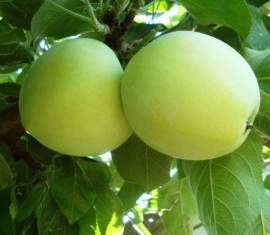
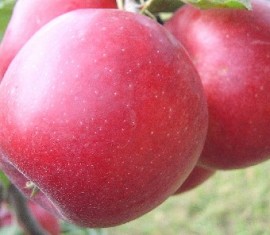
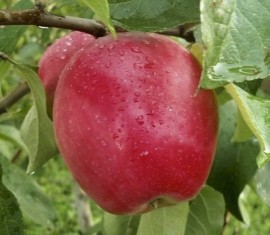
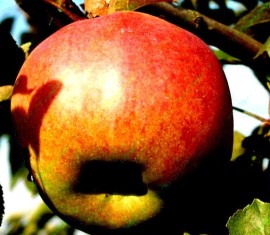
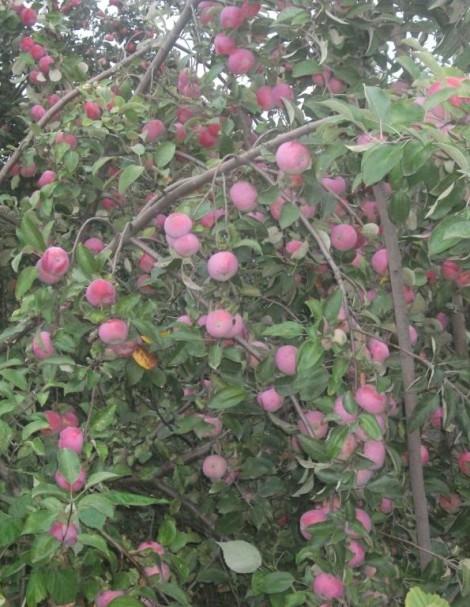
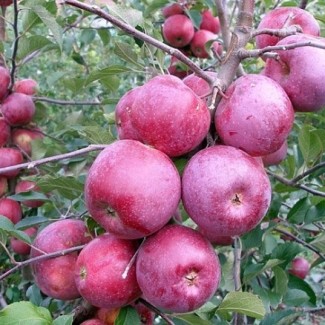
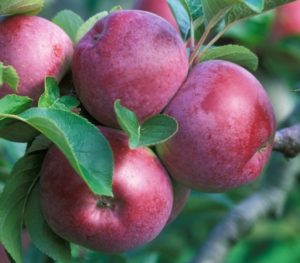 The apples are predominantly medium-sized, round or round-conical, slightly flattened. The average weight of one apple is 140-180 grams, making them medium-sized. The skin is primarily green or greenish-golden, covered 60-85% with a burgundy or burgundy-red blush. It is quite dense, making the apples suitable for any type of transportation.
They cling very tightly to the branches and do not fall off even when overripe. Due to the dense waxy coating, the fruits have a purple hue. They are characterized by the following chemical indicators per 100 grams of product:
- P-active substances – 160.2 milligrams.
- Ascorbic acid (vitamin C) – 4.6 milligrams.
- Pectins (fiber) – 11-11.2%.
- Total sugars (fructose) – 10.2-10.6%.
- Titratable acids – 0.32%.
Spartan apples have dense, juicy, white flesh. They have a pleasant, strong aroma and a sweet, rarely tart flavor. These apples earn a taste score of 4.9-5 out of 5.
Spartan apple tree: characteristics
Crown and root system
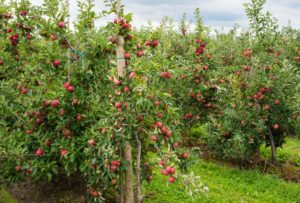 This is a medium-sized tree with a rounded crown when mature. When young, it can be pyramidal for up to 2-5 years. Under favorable conditions it can grow up to 5-7 metersHowever, gardeners prefer to limit growth through pruning to facilitate harvesting. Most branches and shoots are positioned at an acute angle to the trunk. They curve downwards toward the tips, giving the apple tree a spreading, lush appearance.
The central trunk usually grows at a slight angle to the ground surface. The bark on young shoots is burgundy. Over time, it darkens and becomes rough. The leaves are round, shiny, and leathery, dark green. The root system depends largely on the rootstock, so it can be branched or compact, with or without a central taproot.
Productivity and pollination
Spartan is considered a self-fertile variety, meaning it doesn't require additional pollinators to bear fruit. In fact, it can act as a pollinator itself. However, if there are other apple trees within 200 meters that bloom at the same time, a significant increase in yield is observed.
As the tree ages, the fruit gradually decreases in size. While initially they might reach 180 grams, a thirty-year-old apple tree will no longer produce apples weighing more than 90-110 grams.
This variety is quite productive.
A young tree can produce up to 25-30 kilograms of aromatic fruits, and by the age of 11-15 years it can reach 85-100 kilograms.
The total lifespan and fruiting period of such an apple tree can reach 50-65 years, after which the yield gradually declines.
Winter hardiness and disease resistance
Spartan apple trees were bred specifically for growing in harsh conditions. However, in practice, the plant has difficulty withstanding low temperatures. It is very sensitive to winter frosts, and especially to late spring frosts. Therefore, this variety is best grown in southern regions. However, it also dislikes extreme heat and drought, so it requires frequent watering during hot weather.
With proper agricultural practices, apple trees are completely resistant to powdery mildew. They are just as susceptible to pests as other varieties. However, it's especially worth being wary of scabies, regularly clean the trunk circle from fallen fruits and leaves, spray with special agents, otherwise Spartan can be damaged quickly and heavily.
Subspecies and rootstocks
There are several varieties of this cultivar, each with its own characteristics, which should not be forgotten.
Subspecies
| Subspecies | Description |
| Late | This is the most productive variety, yielding up to 160-175 kilograms of fruit in good years, with a tasting score of 5. This variety is more frost-resistant, so it can be grown until Urals, it is more resistant to scab and is completely insensitive to powdery mildew. |
| Winter | Apple trees of this subspecies are distinguished by a distinctly spherical crown and small, dark green, leathery leaves. Fruiting can continue until the end of October, but the apples themselves are smaller, no more than 100 grams, and have a distinctly tart flavor. |
If you properly cover Spartan for the winter, it will be able to withstand frosts down to -32-35°C.
Rootstocks
It is common to graft trees onto a wide variety of rootstocks, but the results can vary greatly.
| Rootstocks | Peculiarities |
| Dwarf | The red-leaved Paradise Budagovskyi is a good choice for this option. The tree will be short, only up to 2 meters, and care will be much easier. Fruit can be harvested as early as the third year after planting, and they are much larger than usual (150-190 grams). The rhizome easily tolerates freezing temperatures down to -15°C. The main drawbacks are freezing of the branches in winter and sunburn in the summer heat. |
| Semi-dwarf | These trees grow to 3-3.5 meters and begin bearing fruit four years after planting, with slightly smaller fruits (110-150 grams). Frost resistance on this rootstock is lower, but the strong and extensive root system allows it to easily survive dry periods. |
| Columnar | In fact, such rootstock is considered undesirable for this apple tree; the trees often die and fail to thrive. However, some experimental specimens showed excellent results. Their fruit began 30 centimeters above the soil surface, and the branches grew vertically upward. |
So semi-dwarfs are best suited for the Moscow region and similar rather changeable weather conditions. In the middle zone, it is better to choose a dwarf rootstock, late-ripening Spratana, as in the Northwest or Urals.
Features of growing Spartan
 Landing
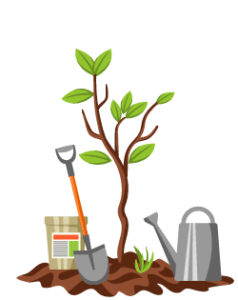 Landing
Basic conditions
- The site should be chosen away from a low-lying area and away from groundwater. If such a location is not available, a full range of drainage work will be required, otherwise the root system may rot.
- Spartan prefers fertile soils with low acidity, so planting it in sand or loam is not the best solution.
- Holes are dug 50-60 centimeters deep and 1 meter in diameter. They should be prepared at least a week before planting. To do this, place drainage material (crushed stone, nut shells, expanded clay) at the bottom, then mix some soil with humus, ash, superphosphates, and potassium. Pour this mixture into the holes and add 1-2 buckets of water.
- On the day of planting, lower the seedling into the hole, remembering to straighten the roots, hold it in place and cover it with soil so that the root collar rises above the surface by 3-7 centimeters.
- There should be at least 3 meters between apple trees of the same variety, but it is better to plant other fruit trees 4-4.5 meters apart.
- After planting, you need to water the apple tree with 20 liters of water and mulch the soil with humus.
Pay attention to light levels when choosing a planting location for this variety. This is a very important factor, directly affecting yield.
Experienced gardeners say there's no need to dig in stakes, as trees don't need support. However, it wouldn't hurt to provide protection from northerly winds. For this purpose, choose a planting site near fences, hedges, or building walls.
Landing dates
This variety can be planted in either spring or fall, depending on the age of the seedlings. First-year trees are best planted after the cold weather has passed, around mid-April, so they have time to fully establish. Older trees can be planted in late September or early October, allowing at least four weeks before the first hard frost.
Protection from frost and rodents
To prevent frost damage to young trees during the first few years, they are covered. Straw, spruce branches, roofing felt, roofing felt, and burlap are all suitable materials. The chosen material is wrapped around the lower part of the trunk and any damaged branches.
Such activities inevitably attract rodents and insects, which move closer to human dwellings during frosty weather. To prevent them from damaging apple trees, they should be whitewashed with lime in the fall, coated with special compounds (such as grease or lard), and treated with suitable chemicals.
Tree care
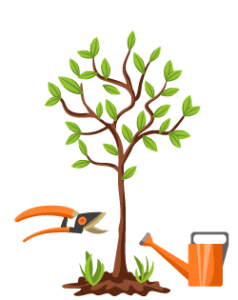 Tree care
Loosening the soil, watering: proper agricultural technology
To ensure the tree takes root well and grows quickly, it needs regular watering and loosening of the soil. Watering is primarily done by sprinkling. In dry and hot weather, water 20-40 liters once every two weeks. If it rains, you can stop and then resume when dry weather returns.
Loosening is done very carefully, as the roots are usually located shallowly beneath the surface. Twice a year, a shallow dig around the trunk is sufficient.
Pruning: simple crown shaping
- FormativeThis is an important set of measures aimed at creating a properly shaped crown, which will significantly simplify harvesting and increase yield. The first stage is carried out immediately after planting: all shoots and the main stem are shortened by a third. To prevent the crown from becoming overly dense, formative pruning should be performed annually, in spring and fall. All unnecessary shoots are removed. It's best to leave the correct lateral branches in place, ensuring the apple tree develops a uniform, stable, and spreading growth.
- SanitaryIt is best to prune old, diseased, and dry branches annually in early spring or late autumn, when the sap flow stops.
- SupportiveThis type of pruning is not performed separately on the Spartan apple tree, as it is part of the formative complex.
This self-fertile variety doesn't require pollinators and produces fairly good yields on its own. However, to significantly increase yields, suitable varieties can be planted nearby.
Reproduction
- Layers (clones).
- Growing from seeds.
- Grafting (rootstock) by buds or cuttings.
Diseases and pests
- Moniliosis.
- Scab.
- Cytosporosis.
- Apple tree codling moth.
- Green aphid.
Self-pollination results in the formation and development of only 70% of ovaries, while with the participation of pollinators, 100% can be achieved.
Ripening and fruiting of Spartan apple trees
The beginning of fruiting
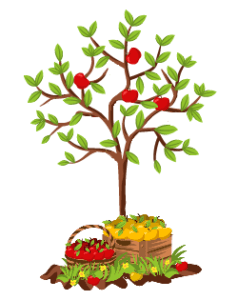 The beginning of fruiting
Spartan is considered an early-fruiting crop. When grown from seed, the first fruits can be seen on the tree only in the fourth or fifth year. If grown from a vegetative rootstock, the first apples can be harvested as early as the second or third year.
Flowering time
Depending on climate conditions, flowering may occur in early, mid, or even late May. The timing may also shift depending on the weather. The apple tree produces large white flowers with a distinctive, strong fragrance.
Fruiting and growth
Apples are firmly attached to the branches, so shedding is uncommon. Harvesting typically begins in mid-September, but sometimes the harvest can be delayed by a full month—until mid- or late October—without affecting shelf life.
It's not customary to eat Spartan apples immediately after harvest. They need to rest to develop their full aroma and flavor. It's best to wait at least a month, but they develop their most intense aroma and flavor closer to spring.
In the first few years, the apple tree produces relatively little fruit, but by the third or fourth year after planting, it can produce around 40 kilograms of fruit. It reaches its peak fruiting between the eighth and twelfth years, when a tree can yield 85-120 kilograms of apples.
It is optimal to apply fertilizer four times per season.
Top dressing
- When ovaries are forming in the spring, it is recommended to fertilize with urea or any organic matter.
- During flowering, fertilize with superphosphate, potassium sulfate and urea.
- At the very beginning of fruiting, 10 grams of sodium humate and 0.5 kilograms of nitrophoska are diluted in 100 liters of water.
- When the apples are fully harvested, 300 grams of potassium sulfate and superphosphate are added to the area around the trunk.
What to do if it doesn't bloom or bear fruit
- Check for diseases or pests.
- Prune old, diseased or damaged branches.
- Reduce or increase watering.
- Transplant to a more fertile area.
Why do apples fall?
- Natural phenomena.
- Pests.
- Diseases.
Leave your thoughts on Spartan in the comments and share your experiences with newcomers!