Idared Apple Tree: Variety and Care Features
| Color | Reds |
|---|---|
| Ripening season | Autumn |
| Size of apples | Large |
| Taste | Sweet , Sweet and sour |
| Crown type | Average tree height |
| Shelf life | High shelf life |
| Application | Universal variety |
| Winter hardiness | Low winter hardiness |
| Fruiting age | Up to 5 years |
 History of origin and regions of growth
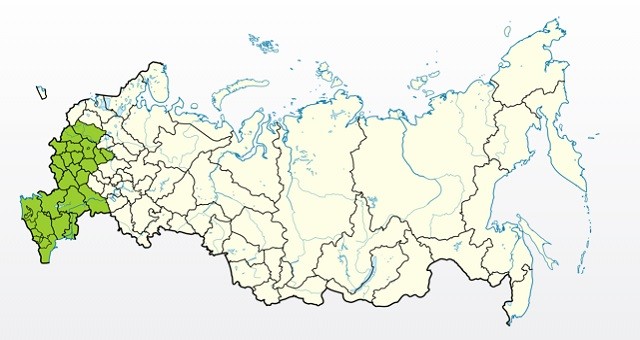
Growing regions
The variety's primary distribution area in Russia is the Krasnodar Krai, where over 85% of all plantings are produced. However, it is also cultivated virtually throughout the south of the country, as well as in Belarus and Ukraine.
Origin
The Idared variety is believed to have originated in nurseries in Idaho, USA. It was developed by crossing the Wagner and Jonathan varieties back in 1935. In 1942, it was classified as an elite variety, which allowed it to quickly spread throughout America.
By 1960, the tree was brought to Europe, from where it made its way to the Soviet Union, where it proved its worth in warm, temperate climates. However, today, Idared is losing popularity due to a saturating market with apples of similar flavor, as well as the development of new, original varieties. Therefore, despite all its advantages, it is more often found in small private farms.
Content
Description of the Idared apple variety
 This American-bred winter apple variety has long been a welcome guest in orchards around the world, and our country is no exception. It is highly productive, has excellent consumer qualities, is easy to transport, and has a long shelf life. This makes Idared recommended for cultivation in both large, industrial farms and small home gardens.
Apples: color, size, weight
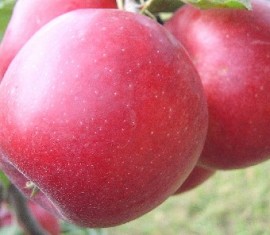
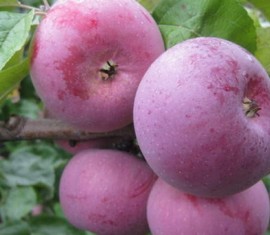
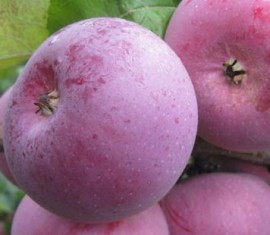
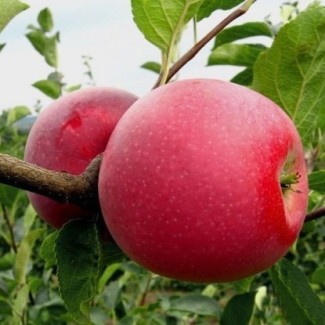
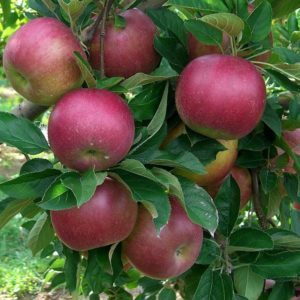 The Idared variety produces fruits that are typically large (up to 180-200 grams) or medium (up to 120-150 grams). They are typically round, slightly flattened, and can have a slightly conical shape, with subtle ribbing.
The apple skin is thin but dense and strong. It is smooth, glossy, and covered with a light waxy coating that gives it a bluish tint. Its base color is light green, with sparse but large greenish subcutaneous dots that merge into a kind of marbled light stripes. The blush typically covers 65-85% of the fruit and can be carmine-red or raspberry. The chemical composition is characterized by the following indicators per 100 grams:
- P-active substances – 120 milligrams.
- Vitamin C (ascorbic acid) – 11.5 milligrams.
- Total sugars (fructose) – 10.5%.
- Titratable acids – 0.6%.
- Pectins (fiber) – 13.5%.
The marketability of Idared fruits is considered to be up to 90%, with over 10% being premium grade, and 45-50% being first grade. The flesh has a light creamy hue, is dense, crisp, and has a sweet-tart flavor. During storage, it can become coarse-grained, and in spring (toward the end of its shelf life), it can even become loose and less juicy. The tasting score for Idared's appearance matches its flavor, scoring 4.3 out of 5.
Idared apple tree: characteristics
Crown and root system
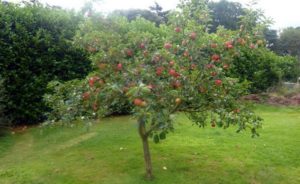 The trees are usually vigorous, but this may depend on the rootstock used. Without pruning, they can easily reach 6-7 meters in height. By the age of 8-10, they can reach 3-4 meters. Crown The tree is predominantly oval or spherical, becoming spreading with age and prone to dense growth, which gardeners should monitor closely. The skeletal branches generally extend from the trunk at an acute angle.
Young shoots have smooth, grayish-brown bark that begins to crack and may turn brown over time. Idared leaves are dark green, slightly glossy, and have a distinct "down" underneath. The root system is superficial and branched; the vegetative rootstock has a more robust central taproot; the rest depends on the rootstock used.
Productivity and pollination
This variety is considered to be high-yielding, although some varieties, for example, Antonovka, can yield much more apples (up to 250-300 kilograms).
Idared produces only 100-120 kilograms, but thanks to its consumer and transport qualities, the variety has been popular for almost a hundred years.
The tree bears fruit regularly, regardless of the year; weather conditions have little effect on fluctuations in the number of apples.
Apple trees are considered conditionally self-fertile, but large yields can't be expected when planted alone. Only 2.5% of the ovaries will develop into full-fledged apples. Therefore, it's common to use pollinator varieties and plant the trees close to apiaries to ensure unimpeded access for pollinating insects.
Winter hardiness and disease resistance
The bulk of this variety's small roots are located just below the soil surface, so it cannot tolerate low temperatures, nor excessively high ones. Therefore, it's best to choose regions with a fairly mild, warm climate for cultivation or take serious measures to protect apple trees from frost. At temperatures as low as 12-15°C, unprotected rhizomes can be damaged, and the tree can lose up to 90% of its fruit, or even die completely.
The tree isn't particularly resistant to powdery mildew or scab, so it's important to take preventative measures to protect the plant from fungal infections. Idared apple trees also face another serious threat: brown spot, which can also seriously damage the harvest. It's caused by excessive moisture, so extreme caution is required when treating apple trees.
Subspecies and rootstocks
There are several ways to grow Idared apple trees, preserving all the qualities of the variety with the addition of the properties of the rootstock.
| Rootstocks | Peculiarities |
| Dwarf | The special M-9 rootstock is primarily used for cultivation, allowing the tree to begin bearing fruit as early as the second year after planting. However, it does not grow more than 2.5-3 meters in height, making care and harvesting significantly easier. These apple trees are believed to bear fruit for approximately 20 years, after which they will need to be replaced with younger specimens. This also means an increase in the overall productivity of the garden, as the compact size of the trees and rapid fruiting will yield noticeable results in just a couple of years. However, the roots are located very high below the surface, so they require strengthening, especially in windy climates. |
| Technical | The semi-dwarf M-106 rootstock is used to create these subspecies. This variety is ideal for intensive orchard cultivation, as it offers the highest productivity. These apple trees begin to bear fruit abundantly as early as the third year after planting, and can yield at least 120-150 kilograms per tree. Their average lifespan is up to 35 years, which is significantly different from dwarf varieties. However, the trees can reach a height of 4-5 meters, which makes harvesting somewhat more difficult. |
| Columnar | Growing on a columnar rootstock is the most productive option. These apple trees grow to a small height, only up to 2 meters without side branches, completely covered with apples. The extensive root system provides the tree with all the moisture and nutrients it needs. The survival rate of these apple trees is only 50-60%, which is quite low. |
Features of growing Idared
 Landing
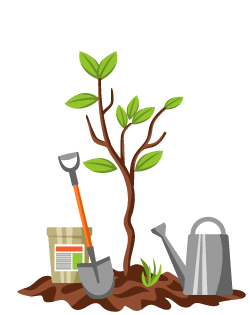 Landing
Key Features
- You need to choose a site with good lighting, not shaded, otherwise the apples will be small, and you won’t see a good harvest.
- Ideally, choose light, airy soils, such as sandy loam or loam. However, apple trees can also be planted in black soil, if you add a little river sand. For sandy or clay soils, it's best to add humus, peat, and black soil to improve the plant's nutritional value.
- Stakes are dug directly into the holes on the north side to support the seedlings. They can only be removed in the third year after planting.
- If the root system has dried out, it's best to soak the seedling in a bucket of cool water for 6-8 hours to revive it. Completely dried or damaged roots can be simply trimmed off with pruning shears.
- The root collar is left above the soil surface. 3-5 centimeters is sufficient.
- Leave 3 and 4 meters between trees and rows, respectively. This will be sufficient to prevent plants from interfering with each other.
- The soil is compacted, but not too much, and watered immediately after planting with 20-30 liters of water.
It's best to begin all planting work well in advance. For spring planting, prepare the holes in the fall, and for fall planting, prepare them 2-4 weeks in advance. Dig holes 60-80 centimeters deep and about a meter or a meter twenty in diameter. Add a mixture of excavated soil and mineral and organic fertilizers to the bottom, add 20-40 liters of water, and leave them outdoors to await their proper time.
Landing dates
In regions with mild climates, the Idared variety thrives when planted in both spring and fall. Trees planted in the fall, after the leaves have fallen, are more resilient and frost-resistant. It's important to allow at least 4-5 weeks before the first frost, otherwise the tender plants may freeze and die.
When planting in spring, choose the right time before the buds begin to open. This is typically around early or mid-April. In spring, it's crucial to not miss the right time, as delays will lead to poor survival. Then, you'll need to pay much more attention to the tree throughout the growing season until fall to prevent it from dying.
Protection from frost and rodents
The tree's roots are located very close to the surface, so it is quite susceptible to frost. To protect it, line the root zone with straw bales, hay, or spruce branches. You can also cover the trunks with roofing felt, tar paper, or even wrap them in nylon tights. If possible, plant taller trees on the leeward side or provide hedges, walls, or fences.
Such tricks attract insects, which are eager to overwinter in such secure shelters, and hungry rodents, which move closer to human dwellings during the winter. To protect them, the trunks are whitewashed with lime in the fall and also coated with grease or lard.
Tree care
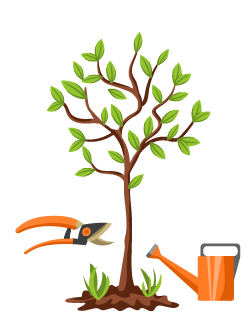 Tree care
Loosening the soil, watering: proper agricultural technology
Regular soil cultivation (digging, loosening, and hoeing) is essential for the variety to thrive. Therefore, you'll need to pay close attention to this, digging the area around the tree trunk twice a year to remove root suckers, shoots from other trees, and weeds.
The tree also needs watering, but only during particularly dry periods, when natural precipitation has not occurred for more than 10 days. Otherwise, excessive moisture can encourage fungal diseases, which is not desirable.
Pruning: simple crown shaping
The columnar Idared is the easiest to prune, as it has no lateral scaffold branches. Therefore, simply shorten the trunk by one-third in the second year after planting, and the job is complete. With this variety, thin, side-growing branches are best pruned in early spring, around the beginning of April. Different tree species can be shaped differently, giving them any desired form; the main thing is to not prune more than a third of the branches at one time.
Sanitary pruning can also be done in the spring, but it can also be done in the fall. Then, you'll need to remove all damaged, diseased, or dried shoots. The cut areas should be sealed with garden varnish or painted with water-based paint.
Pollinators
- Ruby Dukes.
- Red Delicious.
- Wagner.
- Jonathan.
- Gloucester.
- Rosavka.
Reproduction
- Rooting by cuttings.
- Grafting by cuttings and buds.
- Growing from seeds.
- Clones (layering).
Diseases and pests
- Powdery mildew.
- Scab.
- Brown spot.
- Flower beetle.
- Leaf roller.
- Green aphid.
Ripening and fruiting of Idared apple trees
The beginning of fruiting
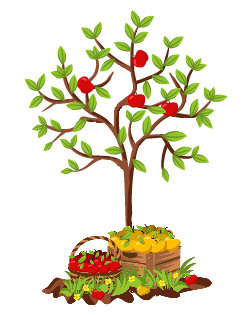 The beginning of fruiting
Vigorous trees grown on vegetative rootstocks most often begin bearing fruit only in their fifth or sixth year, although a few fruits can be harvested earlier. Dwarf and semi-dwarf trees produce good yields as early as their second or third year, and full productivity can be observed by the fifth. However, while the former's active fruiting period is over 30-35 years, the latter's will, at best, last up to 20.
Flowering time
These apple trees begin blooming quite early. Some bloom as early as late April, but if it's cold, they can linger until mid-May, no later, depending on the climate and weather conditions. They bloom for quite a long time, up to two weeks.
The Idared variety produces large, delicately pale pink flowers with five fleshy, large petals and long stamens. They have a moderate fragrance, so it's a good idea to have an apiary nearby, as pollinators are unlikely to detect the scent from a distance.
Fruiting and growth
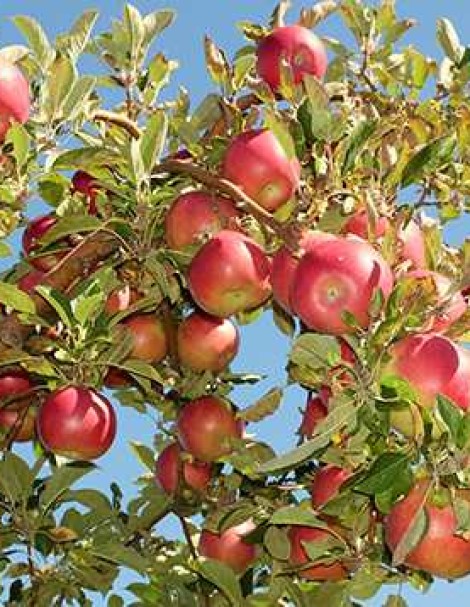
As we've already mentioned, dwarf subspecies begin to bear fruit fully as early as their fifth or sixth year. Moreover, apple trees produce abundantly—the branches are literally covered with clusters of fruit. Harvesting is usually possible as early as the second half of September or towards the end; in exceptional cases, harvesting can be delayed until early October. Tree growth is vigorous when young, reaching approximately 20-40 centimeters, but slows with age.
Apples can be stored for a very long time, retaining virtually their flavor for up to 6-7 months. With proper storage, they even show a slight improvement in flavor after 2-3 months, increasing juiciness, richness, and harmony. Apples also have excellent transport qualities; they can be easily shipped anywhere in the world without worrying about spoilage en route. Their thin, yet strong and elastic skin provides reliable protection against damage.
Top dressing
- Peat.
- Humus.
- Manure.
- Superphosphate.
- Mineral complexes.
What to do if it doesn't bloom or bear fruit
- Perform pruning.
- Transplant.
- Check for pests and diseases.
- Water and stop watering.
Why do apples fall?
- Pests.
- Diseases.
- Natural phenomena (rain, wind, hail).
- Excessive humidity.
Share your thoughts on Idared in the comments below to share your knowledge with fellow budding gardeners.