
Yesenia apple tree: characteristics of the variety and care
| Color | Reds |
|---|---|
| Ripening season | Winter |
| Size of apples | Average |
| Taste | Sweet and sour |
| Application | Fresh , For recycling , Storage |
| Winter hardiness | Average winter hardiness |
 History of origin and regions of growth
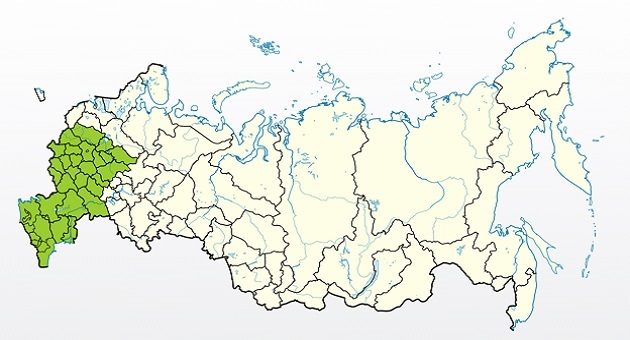
Growing regions
- Some northern regions.
- North Caucasus.
- Crimea.
- European part of Russia.
Origin
The development of columnar apple trees suitable for cultivation in temperate climates has become a true calling card of the All-Russian Research Institute of Fruit Crop Breeding in the Oryol Region. A completely new columnar variety was recently developed, given the beautiful, poetic name Yesenia. Testing will begin in 2019, so it's too early to talk about its widespread use, but the variety has considerable potential.
Content
Description of the Yesenia apple tree variety
 Small, compact trees that take up little space in the garden yet produce a consistently good harvest each year—that's exactly what the Yesenia variety, developed by Orlovskaya, is all about. This plant not only bears fruit abundantly, but also fits easily into almost any design, and can even be grown in pots.
It's relatively undemanding regarding conditions, soil, and moisture, requires little maintenance, doesn't require labor-intensive pruning, and is highly resistant to scab and other fungal infections. Despite its short life cycle, it's recommended for cultivation not only in small farms but also in large, intensive commercial gardens.
Apples: What they look like
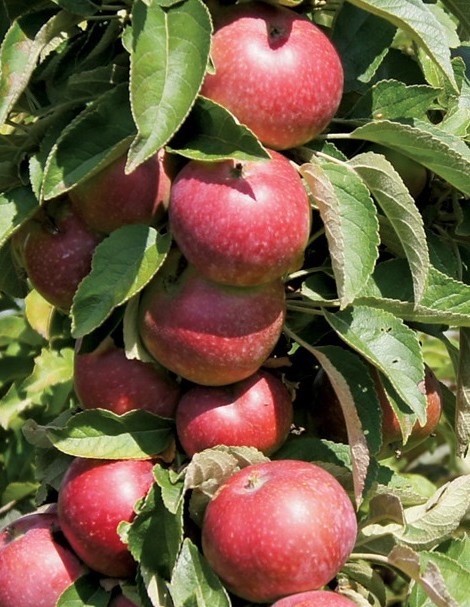
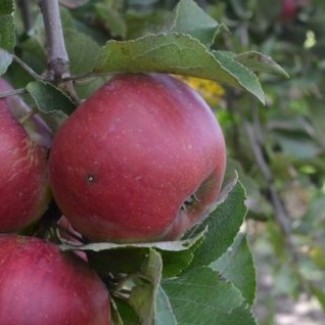
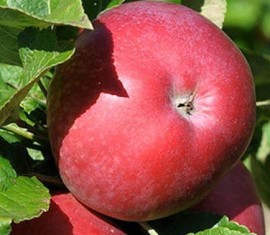
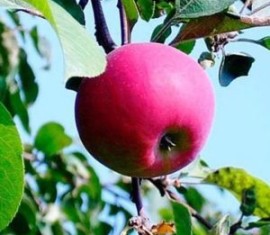
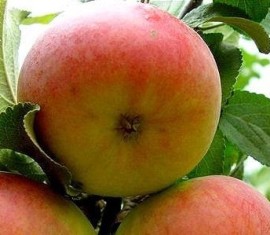
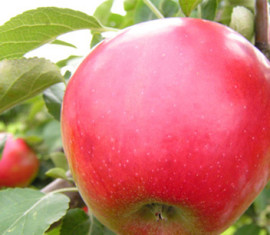
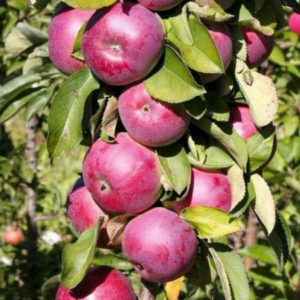 The fruits are medium-sized, but often larger than average, approximately 160-210 grams, with some reaching 200-250 grams. They are symmetrical, irregular, round or round-conical, and can be slightly taproot-shaped or spherical. Ribbing is subtle and almost completely unnoticeable.
The skin is dense, elastic, and strong, offering excellent protection against mechanical damage. It is smooth, glossy, light green or slightly yellowish, and at maturity becomes covered with a dense waxy-oily coating. The blush is bright red, deep red, or slightly crimson, covering approximately 65-80% of the surface. Subcutaneous punctures are large, numerous, and clearly visible on the surface. The following parameters can be used to estimate the approximate chemical composition:
- P-active substances – 294-296 milligrams.
- Ascorbic acid (vitamin C) – 13.1-13.9 grams.
- Sugar (fructose) – 10.5-10.8%.
- Titratable acids – 0.82%.
- Pectins (fiber) – 8.7%.
The flesh is juicy, greenish or yellowish in color, fine-grained, dense, crisp, and prickly. The flavor is considered dessert-like, sweet and sour, with a hint of sweetness, harmonious and balanced. Experts give Yesenia 4.3-4.4 points on a 5-point scale for taste and appearance, respectively.
Apple tree Yesenia: characteristics
Crown and root system
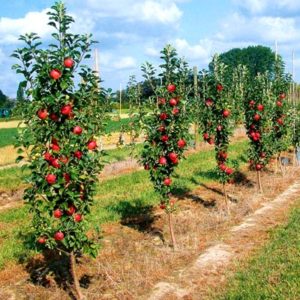 Most often, the maximum crown height of this variety usually does not exceed 2.4-2.8 meters., but under certain conditions it can grow to more than three. This tree is a naturally occurring semi-dwarf columnar tree, growing as a single trunk without lateral scaffold shoots. Therefore, its crown width does not exceed 25-40 centimeters, due to the fruiting spears and rings growing directly from the central core. The bark is grayish-green or brownish, may have slight pubescence, but is generally smooth and glossy.
The leaves are medium-sized, elongated, long-pointed, with a tip that curls in a propeller-like fashion, and a serrate-crenate, wavy edge. They are dense, leathery, matte, rich green or emerald, and have a pubescent surface with delicate ribbing. The root system is superficial and not adapted to water-seeking.
Productivity and pollination
Compared to other columnar apples, the early-bearing and prolific Yesenia looks very attractive.
One mature tree can yield approximately 7-9 kilograms of delicious, sweet, and aromatic apples per season. With proper care and favorable weather and climate conditions, this figure can increase to 9-11 and even 14-16. At standard planting density, approximately 100-120 tons of fruit are typically harvested per hectare..
The variety is considered self-sterile, meaning it will not produce fruit, just like apples, unless pollinators are present within 45-80 meters. Therefore, experienced gardeners plant the trees interspersed, ensuring their flowering times coincide. To attract insects, the trees can be sprayed with sugar syrup.
Winter hardiness and disease resistance
No columnar apple tree can boast of exceptional resistance to low temperatures, and Yesenia is no exception. Frosts below 20-25°C that last for more than a few days will likely kill the tree. It must be carefully prepared for winter, meeting all necessary requirements, including complete covering with plastic. Even in the relatively mild conditions of Crimea and the Caucasus, trees require proper protection from the cold.
Yesenia is quite resistant to scab, powdery mildew, and other apple tree diseases. Even during the most severe epidemics, it may not be affected at all. If it does become infected, it usually affects the leaves, while the fruit remains perfectly edible. Insects can be a nuisance for gardeners, but timely preventative treatment will solve all problems.
Rootstocks and subspecies
This is a completely new variety, so it's too early to talk about its subspecies. It can be grown on a wide variety of rootstocks, the most popular of which are Mark and M108. The tree's characteristics remain virtually unchanged, but on seed-grown varieties, it can grow up to 3-3.5 meters, with increased winter hardiness, but smaller fruit.
Features of growing Yesenia
 Landing
 Landing
Basic conditions
- This variety is very delicate, so if given the right conditions, it will immediately respond with vigorous growth and abundant fruiting. First and foremost, the planting site should be sunny and, if possible, protected from strong winds. It's important to ensure proper crown ventilation. This means protecting the trees from drafts, but avoiding excessively dense plantings.
- Ideally, the soil should be fertile to ensure the seedlings have enough nutrients to grow and bear fruit. However, pure black soil is best diluted with imported and washed river sand, while loam and sandy loam should be regularly fertilized.
- Soil acidification will definitely kill your garden. Therefore, it's important to monitor the acidity closely, neutralizing it with lime if necessary.
- Proximity to groundwater isn't a problem for Yesenia, as long as it doesn't rise above one and a half meters. It's not recommended to plant it near streams or rivers, lakes, ponds, swamps, or floodplain lowlands.
- It is not necessary to prepare holes for planting these columns in advance; they can be dug in about 2-3 weeks, which is quite enough.
- There should be approximately 50-60 centimeters of space between apple trees, and up to 80-90 between rows, but 1 meter is also possible.
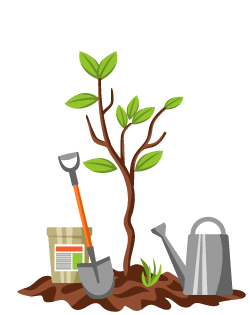
- They dig holes 60x80 centimeters, fill the bottom with soil from the top layer mixed with fertilizer, if necessary, make a cushion of drainage and fill with 20-25 liters of water.
- Planks or stakes are driven into the holes to support the trees, as their rhizomes are weak and shallow, so this is absolutely necessary. It is advisable to place support from the north side, this will give the trunks additional protection.
- Root collar The seedling should always remain above the surface, at least 7-9 centimeters. Otherwise, the rootstock's properties will be lost.
- Stand the Yesenia upright, hold it by the trunk, cover it with soil, and immediately compact it layer by layer by hand. This will prevent air pockets from forming, which can cause small roots to rot. It is recommended to mulch the surface with sawdust, chopped grass, manure, or any other suitable material.
The Yesenia variety is one of the few suitable for growing in pots, meaning without any need for open ground planting. Therefore, it can be easily cultivated in greenhouses, for example, in the Far North or the Far East. This is further facilitated by the tree's very compact size and its limited spread.
Landing dates
To ensure apple trees take root well and survive, experienced gardeners recommend planting them in early spring, around late March or early April. If you don't have time or bought seedlings in the fall, you can bury them for the winter at a 45° angle. This way, they won't sprout but will easily survive until the following spring. With a closed root system, you can plant trees at any convenient time during the growing season; they will likely establish quickly and without problems.
Tree care
 Tree care
Protection from frost and pests
Trees need to be carefully wrapped for the winter to prevent frost damage. But first, watering must be stopped on time, in mid- to late September. If this isn't done, the sap flow in the trunks won't stop in time, and the wood will inevitably freeze. You can cover the root zone with dry leaves, grass, straw, soil, or spruce branches. Wrapping the trunks with burlap or any other fabric, roofing felt, or tar paper is best.
It's also a good idea to create shelters made of film, agrofibre, or tarpaulin, like a tent; this will make the tree even more comfortable overwintering in our harsh conditions. Rendered lard or grease applied to the tree trunk is a good protection against rodents. Lime repels insects. whitewash which is produced twice a year: in spring and autumn.
Loosening the soil, watering: proper agricultural technology
Loosening the soil and proper aeration are essential for Yesenia. It dislikes a clogged root ball and may not even tolerate the harsh conditions associated with it. Therefore, dig around the trunk twice a year, removing weeds and shoots from various plants. Between these steps, hoe the soil an additional 8-12 times. It's best to do this the day after watering.
Since the tree's roots are very weak, you can help it extract nutrients and water from the soil. To achieve this, plant soil-fluffing plants near the trunk, such as parsley, lemon balm, dill, marigolds, and calendula.
Apple trees will need to be watered frequently, at least once every ten days, but preferably once a week. However, this rule applies only if there is no natural precipitation. Obviously, if there has been a heavy downpour, pouring water is foolish and counterproductive; you should wait 7-10 days before watering the garden again.
Pruning: simple crown shaping
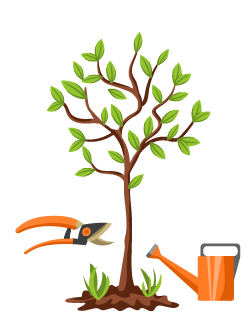
Column trees require virtually no formative pruning other than the initial one performed at the nursery. Furthermore, the tree may produce a second top during growth. In the fall, select the stronger and more vigorous one and prune the other. The terminal bud should also be removed if it freezes, as should any dead fruiting twigs. Otherwise, the tree grows on its own.
Pollinator varieties
- Melba.
- Vazhak.
- Lobo.
- Jonathan.
- Sinap Orlovsky.
- Triumph.
- Ostankino.
Reproduction
- Rooting.
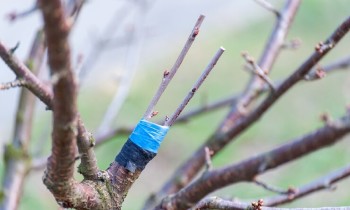
- Kidney grafting.
- Growing from seeds.
- Cuttings.
Diseases and pests
- Black crayfish.
- Bacterial burn.
- Green aphid.
- Codling moth.
- Hawthorn.
Ripening and fruiting of Yesenia
The beginning of fruiting
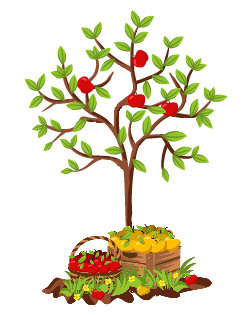 The beginning of fruiting
The variety is considered to be quite early-bearing, and the first flowers can be seen in the nursery during its first year. However, it's not recommended to let them develop into apples; gardeners recommend plucking them generously. This is also recommended in the second or third year, and harvesting begins in the fourth or fifth. In the first few years, the fruit yield is usually just a few, between 5 and 10, but soon the number will increase.
Flowering time
Almost all late-ripening varieties also bloom quite late. Yesenia, for example, begins to open its buds only in late May or early June, depending on the climate and weather. Its flowers are large, with large petals, white or slightly pinkish at the base, very fragrant, gathered in small inflorescences, and abundantly covering the entire trunk. Flowering lasts no more than 12-15 days, during which time bees must have time to pollinate the trees, which is usually done by spraying the apple trees with sugar syrup.
Fruiting and growth
This tree is fast-growing, capable of reaching 25-45 centimeters in a single year. Therefore, it reaches its maximum height very quickly, in just a couple of years. It also increases its fruiting rate quite quickly, producing a full harvest as early as the sixth or seventh year. A drawback is the short lifespan of the Yesenia standard tree. It will bear fruit for only 15-17 years after its first fruiting, after which it can only be uprooted and replaced with a new one.
The fruit ripens quite late, only by the end of September or the beginning of October, and sometimes even later if the weather is cold and rainy. However, within the designated timeframe, you can safely pick the fruit, place it in wooden crates, and sprinkle it with sawdust or sand. Don't worry about the apples falling to the ground if they're overripe—that won't happen; they hold together very firmly. Their shelf life is average, and they'll keep until about mid-February, but after that, they'll become soft, wilt, and their flavor will deteriorate.
Top dressing
- Compost.
- Ammonium nitrate.
- Humus.
- Superphosphate.
- Manure.
- Mineral complexes.
What to do if it doesn't bloom or bear fruit
- Check for pests or diseases.
- Transplant into the sun.
- Water.
- Fertilize.
Why do apples fall?
- Wind, hail, hurricane, rain.
- Pest damage.
- Diseases.
Please leave your feedback on the Yesenia variety, as many gardeners would like to grow similar ones in their gardens.

Comments
It's wary of late ripening and frost. The Komi Republic is clearly not suitable for growing this apple tree. What are retailers thinking when they bring it to our region?