Phoenix Altai apple tree: characteristics of the variety and care
| Color | Greens |
|---|---|
| Ripening season | Autumn |
| Size of apples | Average |
| Taste | Sweet and sour |
| Crown type | Average tree height |
| Shelf life | High shelf life |
| Application | Universal variety |
| Winter hardiness | High winter hardiness |
| Fruiting age | Up to 5 years |
 History of origin and regions of growth
Growing regions
- Siberian Federal District.
Origin
Research into developing frost-resistant apple trees has been conducted at the Siberian Horticultural Research Institute since the 1930s. Renowned Russian breeder Mikhail Afanasyevich Lisavenko, the author of over forty different varieties, began developing a new fruit tree in the early 1940s, which was selected from seedlings from open pollination of the Bellefleur-Phoenix variety.
During the war, work was suspended, but by the mid-1950s, the new Altai Phoenix was classified as an elite variety and sent to local farms for testing. Co-authors of the variety included I. P. Kalinina, L. Yu. Zhebrovskaya, and N. V. Ermakova. In 1974, the variety was added to the State Register and zoned for Siberia and the Urals.
Content
Description of the Phoenix Altai apple tree variety
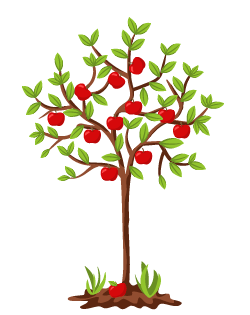 There are many varieties that are resistant to the harsh weather conditions of the Russian North and Siberia There are many apple varieties, but many prefer the Phoenix. Its high adaptability, good yield, and, most importantly, excellent consumer and commercial qualities are the reasons for this. The apples are quite large and tasty, making the trees popular in both small home gardens and commercial intensive orchards.
Apples: What they look like
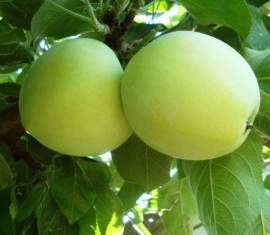
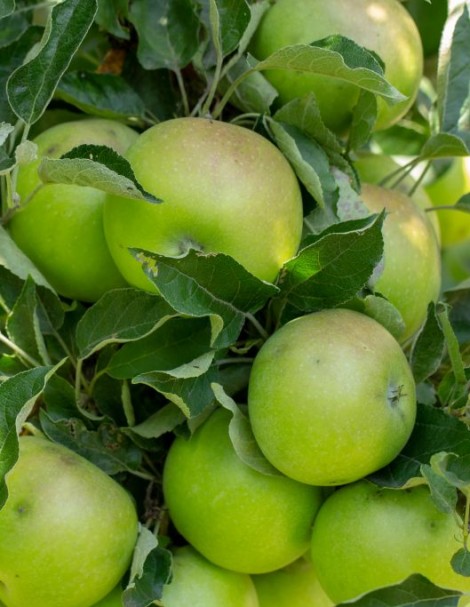
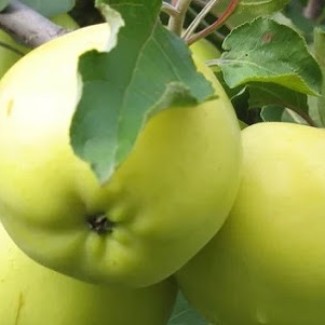
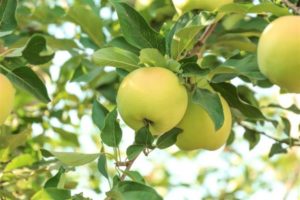 Compared to other Siberian varieties, the fruit of these apple trees stands out for its size. They are considered medium-sized, easily growing to 70-130 grams, and with good care and favorable weather, up to 120-160 grams. The apples are round and regular in shape, sometimes slightly flattened, sometimes with clearly visible, smooth ribbing.
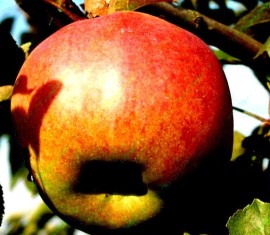
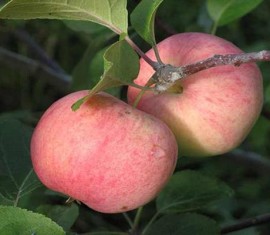
The skin is dense, firm, smooth, and glossy, and may be covered with a light oily coating. It is light green or light green even when ripe. On the sunny side, a diffuse blush of pale red or pink often appears. Subcutaneous spots are faintly visible, numerous, and light gray. The chemical composition can be characterized by the following indicators per 100 grams:
- P-active substances (catechins) – 123 milligrams.
- Ascorbic acid (vitamin C) – 16.8 milligrams.
- Total sugars (fructose) – 10.7%.
- Pectins (fiber) – 4.15%.
- Titratable acids – 0.97%.
The fruit's flesh is white, fine-grained, crisp, medium-dense, very juicy, and tart. The flavor is considered dessert-like, harmonious, and balanced between sweet and sour. According to professional tasters, the apples scored 4.5 points for appearance and 4.3 points for flavor out of a possible 5.
Phoenix apple tree: characteristics
Crown and root system
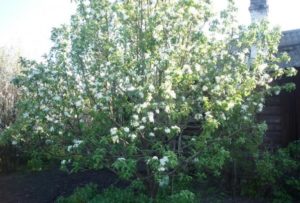 The trees are considered medium-sized, as without formative pruning they reach only 3.5-4 meters in height.However, most gardeners prefer to limit them to a maximum of 3-3.5 meters to simplify maintenance and harvesting. The crown is broadly oval or spherical, not prone to dense growth. The branches extend predominantly at right angles and have dense dark brown or greenish-brown bark, which can crack and crumble over time. The main fruit crop is formed on numerous fruiting twigs and rings.
The leaves are medium-sized, leathery, matte, and lightly pubescent on the back. They are short-pointed, often folded like a boat, and may have slightly pinkish, serrated edges. The root system is highly branched, with a medium depth of penetration. Depending on the rootstock, it may or may not have a central radicle.
Productivity and pollination
The variety is considered high-yielding, especially in comparison with other Siberian apple trees.
In a good year, one mature tree can easily produce approximately 40-50 kilograms of aromatic, delicious fruit.
The variety is considered self-sterile. This means that to ensure fruit formation, apple trees with suitable flowering times must be within reach. Experienced gardeners typically plant the trees in rows to facilitate future harvesting. It's also a good idea to set up an apiary near the garden or use portable options.
Winter hardiness and disease resistance
Compared to other Siberian varieties, Phoenix can be considered only moderately tolerant of low temperatures, and most importantly, of temperature fluctuations. The growing location plays a significant role. For example, apple trees in the low mountains tolerate severe frosts much better than those in the windswept steppe. However, Phoenix can withstand temperatures as low as -30-35°C without significant damage. At lower temperatures, young shoots and, less frequently, wood are susceptible to frost damage. The tree recovers well; it completely recovers from frost damage in just a year or two.
The main problem with this variety is its susceptibility to fungal apple infections. Phoenix can be easily affected. scab, powdery mildew, tinder fungus, black rock, and other "charms" that are very difficult to get rid of. To minimize the risks, it is necessary to regularly carry out a full range of preventative measures, starting with timely cleaning of the trunk area and ending with spraying with fungicides.
Rootstocks and subspecies
There are currently no specific subspecies of this variety. However, it is grown on various rootstocks: vegetative, dwarf, semi-cardic, and even creeping. In the former, the characteristics of the variety remain virtually unchanged, with the exception of the tree's height. In the creeping variety, the fruits can be much smaller, barely reaching 50-70 grams, but their flavor remains the same. There is no columnar Phoenix.
Features of growing Phoenix
 Landing
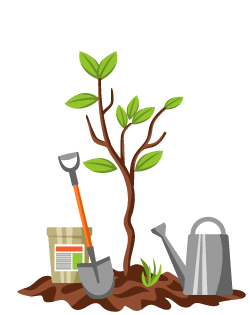 Landing
Basic conditions
- Choose a sunny location for your soybean variety, ensuring the branches receive light for most of the day. Shade can negatively impact the trees, causing them to become diseased and even die.
- Phoenix altaiense seedlings should never be planted where the groundwater level rises above 2.5-3 meters, near open natural or artificial reservoirs, wells, or in lowlands or hollows where moisture accumulates. All of this will inevitably lead to root rot and significantly increase the risk of fungal diseases.
- Planting holes can be prepared in advance, or 2-4 weeks before planting. Young seedlings have a relatively small root system, so a depth and diameter of 80 centimeters is sufficient. Add a fertile layer of soil mixed with fertilizer to the bottom, cover with 10 centimeters of drainage material (vermiculite, broken brick, or nutshells), and add 10-20 liters of water.
- There should be at least 2.5-3 meters between trees, and about 2-3 meters in a row, so that the roots and crowns do not conflict in the future.
- Immediately dig special metal or wooden stakes into the holes, then tie the seedlings to them. It's best to place them on the north side and leave them there until the fourth or fifth fruiting season.
- The seedlings are placed on the drainage so that root collar Protrudes above the surface by at least 8-12 centimeters. Otherwise, the trees may root above it, and all the properties of the rootstock will be destroyed.
- The root system is covered with soil layer by layer and compacted by hand, but do not pack the soil too tightly. A mound of earth is created around the root system, and 10 liters of water are poured into it. The surface is mulched with compost, humus, chopped grass, and manure.
Landing dates
One- and two-year-old Phoenix seedlings are typically planted in early spring, as their survival rate is much higher this way. The ideal time is early to mid-April, when the threat of frost has passed, but the buds have not yet begun to open. If you've purchased three-year-old or older trees, it's best to postpone planting until fall. The optimal time is when the leaves have completely fallen, but the autumn frosts won't arrive for at least 3-4 weeks.
Protection from frost and rodents
Protecting young trees from freezing temperatures is easy. First, spread a mat of straw or dry grass over the root zone, or you can simply pile up 10-15 centimeters of soil. This will protect the rhizomes from freezing. Trunks can be wrapped with roofing felt, agrofibre, roofing felt, or burlap. In the very early stages, a ball-shaped covering is acceptable, but for older plants, this is no longer necessary.
Tree care
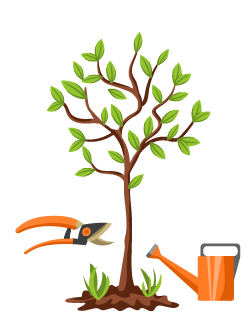 Tree care
Loosening the soil, watering: proper agricultural technology
Once or twice a year, trees should be dug around to provide additional oxygen to their roots. At the same time, weeds, root suckers, and other plant shoots that rob the apple tree of nutrients from the soil should be removed. Care must be taken to avoid damaging the roots located nearby below the surface.
Water and fertilize the Altai Phoenix carefully, as the trees simply do not tolerate excess moisture. Fertilize according to the schedule indicated on the packaging, and water no more than 4-5 times per season, and only during dry and humid weather. Ideally, time watering to coincide with inflorescence formation, flowering, and fruit ripening.
Pruning: simple crown shaping
Trees of this variety do not require artificial crown correction unless height restriction is required. Its branches grow relatively sparsely and retain their shape well. In the first year after planting in open ground, it is sufficient to shorten the central stem by one-third and shorten the branches by 5-8 centimeters in tiers. However, annual hygienic pruning will be necessary, removing old, dry, diseased, and damaged shoots.
Pollinator varieties
- Pepinka.
- Bellefleur the Chinese.
- Altai news.
- Gorno-Altaisk.
- Welsey.
Reproduction
- Clones (layering).
- Rooting cuttings.
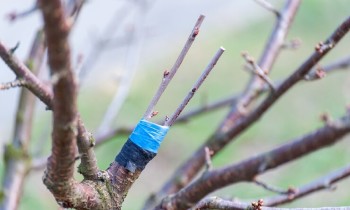
- Grafting by buds and cuttings.
- Growing from seeds.
Diseases and pests
- Powdery mildew.
- Scab.
- Tinder fungus.
- Moniliosis.
- Hawthorn.
- Scale insect.
Ripening and fruiting of Phoenix
The beginning of fruiting
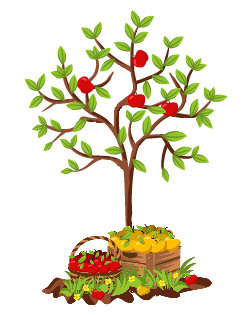 The beginning of fruiting
The first flowers on the tree can appear as early as 2-3 years after planting in open ground. However, gardeners recommend plucking all buds before they bloom to allow the Phoenix to develop a root system and build up foliage. Furthermore, it's recommended to harvest the first crop only in the 5th year, once the tree is fully established. By then, you can expect to yield up to 20-30 kilograms of delicious, juicy apples.
Flowering time
Apple trees bloom in mid- to late May, so finding pollinators is usually easy, as most crops bloom during this period. Depending on the region's climate or the weather conditions of a particular year, these dates may shift slightly. The flowers themselves are large, fragrant, with fleshy, snow-white petals, sometimes with a slight light green or pinkish tint.
Fruiting and growth
This winter apple tree grows rather slowly, gaining no more than 8-10 centimeters per year. This growth rate accelerates significantly before fruiting begins, but then slows. Nevertheless, the tree produces quite rapidly. By the sixth to eighth year, full harvests of up to 40-50 kilograms of aromatic fruit can be harvested.
Technical maturity occurs around the second half of September. Then the apples can be picked from the branches and stored. However, they cling tightly to the branches, so there's no need to rush. They can be stored in wooden boxes sprinkled with sawdust in a well-ventilated cellar for about 5-6 months, which is excellent. Consumer maturity will not begin for at least a month. If picked just before the frosts in October, the apples become plump, almost translucent. These apples can't be stored for more than 1-2 weeks and are best processed immediately into juice, jam, or compote.
Top dressing
- Superphosphate.
- Mineral complexes.
- Peat.
- Compost.
- Manure.
- Humus.
What to do if it doesn't bloom or bear fruit
- Check for pests and diseases.
- Transplant.
- Limit watering.
Why do apples fall?
- Overripe.
- Natural factors.
- Pests.
- Diseases.
- Excess moisture.
Leave your feedback on the winter-hardy Phoenix Altai variety to share your experience and knowledge with others.