Apple tree Rumyanka Sverdlovsk: characteristics of the variety and care
| Color | Reds |
|---|---|
| Ripening season | Autumn |
| Size of apples | Average |
| Taste | Sweet and sour |
| Crown type | Average tree height |
| Shelf life | Average shelf life |
| Application | Universal variety |
| Winter hardiness | High winter hardiness |
| Fruiting age | Up to 5 years |
 History of origin and regions of growth
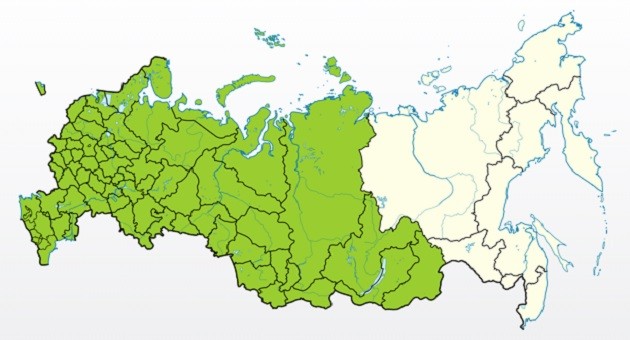
Growing regions
- Crimea.
- Yaroslavl region.
- Ural.
- Volga-Vyatka region.
- Middle zone.
- Tver region.
- Leningrad region.
- North Caucasus.
- Pskov region.
- Moscow region.
Origin
The Sverdlovsk Rumyanka was developed by the renowned Russian pomologist and breeder Leonid Andrianovich Kotov around the mid-1980s. It was created by crossing the Vydubetskaya Plakuchaya variety with the Aport variety. The result was quite good, and an application for approval for variety testing was submitted in 1992.
The new variety underwent a lengthy trial period. It wasn't until 2009 that the application was approved and Rumyanka was included in the State Register of Breeding Achievements. The variety's official zone is the Volga-Vyatka region, but it can be grown practically anywhere in the country, with the exception of the harshest areas.
Content
Description of the Sverdlovsk Rumyanka variety
 This early-bearing Sverdlovsk variety is compact, doesn't take up much garden space, and grows well in a variety of soils. It's environmentally friendly and resistant to scab and other fungal infections. However, its frost resistance without protection is not very high. They bear fruit regularly, without resting, and have a long, active lifespan.
The fruits, compared to other frost-hardy Sverdlovsk varieties, are quite large. They are attractive in appearance, very tasty, and easily transported even over long distances, but do not have a long shelf life. They are suitable for individual cultivation and for industrial planting as raw material for processing.
Apples: What do they look like?
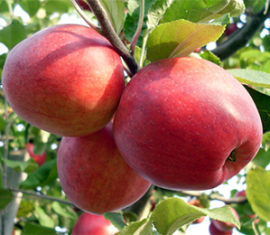
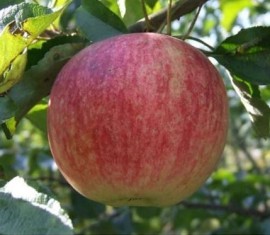
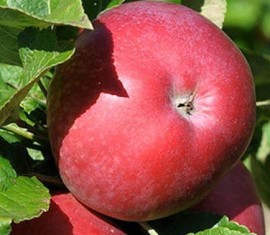
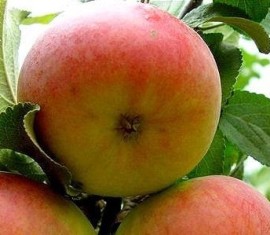
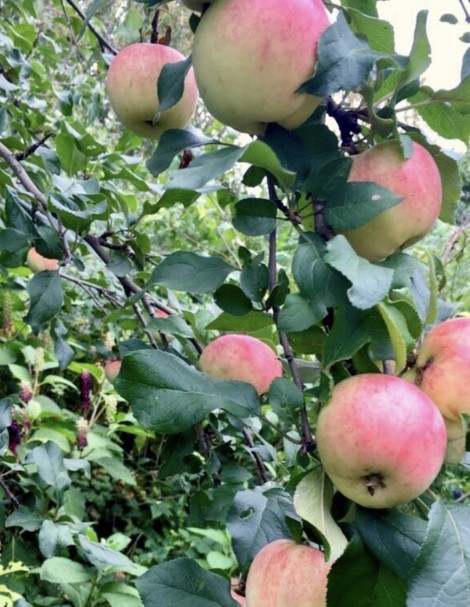
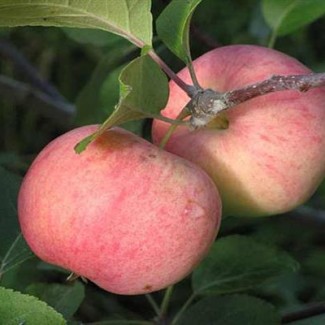
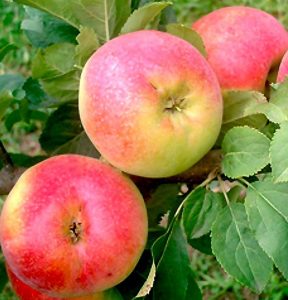 The fruits are considered medium-sized, reaching a maximum weight of 160-190 grams. However, compared to other Ural apple trees, they are quite impressive. The fruit is round, broadly conical, uniform, and symmetrical. The ribbing is smoothed and virtually invisible, with no visible side seam.
Rumyanka has a dense, pleasant-to-the-touch skin that's smooth, glossy, and dry. As it ripens, it becomes covered with a waxy, slightly silvery coating. Its base color is a rich light green or yellow-green. The blush covers more than 45-50% of the apple's surface. It's bright carmine, deep red, or burgundy, speckled, spotted, and striped, giving the apples a variegated appearance. Subcutaneous spots, very small but numerous, are gray-green in color and difficult to see on the surface. Experts recommend studying the following data for a more accurate assessment of the apple's chemical composition:
- P-active substances (catechins) – 236 milligrams.
- Ascorbic acid (vitamin C) – 37.3 milligrams.
- Total sugars (fructose) – 11.9%.
- Pectins (fiber) – 14.7%.
- Titratable acids – 0.81%.
The apples have a creamy or slightly lemony, coarse-grained yet juicy flesh of medium density. It has a pleasant, sweet-tart flavor, considered a dessert apple, harmonious, and balanced. According to professional tasters, it scores 4.2-4.3 out of 5.
Apple tree Rumyanka Sverdlovsk: characteristics
 Crown and root system
 Crown and root system
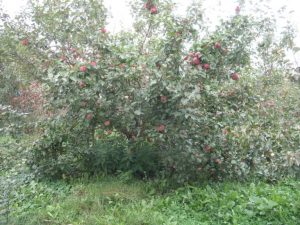
The variety is classified as medium-thick and its height is also average, approximately 4-5 meters without formative pruning.When young, the crown can be oval or even pyramidal, but with age it becomes increasingly rounded, becoming spreading and drooping in old age. The shoots are thick, mostly straight, medium-length, set at an obtuse angle, and covered with green or greenish-brown bark. Fruiting occurs on fruiting twigs and rings.
The leaves are large, flattened, heavily wrinkled, matte, and leathery. They are long-pointed, mostly ovate-ovate, but can be lanceolate. The margins are coarsely serrated, crenate, green or deep green, and often have a felt-like pubescence on the back. The root system is highly branched, moderately to well-developed, adapted to water-seeking, and has numerous small branches.
Productivity and pollination
The fertility of Rumyanka is considered high, but only in comparison with Sverdlovsk and other northern apple trees.
One mature tree can produce approximately 55-70 kilograms of aromatic fruit per year. However, with careful care, regular watering, fertilizing, and timely pruning, this yield can be increased by 35-45%.
The variety is considered conditionally self-pollinating, meaning it doesn't require external pollinators. However, many gardeners recommend planting varieties with appropriate flowering times within 50-90 meters of the Rumyanka. This will result in more fruit, which will be larger. In the spring, during flowering, it's a good idea to spray the trunks with sugar syrup to attract insects.
Winter hardiness and disease resistance
Apple trees have good resistance to low temperatures, but this is considered insufficient for Sverdlovsk apple trees. Trees, especially young ones, don't tolerate early autumn or late spring frosts well. Moreover, sudden temperature fluctuations can seriously damage them. Therefore, even with normal winter temperatures down to -25-29°C, it's best to properly prepare and cover the trees before winter.
As noted, the variety exhibits moderate field resistance to scab; Rumyanka has no immunity. Other fungal and parasitic diseases can also affect trees. Therefore, regular preventative treatments with products available from a farm supply store are necessary.
Rootstocks and subspecies
Apple trees are grown on rootstocks of various origins, from wild trees and rowan trees to cultivated dwarfs and semi-dwarfs. This allows the trees to acquire some unique characteristics. Care must be taken, as an apple tree on a dwarf rootstock will be even less winter-hardy than, for example, one on a tall one.
Features of growing Sverdlovsk Rumyanka
Landing
 Landing
Basic conditions
- Apple trees, like all fruit trees, prefer areas that receive full sun for most of the day. In the shade, they may not grow at all or become spindly and fail to bear fruit.
- Trees thrive in well-maintained, loose, and permeable soil. It should be fertile but not congested. Black soil should be diluted with loam and sand, and regular fertilization will help ensure good growth.
- The groundwater level in the area where apple trees are planted should be moderate, no closer than two meters. Otherwise, the trees will sink their roots into the water and rot. For the same reason, they should not be planted on the banks of a river or lake, near a shallow well, in a marshy area, or in a floodplain meadow.
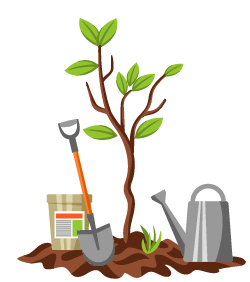
- It's best to prepare the holes a season before planting, but 2-4 weeks is enough to allow them to cure. Dig them approximately 70 centimeters deep and the same in diameter. Fill the bottom with topsoil mixed with mineral and organic fertilizers, then add drainage and water.
- It's essential to leave 3.5-4 meters of space between rows, and up to 4-5 meters between trees within a row. This will prevent them from interfering with each other's growth in the future.
- Trellis, stakes, or slats are driven directly into the holes for tying. These structures not only provide support but also provide additional protection during cold weather if placed on the north side of the tree trunk.
- The root collar is always left above the surface at least 7-9 centimeters, so that roots do not appear higher, otherwise all the qualities of the rootstock will be completely leveled.
- Place the Rumyanka plant on a drainage mound gathered in the middle of the hole, spread out all the roots, cover with soil, and lightly compact it with your feet. Then, water the top with 35-40 liters of water and apply mulch to retain moisture.
Landing dates
Spring planting is the optimal option for the Rumyanka Sverdlovskaya variety if the region's climate is generally harsh and frosty. The apple tree is susceptible to recurrent frosts, especially when young. However, in other regions, it can easily establish itself after fall planting. The key is to plant only when the sap is still flowing or no longer flowing.
Tree care
 Tree care
Protection from frost and pests
The blush grows well even in the harsh conditions of Siberia, but only if winter protection is carried out correctly and in a timely manner. The main thing is to stop water apple trees until the beginning of autumn, around the end AugustFor the winter, young trunks are covered with a tent-like covering, while mature trunks are wrapped in roofing felt, tar paper, burlap, or any other suitable material. The root zone can be covered with soil, spruce branches, hay bales, or straw.
To combat insects, trees should be regularly sprayed with insecticides. It's also a good idea to whitewash the trunks with a thick lime solution. This will prevent pests from hiding in cracks and broken bark. To repel rodents, coat the trunks with lard, fuel oil, or grease.
Loosening the soil, watering: proper agricultural technology
It's common to dig around tree trunks only until trees reach 9-11 years of age, but many stop this active loosening earlier. The area around the trunk is best seeded with herbs or lawn grass; these plants will provide natural aeration to the soil. It's also a good idea to hoe the soil first, removing weeds, shoots from other plants, and root suckers.
In dry and hot weather, water the tree in the mornings and evenings. Approximately 25-30 liters of water are needed per tree. It's also convenient to dilute fertilizers so they're better absorbed by the rhizomes. Water should be applied around the perimeter of the tree's crown, as this is where the roots are located.
Pruning: simple crown shaping
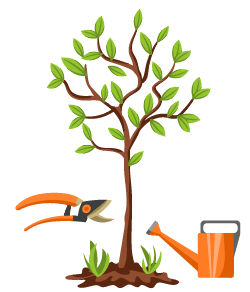
Rumyanka apples usually arrive from nurseries already formed, with a layered or sparsely layered form. However, the tree is quite pliable and can be made into almost anything. As long as you don't prune more than a third of the green mass at a time, the tree easily tolerates stress. Simply maintain the branching and prune any shoots that protrude inward or upward.
Sanitary pruning and cleaning are usually carried out in the fall, after the leaves have fallen, but if necessary, dry, diseased, or broken branches can be cut at any time of year. All wounds on the tree must be painted or garden pitch, you can even just cover it with soil.
Pollinator varieties
- Borovinka.
- Ranetki.
- Sverdlovsk beauty.
- Bugler.
- Carpet.
- Silver hoof.
- Solntsedar.
- The aroma of Uktus.
- Progress.
- On-screen.
Diseases and pests
- Scab.
- Cytosporosis.
- Fruit rot.
- Cancer.
- Powdery mildew.
- Scale insect.
- Leafhopper.
- Fruit hyacinth.
- Hawthorn.
- Green aphid.
- Leaf roller.
Ripening and fruiting of the Sverdlovsk Rumyanka
The beginning of fruiting
 The beginning of fruiting
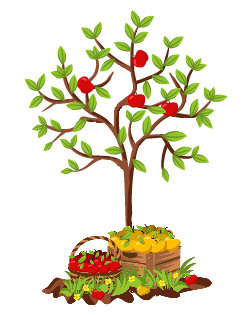
Apple trees are considered mid-season fruiting. The tree may bear fruit for the first time only in the fourth or fifth year after planting, and even then, only under favorable conditions. If the Rumyanka is under stress, it may not begin bearing fruit until the fifth or seventh year. The first harvests aren't particularly abundant, but there will certainly be a few dozen fruits to sample.
Flowering time
Dense pink buds bloom in mid-May, so finding pollinators is easy. The flowers themselves are usually white, but can have a slight pinkish tint. They are large, beautiful, and densely covered with flowers, their fragrance clearly perceptible from afar and quite recognizable.
Fruiting and growth
A full harvest will take approximately 8-10 years, sometimes even longer. However, the situation is saved by regular, fairly abundant fruiting, as well as the apple tree's long lifespan (over 50-60 years). Fruitfulness increases at an average rate from year to year.
Rumyanka apples begin to ripen around mid- to late September. Sometimes, during rainy and cold summer weather, they can be delayed until the end of the month. They ripen evenly, all at once, making harvesting much easier. Readiness is determined by their waxy coating and rich flavor. The fruit can be transported over any distance, but storing it, even in special containers, is difficult. refrigerator with the right level of humidity and temperature, it will not last longer than 3-4 months.
Top dressing
- Superphosphate.
- Humus.
- Peat.
- Calcium.
- Manure.
- Compost.
What to do if it doesn't bloom or bear fruit
- Limit or activate watering.
- Eliminate insects.
- Cure diseases.
- Fertilize.
- Move to a sunnier and more ventilated place.
Why do apples fall?
- They are very overripe.
- Wind, rain, hail, snow.
- Pests or diseases.
Leave a review of the Rumyanka Sverdlovskaya apple tree variety so that even a novice gardener can receive useful information firsthand.