Welsey apple tree: characteristics of the variety and care
| Color | Reds , Pink |
|---|---|
| Ripening season | Autumn |
| Size of apples | Small ones , Average |
| Taste | Sweet and sour |
| Crown type | Average tree height |
| Shelf life | Average shelf life |
| Application | Universal variety |
| Winter hardiness | Average winter hardiness |
| Fruiting age | Up to 5 years |
 History of origin and regions of growth
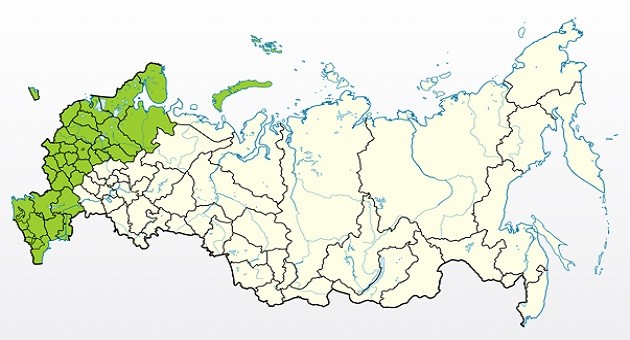
Growing regions
- Central Federal District.
- Volgograd region.
- North Caucasus.
- Central Black Earth Region.
- North-Western District.
Origin
The Welsey variety was developed in the United States from a Siberian cherry apple tree.
In different regions this variety may have other names: Tartu Pink or Tartu Rose, Abundant, Fruitful, Fertile.
Its spread to Russia in the first half of the twentieth century was preceded by extensive study at pomological centers in the Oryol and Voronezh regions. Ultimately, it was included in the state register and zoned.
Content
Description of the Welsh apple variety
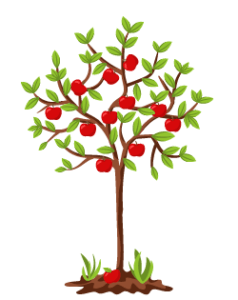
This is one of the American apple varieties that has successfully spread worldwide due to its characteristics. It is considered a winter-ripening variety, but in the south it can ripen late in the fall. Welsh apples are particularly resistant not only to frost but also to diseases and pests, for which they are highly valued by gardeners. It is easily cultivated in almost all regions of Russia, with the exception of Siberia and the Far East.
Apples: color, size, weight
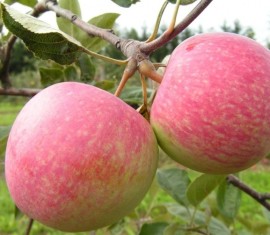
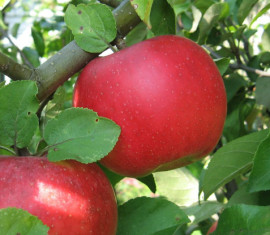
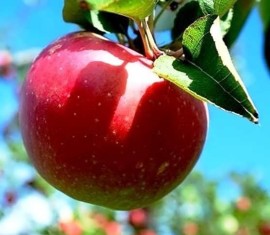
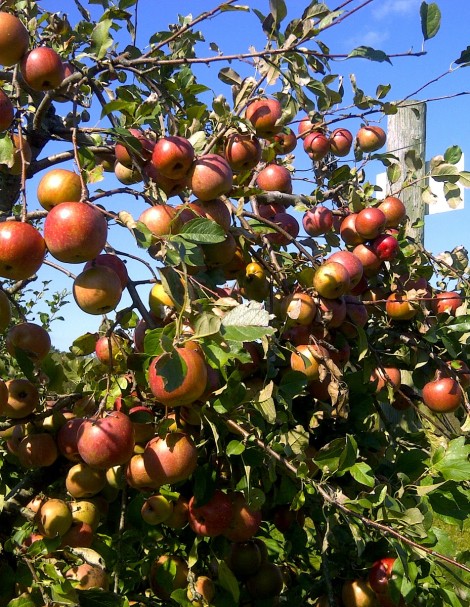
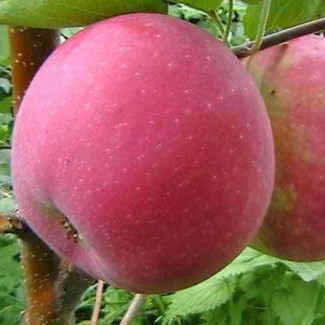
The fruits are considered large-fruited winter apples and are characterized by excellent shelf life, lasting at least 5-8 months in the cellar. They ripen in the second half of September, and in cool weather, until the first half of October. The apples are distinctly turnip-shaped, flattened, and usually smooth, but can be spotted. Early in the ripening phase, the skin has a yellow-green hue, which turns golden as it matures and becomes covered with a beautiful striped red blush. Based on chemical characteristics, several indicators can be identified per 100 grams of product:
- P-active substances – 185.1 milligrams.
- Ascorbic acid – 10.2 milligrams.
- Total sugars (fructose) – 10-10.1%.
- Pectins (fiber) – 10-10.5%.
- Titratable acids – 0.61%.
These apples have a sweet and sour taste and a subtle aroma, scoring 4.2-4.4 out of 5 in tasting reviews. Their skin is thin but quite firm, which makes them easy to transport. The flesh is white, but in some cases it can be filled with beautiful pink veins. The taste of Welsey apples depends largely on the climate of the growing region.
Welsey apple tree: characteristics
Crown and root system
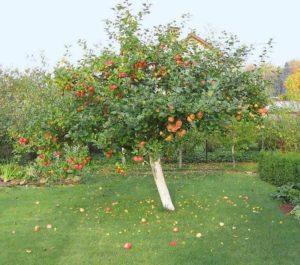 The trees are usually medium-sized, rarely growing more than 4-5 meters.Gardeners try to limit growth by pruning to facilitate harvesting. Young seedlings and trees have a distinct, wide pyramidal shape, which becomes spherical over the years. The leaves are large, sparse, leathery, and rough, glossy with a ragged (very wavy) edge.
Typically, all skeletal branches point upward and droop at the tips. They branch off from the main trunk primarily at an acute angle, which often leads to their breaking off during heavy harvests. Welsh is considered a moderately spreading tree, reaching a diameter of 3-5 meters. The root system is not very extensive; the presence of a central taproot depends on the rootstock. However, it is very sensitive to moisture, which must be taken into account when planning irrigation.
Productivity and pollination
This variety is considered truly high-yielding. The All-Russian Research Institute of Breeding has registered a record yield of 275 kilograms per tree.
The variety is also considered to be early-bearing, meaning it begins to produce apples suitable for harvesting early (in the 4th-5th year), weighing 80-150 grams.
This is a self-fertile variety, meaning it doesn't require cross-pollination with other apple trees. This is crucial for many gardeners, as the trees aren't dependent on weather, which directly influences the behavior of pollinating insects.
Welsey's high yield directly impacts the size of the fruit. The more ripening fruit there is on the vine, the smaller the fruit will be. However, this doesn't affect the apples' taste in any way.
Winter hardiness and disease resistance
Although Welsey is a winter-bearing variety, it is not particularly frost-resistant. It tolerates temperatures down to -22-25°C (-72°F). However, lower temperatures can lead to frost damage to the tops and branches, and even the death of the entire plant. However, with proper insulation and care, apple trees can survive temperatures as low as -30°C (-22°F).
Many gardeners consider this variety's main advantage to be its immunity to scab. Welsey apple trees are never susceptible to scab. However, they can easily be affected by other diseases. Therefore, it's a good idea to regularly treat the tree with appropriate treatments and promptly remove fallen leaves, especially rotting fruit, from under the tree.
Rootstocks and subspecies: features
Welsh is grown on a variety of rootstocks, without significantly changing the size of the fruit or yield: dwarf, semi-dwarf, creeping.
The latter is the most frost-hardy variety. However, when grown in the Far East or Siberia, trees still need to be protected from frost to prevent shoots from burning. Welsey is not grown on tall rootstocks. The variety thrives on seedlings of Ranetka skorospelaya, Konfetny, and clonal varieties.
These apple trees themselves serve as high-quality rootstocks for many varieties, and are also available as maternal rootstocks for the following subspecies: Bezhin Lug, Aelita, and Pizhma.
Features of growing Welsh
Apple trees don't have any special soil or climate requirements, nor do they require any special care. Generally accepted conditions for all fruit crops are sufficient.
Landing
 Basic conditions
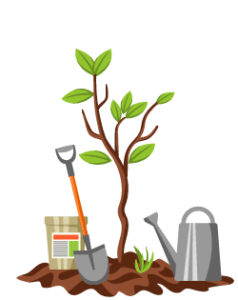 Basic conditions
- Welsi doesn't like areas close to groundwater, depressions, or marshy areas. These areas will likely cause the rhizome to rot and the tree to die.
- It is not advisable to plant apple trees on clay soils or in sand.
- The planting site should be bright, protected from drafts or north winds.
- It is enough to dig holes for the tree 80-90 centimeters deep, and even 50-60 centimeters in diameter will be enough, since the root system is not very branched.
- When planting, the neck should be at least 5-8 centimeters above the soil surface.
- To prevent the risk of pest attack, the roots are treated with suitable insecticides.
- The holes with seedlings placed in them are filled with a mixture of soil, wood ash, and a small addition of superphosphate.
- Stakes are immediately driven into the edges of the hole for tying, which can be removed no earlier than the third year of growth.
- Immediately after planting, water the soil generously, requiring approximately 25-30 liters of water. Mulch with chopped hay or manure if desired.
Landing dates
Welsey roots well when planted in both spring and fall. However, if you want the tree to be more frost-resistant, it's best to plant it in April.
Protection from frost and rodents
For the winter, it's best to wrap young seedlings in burlap, straw, roofing felt, or tar paper. This will not only protect them from the cold but also keep rodents out. It's a good idea to coat the trunks with lard or grease beforehand. It wouldn't hurt to do so in the fall. whiten their lime.
Tree care
 Tree care
Loosening the soil, watering: proper agricultural technology
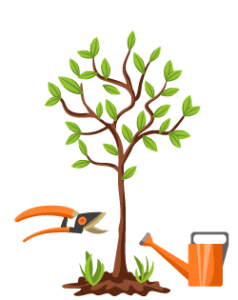
Welsey is not particularly demanding when it comes to loosening the soil around the trunk, but it would be a good idea to dig it up regularly, at least twice a year, removing weeds and young shoots from the roots at the same time.
This variety requires watering, but only in dry years. If there's been no rain for more than ten days, you can moisten the soil with 2-3 buckets of water. Keep in mind that overwatering will kill the tree, so be careful not to overwater.
Pruning: simple crown shaping
- FormativeThis type of pruning should be performed annually in early April or October, when the sap no longer circulates through the branches. Unnecessary branches are removed, and those remaining are shortened by about a third.
- SanitaryThis is also an important part of tree care; it requires regularly pruning diseased, dry, or damaged branches.
- RejuvenatingThis pruning is performed starting 10-12 years after planting the apple tree in open ground. Two to three mature shoots are removed.
This is not necessary to obtain a harvest, but cross-pollination can achieve better results.
Reproduction
- Layers (clones).
- Growing from seeds.
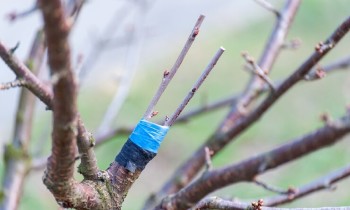
- Grafting (rootstock) by buds or cuttings.
Diseases and pests
- Cytosporosis.
- Fruit rot.
- Powdery mildew.
- Apple codling moth.
- Hawthorn.
As mentioned, this variety is particularly resistant to scab. However, there are diseases and pests that pose a threat to it.
Ripening and fruiting of Welsey apple trees
The beginning of fruiting
 The beginning of fruiting
The first apples can be seen in the second or third year, but full fruiting doesn't occur until the fourth or fifth year. However, a bountiful harvest will take another seven or eight years. Young trees produce a good harvest annually, but after 15 years, they begin to bear fruit every other year. The average lifespan of the Welsh tree is 30-45 years, after which it begins to slow down.
Flowering time
Apple trees bloom in May. Depending on the region, this may be mid-May, early May, or late May.
Fruiting and growth
The variety is very productive. Peak growth can be observed as early as 8-12 years after planting the seedling in open ground. Red-sided apples typically ripen in September, again depending on the growing conditions.
They keep quite well, but can only be preserved until spring under special conditions, first immersed in wax or paraffin. In the cellar, the fruit can be safely stored until early to mid-February.
Top dressing
- Manure.
- Bird droppings.
- Wood ash solution with microelements.
- Superphosphate.
What to do if it doesn't bloom or bear fruit
- Apply fertilizer.
- Check for pests or diseases.
- Perform pruning.
Why do apples fall?
- Overripe.
- Insufficient watering or excessive moisture.
- Natural phenomena (wind, rain, hail).
- Pests or diseases.
Don't forget to leave your feedback on Welsey in the comments to share your experience growing this variety with other users.