Altai Golubok apple tree: characteristics of the variety and care
| Color | Reds |
|---|---|
| Ripening season | Autumn |
| Size of apples | Small ones |
| Taste | Sweet and sour |
| Crown type | Average tree height |
| Shelf life | Low shelf life |
| Application | For recycling , Fresh |
| Winter hardiness | High winter hardiness |
| Fruiting age | Up to 5 years |
 History of origin and regions of growth
Growing regions
- Western Siberia.
Origin
This is an old variety, developed by Russian breeders at the experimental station of the Siberian Research Institute of Horticulture in Gorno-Altaisk back in 1937. It was obtained by crossing the saffron pepin and the frost-resistant purple ranetka. The variety was developed by M.A. Lisavenko himself and a group of his colleagues:
- Sizemova M. A.
- Kukharsky I. A.
- Sirotkina V. A.
Immediately after its production, the hybrid was sent to nearby farms for field trials. As a result, by 1959, the variety was classified as an elite variety, entered into the state register, and zoned for the West Siberian region.
Content
Description of the Altai Golubok apple variety
 Despite inheriting the small fruit size of its ancestor, Ranetka, the variety remains quite popular on the market almost a hundred years later. Experts highlight its enviable early fruiting and resistance to low temperatures among its special advantages.
The blueberry is considered unpromising, which is why it has recently been grown primarily in small private farms and is not suitable for intensive commercial gardens.
Apples: What they look like
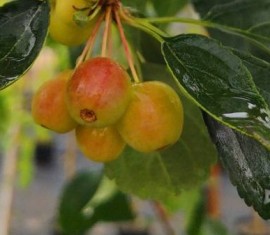
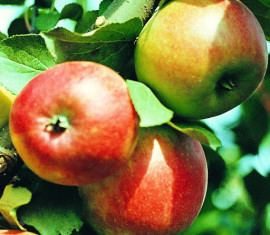
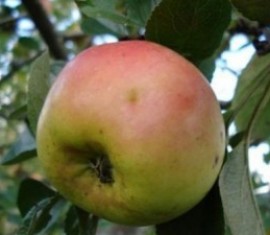
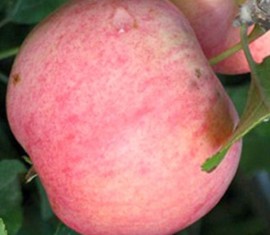
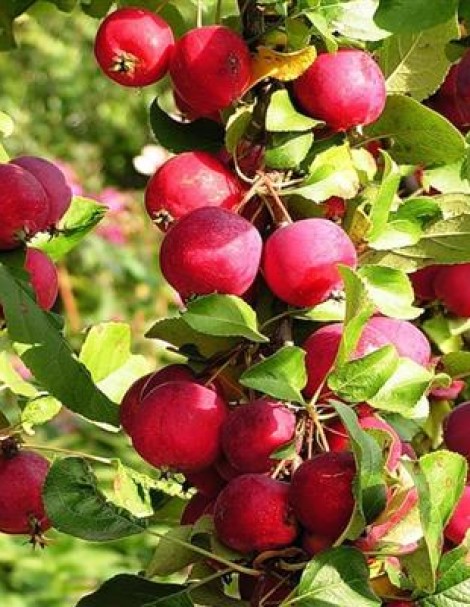
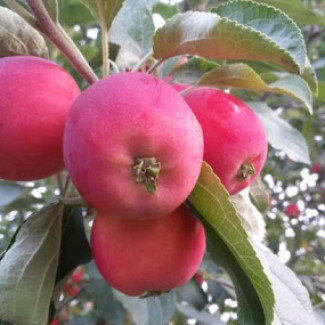
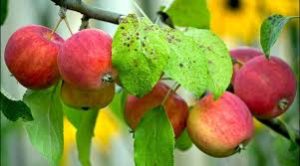 The fruits of this variety are round, slightly flattened, even flat-round, and uniform in size. They are quite small, reaching a maximum weight of 26-35 grams. The ribbing is very subtle, practically unnoticeable.
The apple skin is dense, smooth, glossy, covered with a waxy coating, strong and elastic. It has a green or greenish-yellow hue, turning honey-yellow as it ripens. The blush, covering approximately 85-90% of the fruit's surface, is dark red or blood-red. Subcutaneous spots are light gray or slightly light green and clearly visible. The chemical composition can be characterized by the following indicators (per 100 grams):
- P-active substances (catechins) – 195 milligrams.
- Ascorbic acid (vitamin C) – 5 milligrams.
- Total sugars (fructose) – 10.2%.
- Pectins (fiber) – 4.8%.
- Titratable acids – 1.42%.
The flesh is dense, fine-grained, crisp, and prickly. It has a green tint when unripe, later turning yellowish and even orange. The flesh may contain reddish-brown veins. The apples' flavor isn't exactly balanced or harmonious, but it's considered dessert-like and satisfying. The tasting score is only 3.9 for flavor and 4.3 for appearance out of a possible 5.
Apple tree Golubok: characteristics
Crown and root system
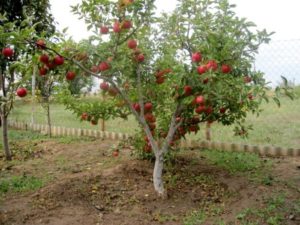 Trees of this variety are considered medium-sized, as they usually do not grow more than 4-5 meters in height, and even then without any formative pruning. Gardeners typically prefer to limit their growth to 3-4 meters, which makes harvesting and maintenance easier. The crown can be oval or even pyramidal when young. With age, it becomes broadly oval and even spreading. Branch density is average, and the tree is not prone to excessive thickening.
The bark is light brown or greenish-brown, glossy, and slightly pubescent. It can turn brown, crumble, and crack in old age. Fruiting occurs on young shoots, fruiting twigs, and simple ringlets. The leaves are medium-sized, dark green or just green, leathery, and dense. They have finely serrated margins and a light pubescence on the back. The root system is deep and branched, and may or may not have a central taproot, depending on the rootstock.
Productivity and pollination
For a Siberian apple tree, Golubok produces a truly impressive yield. They bear fruit very early, which is why they are particularly prized by gardeners, as numerous blossoms can be found on the tree by the second or third year.
On average, a mature tree of the Altai Golubok variety yields approximately 45-60 kilograms of apples. The absolute record is 145 kilograms. This result was officially recorded in the Altai Krai in 1998.
The tree is considered conditionally sterile. This means you'll still be able to harvest some apples, approximately 20-30% of the potential harvest. However, to maximize fruit production, it's best to interplant apple trees with other varieties, no more than 50-150 meters apart. It's also recommended to bring a mobile apiary directly to the planting sites during the flowering period.
Winter hardiness and disease resistance
Apple trees are highly frost-resistant, so they can easily survive the rather harsh Siberian winters. They survive temperatures as low as -27-33°C without any consequences, even when low temperatures persist for more than two weeks or alternate with thaws, which most varieties cannot withstand. At lower temperatures, they may experience slight frost damage, but quickly recover.
Initially, the standard trees had some resistance to scab, powdery mildew, and other fungal infections. However, over time, they lost this immunity. Modern Golubok is quickly and heavily attacked by diseases, and may even fail to recover from them, affecting not only the leaves but also the fruit.
Rootstocks and subspecies
Golubok is most often grown on standard vegetative rootstock, which produces a taller, more vigorous, and frost-resistant tree. However, dwarf and semi-dwarf varieties can also be used, but their winter hardiness will be reduced. There are no columnar varieties of this cultivar, so if you're offered one, it's best to avoid purchasing it.
Features of growing Golubka
 Landing
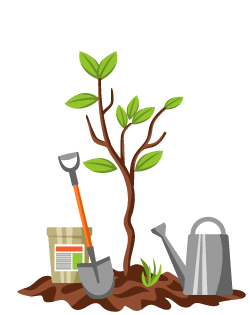 Landing
Basic conditions
- These apple trees don't require black soil; they grow best in sandy loam and clay loam, but regular fertilizing will still be necessary. Make sure the soil is slightly acidic, otherwise the seedlings may die.
- Ideally, choose sunny, open areas for the Dove, but be sure to protect them from drafts, especially on the north side. Trees can be planted under the protection of taller plants, building walls, fences, and hedges.
- This variety doesn't like excessive moisture, so planting it in areas where the groundwater table is higher than 2-2.5 meters is unproductive. Avoid planting it near a river, pond, well, or in a floodplain or ravine where meltwater accumulates in the spring. This will lead to root rot and the death of the plant.
- It's best to prepare the holes in advance, at least 2-4 weeks before planting. To do this, dig vertical holes 70-80 centimeters in diameter and the same depth. Add soil and fertilizer to the bottom, then add drainage (rocks, gravel, or vermiculite) on top, and add 20-30 liters of water. These holes are usually left outdoors.
- It is necessary to leave approximately 4-5 meters between trees in a row, and 4 meters between rows is enough. This way, in the future, they will not conflict with either crowns or rhizomes.
- Before planting, inspect the seedlings themselves, especially the roots. Any rotten, dry, or broken roots should be removed immediately. It's a good idea to soak the trees in warm water for 4-6 hours.
- On the north side, stakes should be driven into the holes immediately to tie the trees to. They can be removed no earlier than three or four years after fruiting.
- The root collar of the seedling should always be at least 10-12 centimeters above the soil surface to prevent the tree from rooting above it. If this happens, the original qualities of the rootstock will be completely lost.
- The tree is placed vertically, supported by the trunk, directly on the drainage system. The roots are spread out, and the soil is covered, compacted by hand. Once completed, a small earthen bank is built around the perimeter of the hole, and 20-30 liters of water are poured into it. The surface is mulched with manure, grass, humus, or compost.
Landing dates
You can plant the Dove in either spring or fall; in theory, it should tolerate both. However, experienced gardeners recommend planting it in the fall. This will give the tree more time to adjust to its location and develop roots and branches before it's time to flower and bear fruit.
The optimal time for planting is after the leaves have fallen, but no later than 2-3 weeks before the first frost. This applies only to bare-root seedlings. Indoor seedlings can be transplanted into open ground at any time during the growing season.
Protection from frost and rodents
The variety is quite tolerant of low temperatures, but it still needs winter protection. If conditions are truly harsh, you can lay straw mats around the root zone, wrap the trunk with roofing felt, tar paper, burlap, or even old women's tights. Young trees can even be covered with a layer of burlap or agrofibre.
To protect the delicate bark from hungry rodents, the trunks can be coated with lard, grease, or industrially produced substances. To get rid of these pesky insects, you need whiten trunks 1-1.5 meters deep with ordinary lime.
Tree care
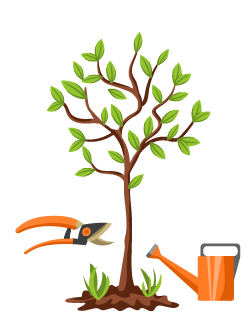 Tree care
Loosening the soil, watering: proper agricultural technology
Like any crop, Golubok loves oxygen-rich soil. Therefore, it certainly wouldn't hurt to loosen the soil around it twice a year and dig around the trunk. But a little hoeing at other times won't hurt either. This will also remove weeds and root suckers.
Apple trees only need to be watered when young or during particularly dry years. Under normal conditions, they find moisture on their own quite well. However, if the weather is hot and there's no precipitation, it's best to water them every 10-12 days. You can also feed and fertilize the trees at this time.
Pruning: simple crown shaping
The variety isn't prone to dense crowns, so one formative pruning in the first year is sufficient, followed by maintenance. The easiest way to achieve this is with a sparse, tiered crown, where the skeletal branches are spaced widely apart. Regular sanitary pruning is also recommended, removing dead, damaged, or diseased shoots. Rejuvenation can be done around 13-16 years of age, when 3-4 mature branches should be pruned to allow new growth to develop.
Pollinator varieties
- Gorno-Altaisk.
- Ranetka.
- Bellefleur the Chinese.
- Uralsk resident.
- Champion.
Reproduction
- Rooting cuttings.
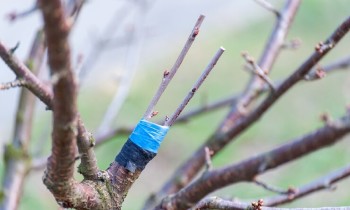
- Grafting by buds and cuttings.
- Growing from seeds.
Diseases and pests
- Fruit rot.
- Scab.
- Milky dew.
- Tinder fungus.
- Moniliosis.
- Codling moth.
Ripening and fruiting of the Altai blueberry
The beginning of fruiting
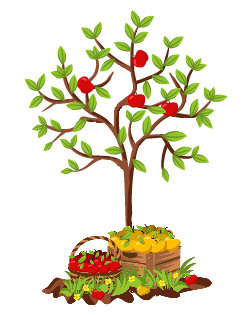 The beginning of fruiting
This is a very early-bearing variety, and the first inflorescences can be seen already in the nursery on first-year trees. It's clear that it's best to remove all buds between the first and third years to allow the apple tree time to develop its rhizome and foliage. The tree will begin to bear fruit in its third to fifth year, yielding up to 5-15 kilograms of small, fragrant fruits.
Flowering time
Siberian apple trees typically bloom a little later because spring often shifts slightly later. So, while blooming should begin in mid- or late May, it can begin as late as June, depending on the weather. It lasts only 6-10 days, so it's important to give insects time to pollinate the trees. The Golubok's flowers are large, gathered in small clusters, white or with a slight pinkish tint.
Fruiting and growth
Apple trees grow quite quickly, gaining 20-45 centimeters during the growing season. Therefore, by the fifth to seventh year, they reach their full height. Their yield increases gradually. Around the 10th to 12th year, they will be able to harvest the maximum number of rather tasty and unusual apples.
This variety is considered an early autumn or late summer variety, as consumer maturity occurs around the third ten days of August or the very beginning of September. Even under ideal storage conditions, the apples can be stored for no more than 1-3 months without losing their flavor or marketability, after which they become loose and tasteless. By then, they should be completely eaten or processed into jams, compotes, preserves, and other delicacies.
Top dressing
- Mineral complexes.
- Compost.
- Manure.
- Humus.
What to do if it doesn't bloom or bear fruit
- Check for pests and diseases.
- Transplant.
- Limit or activate watering.
Why do apples fall?
- Natural factors.
- Pests.
- Diseases.
- Excess moisture.
Leave your feedback on the winter-hardy Altai Golubok variety to share your experience and knowledge with others.