Apple tree Sokovoe: characteristics of the variety and care
| Color | Reds |
|---|---|
| Ripening season | Autumn |
| Size of apples | Small ones |
| Taste | Sweet and sour |
| Crown type | Average tree height |
| Shelf life | Low shelf life |
| Application | Fresh , For recycling |
| Winter hardiness | High winter hardiness |
| Fruiting age | Up to 5 years |
 History of origin and regions of growth
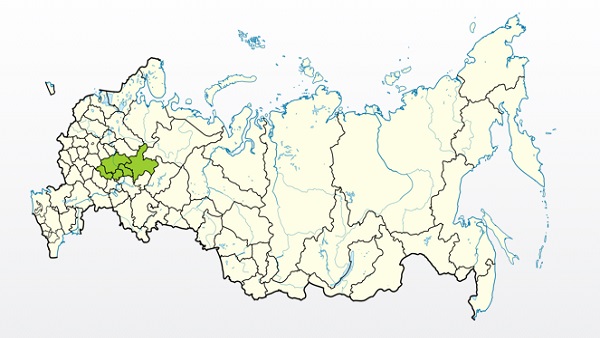
Growing regions
- Kirov region.
- Mari El.
- Chuvashia.
- Mordovia.
- Nizhny Novgorod region.
Origin
The cultivar was developed and created by the renowned Russian breeder Leonid Andrianovich Kotov and his colleague Tamara Aleksandrovna Makarova. Around the mid-1980s, by crossing and hybridizing the Urozhainoye and Uralskoye Nalivnoye varieties, a seedling was obtained, named Sokovoe. Several different variations of this same hybrid were designated with numbers (Sokovoe-2, Sokovoe-3, Sokovoe-4).
In the mid-1990s, the scientific community decided to classify the variety as elite. It was distributed to various farms across the country for field trials. The apple tree performed so well that in 2002 it was added to the State Register and zoned for the Volga-Vyatka region.
Content
Description of the Sokovoe apple variety
 This autumn variety possesses so many unique qualities that any gardener will want to grow it in their own garden under suitable climatic conditions. Sokovoe apples are exceptionally tolerant of low temperatures and temperature fluctuations, are resistant to excess moisture, and are almost unaffected by drafts. They begin bearing fruit quickly and don't require other apple trees, producing high yields of small, yet tasty and juicy apples. They are suitable for cultivation in both commercial intensive orchards and small home gardens.
Apples: What they look like
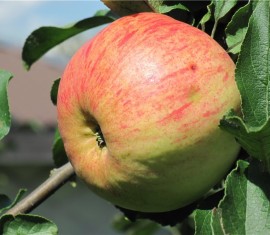
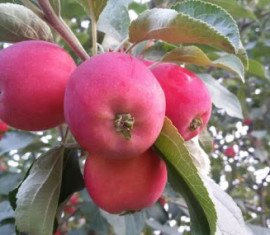
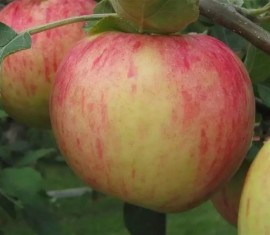
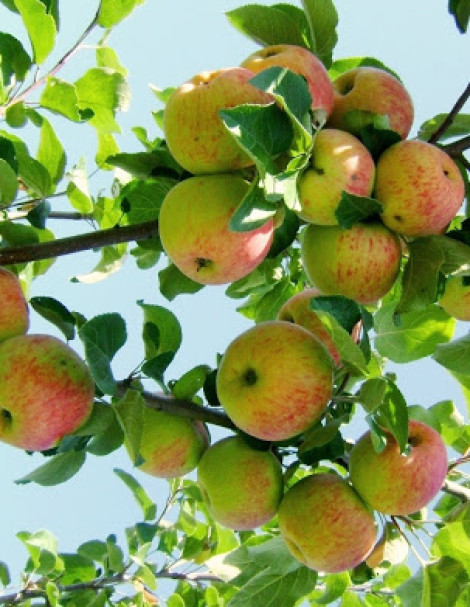
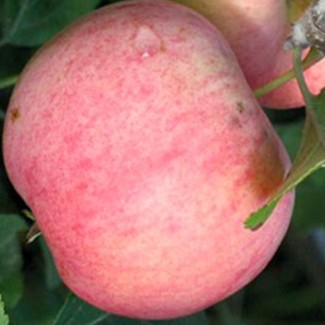
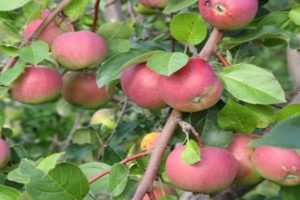 The fruits are predominantly small or approaching medium in size. They can weigh between 60 and 120 grams, but are generally uniform on a single tree, and size directly depends on care, feeding, fertilization, weather, and climate conditions. The apples are round, slightly flattened, and the ribbing is barely noticeable.
The fruit skin is smooth, glossy, shiny, and green when unripe, becoming creamy or light cream-colored when ripe. It is firm and elastic, but not hard, and cracks easily when mechanically damaged. The blush covers 65-85% of the surface; it is reddish-pink, sometimes slightly crimson, and is vaguely speckled, spotted, or striped. Subcutaneous punctures are large, numerous, light gray or slightly greenish, and moderately visible on the spotted surface. The chemical composition can be characterized by the following indicators per 100 grams:
- P-active substances (catechins) – 264 milligrams.
- Ascorbic acid (vitamin C) – 6 milligrams.
- Total sugars (fructose) – 11.2%.
- Pectins (fiber) – 7.5%.
- Titratable acids – 0.48%.
The flesh has a slightly greenish or creamy hue; it is quite dense, fine-grained, crisp, prickly, very juicy, and has a powerful, distinctive aroma. The flavor is considered table-worthy, harmonious, balanced, and sweet-and-sour. This variety is primarily used for industrial-scale juice production. Professional tasting scores for Sokovyi reach 4.5 out of 5 for appearance and taste.
Apple tree Sokovoe: characteristics
Crown and root system
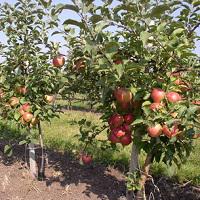 The trees are considered medium-sized, although without formative pruning they can easily reach 5-6 meters.Owners typically don't allow the trees to grow to this height, limiting their growth to 3-4 meters for ease of harvesting and maintenance. The crown is oval or broadly oval in shape and can reach 3 meters in diameter. Branches extend from the trunk at a nearly 90-degree angle and are covered in cherry-brown or brownish bark, smooth and slightly pubescent.
The leaves are medium-sized, elongated, long-pointed, and dark green or bright green. They are leathery, coarsely ribbed, and matte in appearance, with a sparse pubescence on the underside. The root system is robust, branched, and deeply rooted, with or without a central taproot, depending on the rootstock.
Productivity and pollination
Sokovoe is considered a high-yielding apple variety, which compares favorably with other Siberian and generally northern apple trees.
On average, one mature tree can yield at least 60-80 kilograms of fragrant, juicy fruit annually. In years with particularly favorable weather, some gardeners have even harvested more, up to 80-90 kilograms..
The tree is conditionally self-fertile, meaning that even if there isn't another apple tree of a different variety blooming within 50-100 meters of the tree, it will still produce fruit. For pollination, the Sokovoe apple tree requires only bees and wind. Therefore, experienced gardeners recommend spraying the plantings with sugar syrup to attract insects and transporting mobile apiaries. However, to increase yield, it's common to use additional pollinators.
Winter hardiness and disease resistance
This large tree is very resistant to low temperatures and fluctuations. It can even withstand temperatures as low as -32°C to -37°C. Moreover, the variety can withstand cold for long periods without significant harm, and produce fruit within normal limits the following year. Sokovyi is also resistant to sudden changes, fluctuations, harsh frosts followed by thaws, and strong winds, although careful preparation for winter is essential.
The Sokovoe apple tree has a genetic immunity to scab, including all five of its types, so it never suffers from any of these diseases. The trees are also quite resistant to other fungal apple infections. However, the variety is susceptible to pests, so regular and timely insecticide treatments are required.
Rootstocks and subspecies
There are several subspecies, designated by numbers, but the differences between them are minor. All characteristics remain virtually identical to the parent plant, with slight variations in fruit color, size, and sweetness. Sokovoe is grown on various rootstocks: standard, dwarf, and semi-dwarf. There are no columnar varieties, but a particularly popular variety grown on wild and semi-cultivated stock is even more frost-resistant.
Features of growing Sokovy
 Landing
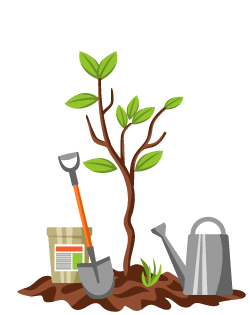 Landing
Basic conditions
- This variety prefers well-ventilated, open sites where the trees will receive full sun for most of the day. Flat sites are preferable, but they can also be planted on a slope, but only on a south-facing one.
- Sokovoe has no soil requirements and grows well in loam, sandy loam, or black soil. The main thing is that the salinity and acidity are within normal limits.
- Planting apple trees in low-lying areas where moisture accumulates or where spring meltwater collects is far from ideal. Their rhizomes begin to rot, and the trees die. For the same reason, it's not recommended to plant Sokovoe apple trees near bodies of water (ponds, lakes, rivers) or shallow wells. Groundwater should be at least 3-3.5 meters below the surface.
- Some people prepare the holes in advance, which is the most practical option. To do this, dig them 80-90 centimeters deep and about the same in diameter, fill the bottom with soil and fertilizer, then add drainage, fill with water, and leave them outdoors. If you didn't have time to do this in the fall or spring, you can dig the holes 2-4 weeks before planting.
- It's best to leave about 2.5-3 meters between trees in a row, and about 4-4.5 meters between rows. This will make it much easier to care for them and harvest the fruit, and the trees themselves won't interfere with each other with branches or roots.
- It's a good idea to immediately dig in metal or wood stakes to tie the seedlings to. These supports should not be removed until the tree has been bearing fruit for three to four years.
- The seedling is inspected for damage. Dry and damaged shoots are cut off and placed with the rhizomes in a mixture of soil and water for 4-7 hours. Alternatively, they can simply be placed in warm water.
- Spread the roots, place the tree on a mound of drainage material, and fill it with soil, compacting it by hand. Create a medium-sized earthen bank around the perimeter of the hole, and add 25-40 liters of water into it. Mulching the surface with sawdust, humus, compost, or chopped grass is recommended to prevent rapid moisture loss.
Landing dates
Sokovoe can be planted in either fall or spring. However, experts recommend the latter option, as the trees have a much better survival rate. Therefore, it's best to choose a warm, sunny day in late March or early April, when all possible frosts have passed. If you purchased the seedlings in the fall, you can bury them at a 45-degree angle to preserve them and plant them only after the frost has passed.
Protection from frost and rodents
This variety is very resistant to low temperatures and fluctuations, but protective measures should still be taken. In the fall, the area around the trunk should be covered with straw or dry grass mats. In the harshest climates, it's advisable to pile 15-25 centimeters of soil there, which should be removed in the spring. The trunks can be wrapped in various suitable materials, such as burlap, roofing felt, or old women's tights.
To protect the tender bark of seedlings from hungry mice and haresTo prevent insects from eating it during the cold season, trees should be coated with lard or grease, but commercially available products can also be used. Whitewashing the trunks with regular lime is also effective against insects.
Tree care
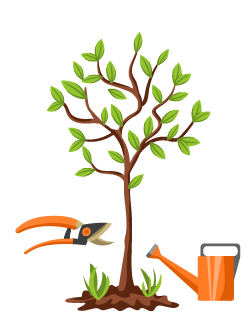 Tree care
Loosening the soil, watering: proper agricultural technology
It's a good idea to dig around the tree's trunk in spring and fall, but you can do this just once a year. Hoeing the soil can be done 3-4 times a season as needed. Be careful not to compact the soil to a hard, asphalt-like consistency, as this will cut off oxygen from the roots. At the same time, remove all weeds, root suckers, and shoots from other trees and shrubs. After 16-18 years, you can cover the trunk with sod, which will completely eliminate the need to dig under the tree.
Watering a mature tree with normal natural rainfall is not necessary; it will find moisture on its own. However, in dry and hot years, water can be added approximately 3-4 times during the summer. At the same time, you can feed the trees and fertilize the soil, as water helps them absorb nutrients much better.
Pruning: simple crown shaping
Sap trees are very prone to becoming overgrown, so it's best to perform shaping pruning early to prevent excessive growth. In the first year, prune the trunk by a third, leaving only 2-4 skeletal branches, which should be 5-7 centimeters shorter, spaced widely apart, and arranged in tiers. Subsequently, maintain the shape by removing any shoots that grow inward or vertically upward.
Sanitary pruning involves removing all broken, dried, damaged, or diseased branches. This is best done in late fall or early spring, when the sap has stopped flowing in the trunks. All cut areas should always be treated with something, whether it's garden varnish or regular water-based paint.
Pollinator varieties
- Bellefleur the Chinese.
- Uralsk resident.
- Chinese sannin.
- Gorno-Altaisk.
- Sverdlovsk anise.
- Spartan.
- In Memory of Ulyanishchev.
Reproduction
- Rooting cuttings.
- Grafting by buds and cuttings.
- Growing from seeds.
- Clones (layering).
Diseases and pests
- Cytosporosis.
- Fruit rot.
- Cytosporosis.
- Tinder fungus.
- Green aphid.
- Codling moth.
Ripening and fruiting of Sokovy
The beginning of fruiting
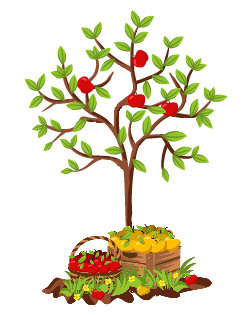 The beginning of fruiting
This variety is considered early-bearing because the first harvests can be collected as early as 3-4 years after planting in open ground. Around 2-3 years, individual flowers may bloom on the tree, but it's best to pluck them immediately. Subsequently, harvests of 5-10 kilograms can be obtained in the 4-5th year.
Flowering time
Like most Siberian apple trees, Sokovoe blooms in May, roughly from mid- to late-May. The exact bloom dates depend not only on the climate but also on the weather conditions of the particular year. The apple tree blooms profusely, producing beautiful, large pink flowers with a powerful and pleasant fragrance. They literally shower the branches, making the tree look very attractive.
Fruiting and growth
Juice trees grow very quickly, especially when young. They can gain approximately 45-70 centimeters of green mass in a single season, which is quite impressive. Over time, this active growth gradually slows until the trees reach their full height. Yields also increase gradually, and by the 8th to 10th year, they can harvest a full 60-70 kilograms of aromatic and very juicy fruit, which is primarily used for juice production.
These autumn apples are best picked in the second half of September, or even at the very end of the month. They ripen evenly, almost all at once, so harvesting can be scheduled within one or two days. It's best to process the harvest immediately, but if ideal humidity and temperature conditions are achieved, they can be preserved fresh for 30-45 days. The fruit transports well, but it's best not to prolong the process too much.
Top dressing
- Superphosphate.
- Compost.
- Nitrogen fertilizers.
- Humus.
- Potassium complexes.
- Ammonium nitrate.
- Manure.
What to do if it doesn't bloom or bear fruit
- Check for pests and diseases.
- Transplant to a sunnier location.
- Limit watering.
Why do apples fall?
- Overripe.
- Natural factors.
- Pests.
- Diseases.
Leave your feedback on the winter-hardy apple variety Sokovoe to share your experience with others.