
Champion apple tree: characteristics of the variety and care
| Color | Reds |
|---|---|
| Ripening season | Autumn |
| Size of apples | Large |
| Taste | Sweet |
| Crown type | Average tree height |
| Shelf life | High shelf life |
| Application | Universal variety |
| Winter hardiness | Average winter hardiness |
| Fruiting age | Up to 5 years |
 History of origin and regions of growth
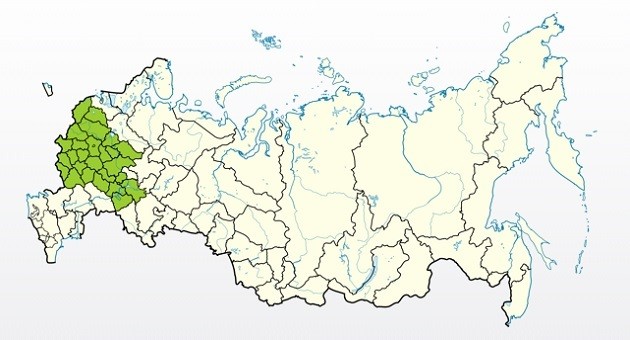
Growing regions
- Middle zone.
- Eastern Volga region.
- Southern regions of the Black Earth Region.
- Some northern regions.
History of origin
Today, the variety with the beautiful name "Champion" is at the peak of its popularity. It's considered young, as it was bred relatively recently, in the 1970s, at the Experimental Station near the village of Golovousy in the Czech Republic (formerly Czechoslovakia). Two varieties were used to create the hybrid: the Orange Reinette Coxa and the well-known Delicious Golden.
Trials were conducted in various zones of Ukraine: forest-steppe, steppe, and southern Polesia. The variety performed quite well, attracting gardeners' attention for its taste, appearance, and shelf life. In recent years, Poland has become the main importer of the Champion variety to Western Europe.
Content
Description of the Champion apple variety
 Every gardener dreams of replacing old varieties in their garden with new ones that boast enviable consumer qualities. Champion is one such variety. It's easy to care for, produces consistently abundant harvests without resting, and its apples are easy to transport even over long distances and last until the next harvest. Experts recommend Champion not only for small garden plots but also for commercial intensive orchards.
Apples: What the Fruit Looks Like
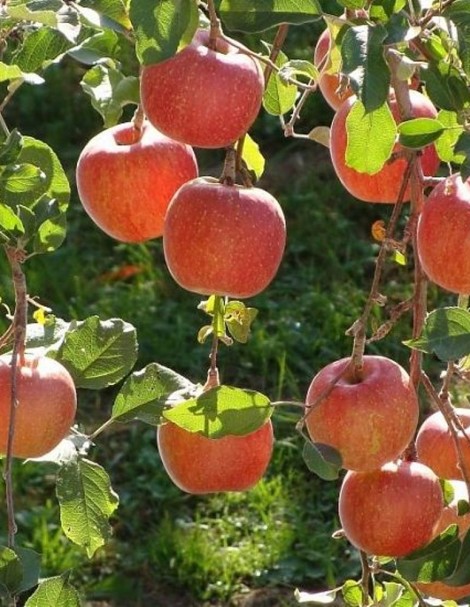
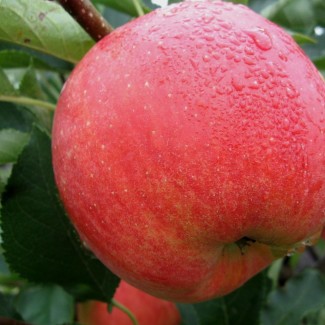
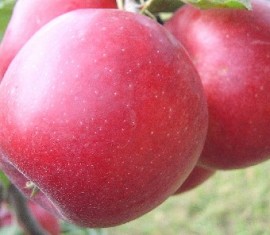
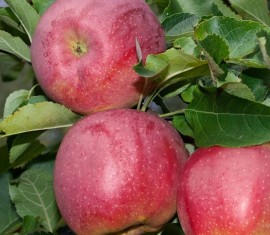
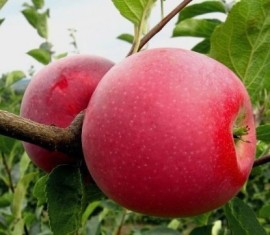
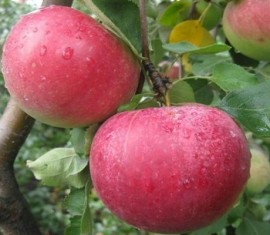
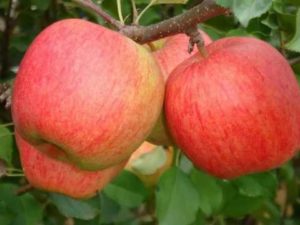 The fruits of this variety are quite large, without a large variation in size, and can easily grow up to 170-220 grams under suitable conditions. They are round and slightly flattened.
Their skin is dense but thin, greenish-yellow when fully ripe. It's almost completely covered with a reddish-orange blush, sometimes blurred or streaked, especially on the side facing the sun. The chemical composition is characterized by the following indicators:
- P-active substances – 287 milligrams.
- Vitamin C (ascorbic acid) – 8.2 milligrams.
- Total sugars (fructose) – 13-14%.
- Pectins (fiber) – 12.5%.
- Titratable acids – 0.69%.
The fruit's flesh isn't very firm when ripe. It's somewhat loose, yet still quite juicy. Its color leans toward cream or slightly yellowish. The Champion's flavor is considered dessert-like, balanced, and harmonious, with a strong, distinct aroma. According to tasting reviews, the fruit scores 4.8 out of 5 for appearance and 4.4 for flavor.
Champion apple tree: characteristics
Crown and root system
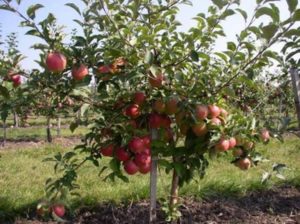 The tree is considered to be of medium or below average height. Without pruning, it can easily produce shoots up to 5 meters high, but in cultivated gardens, thrifty owners usually do not allow it to grow so much. Therefore, in most cases the tree reaches 2.5-3.5 meters maximum. Crown The variety has a medium-density habit, not prone to excessive thickening, and has a pyramidal or even oval shape when young. Over the years, it becomes broadly pyramidal, spreading, and sometimes weeping, with long branches drooping downward.
The leaves are a rich, dark green, smooth and leathery above, with a noticeable pubescence beneath. The petioles are rounded, tapering toward the edges, and the tips can even be twisted into a spiral. The leaf margins are serrated and jagged. The root system is well-branched, but primarily superficial, significantly reducing the variety's frost resistance.
Productivity and pollination
Among winter apple trees, the Champion variety is considered highly productive.
In a good year, it can yield at least 70-110 kilograms of aromatic fruits, which are distinguished by an enviable uniformity in size.
A five- or seven-year-old tree can easily yield up to 30 kilograms of fruit. Fruiting cycles can occur in older trees, but this is rare.
This variety is relatively self-sterile, so if it's the only one in the garden, it won't produce a good harvest. While it usually blooms profusely, ovaries only form in 20-30% of cases. A nearby apiary will further increase the yield. Experienced gardeners even arrange to bring their hives into their gardens during the flowering period to boost pollination.
Winter hardiness and disease resistance
Champion's frost resistance is average, even below average. It struggles with temperatures below 15-18°C. If such weather persists for a long time, and is accompanied by wind, the apple trees may die. Therefore, they require protection even in fairly moderate growing conditions. Covering not only the root zone and the lower part of the trunk is necessary, but also the skeletal and all other branches.
The variety has the greatest resistance to powdery mildew, but scab It can easily infect trees. Therefore, it's essential to regularly carry out all necessary preventative measures, including spraying with chemicals and clearing the area around the trunk of fallen leaves or rotting fruit. This variety is highly susceptible to bitter pit.
Subspecies and rootstocks
| Subspecies | Description |
| Giant | This is a special subspecies of Champion, whose fruits grow to truly gigantic sizes. They can weigh up to 750-900 grams when ripe, so growing them on branches without support is unlikely. The trees are not frost-resistant, so they are grown primarily in botanical gardens or greenhouses. |
| Renault | A Polish hybrid developed by breeders Reitman and Nowakowski, whose surnames inspired its name. This subspecies is particularly frost-resistant and tolerates temperatures of 28-30°C without any problems, without losing its fruit. The apples themselves are large, weighing 190-220 grams, with a more intense blush, and an even sweeter flavor. |
| Arno | This subvariety is grown on a 54-118 rootstock, but retains all the characteristics and qualities of the parent plant. Its apples reach 200 grams in weight, have an intense color, and the flesh is denser, fine-grained, and juicier. Its cold tolerance is reduced. |
| Rootstocks | Peculiarities |
| Dwarf | In this variant, the apple tree grows no taller than 2 meters, making care and harvesting much easier. It possesses all the qualities of the parent variety. |
| Semi-dwarf | The tree grows to 2-3 meters and is grown on MM-106 rootstock. This variety is characterized by resistance to scab, powdery mildew, and other fungal infections. Its fruits are sweet, large (up to 250 grams), dark, almost burgundy, and covered with a waxy coating, giving them a bluish tint. |
| Columnar | A tree on this rootstock grows to a maximum height of 3 meters. This is the most desirable option for many, as it has no lateral scaffold branches, and its crown reaches a maximum width of 30-40 centimeters. This significantly saves space in the garden. A single tree typically yields up to 45-50 kilograms of aromatic apples with thin, soft skin and a more tart flavor. A significant drawback of this subspecies is its short lifespan. It grows and bears fruit for only 10-15 years, after which it must be replaced with a younger tree. |
Features of growing Champion
 Landing
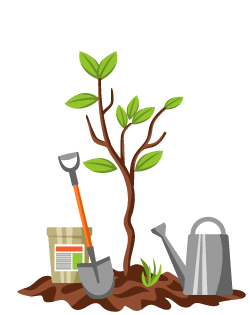 Landing
Key Features
- For planting Champion, choose well-lit and ventilated areas. However, special attention should be paid to avoiding drafts, which the trees do not tolerate.
- Apple trees prefer dry sites with low groundwater levels. Planting them near bodies of water is also not advisable. Their rhizomes can rot, resulting in the death of the tree.
- The holes for each variety are dug small, just 50-60 centimeters deep and the same in diameter (for vigorous rootstocks, 80 centimeters deep and 1 meter in diameter). These can be prepared in advance, for example, in the fall or at least 2-4 weeks beforehand. To do this, mix some of the excavated soil with fertilizer and, after returning it to its original location, add 20-30 liters of water.
- Before planting, visually assess the root system; if necessary, soak it in water for 6-7 hours, and cut off any damaged or dried roots with garden pruning shears.
- Immediately dig stakes into the hole on the north side, to which the seedlings will be tied. Do not remove them during the first or second year.
- The root collar must be left at least 5 centimeters above the surface, otherwise the tree may root higher, which will lead to a complete loss of the rootstock's qualities.
- Sprinkle the root system, constantly shaking it slightly so that there are no air bubbles near the rhizome; the apple tree does not like this.
- A border of soil is made around the root zone, into which 30-40 liters of water are poured.
Landing dates
Champion isn't particularly frost-resistant, so it's recommended to plant it in the spring. Even if you purchased seedlings in the fall, you can plant them in a convenient location, protecting them from frost. However, you can try planting them in late September after the leaves have fallen, but there are still at least four weeks left before frost. In the spring, it's best to postpone planting until late April.
Protection from frost and rodents
Up to three years of age, trees must be wrapped and protected from frost if winter temperatures drop below -16-20°C for more than two weeks. Not only the roots, but also the trunks and branches require protection. Until the tree reaches three years of age, it is recommended to completely wrap it in plastic film or burlap, surrounding it with straw bales and spruce branches.
To prevent insects from overwintering on apple trees, the trunks should be whitewashed with lime or treated with special insecticides in the fall. To repel hungry rodents, treat the trunks with lard or grease.
Tree care
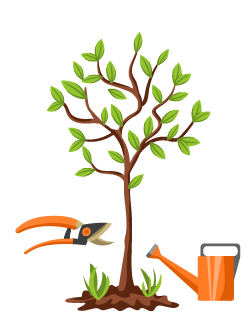 Tree care
Loosening the soil, watering: proper agricultural technology
It's not necessary to loosen the soil under the Champion, but you can dig around the trunk area once a year. However, extreme caution is a good idea, as you don't want to damage the roots located close to the surface. Removing weeds, root suckers, and shoots from shrubs or other trees is a common gardening practice for any variety, and it's no bad idea for this one either.
Overwatering can kill an apple tree, as frequent standing water will cause the root system to rot. Therefore, watering apple trees of this variety should only be done in extreme cases, and even then only sparingly, perhaps two or three times during the growing season.
Pruning: simple crown shaping
During the first three years, pruning must be done carefully, as the crown must be properly shaped for easy harvesting. To achieve this, skeletal lateral branches are formed in tiers, preferably spaced far apart. The main stem is shortened by a third starting in the first year, and the tiers of branches should be 5-10 centimeters shorter. The columnar Champion will require the least amount of work; it will only require shortening the trunk and removing small branches on the sides if they interfere.
As the tree matures and then ages, regular sanitary and rejuvenating pruning will be necessary. This involves removing all damaged, dead, or diseased branches. From 10 to 15 years of age, 2-3 mature branches should be pruned to allow new growth to develop, which will significantly rejuvenate the tree.
Pollinator varieties
- Priam.
- Idared.
- Alva.
- Gloucester.
- Lobo.
- Teremok.
- James Grieve.
Reproduction
- Growing from seeds.
- Layers (clones).
- Grafting by cuttings or buds.
- Rooting cuttings.
Diseases and pests
- Bitter pitting.
- Black crayfish.
- Powdery mildew.
- Scab.
- Codling moth.
- Green aphid.
- Flower beetle.
Ripening and fruiting of the Champion apple tree
The beginning of fruiting
 The beginning of fruiting
Gardeners especially like the Champion variety because you can sample a few apples from the tree as early as the second or third year, and fruiting begins in the fourth or fifth. While you're unlikely to harvest more than 5-15 kilograms during this period, it's a very good start.
Flowering time
Like all winter apple trees, the Champion begins blooming around mid-May. Depending on the climate, this may extend until the end of the month. The buds open briefly, and within 10 days, none remain. The variety produces medium-sized, saucer-shaped flowers, white and fragrant, with large stamens.
Fruiting and growth
By the sixth or seventh year, the variety begins to bear fruit abundantly. It can now produce full harvests, which are easy to transport and store under suitable conditions (a well-ventilated cellar). The tree grows quite significantly, up to 15-25 centimeters per year, for the same amount of height gain (5-7 years). After this, it begins to spread outward, becoming more spreading.
The fruit reaches full maturity in mid-September, but sometimes it can take until the end of the month. Almost all the apples ripen at the same time. Extreme caution is required and it's best to harvest them within the first ten days, as they can fall to the ground within two days of reaching technical maturity. Then, the entire harvest should be processed immediately (within 3-5 days) into jams, preserves, or compotes. If harvested promptly, the fruit can easily be stored for 5-6 months.
Top dressing
- Mineral complexes.
- Superphosphate.
- Humus.
- Manure.
- Bird droppings.
- Potash fertilizers.
What to do if it doesn't bloom or bear fruit
- Transplant to a drier place.
- Check for pests (flower beetles).
- Stop watering.
- Check for frostbite.
- Fertilize the soil.
Why do apples fall?
- Overripe.
- Damaged by pests.
- The apple tree is affected by diseases.
- Natural causes (hail, wind, rain).
Share your thoughts on the Champion in the comments below to share your experiences with other amateur and professional gardeners.




Comments
The apples are excellent, great for juice and just eating, although many find them overly sweet. They grow right next to our house, fortunately the trees aren't very tall and don't shade the house. We pick them around October, not until frost, as this variety doesn't always tolerate frost well.