Apple tree Alyonushka: features of the variety and care
| Color | Reds |
|---|---|
| Ripening season | Summer |
| Size of apples | Small ones |
| Taste | Sweet and sour |
| Crown type | Average tree height |
| Shelf life | Low shelf life |
| Application | For recycling , Fresh |
| Winter hardiness | High winter hardiness |
| Fruiting age | Up to 5 years |
 History of origin and regions of growth
Growing regions
- Tuva.
- Krasnoyarsk Krai.
- Chita region.
- Novosibirsk region.
- Buryatia.
- Tyumen Oblast.
- Irkutsk region.
- Tomsk region.
- Khakassia.
- Kemerovo region.
Origin
The history of this apple tree can be traced back to 1948, when the renowned Russian-Soviet breeder Nikolai Nikolaevich Tikhonov was appointed head of the Krasnoyarsk Experimental Station. Together with his wife, A.S. Tolmacheva, he developed more than forty varieties, including "Alenushka," which was added to the State Register in 1960.
A new, early-fruiting, and frost-resistant variety was developed by crossing the well-known Papirovka and Ranetka Laletino. The result is a variety considered a favorite among Siberian gardeners. In the 1970s and 1980s, this apple tree was in great demand in intensive orchards, but over time, more advanced varieties took its place, and Alenushka became a favorite among small home gardeners.
Content
Description of the apple tree variety Alyonushka
 At one time, this variety truly occupied a significant place in Siberian fruit growing, with at least 40% of all orchard land devoted to its cultivation. This is unsurprising, as the apple tree is distinguished by its high winter hardiness, enviable early fruiting, and substantial yields, despite its compact size and exceptional ease of care. Moreover, the apples are so rich in various nutrients that they can safely be used as a vitamin "bomb" during the cold season.
Apples: What they look like
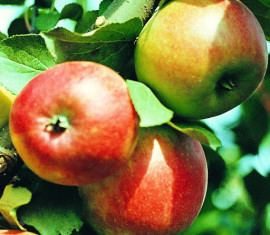
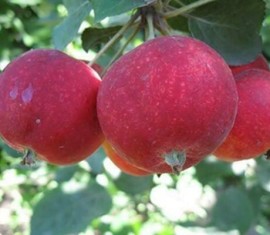
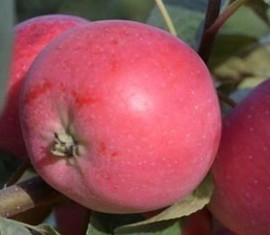
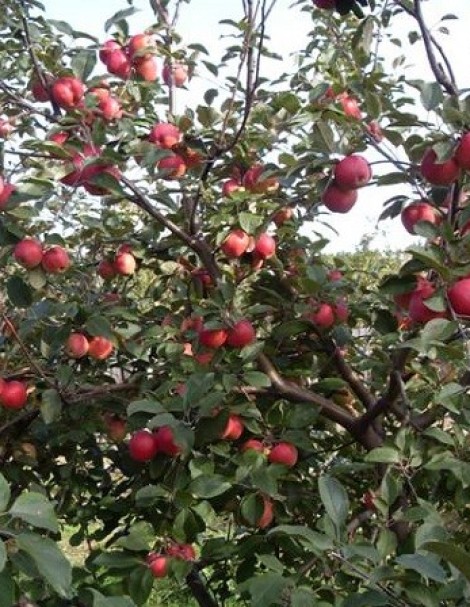
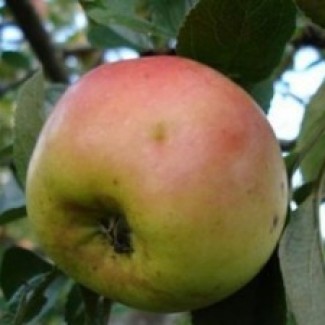
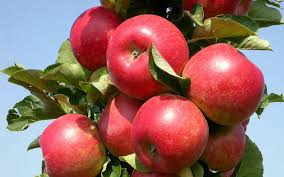 The fruits of this variety are uniform, round, and can be slightly flattened, but are quite small. They can reach a maximum weight of 24-40 grams, making them similar to their immediate ancestor, the Renet. They most often have subtle ribbing, but the seam is usually clearly visible.
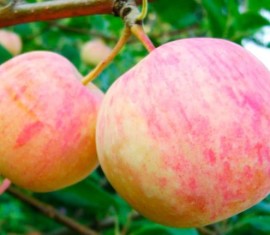
The fruit skin is smooth, glossy, often covered with a light oily bloom, light golden or slightly greenish-yellow in color. The blush covers more than 85-90% of the surface, with a blurred, reddish-pink striped pattern that intensifies during cellar storage. The fruit's chemical composition can be characterized by the following indicators per 100 grams:
- P-active substances (catechins) – 196 milligrams.
- Ascorbic acid (vitamin C) – 31.2 milligrams.
- Total sugars (fructose) – 10.8%.
- Pectins (fiber) – 16.6%.
- Titratable acids – 0.7%.
The flesh of the Alyonushka apple variety is snow-white and, even after prolonged storage, does not acquire a yellow or creamy hue. It is coarse-grained, juicy, and tender, with a medium firmness and a pleasant, powerful aroma. The fruit's flavor is considered dessert-like, balanced, and harmonious, with a sweet and sour tang and distinct spicy notes. According to professional tasting reviews, the apples scored 4.3 points for appearance and 4.6 points for taste out of a possible 5.
Apple tree Alyonushka: characteristics
Crown and root system
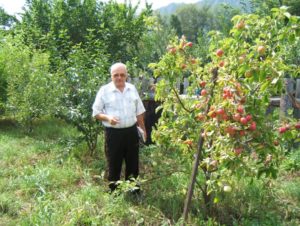 The tree is fast-growing, unlike the Minusinsky Red. It grows rapidly, but slows down slightly once fruiting begins. It is considered a medium-sized tree, although it would be more appropriate to call it a natural semi-dwarf. Without pruning, the maximum height of the tree is only 2.5-3 meters.
Crown When young, it is oval or rounded, but with age it inevitably becomes spreading, as its branches droop. It is medium-dense, requires regular pruning, and produces quite a lot of foliage. The branches are long and upward-facing, but the tips often droop downward, forming a broom-like shape. The bark is smooth, brownish or brownish-green. In areas not exposed to direct sunlight, it can have a delicate olive hue.
The apple tree bears fruit on last year's growth, compound and simple rings, and fruiting twigs. The foliage is light green, rounded-elongated, ovate, leathery, matte, and noticeably pubescent with a crenate-serrate margin tapering to a point. The root system is superficial, highly branched, and may or may not have a central taproot, depending on the rootstock used.
Productivity and pollination
This variety produces high yields under suitable conditions and proper microzone management. Fruiting begins approximately three or four years after planting outdoors, but at that point, you'll only be able to harvest a few dozen aromatic fruits.
Alyonushka reaches its peak at approximately 11-13 years, when up to 60-80 kilograms of apples can be harvested from one tree.
For the first ten years, the tree bears fruit annually, but then produces fruit every other year, alternating active fruiting with periods of rest. The average period of active fruiting is approximately 50-75 years, after which it gradually declines to zero.
The variety is completely self-sterile, meaning that to obtain a harvest, it's essential to ensure the availability of suitable pollinating apple varieties. These must be grown within 50-150 meters of each other, otherwise, the honey plants will not be able to pollinate. Experienced gardeners plant orchards near apiaries or use mobile apiaries during the apple tree bloom period to assist the bees in their work.
Winter hardiness and disease resistance
This variety is considered one of the most cold-resistant in the world. During testing, the seedlings survived unusually cold weather, with ground temperatures dropping below -48°C. During this period, Alyonushka lost no more than one-third of its crown, and then fully recovered within just a year. Therefore, many take advantage of these qualities when planting apple trees, even in the Far East. However, the trees are not very resilient to heat and drought and can die if watering is not provided promptly.
ScabAlyonushka can be infected rapidly and heavily with one of the most common apple diseases. Not only the leaves but also the fruit are affected. It is also susceptible to other infectious and fungal diseases, and pests readily attack the leaves, fruit, and even the wood. Therefore, all preventative measures must be taken regularly to avoid plant death.
Rootstocks and subspecies
No work has been done to cultivate subspecies of the Alyonushka variety, although the trees themselves may differ slightly depending on many external factors. The variety is grown on vegetative, dwarf, and semi-dwarf rootstocks; columnar varieties do not exist. Therefore, if you are offered something similar, it is most likely a scam. Experiments have been conducted with growing the variety as a creeping (creeping) tree. It responds well to pruning, bears fruit vigorously, and grows no more than a meter in height, but produces smaller fruits that acquire a tart, astringent flavor.
Peculiarities of growing Alyonushka
 Landing
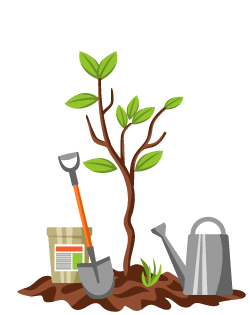 Landing
Basic conditions
- Alenushka's planting location must be chosen carefully; it prefers sunny, well-warmed areas throughout the day. It's advisable to protect the trees from drafts, otherwise they may become diseased. They thrive best planted under the shelter of building walls, hedges, fences, and taller trees.
- Soil Almost any soil will do, as long as it's not pure clay or is overly acidic. Loam, black soil, and sandy loam are ideal for this variety.
- Avoid planting apple trees near swamps, natural bodies of water, or wells. They also don't like damp, low-lying areas or areas near groundwater. Groundwater should be no deeper than 2.5-3 meters, otherwise the roots may rot.
- As with most apple trees, holes need to be prepared in advance. Ideally, this should be done in the fall, but 2-5 weeks before planting can also be done. The root system, like the tree itself, is quite compact, so holes no more than 50 centimeters deep and the same in diameter are needed.
- It is optimal to leave about 3 meters between trees in a row so that their crowns do not conflict, and 2 meters can be left between rows.
- A layer of topsoil mixed with humus, nitrophoska, or other fertilizers is added to the bottom of the hole. Drainage is then added, such as gravel or vermiculite, and then 20-30 liters of water are added. The hole is left fallow until the apple trees are planted.
- On the day of planting, the root system is carefully examined, cutting off all dried, diseased or damaged shoots with garden pruning shears, and then immersed in warm water for 6-9 hours.
- It is important to ensure that the root collar protrudes above the surface by at least 4-8 centimeters, otherwise it will take root and the properties of the rootstock will be hopelessly lost.
- Stake stakes are driven into the holes immediately, preferably on the north side. It's best to leave them in place for the first few years.
- Place the seedlings on a drainage platform, spreading out their root system, and carefully cover with soil, compacting it lightly. The area around the apple tree should be soft soil, not paved.
- A small mound of soil is poured around the perimeter of the tree trunk circle, and 20-30 liters of water are added inside it, after which it would not hurt to mulch the surface with humus or any other suitable material.
Landing dates
Alyonushka can be planted either in the spring, before the buds begin to open, or in the fall, after the leaves have fallen and the sap has stopped flowing in the trunks. Experienced gardeners prefer the latter method, as they believe the seedlings' survival rate will increase significantly, and their growth rate will significantly increase. Young apple trees purchased with closed root system (in special bags or pots that do not require disposal), can be planted at any time from spring to autumn.
Protection from frost and rodents
Apple trees are so winter-hardy that they don't require special frost protection, but it wouldn't hurt to pile dry leaves, hay, and branches onto the root zone, or to scatter some spruce branches. If you're still concerned, you can wrap the trunks in agrofibre, burlap, or even roofing felt, or surround them with straw mats, but usually such measures aren't necessary.
The main winter dangers for Alyonushka are insects and rodents. Therefore, the trunks will need to be regularly whitewashed, sprayed with copper sulfate, and lubricated with lard and grease.
Tree care
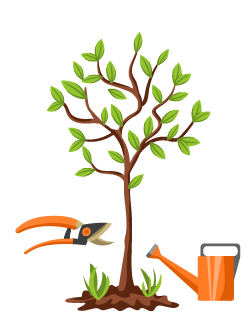 Tree care
Loosening the soil, watering: proper agricultural technology
Weeding and root suckering are recommended annually, but for this variety, simply digging around the trunk once a year is sufficient. Note that this should be done carefully to avoid damaging the roots located close to the surface. In the future, you can line this area with sod to make the job easier.
Apple trees can and should be watered. It's best to follow the ten-day rule: if dry weather persists for more than ten days, it's time to add water. For a mature tree, 10-20 liters twice a day, morning and evening, is sufficient. Fertilizer can be added at this time, but this shouldn't be done until 3-4 years after planting.
Pruning: simple crown shaping
The first formative pruning is performed the year the tree is planted in open ground. This involves removing a third of the length of all branches and the central trunk. This should be done again after three years. Dry, damaged, or diseased branches should be removed regularly in spring and fall. The cut areas can be sealed with garden varnish or water-based paint. It's also best to remove branches that point inward or protrude vertically.
Pollinator varieties
- Youth.
- Welsey.
- Pepinka.
- Lada.
- Mana.
- Lightning.
- Flashlight.
- Lada.
Reproduction
- Clones (layering).
- Rooting cuttings.
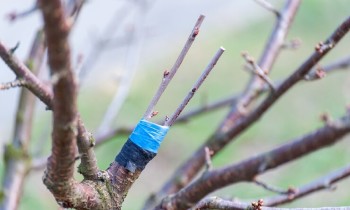
- Grafting by buds and shoots.
- Growing from seeds.
Diseases and pests
- Scab
- Powdery mildew.
- Moniliosis.
- Fruit rot.
- Hawthorn.
- Scale insect.
- Leaf roller.
- Flower beetle.
- Codling moth.
Ripening and fruiting of Alyonushka
The beginning of fruiting
 The beginning of fruiting
Trees begin bearing fruit as early as three or four years after planting, but these few dozen apples are unlikely to be considered a full harvest. Some trees bloom in the first or second year, but it's best to remove all blossoms completely, allowing the seedlings to develop a root system and crown, allowing them to become strong enough for the apples to ripen.
Flowering time
Alyonushka apple blossoms begin blooming in the second half of May and don't last long, so you'll need to be careful not to miss the moment if you're planning to set up a mobile apiary. They'll be over in about 5-6 days, and you could be left without a harvest. The apple blossoms themselves are large, with fleshy petals that are white or slightly pinkish, and have a bright, powerful aroma.
Fruiting and growth
Apple trees grow very quickly at first, reaching 1-2 meters in height within 1-2 years, but then, with the onset of fruiting, production slows sharply. A full harvest can be obtained approximately 6-8 years after planting, and the trees will not reach their peak until 10-12 years. Initially, they bear fruit every year, then begin to bear fruit every other year, giving themselves a rest period. However, a single tree can yield 65-80 kilograms of fragrant and delicious fruit.
Full ripening occurs around mid-August, making these apple trees considered summer apples. They hold firmly to the branches, so there's no rush to harvest. They also transport fairly well. However, like all summer varieties, they don't keep well. Even in a good cellar with the right temperature and humidity, they can only be stored for 30-45 days. After that, the flavor deteriorates, and the flesh becomes loose, cottony, and unpleasant. Therefore, for large quantities, it's best to process the apples immediately into juices, jams, compotes, and preserves.
Top dressing
- Mineral complexes.
- Superphosphate.
- Compost.
- Manure.
- Ammonium nitrate.
- Humus.
What to do if it doesn't bloom or bear fruit
- Check for pests and diseases.
- Provide watering.
- Transplant to a sunnier area.
Why do apples fall?
- Natural factors.
- Pests.
- Diseases.
Leave your feedback on the winter-hardy Alyonushka variety to share your experience and knowledge with other amateur and professional gardeners.