Uralets apple tree: characteristics of the variety and care
| Color | Reds , Striped |
|---|---|
| Ripening season | Autumn |
| Size of apples | Small ones |
| Taste | Sweet and sour |
| Crown type | Tall tree |
| Shelf life | Low shelf life |
| Application | For recycling , Fresh |
| Winter hardiness | High winter hardiness |
| Fruiting age | From 5 years old |
 History of origin and regions of growth
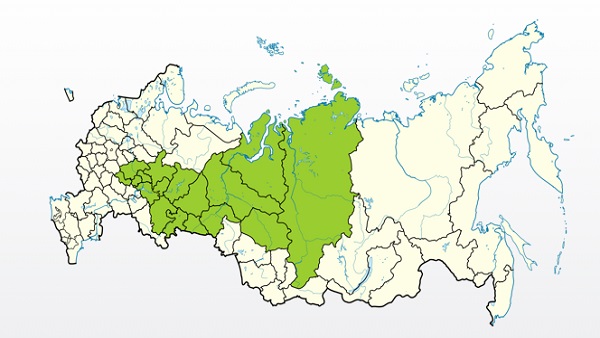
Growing regions
- Volga-Vyatka region.
- Western Siberia (partially).
- Ural.
Origin
This ancient variety has a history spanning approximately a hundred years. Back in the early twentieth century, the renowned Russian breeder, PhD in agricultural sciences, teacher, and agronomist Porfiry Afanasyevich Dibrov conducted a series of experiments at the Sverdlovsk Experimental Station for Horticulture and Agriculture to cross-pollinate several apple varieties, ultimately producing a new variety called Uralets.
The Chinese Voskova variety was used as the mother tree, pollinated with a mixture of Ukrainka saratovskaya and Anise rosea pollen. Around 1946-48, the hybrid seedling was recognized as elite and sent to nearby farms for field trials. In 1959, it was added to the State Register and zoned for Karachay-Cherkessia and the Altai Republic.
Content
Description of the Uralets apple variety
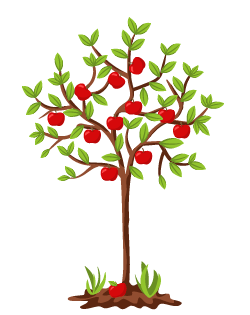 This variety exhibits high frost resistance, as well as resistance to a variety of common apple fungal infections. This has certainly caught the attention of Russian gardeners. Its small, compact trees, significantly easier to care for and harvest, and consistently high yields of delicious and aromatic fruit have made Uralets a popular choice in the market. It is suitable for growing in small garden plots as well as in intensive commercial orchards.
Apples: What they look like
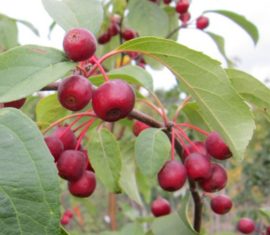
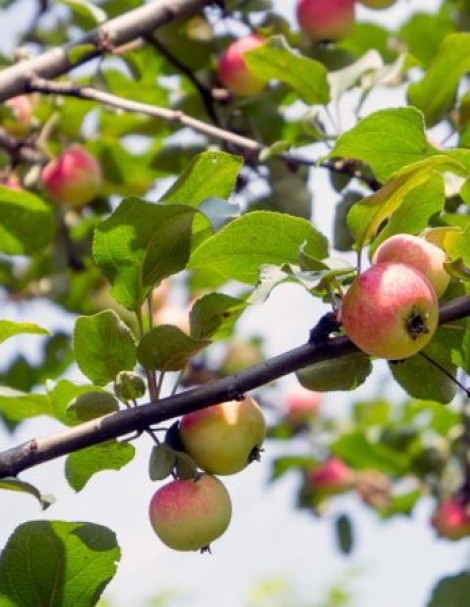
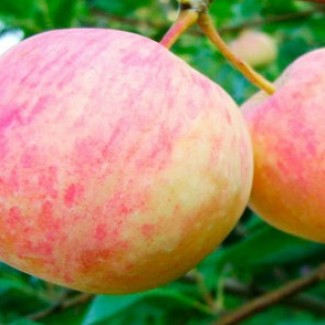
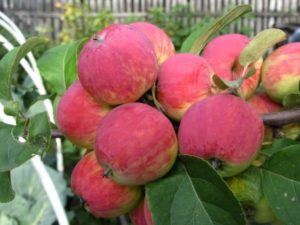 The fruits are predominantly round or round-conical in shape with a truncated tip, non-uniform, and symmetrical. They are mostly small or even very small. The largest specimens barely reach 45-60 grams, but some weigh 20-35 or 55-70 grams. The ribbing is subtle and completely invisible to the naked eye.
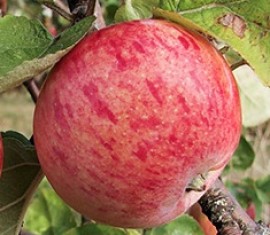
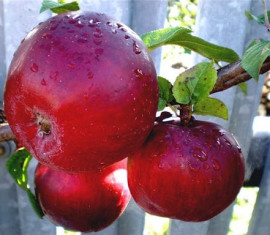
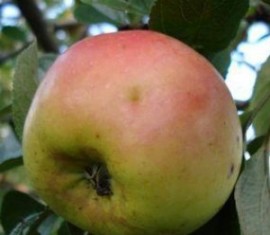
The fruit skin is dense, smooth, glossy, and dry, with no oily or waxy coating. When unripe, it is greenish-green, becoming creamy or slightly yellowish as it ripens. It is covered with a carmine-red, blurred, streaky blush covering 65-80% of the surface. Subcutaneous dots are numerous, gray or light green, and barely noticeable. The chemical composition is characterized by the following indicators per 100 grams:
- P-active substances (catechins) – 300.7 milligrams.
- Ascorbic acid (vitamin C) – 6 milligrams.
- Total sugars (fructose) – 11.8%.
- Pectins (fiber) – 14.4%.
- Titratable acids – 1.2%.
The flesh is dense, fine-grained, and extremely juicy. It's prickly, crisp, light yellow or cream-colored, and has a unique sweet-and-sour flavor with a hint of sweetness. It's considered a dessert-like, harmonious, and balanced taste; some call it tangy. Professionals give the apples a 4.7 for appearance and a 4.2 for flavor on a 5-point tasting scale.
Uralets apple tree: characteristics
Crown and root system
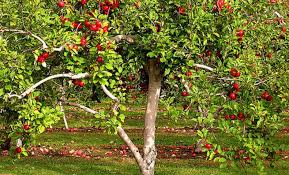 Scientists classify trees of this variety as vigorous, because they without pruning they can easily stretch up to 10 and even 15 metersIf you plant it in your garden, it will be the tallest apple tree on the property. However, most gardeners prefer to limit the Uralets's height to 4-4.5 meters for ease of care and harvesting.
The crown is compact, sometimes oval, elongated, pyramidal, or narrowly pyramidal. Branches extend from the trunk at an angle close to ninety degrees, but then rise upward. Over time, with abundant harvests, the tree can become spreading due to the pressure of the fruit. Fruiting occurs on shoots 2-3 years old, on spears and rings.
The branches are mostly straight and long, covered with smooth but densely pubescent brown or dark brown, or even brownish, bark. The leaves are green or light green, matte, leathery, and dense, with coarse ribbing. They are rounded, with a long, pointed tip, sometimes spirally curled, and a finely serrated, crenate, and wavy margin. The root system is highly branched, capable of extending over long distances, and adapted to the search for water.
Productivity and pollination
The size of the fruit is not impressive, but despite this, thanks to the large size of the trees and abundant fruiting, the variety can be called high-yielding.
With proper care and favorable weather and climate conditions, a single mature tree can easily yield 65-90 kilograms of fruit per season. In some years, productivity can soar to 100-120 kilograms. The absolute record is held by gardeners from the Sverdlovsk region, who harvested 146 kilograms of apples from a single tree in 1989..
The Uralets apple is considered completely self-sterile. This means that without other varieties nearby that bloom at the same time, no fruit will be produced. Therefore, to ensure a harvest, apple trees must be grown nearby, within approximately 50-150 meters. It's a good idea to locate orchards in close proximity to beekeeping farms or to use mobile apiaries.
Winter hardiness and disease resistance
This variety is considered winter-hardy because it easily tolerates fairly low temperatures. Even temperatures as low as -37°C and as low as -40°C won't affect the trees, especially if winter preparation has been carried out correctly and watering has been stopped no later than early October.
The Uralets apple variety is not particularly susceptible to scab, powdery mildew, or other fungal infections, although the gene protecting them is not present in its DNA. The trees are resistant to these diseases, and even if they do become infected, they recover quickly and mildly. Even in years with significantly higher rainfall than normal, apple trees of this variety are virtually disease-free.
Rootstocks and subspecies
The variety is grown on various rootstocks, but most often on standard clonal varieties. Several main subspecies of Uralets are known, which are worth exploring in more detail.
| Subspecies | Description |
| Ural Bulk | This is a medium-sized tree with a spreading, weeping, and drooping crown. It bears fruit regularly, producing medium-sized apples weighing up to 50-90 grams. They are white-yellow in color and covered with a faint, diffuse pinkish or reddish blush. Fruiting begins in the second to fourth year, and the fruit can be stored for 45-60 days without losing its flavor. |
| Handsome Uralsk | This subvariety, bred by L. A. Kotov, possesses all the qualities of the parent variety, but is significantly improved. The trees don't grow very tall, reaching approximately 4-5 meters, and the fruits are quite large, weighing up to 120-150 grams. Their shelf life is somewhat shorter, no more than 30-45 days after harvest. |
| Assistant of the Uralsk resident | This subspecies produces good yields and boasts enviable winter hardiness. With fruit weighing only 65-85 grams, it can yield at least 120 kilograms of aromatic fruit per year and is resistant to scab and insect damage. The cream-colored apples, very similar to the parent variety, are covered with a streaky carmine blush, juicy, and have a sweet-tart flavor with a hint of tartness. |
Peculiarities of growing Uralets
 Landing
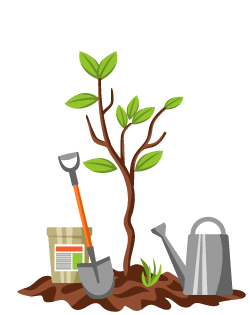 Landing
Basic conditions
- The variety doesn't have any special requirements for planting site or soil. However, sunny, open spaces are best to ensure large, plump fruits. Soil It can be loamy or sandy loam, or even black soil, but it is advisable to dilute it with river sand.
- No wind can harm mature trees, but young trees can be vulnerable. Therefore, it's not advisable to plant them in a drafty area, as this can delay the first fruiting by several seasons.
- Groundwater level isn't a big factor for the Uralets, as its deep roots can easily reach even 3.5-5 meters of water. However, planting it near ponds, rivers, lakes, and wells is not recommended, as the rhizomes may begin to rot.
- The holes should be prepared in advance. For spring planting, this should be done in the fall, and for fall planting, at least 2-4 weeks before planting. To do this, dig holes approximately 60 centimeters deep and up to 1 meter in diameter. Fill the holes with the removed topsoil, mixed with humus or other organic fertilizer. Cover the holes with 8-12 centimeters of gravel, add 35-50 liters of water, and leave uncovered.
- Stakes are immediately dug or driven into the holes for subsequent support, at least 1.5 meters above the horizon. They can be wooden or metal. Two stakes can be placed randomly, and one is preferably placed on the north side of the seedling.
- The tree's root collar must remain at least 6-9 centimeters above the soil surface to prevent it from rooting higher. Otherwise, all the rootstock's properties may be completely lost.
- The tree is placed vertically on the drainage, covered with soil, compacted by hand, filled with 40-45 liters of water, and it is advisable to mulch the surface with chopped grass or compost.
Experienced gardeners recommend carefully inspecting the rhizomes before planting. If dry, rotten, or damaged shoots are found, they should be trimmed off with pruning shears. Afterwards, soak the seedlings with their roots in warm water for 4-7 hours to allow them to absorb moisture and ensure better rooting.
Landing dates
The Uralets tree thrives when planted in both spring and fall. In the former case, it's best to wait until the snow has completely melted and the risk of frost has passed. However, you need to ensure that the sap hasn't yet begun to flow and the buds on the branches haven't begun to open. In the fall, you need to wait until the leaves have fallen and the sap has stopped flowing. It's important to plant at least 3-5 weeks before the frost so the seedling has time to adapt to the environment before the stress of frost.
Protection from frost and rodents
The variety is considered very resistant to low temperatures, so there will be no special requirements for shelter. In harsh conditions Urals or Siberia You can simply pile a 15-25 cm layer of soil onto the root zone, or cover the area with mats of dry grass, straw, or industrial non-woven fiber. Trunks are wrapped in burlap, old women's tights, roofing felt, or roofing felt. Due to their tall stature, trees are not covered with a ball.
To repel insects from the bark and root zone, whitewash the trunks with lime in spring and fall. Coating the trunks with grease or commercially available products will help repel rodents that come to feast on the delicate bark of apple trees during the cold season. Rendered lard is also recommended.
Tree care
 Tree care
Loosening the soil, watering: proper agricultural technology
The tree doesn't require any special care, so it's enough to dig up the area around the tree trunk once a year, removing weeds, root suckers, and shoots from other trees and shrubs. Hoeing the area is optional, but it's best to cover it with sod for about 5-7 years; then the weed problem will resolve itself. Some people cover the area under the tree with gravel, but this is far from the best option.
Watering isn't absolutely necessary for the tree, but it won't hurt in particularly dry and hot years. It's generally considered sufficient to apply 45-50 liters of water three to five times during the growing season, twice a day, morning and evening. Organic fertilizers, mineral supplements, and other supplements are also added along with the water.
Pruning: simple crown shaping
Pruning apple trees of this variety is easy, as they don't tend to develop a dense crown. Initially, cut off a third of the central trunk, and trim the scaffold branches (3-5 will suffice) by 5-7 centimeters. Subsequently, simply maintain the shape, preventing the crown from becoming overgrown. Also, prune shoots that protrude vertically (suckers) and those growing inward.
Sanitary pruning is even easier; it simply involves removing dead, damaged, or diseased branches. This will prevent the tree from becoming diseased, and all cut areas are sealed with garden pitch or at least soil. Rejuvenation can be performed starting around 15-18 years of age, when it becomes necessary. Then, remove 2-3 mature branches at a time, making way for younger ones.
Pollinator varieties
- Bashkir handsome man.
- Ural bulk.
- Ligol.
- Xenia.
- Pervouralskaya.
- Welsey.
Reproduction
- Clones (layering).
- Rooting cuttings.
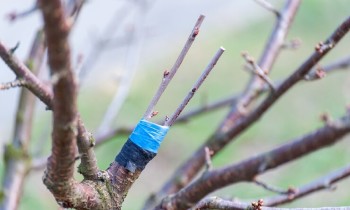
- Grafting by buds and cuttings.
- Growing from seeds.
Diseases and pests
- Moniliosis.
- Tinder fungus.
- Scale insect.
- Hawthorn.
Ripening and fruiting of the Uralets
The beginning of fruiting
 The beginning of fruiting
This apple tree can't be called particularly early-bearing, as the first fruits usually appear around 5-6 years after planting in open ground. However, it can bloom as early as 3-5 years, but it's best to pluck the buds. In the first few years, approximately 5-15 kilograms of fragrant fruit are harvested.
Flowering time
Depending on the growing location, apple trees may have slightly different blooming times. Expect the process to begin in May, either mid- to late-May. The buds open uniformly, and the tree blooms for approximately 10-12 days. The flowers themselves are beautiful, snow-white, despite having a bright pink hue when closed. They are intensely fragrant, making them a popular choice for pollinating insects.
Fruiting and growth
The Uralets tree begins to grow tall immediately in its first year. It can gain at least 25-55 centimeters in a year, so it will reach its full size fairly quickly. Fruiting increases gradually over 3-6 years until it reaches its peak. The average lifespan of active fruiting is approximately 70-90 years. Some experts say the Uralets tree will continue to bear fruit even after 100-120 years, but there is no official data yet.
The harvest is around the very beginning of September, or closer to mid-September if the weather is poor. The fruits ripen uniformly, then hold firmly to the branches, and only fall off after 2-4 weeks. However, if they are left too long, the flavor and texture can deteriorate, making them unusable. Their shelf life is short, about 30-45 days maximum, so it's best to harvest them immediately. recycle for compotes, jams or juices.
Top dressing
- Superphosphate.
- Mineral complexes.
- Ammonium nitrate
- Manure.
What to do if it doesn't bloom or bear fruit
- Check for pests and diseases.
- Transplant.
- Limit watering.
Why do apples fall?
- Overripe.
- Natural factors.
- Pests.
- Diseases.
Leave your feedback on the winter-hardy Uralets variety to share your experience with others.