Apple tree July Chernenko: characteristics of the variety and care
| Color | Reds |
|---|---|
| Ripening season | Summer |
| Size of apples | Average |
| Taste | Sweet and sour |
| Crown type | Tall tree |
| Shelf life | Low shelf life |
| Application | For recycling , Fresh |
| Winter hardiness | High winter hardiness |
| Fruiting age | Up to 5 years |
 History of origin and regions of growth
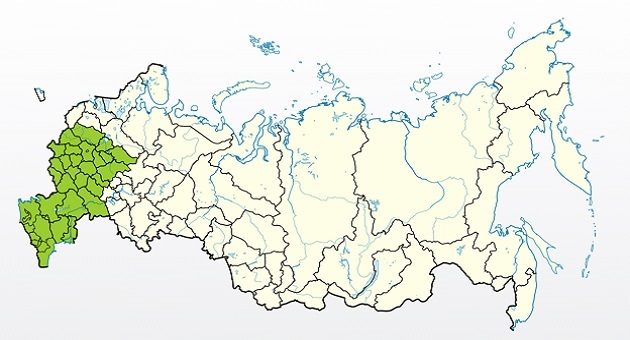
Growing regions
- Middle zone.
- North Caucasus.
- Moscow region.
- Leningrad region.
- Crimea.
- Northern regions (selective).
Origin
Work on this variety began in the mid-1930s. It was developed by the I.V. Michurin All-Russian Research Institute of Genetics and Breeding of Fruit Plants, specifically by the distinguished biologist, breeder, and leading pomologist at the institute, Semyon Fedorovich Chernenko. Two main varieties were used in the crossbreeding: Papirovka and Anis alyi.
In 1947, the first application was submitted to the State Register, and the Iyulskoye Chernenko variety was classified as an elite variety and sent for field trials to nearby farms. Scientists observed the apple tree in action, and after a considerable period of time, only in 1965, it was added to the State Register of Breeding Achievements and zoned for the Middle Volga and Central regions.
Content
Description of the July Chernenko variety
 These beautiful, elegant apples are a delight to the eye when ripe, giving the garden an incredibly attractive appearance. But this is far from the main advantage of the Iyulskoye Chernenko variety. The trees grow very quickly and begin bearing fruit quite early, are easy to care for, and are tolerant of various growing conditions, easily withstanding low temperatures.
The fruits ripen very early, earlier than almost all others in the garden, and are beautiful, fragrant, and sweet. Despite the fact that the fruits ripen simultaneously and have a short shelf life, this variety is recommended for growing in home gardens and small commercial orchards due to its tall stature and the difficulty of harvesting.
Apples: What do they look like?
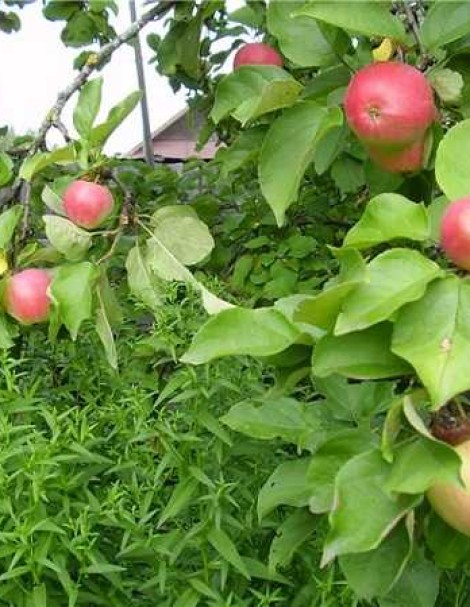
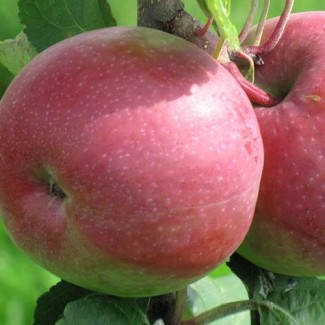
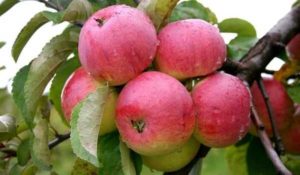 Most often, the fruits are uniform, medium or slightly larger than average in size, round, even spherical, but can also be slightly elongated, conical, or flattened at the stem. They can grow up to 130-150 grams, but in exceptional cases, they can reach 150-190 grams. The ribbing is smooth, clearly visible near the calyx, and the lateral suture may be clearly visible.
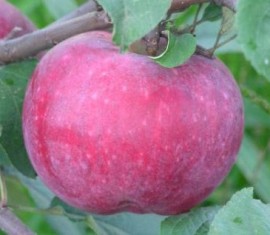
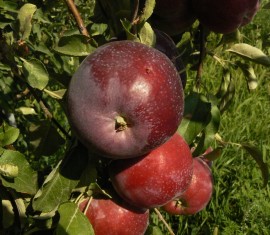
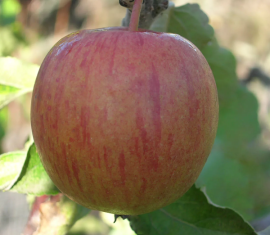
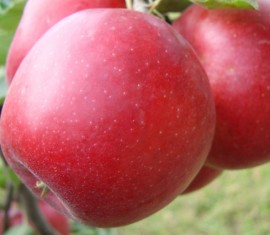
The skin is dense but thin, delicate, and brittle, with moderate susceptibility to mechanical damage. Its color ranges from green to light green and lemon. The blush covers most of the fruit; it is vaguely spotted, speckled, and streaked, most often beetroot, cherry, or deep raspberry in color. Subcutaneous dots are small but numerous, light green or grayish in color, and clearly visible. The chemical composition of the fruit can be assessed based on the following data:
- P-active substances – 263 milligrams.
- Ascorbic acid (vitamin C) – 12.5 grams.
- Sugar (fructose) – 12.8%.
- Titratable acids – 0.86%.
- Pectins (fiber) – 12.9%.
The flesh is firm but very tender, crisp, not prickly, and fine-grained. It has a pleasant consistency, is juicy, and aromatic. The flavor is considered dessert-like; it's sweeter with a hint of tartness, harmonious, and balanced. Professional tasting scores for Iyulskoye are no less than 4.0-4.3 out of 5.
Apple tree July Chernenko: characteristics
Crown and root system
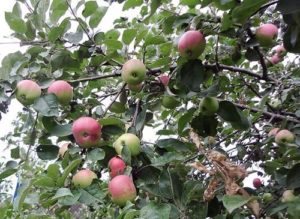 The trees are considered vigorous, although they are hardly comparable to some representatives of the species. The standard trees grow no more than 5-5.5 meters, and even then without formative pruning.The crown is initially pyramidal or oval-elongated, becoming oval-conical over the years, slightly spreading, and sometimes even weeping. The branches are not very dense, extending from the trunk at right angles. They are long, straight, and slender, with short internodes, and covered with gray-green or gray-brown bark with heavy pubescence.
The leaves are large, dense, leathery, oblong but not particularly elongated, and long-pointed, with tips often twisted. The edges are serrated, serrate-crenate, often wavy, and can be folded into a boat shape. The color varies widely, from light green to dark emerald, depending on the rootstock, growing region, weather, and other internal and external factors. The root system is extensive and deep, most often taproot, but can also be fibrous, with the selected rootstock playing a key role.
Productivity and pollination
The variety's fertility is considered average, but to achieve a good yield, the tree will require proper care. Otherwise, the fruit will be few in number, but they will still grow.
One fully mature Iyulskogo Chernenko tree can yield 55-65 kilograms of colorful, bright, beautiful, and sweet fruit per season. If the trees are neglected completely, the yield typically drops by about half. With very intensive feeding, fertilization, and care, a maximum of 75-80 kilograms can be achieved..
The variety is completely self-sterile, which is considered a drawback, despite its particular sensitivity to pollen from other plants. The apple trees will pollinate even if the July apple tree is 150-200 meters away from other varieties that are suitable for flowering. However, experienced gardeners plant them much closer to avoid risks and ensure maximum yields.
Winter hardiness and disease resistance
Iyulskoye can safely be called a cold-resistant variety. Therefore, many gardeners even in the Urals, the Far East, and Siberia grow it with great success. Due to the compact crowns, the trees are easy to cover for the winter, and they are quite capable of withstanding temperatures down to -40-42°C. This variety dislikes sudden temperature changes, excessive humidity, and drafts, but is otherwise tolerant and hardy.
Apple trees are fairly resistant to the main range of fungal and bacterial infections affecting apples. However, the main enemy of apple trees is scab – threatens both the July and July trees, and very seriously. This is truly considered the main drawback of these trees. They are heavily infected, damaging both leaves and fruit, and the entire harvest is completely unfit for consumption.
Rootstocks and subspecies
There are no subspecies of July's trumpet, but it can be grown on a wide variety of rootstocks, giving the trees their distinctive qualities. On standard vegetative rootstocks, they grow tall and vigorous, with fruits typically of medium size and excellent winter hardiness.
However, many gardeners prefer dwarf and semi-dwarf varieties, which produce a compact and neat crown. These trees begin to bear fruit as early as the second or third year, producing larger and more abundant apples. This allows for significantly higher planting density. However, the variety's winter hardiness decreases.
Peculiarities of growing July Chernenko
 Landing
 Landing
Basic conditions
- It's essential to choose a sunny planting site, as otherwise the sugar levels in the fruit will decrease significantly. This results in smaller, more sour apples. In some cases, if the trees are too shaded, they may even refuse to bloom or bear fruit.
- An open, well-ventilated but draft-free space is another requirement for selecting a location for July's lily. The crown should be well-ventilated to minimize the risk of fungal infections due to stagnant air.
- The groundwater level at the planting site should be no higher than 2-2.2 meters, otherwise the rhizomes will inevitably rot. Trees can be planted by creating mounds or using drainage, such as slate or roofing felt digging in to guide the roots. Avoid planting near wells, rivers, streams, ponds, lakes, and other bodies of water.
- There are no special soil requirements, but if you have a choice, loam, sandy loam, or polished chernozem are best. Excessively acidic soils are neutralized with lime and dolomite flour, overly fertile soils are diluted with washed river sand, and depleted soils require fertilization.
- It is optimal to dig holes 6-7 months before planting, but if you haven’t had time, then you can limit yourself to just 4-6 weeks.
- The holes should be at least 1 meter in diameter and 60-80 centimeters deep. The bottom is lined with soil and fertilizer, a drainage layer is added on top, and then the entire hole is filled with water.
- I immediately drive stakes into the holes to which the seedlings will be tied later. If they are placed on the north side, they will also protect the trees from frost.
- Leave at least 4-4.5 meters between trees, and up to 5-5.5 meters between rows. This ensures that mature trees don't clash with each other in the future, either through crowns or rhizomes.
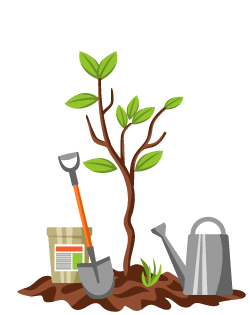
- Place the tree vertically, sprinkle it with soil, compact it with your hands, water it with plenty of water (50-65 liters), the surface of the ground mulch sawdust.
Landing dates
Experienced gardeners recommend planting trees of this variety from late September to late October. The key is for the leaves to have finished falling and for at least 3-5 weeks before the first frost, otherwise they may suffer life-threatening damage. With its closed root system, Iyulskoye can be planted at any time—spring, fall, or even midsummer. In harsh northern regions, it's best to plant this variety in late March or early April.
Tree care
 Tree care
Protection from frost and pests
All standard winter protection measures for apple trees will work for this variety as well. When young, it's preferable to cover them with a tent-like covering, covering them from the rootstock to the crown. Larger trees are wrapped in burlap, roofing felt, straw bales, or dry hay mats. Spruce branches and bundles of well-dried leaves are placed on the root zone. The key is to insulate them so that the rootstocks don't rot, otherwise the trees may die.
Coating the trunk with lard, grease, fuel oil, and other strong-smelling substances is effective against rodent pests. To repel insects from chipped and cracked bark, it's advisable whiten The trunk is limed twice a year, in early spring and late autumn.
Loosening the soil, watering: proper agricultural technology
Loosening the soil around the root system is essential; trees will not tolerate a lack of aeration, and they also thrive on moderate moisture. Therefore, dig in the spring and fall, and hoe the soil approximately 6-8 times per season in between. At the same time, remove various weeds, root suckers, and plant shoots that rob the apple tree of nutrients. In the future, you can sow the space beneath the tree with herbs, which will help create natural aeration.
Trees love watering, especially when young, before they've developed a strong root system. During dry periods, watering can be done approximately every 10-14 days, unless it rains. The same amount of time is counted from the beginning of precipitation, and then watering can begin again. Fertilizer can also be added at this time, as it will be absorbed much better with water. 40-45 liters is sufficient; if possible, a drip system can be used. watering, it is even more suitable for July.
Pruning: simple crown shaping
It's not customary to prune the tree in its first year, as it usually only has one shoot, leaving unclear what the future holds. In the second year, the main shoot is cut back by a third, and two or three skeletal shoots are created, spaced far apart and at different heights. The lower they are located, the shorter they should be.
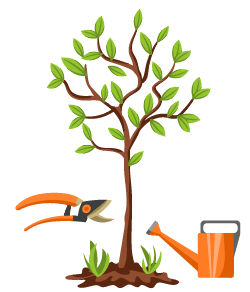
Sanitary pruning of the tree is carried out in the spring and fall, cutting off all dry or broken branches. However, if a shoot breaks in midsummer, it is best to prune or saw it off immediately, before the leaves fall. Wounds are always sealed with garden pitch to minimize stress. Rejuvenation is usually not performed, as the active lifespan of an apple tree is only 35-50 years, during which time it simply does not have time to age.
Pollinator varieties
Reproduction
- Rooting.
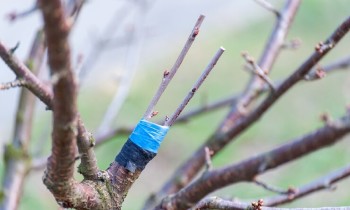
- Kidney grafting.
- Cuttings.
Diseases and pests
- Scab.
- Bacterial burn.
- Powdery mildew.
- Green aphid.
- Codling moth.
- Leaf roller.
- Hawthorn.
Ripening and fruiting of July Chernenko
The beginning of fruiting
 The beginning of fruiting
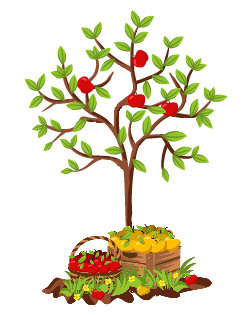
This apple tree is rightfully considered an early fruiterer, as it begins bearing fruit even on vegetative rootstocks in the 4th or 5th year, and even earlier on dwarf and semi-dwarf varieties. The first flowers may appear on the branches in the 2nd or 3rd year, but they are unlikely to produce apples, so it's recommended to remove all these barren flowers. They will only waste the tree's sap. The first harvests won't be particularly impressive, yielding approximately 5-10 kilograms of medium-sized, but sweet and attractive fruit.
Flowering time
This is a very early-maturing apple tree, so it begins blooming quite early. As early as early May, and sometimes as late as April in warm years, large, beautiful, fragrant, and delicate white or pinkish-white buds begin to bloom on its branches. This process lasts approximately 10-12 days, during which time pollination has time to occur.
Fruiting and growth
The July tree grows very quickly, especially in the early stages before it begins bearing fruit. At this point, it can reach at least 45-60 centimeters in height. Therefore, the tree reaches its maximum height very quickly. After fruiting begins, growth slows slightly, but not significantly. Yields also increase quite rapidly, reaching their full potential by the 8th to 10th year.
Apples ripen very early, starting around mid-June. They don't ripen all at once, but gradually, starting from the sunny side. You don't have to worry about them falling to the ground until mid-August, but then you'll definitely have to pick them and process them all quickly. Early apples always have a short shelf life; July apples can be stored for about 25-35 days, and even then, only in a good cellar or a dedicated refrigerator.
Top dressing
- Peat.
- Compost.
- Ammonium nitrate.
- Humus.
- Chicken manure.
- Superphosphate.
- Manure.
- Mineral complexes.
What to do if it doesn't bloom or bear fruit
- Check for pests or diseases.
- Transplant into the sun.
- Water.
- Fertilize.
Why do apples fall?
- Wind, hail, hurricane, rain.
- Overripe.
- Pest damage.
- Diseases.
Please leave your feedback on the July Chernenko variety, as many gardeners would like to grow similar ones in their gardens.