Apple tree Terentyevka: characteristics of the variety and care
| Color | Reds |
|---|---|
| Ripening season | Summer |
| Size of apples | Average |
| Taste | Sweet and sour |
| Crown type | Tall tree |
| Shelf life | Low shelf life |
| Application | Fresh , For recycling |
| Winter hardiness | High winter hardiness |
| Fruiting age | Up to 5 years |
 History of origin and regions of growth
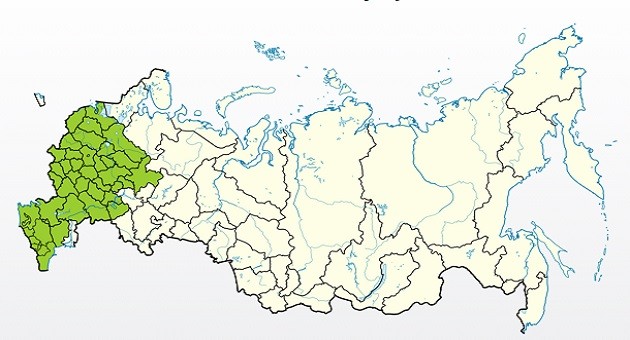
Growing regions
- Middle zone.
- North Caucasus.
- Crimea.
- Moscow region.
- Leningrad region.
Origin
This variety is considered one of the oldest naturally bred apple trees. When and how they appeared in our country's orchards is unknown, but the first mentions of them can be found in documents dating back to the late eighteenth century.
Similar apple trees were discovered in the 1920s in Bashkortostan, specifically in the city of Birsk. Some experts believe the tree came to us from the East, but there is no confirmation of this theory.
Content
Description of the Terentyevka variety
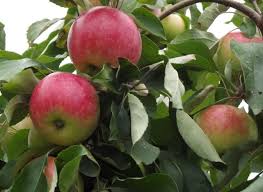
 Medium-sized trees with a compact crown and neat, albeit spreading, branches, familiar to many from childhood. This apple tree, a folk selection, is distinguished by its dense, beautiful foliage and high resistance to black crayfish, bacterial and sunburn resistance, and moderate scab resistance. It is undemanding of soil conditions, does not require frequent fertilizing and watering, and can grow even in poor and shaded areas.
Terentyevka apples are attractive, medium-sized, and have a pleasant flavor and aroma, as well as high consumer and commercial qualities. They don't have a long shelf life, like most summer apples, but they are well suited for processing into juices, jams, and compotes. The variety is considered unpromising and is being actively replaced by newer hybrids, so it is primarily grown in private gardens.
Apples: What do they look like?
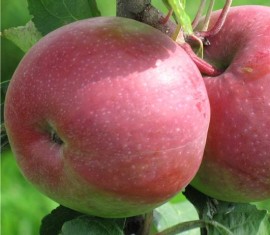
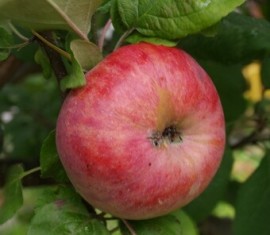
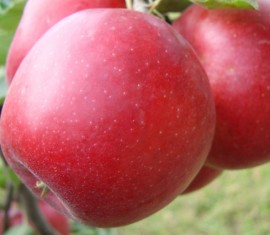
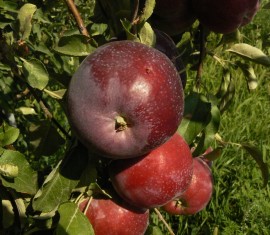
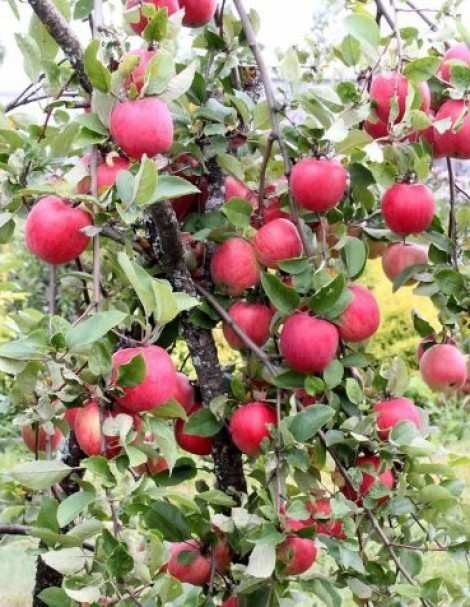
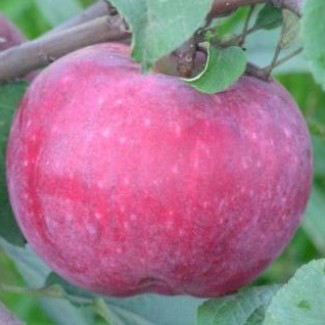
 The fruits are considered medium-sized, as they typically weigh no more than 100-110 grams. They are round, uniform, and symmetrical, smooth, often slightly flattened, and turnip-shaped. Ribbing is visible only on the calyx; on the rest of the fruit, it is smoothed out, and there is no lateral suture.
The skin is smooth, highly shiny, glossy, and dense, yet thin and easily cracked when bitten, mechanically damaged, or even overripe. It is light green in color, acquiring a golden-yellow hue as it ripens, and becomes covered with a silvery-blue waxy coating. The blush is crimson-red, red-pink, or carmine, striped and mottled, and slightly blurred. Subcutaneous punctures are numerous but small and barely noticeable. The chemical composition is well characterized by the following indicators:
- Sugar (fructose) – 9.7%.
- Ascorbic acid (vitamin C) – 12.3 grams.
- Pectins (fiber) – 11.1%.
- P-active substances (catechins) – 234 milligrams.
- Titratable acids – 0.49%.
The flesh is relatively low-density, coarse-grained, and considered somewhat loose. It is juicy at the very beginning and slightly less juicy when slightly overripe. It is white or slightly creamy-green in color, with a sweet and sour, pleasant dessert-like flavor and a strong, distinctive aroma. It has not been officially rated by professional tasters.
Apple tree Terentyevka: characteristics
Crown and root system
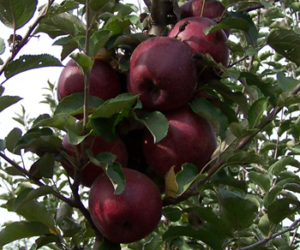 The tree is considered medium-sized, as even without any pruning it grows to a maximum of 3-4.5 meters.The crown is oval or pyramidal when young, but with age it becomes broadly oval, rounded, spherical, sometimes spreading, weeping, and drooping. The foliage is tall, the branches are quite dense, covered with gray-brown or brownish-brown bark without pubescence. The tree has a mixed fruiting pattern (rings, spears, and fruiting shoots).
The leaves are predominantly ovate-elongated, ovate, but can also be lanceolate or long-pointed. The margins are crenate, serrated, or serrated, and can fold into a boat shape. They are bright green or dark green, often with a tomentose pubescence on the underside, and coarsely nerved. The root system is well-developed, highly branched, and adapted to the search for water, nutrients, and minerals.
Productivity and pollination
Despite skepticism from fans of new varieties, Terentyevka has always been and remains a variety with good yield indicators, although it will never be able to compare with Antonovka, for example.
In favorable years, good growers can harvest up to 25-40 kilograms of fruit from a single mature tree per season. Considering the tree's small height, these figures are quite high..
The variety is completely self-sterile. If there are no other apple trees within 45-90 meters of the same flowering time, there will be no harvest. Experienced gardeners interplant the trees, selecting them according to suitable parameters, taking into account not only flowering but also height, to simplify care and harvesting.
Winter hardiness and disease resistance
Terentyevka tolerates winter cold very well. It is virtually immune to temperatures as low as -27-32°C. If these temperatures don't last more than 2-3 weeks, the apple trees don't even require any special protection; standard measures, such as wrapping the trunks with cloth, are sufficient. The apple tree survives sudden changes and fluctuations, from severe frost to thaw, with little or no damage, and even when they do occur, it quickly recovers within a year.
Trees have a moderate resistance to scab and powdery mildew, as well as other fungal threats. This means they may suffer during years of severe epiphytotics. Therefore, preventative treatments and spraying are absolutely essential. Insecticides are also a good idea, as pests can easily damage tree trunks.
Rootstocks and subspecies
Despite being an old variety, it doesn't have many subspecies. Moreover, the differences are so minimal that the apple trees remain completely recognizable. However, they can be grown on a wide variety of rootstocks; they even thrive on pear or rowan, so unpretentious and resilient are they.
Features of growing Terentyevka
 Landing
 Landing
Basic conditions
- Like most varieties, these apple trees prefer full sun, but they can grow strong and healthy even in partial shade. This may negatively impact subsequent harvests, but not significantly.
- It is advisable not to plant trees directly near water (rivers, lakes, streams, wells, ponds), in swamps, floodplain meadows, or in cold lowlands.
- It's good when the tree's crown has good ventilation, but Terentyevka doesn't approve of drafts.
- The holes are dug in advance, but only 2-3 weeks in advance, although those dug 5-8 months in advance are also suitable.
- You need to leave about 3-5 meters of space between trees and rows to give a mature apple tree room to grow.
- Stakes are immediately inserted into the holes to tie up the trunks, which will not only become support, but will also protect from the north wind if placed correctly (on the leeward side).
- Dig holes 65-75 centimeters deep and up to 90-100 centimeters in diameter. Add fertilizer to the bottom, add drainage, fill with 20 liters of water, and leave them outdoors.
- Root collar The apple tree's rootstock must always remain above the soil surface. Otherwise, the rootstock's qualities will be lost when the apple tree takes root higher.
- Place the seedling on a drainage surface, gently straighten the rhizome with your hands, cover with soil, and compact it, but not too much. You can create a 5-7 cm high earthen embankment around the perimeter, and pour 25-30 liters of water inside. mulch.
Landing dates
The tree is resilient to various weather and climate conditions, so it can be planted both in early spring and late fall, after all the leaves have fallen. In spring, choose a warm day when the soil has fully warmed up after frost, for example, in late March or early April. In autumn, this could be September or October. It's best to choose the afternoon for planting, when peak temperatures have already subsided.
Tree care
 Tree care
Protection from frost and pests
Standard winter cover is sufficient for Terentyevka. The trunks are wrapped in various suitable materials, from agrofibre, burlap, and roofing felt to old nylon tights. In the harshest conditions, soil, dry leaves, hay, or straw can be piled onto the root area, as long as it's well-dried. Root rot leads to the tree's death. Covering the tree with a tent is rarely necessary, but given its compact size, it's quite feasible.
To combat insects, apple tree trunks are whitewashed with lime twice a year, once in the spring and once in the fall. You can also coat the trunks with lard, fuel oil, or grease to a depth of about 1-1.2 meters. This will help repel rodents, who enjoy feasting on the delicate bark during the lean winter months.
Loosening the soil, watering: proper agricultural technology
Young trees require root zone tilling, but neglecting this won't be fatal. You can till the soil twice a year or once a year, or simply hoe the soil occasionally. The laziest among you can simply sow the space between the trees with herbs, grasses, and flowers. This ensures natural soil aeration, eliminating the need for frequent tilling.
Watering Terentyevka is only necessary in the first and second years, and it wouldn't hurt to apply it fairly intensively, every 10-12 days. As the tree grows, watering can be reduced or even eliminated entirely if rainfall is regular. Sometimes, a mature tree only needs 3-4 waterings, timed for flowering, fruit set, and fruit ripening. Fertilizers are added with water, which facilitates their absorption.
Pruning: simple crown shaping
The variety naturally has a fairly dense crown, but it responds well to shaping. A sparse, tiered form is optimal, with shoots spaced widely apart and at varying heights. This will ensure adequate air circulation and prevent stagnation, which often leads to disease.
Every year, you'll need to prune dead branches, maintain their shape, and remove diseased and damaged ones. These simply suck the tree's sap, but they're of no use. As early as the 16th to 18th year, you can perform the first rejuvenation, pruning 2-4 mature branches to allow the new ones to develop.
Pollinator varieties
- Pudovshchina.
- Saffron pepin.
- Moscow pear.
- Korobovka.
- Pepinka.
- Folder.
- Nastenka.
- Borovinka.
Reproduction
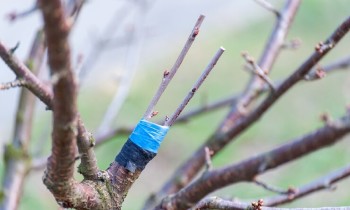
- Grafting.
- Rooting.
- Layers.
Ripening and fruiting of Terentyevka
The beginning of fruiting
 The beginning of fruiting
Trees of this variety bear fruit quite early. Buds open and the first fruits appear as early as three to five years after planting. The first harvests aren't exactly bountiful; you'll only manage to pick a few dozen apples at best, but that's plenty for a sample. They'll be of exactly the same quality as all subsequent ones.
Flowering time
Terentyevka blooms in the middle of May, roughly from early May to mid-May. This is directly influenced not only by the climate of the growing region but also by the weather conditions of the particular year. If the spring is cold, the trees may be delayed, while if the weather is warm, they may bloom as early as late April. The flowers are medium-sized but numerous, densely covering the branches, gathered in inflorescences of 4-6. They are usually snow-white, intensely fragrant, and delicate.
Fruiting and growth
Apple trees grow quickly, reaching their full size soon after planting. They can grow approximately 35-50 centimeters per year, especially early on, before fruiting begins. After this, the growth rate slows slightly, but not dramatically. Full fruiting occurs around the 8th or 9th year, when the maximum fruit can be harvested. Trees don't take regular breaks, but they may occasionally take a breather. Such breaks are unpredictable, and the tree may bloom sluggishly or not produce any buds at all. This is nothing to be alarmed about. Fortunately, such events don't happen often.
The fruits begin to ripen already at the end August, which is why this variety is considered a summer one. They are fully ready for picking around the 20th or 25th. This can be determined by the presence of a bluish bloom and their taste. It's best to pick the apples immediately, as they can fall to the ground, requiring urgent processing. The variety's shelf life is no more than 25-30 days in a special refrigerator or cellar. After this point, the soft flesh will become cottony, sour, unpleasant, and limp, and will begin to rot.
Top dressing
- Mineral complexes.
- Compost.
- Manure.
- Chicken manure.
- Humus.
What to do if it doesn't bloom or bear fruit
- Check for diseases or pests.
- Organize regular watering.
- Fertilize.
- Transplant.
Why do apples fall?
- Overripe.
- Natural weather conditions (wind, rain, hurricane, hail).
- Pest damage.
- Various diseases.
Share your own experience with the Terentyevka apple variety so everyone can get to know it and get maximum yields with minimal effort.