Cascade apple tree: characteristics of the variety and care
| Application | For recycling , Fresh |
|---|---|
| Fruiting age | Up to 5 years |
 History of origin and regions of growth
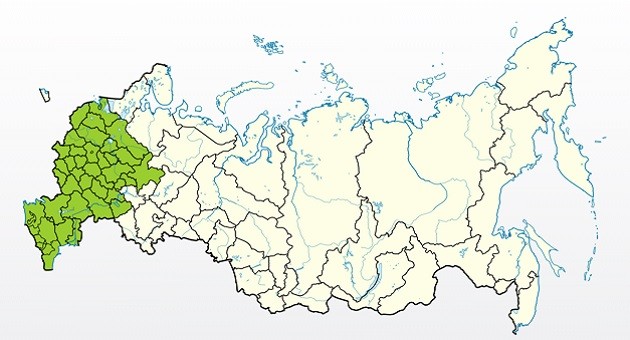
Growing regions
- Crimea.
- Caucasus.
- Some northern regions.
- Moscow region and Moscow.
- Saint Petersburg and Leningrad region.
- Middle zone.
Origin
Research into developing this new variety began at the dawn of the new century in 2000-2001 at the experimental station of the I.V. Michurin Federal Research Center. The cultivar's creators are considered to be the distinguished Russian breeder Nikolai Ivanovich Savelyev and his daughters, Natalya Nikolaevna and Ekaterina Nikolaevna. The first seedling was obtained in 2005, after which it was immediately sent for variety testing.
An application for variety registration was submitted in late 2013, but it was not reviewed until 2015. At that time, the Cascade variety was not only included in the State Register of Breeding Achievements but also officially zoned for the Central Black Earth Region.
Content
Description of the Cascade variety
 Columnar apple trees take up much less space in the garden than standard ones. This is what attracts them to gardeners in our country, and indeed around the world, who value every centimeter of available space. The Cascade apple tree has a very compact crown, does not produce skeletal shoots, requires little maintenance, and easily tolerates the harsh and variable climate of the temperate zone.
Furthermore, it produces good yields, bearing fruit without resting, but its active lifespan is decidedly short, lasting no more than 12-14 years. However, the variety's fruits are large, attractive, have high consumer qualities, and are easily transported even over long distances. Cascade is recommended for cultivation in large, intensive commercial plantings, as well as in small, frequent home gardens.
Apples: What do they look like?
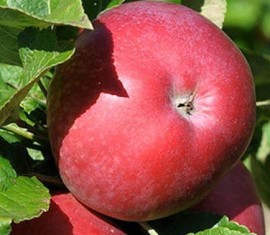
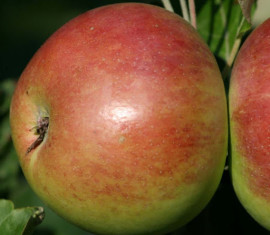
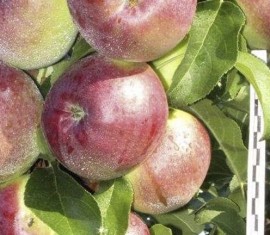
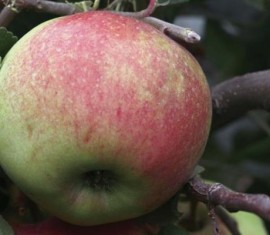
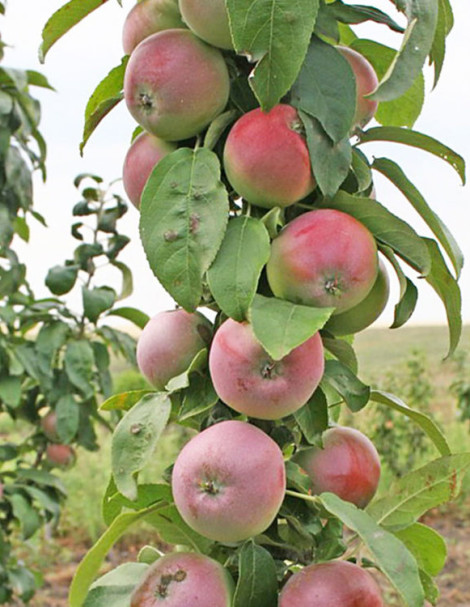
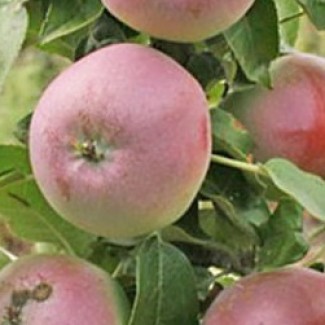
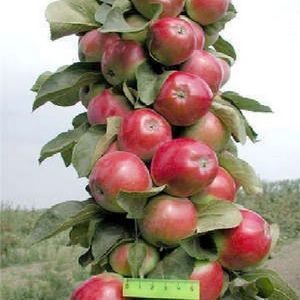 The fruits are quite large, round or slightly flattened along the longitudinal axis. They can reach a weight of 180-210 grams, but with proper care, they can reach 250-300 grams. The fruits are generally of a regular size and symmetrical, with ribbing visible only at the calyx and no lateral seam.
Apple skin is dense, elastic, and reliably protects the delicate flesh from mechanical damage. It is green when unripe, later turning yellowish-green or slightly lemon-colored. A blush of cherry, dark red, or beetroot color appears on the surface, blurred and mottled, becoming more intense on the sunny side. It typically covers no more than 55-70% of the surface. Subcutaneous spots are light-colored, easily visible, small, but numerous. Experts can more easily assess the chemical composition with the following information:
- Pectins (fiber) – 12.8%.
- P-active substances – 289 milligrams.
- Sugar (fructose) – 12.6%.
- Titratable acids – 0.89%.
- Ascorbic acid (vitamin C) – 18.4 grams.
The flesh is firm, fine-grained, very juicy, and crisp, with a slight flake. It is slightly yellowish or creamy in color, has a pleasant, instantly recognizable aroma, and a sweet flavor with a characteristic tartness in the aftertaste. It is considered a table fruit, balanced, and harmonious, scoring 4.5-4.6 points on a professional tasting scale for both flavor and appearance.
Cascade apple tree: characteristics
Crown and root system
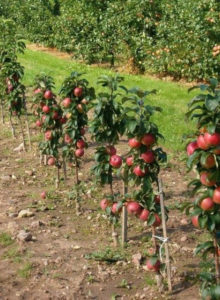 The crown has a typical columnar shape and does not produce lateral skeletal shoots. However, if any do appear, they should be removed immediately before they become woody. The maximum height of the tree is 2.5-2.7 meters, making it a natural semi-dwarf. Fruiting is concentrated on 1-2 year-old fruiting shoots growing directly from the main stem; foliage is medium to dense. The bark is brown-green or simply green, and can be brown and pubescent.
The leaves are medium to medium-large, leathery, smooth, and matte. They are long-pointed, oval, and elongated, with coarse nervation and dense pubescence on the underside. The leaf edges are serrate-crenate, finely serrated, and can be slightly wavy. Their color is green or deep green. The root system is extensive and fibrous, but not deeply rooted. Therefore, in regions with strong winds, trees require additional support throughout their life.
Productivity and pollination
The variety is highly productive, although its yields pale in comparison to regular apple trees. This is all due to the planting density, as over twenty thousand trees can be grown on a single hectare.
Experienced gardeners harvest approximately 15-18 kilograms of aromatic fruit from a single mature tree. However, without intensive care, regular feeding, and fertilizer, yields will be much more modest. In commercial plantings, the average yield is approximately 275-278 centners per hectare..
The Cascade apple tree is considered self-fertile, meaning it doesn't require nearby pollinators to produce fruit. However, many experts say it's still worth planting trees with suitable flowering seasons, as this increases fruit production, albeit not significantly.
Winter hardiness and disease resistance
Among columnar apple trees, the Cascade stands out for its relatively high resistance to variable, frosty winter weather. During variety testing in special chambers, the trees withstood temperatures down to -37-42°C, sustaining damage of only 1-1.2 points. This means that recovery from such stress will take no more than a year, and the impact on the harvest will be minimal. However, under normal conditions, it is best to promptly carry out all necessary preparations for winter and cover the trunks.
The variety is highly resistant to scab, as well as a number of other fungal and bacterial infections. It is rarely affected, and if it is, it primarily affects the leaves. The fruits remain suitable for fresh consumption and processing. Insects are reluctant to damage the foliage and trunks of the variety, but if proper care (cleaning the trunk circle, preventative spraying, etc.) isn't taken, damage can occur. whitewash trunks), then the trees may be seriously damaged.
Rootstocks and subspecies
Columnar apple trees rarely have subspecies, but they can be grown on different rootstocks. This imparts the trees with the specific properties and qualities of the rootstock. For example, dwarf and semi-dwarf rootstocks produce even more compact trees, requiring very little space. Their fruit is typically larger, but their winter hardiness is significantly lower than that of vegetative rootstocks.
Features of growing Cascade
 Landing
 Landing
Basic conditions
- Planting site and lighting requirements are standard: a sunny, open space with good ventilation and deep groundwater. In the shade, where air is regularly stagnant, or where there is a draft, trees may grow poorly and refuse to flower or bear fruit.
- It is not customary to plant a cascade near open water sources: rivers, streams, lakes, swamps, floodplain lowlands, and even near shallow wells.
- It's not necessary to prepare the holes in advance of the planting season, although this is a good idea; 3-5 weeks before planting is sufficient. Dig holes 60 centimeters deep and 60 centimeters in diameter, add fertilizer to the bottom, add drainage if needed, fill with water, and leave them outdoors.
- It's sufficient to leave 0.6-0.9 meters between trees in a row, and up to 1-1.2 meters between rows. This will prevent future root and crown conflicts.
- Special support planks or stakes are immediately driven into the holes. It's best to leave them in place throughout the tree's active life, as its root system is weak and shallow.
- Root collar Apple trees should always protrude at least 5-9 centimeters above the soil surface. This will prevent the apple tree from rooting higher, thereby losing all the qualities and properties of the rootstock.
- Place the seedling in the hole, spreading its roots over a pile of soil or drainage material collected in the center. Support the trunk with your hand, cover with soil, compact it, and water the surface with 10-15 liters of water. mulch.
Landing dates
Cascade is quite hardy and can be planted in both spring and fall. However, it's worth keeping in mind that in harsh, cold regions with long, temperate winters, it's best to choose a warm, sunny day in late March or early April. In warmer regions, September or October is also suitable, when there are still 21-35 days left before frost, but the leaves have already fallen.
Tree care
 Tree care
Protection from frost and pests
Apple trees are quite hardy, but they still need proper frost protection, otherwise a good harvest will be a long time coming, or may not happen at all. In severely frosty areas, rake soil over the roots, cover them with spruce branches, and lay mats of straw or hay. The trunks are wrapped in any fabric, even burlap or old tights. Their compact size allows for the trees to be covered like a tent.
Tree trunks are whitewashed twice a year, in spring and late autumn. This helps gardeners rid themselves of insects that nest in the folds and crevices of the bark. To prevent hares, mice, and hamsters from grazing the succulent bark in winter, the trunks are generously coated with melted lard or grease; sometimes, fuel oil, rancid butter, or drying oil are used.
Loosening the soil, watering: proper agricultural technology
On an industrial scale, loosening is done twice a year using a dedicated tractor. In a small garden, the area around the tree trunk can be dug only once a season, but the soil in between should be hoeed. Weeds, fallen leaves, and fruit should be removed regularly from under the trees, and the soil should be loosened. You can sow the spaces between apple trees with mint, lemon balm, dill, cilantro, or parsley. Herbs will provide natural aeration of the soil, but you'll have to clear the area under the trees.
Cascade requires watering, especially during extremely hot and dry periods. This is especially important in the first or second year after planting. Even then, it's good to water every 10 days. When it rains, count the ten-day period from that point, and then water your garden. Under normal conditions, 8-10 waterings per season are sufficient. Water is also a convenient way to add fertilizers and other supplements, which are much better absorbed when dissolved.
Pruning: simple crown shaping
This variety rarely produces side shoots, so pruning is virtually hassle-free. The key is to prune the central stem promptly and ensure the terminal bud doesn't freeze. If this happens, cut the stem back to a living bud and allow a new tip to develop.
Pollinator varieties
- Antonovka.
- Ostankino.
- Raditsa.
- Currency.
- Chervonets.
- Titovka.
- Melba.
- Mantet.
Reproduction
- Grafting.
- Rooting.
- Growing from seeds.
- Layers.
Diseases and pests
- Powdery mildew.
- Cytosporosis.
- Pit bitterness.
- Scab.
- Green aphid.
- Scale insect.
- Leaf roller.
- Codling moth.
Ripening and fruiting of Cascade
The beginning of fruiting
 The beginning of fruiting
Flowers can be seen as early as the first year, even in the nursery. However, these flowers are usually not allowed to develop and are immediately picked. This allows the tree to develop roots and leaves, strengthen, and adapt to its new conditions. The first harvests of 2-5 kilograms of apples are not harvested until the third to fifth year of life.
Flowering time
Cascade begins forming buds as early as April; they are large, pink, juicy, and clearly visible. By mid-May, they bloom into large, beautiful saucer-shaped flowers, gathered in clusters of 6-8. They densely cover the entire stem, starting from 30-35 centimeters from the ground to the very top, turning the tree into one continuous fragrant candle.
The process continues for about two weeks. After the ovaries have formed, to increase the size of the fruit, they can be thinned by 30-50%. Be sure to do this evenly, otherwise the desired effect will not be achieved.
Fruiting and growth
Apple trees grow in height by leaps and bounds, especially before they begin bearing fruit. They stretch nearly 60-80 centimeters, reaching their peak height in just a couple of years. At the same time, the apple production reaches its full potential by the fifth to seventh year. Apple trees have a short lifespan, so it's best to uproot them and replace them with young trees around the 12th to 15th year. If you organize the process on a conveyor belt, you can easily reap a bountiful harvest every year, and your garden won't take up much space.
The fruit can be picked as early as late September, but they hold tightly to the branches, so there's no need to rush. You can let them ripen until early or even mid-October, but it's best to pick them and store or process them afterward to preserve their flavor. In a high-quality, dedicated refrigerator, apples can last until spring, and in a cellar, for 3-4 months.
Top dressing
- Ammonium nitrate.
- Mineral complexes.
- Chicken manure.
- Peat.
- Superphosphate.
- Compost.
- Manure.
- Humus.
- Humus.
What to do if it doesn't bloom or bear fruit
- Inspect for diseases or pests.
- Organize timely regular watering.
- Fertilize.
- Transplant to a more suitable location.
Why do apples fall?
- Natural weather disturbances.
- Pest damage.
- Various diseases.
Please share your own experience with the Cascade apple variety so that everyone can learn about it and avoid potential mistakes when growing their own orchard.