Apple tree Poetry: characteristics of the variety and care
| Color | Reds |
|---|---|
| Ripening season | Autumn |
| Size of apples | Large |
| Taste | Sweet and sour |
| Crown type | Columnar tree |
| Shelf life | Average shelf life |
| Application | Fresh , For recycling |
| Winter hardiness | High winter hardiness |
| Fruiting age | Up to 5 years |
 History of origin and regions of growth
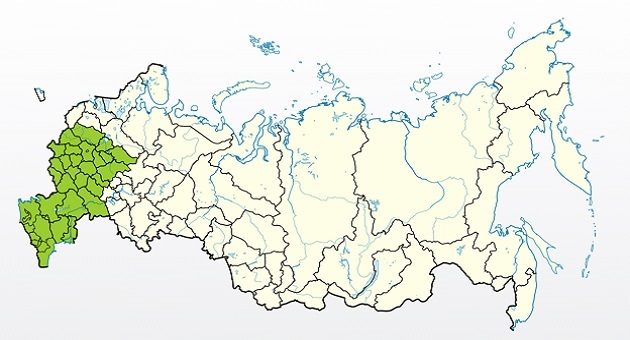
Growing regions
- North Caucasus.
- Crimea.
- Northern regions (partially).
- Moscow region.
- Middle zone.
- Leningrad region.
Origin
The All-Russian Research Institute of Fruit Crop Breeding is renowned throughout the country for its extensive selection of apple trees, and not only for these. One of its outstanding achievements is the Poeziya variety, developed by breeders S. A. Korneeva, E. N. Sedova, and Z. M. Serova. At the end of the twentieth century, the first seedling was bred through open pollination of 224-18 and the complex hybrid SR0523 x Vazhak.
In 2004-2005, seedlings were selected for inclusion in the elite selection and sent for testing and field trials to the village of Zhilina in the Oryol region, at a farm owned by the institute. The new variety performed very well, and in 2015, it was decided to submit an application for inclusion in the State Register of Breeding Achievements, which was then approved. The variety is officially zoned for the Central Black Earth Region, although it can be grown in a wider range of areas.
Content
Description of the Poetry apple variety
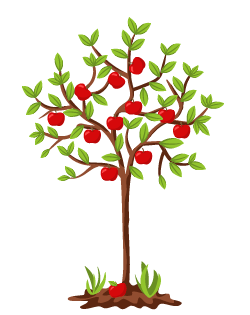 This late-fall or early-winter columnar apple variety is quite resilient to various weather conditions, and also boasts genetic scab resistance. It's a real find for gardeners. This variety is considered highly promising, as its market popularity is rapidly increasing, and for good reason. The trees are easy-to-grow, low-growing, and have compact, single-trunk crowns.
They are early-bearing and fast-growing. They produce high-quality, beautiful, and delicious fruit. Despite their short lifespan and relatively high cost, apple trees are recommended for both large, intensive farms and small home gardens.
Apples: What do they look like?
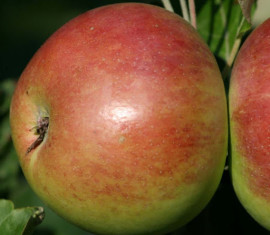
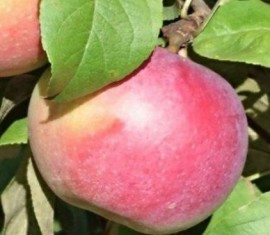
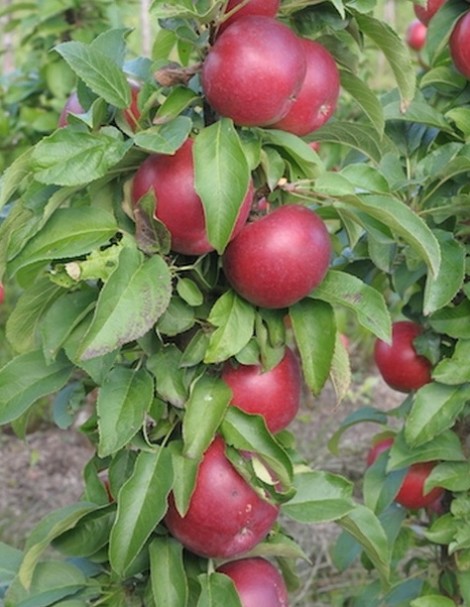
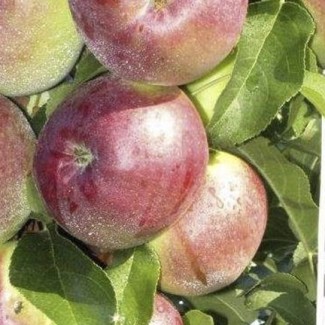
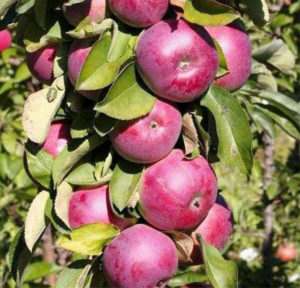 The fruits are medium to slightly larger in size. They can reach a weight of 140-190 grams, but sometimes, in favorable years and with good care, they can reach 200-220 grams. They are round in shape, but can be slightly flattened, slanted to one side, and asymmetrical. The ribbing is only clearly visible near the calyx and is smoothed out.
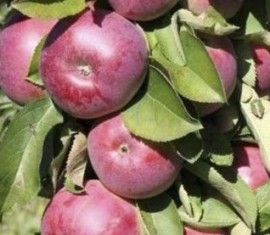
The skin is smooth, shiny, glossy, elastic, and dense, providing excellent protection against mechanical damage. It has a green or yellow-green hue, which can turn golden when ripe. The blush covers more than 75-90% of the surface and is reddish-brown, dark red, or beetroot red, dense, and blurred. Subcutaneous dots are small, sparsely spaced, and light green or slightly grayish. To understand the chemical composition, it's easiest to evaluate the following parameters:
- P-active substances – 234 milligrams.
- Ascorbic acid (vitamin C) – 2.9 grams.
- Sugar (fructose) – 10.8%.
- Titratable acids – 0.76%.
- Pectins (fiber) – 11.9%.
The flesh is firm, pleasantly textured, slightly prickly, crisp, and very juicy. It has a distinct greenish or lemony hue and can be slightly creamy. The flavor is rated as table-like, sweet and sour, distinctive, harmonious, and balanced. For this, the apples receive a tasting score of 4.3 out of 5, and for appearance, a 4.4.
Apple tree Poetry: characteristics
Crown and root system
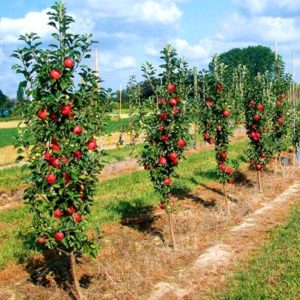 This column is considered medium-sized. Its maximum height is 2.2-2.7 meters, but in some cases it can stretch up to 3This variety grows as a single trunk, making future pruning much easier. The crown width does not exceed 0.25-0.40 centimeters. The trunk, rings, and fruiting branches are covered with smooth, glossy, red-brown or red-brown bark without pubescence.
The leaves are medium-sized, smooth, oval-elongated, glossy, and leathery. They are dark green or emerald in color, coarsely ribbed, long-pointed, with a twisting, propeller-like tip and a serrate-crenate, serrated edge. The blade may curl downward or fold into a boat-like shape. The root system is extensive, fibrous, but shallowly burrowed.
Productivity and pollination
Poesia is considered a high-yielding variety, although many of its “relatives” can easily surpass its performance.
With standard planting patterns, a hectare of apple trees of this variety typically yields approximately 160-200 tons of high-quality fruit annually. This equates to approximately 14-16 kilograms per mature tree trunk.
A special advantage of the apple tree is its conditional self-fertility, meaning it will produce a harvest even if no other apple tree blooms within 50-70 meters of it. However, one should not expect more than 25-35% of the maximum possible yield in this case. Therefore, experienced gardeners recommend interplanting Poesia with other varieties. It's a good idea to use portable apiaries during the flowering period, and spray the trees with sugar or honey diluted with water.
Winter hardiness and disease resistance
The tree is resistant to low temperatures, so much so that even -27-32°C won't harm it at all. However, sudden temperature fluctuations, frequent thaws alternating with severe frosts, ice buildup, and strong drafts will likely kill the trees. Therefore, they need to be provided with adequate shelter during cold periods; otherwise, growing Poetry will be impossible. Fortunately, its compact size makes this task much easier.
The variety's genetic code contains a specific Vf gene, inherited from its "parents." It protects the tree from all five races. scabiesThe tree also rarely suffers from other diseases and is quite resistant to powdery mildew. black crayfish, cytosporosis. However, insects can pose a serious threat. To combat them, trees will need to be regularly sprayed with specialized insecticides.
Rootstocks and subspecies
The variety is not yet old enough to distinguish between subspecies or subcultivars. It is grown on various rootstocks, which primarily affect the characteristics of the trunk itself and only partially affect the fruit. On seed rootstock, Poesia is the most winter-hardy, but produces smaller fruits. On semi-dwarf and dwarf rootstocks, the trees grow compact and produce large apples, but suffer significant frost resistance.
Peculiarities of Growing Poetry
 Landing
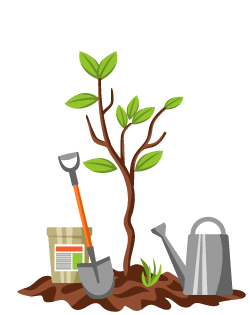 Landing
Basic conditions
- Sunny, open, well-ventilated areas are just what this variety needs to grow. Care must be taken to avoid drafts, which will inevitably kill the tree.
- The tree has standard soil requirements: it should be fertile, but moderately so. With the right feeding and fertilization regime, Poesia grows well in loam, sand, and even on the rocky slopes of the Caucasus or Crimea.
- Proximity to groundwater doesn't play a major role unless it rises above 2 meters. The rhizome isn't capable of penetrating deeply into the soil. However, planting apple trees directly next to a river or stream is not common.
- Digging holes for the columns in advance (a season in advance) isn't necessary, although it won't hurt. It's sufficient to do them at least two weeks in advance. Dig holes 60x80 centimeters (24x32 inches), add fertilizer or a soil-mixed mixture to the bottom, cover with another layer of soil or drainage material, and leave them outdoors to mature.
- It wouldn't hurt to immediately drive in stakes or planks to support the trees. They need the dough because the rhizomes don't hold them in the ground well. Strong winds can uproot young trunks, along with the loose root ball.
- Root collar It's customary to leave the roots above the surface if the properties of the chosen rootstock are important. If the tree roots higher, they will be completely lost.
- Place the seedling upright, spread the roots on a mound of soil or drainage material, cover with soil, and compact it gently. Water the surface and mulch with chopped grass or sawdust.
Landing dates
Gardeners usually consider spring to be the preferred time for planting Poesia. They choose a warm, dry day in late March or early April, when the soil has fully warmed up after the frost and the likelihood of further frost has passed. This ensures almost 100% survival of the seedlings.
Trees can be planted in the fall, around September or October, but there's a high risk that the first frost will kill the tree before it has had time to properly adapt to the new conditions. Therefore, this option is only suitable for residents of more southern regions with mild weather and climate.
Tree care
 Tree care
Protection from frost and pests
Tree trunks are considered winter-hardy, but that doesn't mean they need to be prepared for the cold weather. Their roots are shallow and easily frozen, so to protect them, you'll need to cover the trunk area with spruce branches, straw bales, hay, dry leaves, or even just pile up some soil. Trunks can be wrapped in burlap, roofing felt, old tights, or any other fabric. Their compact size allows for tent-like covering.
To protect the Poetry tree from insects, it is whitewashed to a height of 1-1.1 meters with ordinary lime, thickly diluted to the consistency of sour cream. Rodents will be repelled by strong-smelling substances applied to the trunks, such as grease, rendered animal lard, fuel oil, and old drying oil.
Loosening the soil, watering: proper agricultural technology
You need to dig around the tree twice a year, but very carefully and gently. The root system is the root system, which runs very shallow. Dig the area around the tree trunk to a diameter of at least a meter, removing weeds, root suckers, and shoots from various plants. To promote natural aeration, you can plant various herbs in this area, such as lemon balm, mint, marjoram, dill, and parsley. They will help the soil remain loose under any circumstances.
Poetry will need to be watered regularly, as it won't be able to find the water it needs on its own. Therefore, when young, water once or even twice a week during hot and dry weather. A mature tree only needs to be watered once every 10 days when there's no natural precipitation. 25-40 liters of water, divided into two sessions, early morning and late evening, is sufficient for one trunk.
Pruning: simple crown shaping
This variety generally doesn't require pruning, as it grows as a single trunk. However, it may occasionally produce side shoots, which should be cut back immediately before they become woody. If the top bud freezes, the trunk is also shortened to the second bud, and then a new top is grown.
Sanitary pruning is only required to remove dead fruiting shoots and rhizomes. Broken shoots should also be pruned immediately. Wounds should be sealed with garden pitch. This is always stressful for the tree, so after pruning, a decrease in growth and fruiting can be expected. Rejuvenation of the Poesia is not required, as its active lifespan is only 14-16 years, after which it is best to uproot it and plant a new one.
Pollinator varieties
- Vazhak.
- Gin.
- Currency.
- Malyukha.
- Barguzin.
- Chervonets.
- Ostankino.
- Korobovka.
- Ranets.
Reproduction
- Rooting.
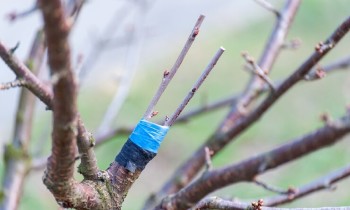
- Kidney grafting.
- Growing from seeds.
- Cuttings.
Diseases and pests
- Bacterial burn.
- Powdery mildew.
- Black crayfish.
- Pit bitterness.
- Green aphid.
- Codling moth.
- Leaf roller.
- Hawthorn.
The Ripening and Fruiting of Poetry
The beginning of fruiting
 The beginning of fruiting
This variety is very early-bearing, but like some other columnar trees, it typically doesn't produce flowers in the first year. Poesia blooms for the first time between the second and fourth years. The first two blooms are usually removed to allow the tree time to adapt and develop a root system. The first year of fruiting is considered to be the fourth or fifth season after planting in open ground; this is the point from which the tree's active life begins.
Flowering time
Buds typically begin to appear on the branches as early as mid-May, and by the second half of the month, they blossom into beautiful, large, fragrant flowers. These flowers have fleshy, slightly curly petals, soft pink or snow-white, and are gathered in clusters of 5-9. This process lasts approximately 15-18 days, during which time the bees must complete their task, and then they quickly fall off, leaving a carpet of petals on the ground.
At this time, the trees look very decorative, just as they do when the fruit is ripening, and become a true highlight of the plot. This process may not begin until the end of the month and will not be completed until June if the spring was cold, rainy, and prolonged.
Fruiting and growth
Standard trees grow quickly, reaching 55-70 centimeters in height in the first few years, and then reaching their full height within a couple of years. After fruiting begins, growth slows slightly, but the trees don't have to expend much energy and effort on forming and ripening fruit. By the sixth or seventh year after planting, the trees begin to bear fruit fully, delighting with large, fragrant fruits.
Apples ripen by the end of September in warm southern regions. In the rest of our country, it's best to delay harvesting until early or even mid-October. Moreover, there's no need to worry about apples falling off; the fruit clings tightly to the twigs. They can be transported even over very long distances; their thick skin protects them from damage. Their shelf life is average, and they'll likely retain their flavor and marketability until around February, and sometimes even until early March.
Top dressing
- Peat.
- Compost.
- Ammonium nitrate.
- Humus.
- Superphosphate.
- Manure.
- Mineral complexes.
What to do if it doesn't bloom or bear fruit
- Check for pests or diseases.
- Transplant into the sun.
- Water.
- Fertilize.
Why do apples fall?
- Wind, hail, hurricane, rain.
- Pest damage.
- Diseases.
Please leave your feedback on the Poetry variety, as many gardeners would like to grow similar varieties in their gardens.