Kubanskoye Bagryanoye apple tree: characteristics of the variety and care
| Color | Reds |
|---|---|
| Ripening season | Autumn |
| Size of apples | Large , Average |
| Taste | Sweet and sour |
| Crown type | Average tree height |
| Shelf life | High shelf life |
| Application | Universal variety |
| Winter hardiness | Low winter hardiness |
| Fruiting age | Up to 5 years |
 History of origin and regions of growth
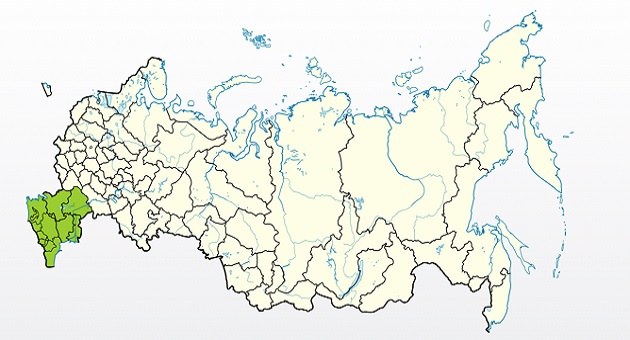
Growing regions
- Crimea.
- North Caucasus.
- Kuban.
Origin
This new late-winter variety was developed at the experimental station of the North Caucasus Research Institute of Horticulture and Viticulture in the late twentieth century. It was created by crossing the Delicious Red and Jonared varieties. The cultivars responsible for this variety include renowned breeders Irina Lvovna Efimova, Tatyana Alekseevna Kosheleva, Valentina Egorovna Kharina, Lev Mikhailovich Sergeev, Lidiya Sergeevna Naumova, and Evdokia Ivanovna Kostetskaya.
In 1996, the apple tree was sent for testing and trials at nearby farms, and immediately demonstrated excellent results. The testing process didn't take long, and by 2003, the Kubanskoye Bagryanoye apple tree was included in the State Register of Breeding Achievements and officially zoned for the North Caucasus region.
Content
Description of the Kubanskoe Bagryanoe variety
 This apple tree has many positive qualities, but it either cannot grow in most of our country or requires special attention and care. The tree is slow-growing, medium-sized, with a sparsely dense, compact crown. It is relatively tolerant of soil conditions, especially if properly and timely fertilized, but requires regular watering. The Kubanskoye Bagryanoye apple variety is highly productive, but it bears fruit only with noticeable regularity after reaching maturity.
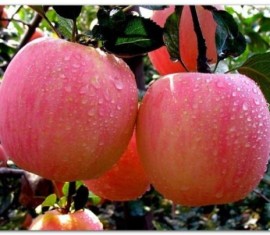
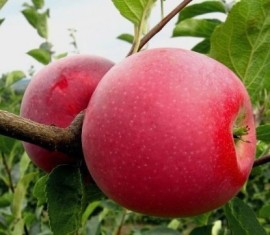
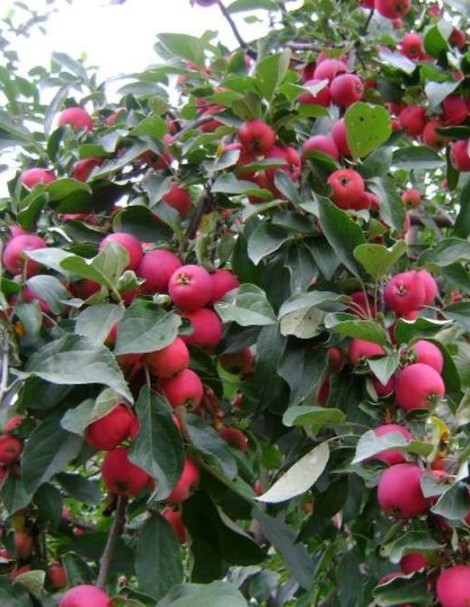
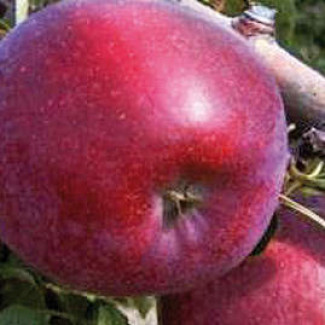
The fruits are very attractive in appearance: large, rosy-sided, covered with a dense, rich blush, fragrant and delicious. They are easy to transport and can be stored for a long time. However, the apples become noticeably smaller in dry years, which is considered a significant drawback. This variety is recommended for cultivation in intensive commercial orchards and small homesteads.
Apples: What do they look like?
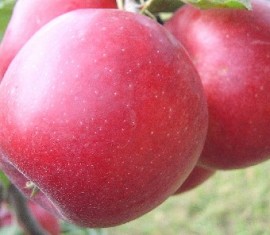
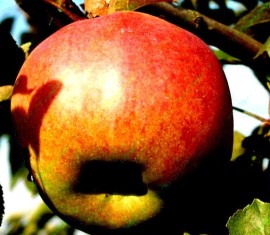
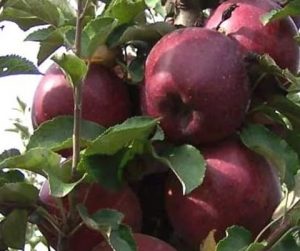 The fruits of this variety are predominantly large or slightly smaller. They can weigh up to 170-220 grams, sometimes slightly more or less. They are symmetrical and relatively uniform. The shape is round, sometimes somewhat rounded-conical, equal-sided, and in some cases slightly flattened. The ribbing on the fruit is slight, barely noticeable, and there is no lateral seam.
The Kuban apple has a dense, strong, and elastic skin, thin but firm, smooth, dry, and sometimes with a light waxy coating. It is elastic and well-protected from mechanical damage. The base color is light green or light green, uniformly bright, and the blush occupies at least 45-60% of the surface; it is a rich dark red or deep carmine, sometimes burgundy or dark purple, uniformly colored, and blurred with spots. Subcutaneous punctures are numerous and small, but rusty, giving the apple's surface a rough appearance, with the side seam not visible. Experts recommend assessing the chemical composition based on the following data:
- P-active substances (catechins) – 129 milligrams.
- Ascorbic acid (vitamin C) – 11.2 milligrams.
- Total sugars (fructose) – 11.6%.
- Pectins (fiber) – 14.4%.
- Titratable acids – 0.84%.
Kubanskoe Bagryanoe apples have dense, fine-grained, and juicy flesh. It's tender yet crisp, breaks easily when bitten, and has a medium-strong aroma. The flesh is creamy or slightly yellowish in color, while the skin can be light red or carmine, with vibrant veining. The flavor is considered dessert-like, balanced, and harmonious, with a pleasant sweet-and-sour balance. Professional tasters give these apples 4.7-4.8 out of 5 possible points.
Kubanskoe Bagryanoe apple tree: characteristics
Crown and root system
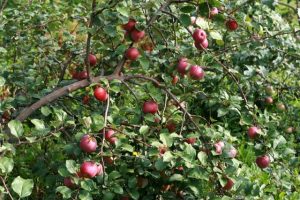 Trees are considered slow growing or moderate growing. They can grow up to 4-5 meters maximumThe crown is initially pyramidal or broadly oval, becoming more rounded with age and drooping and weeping in old age. The shoots are set at an acute angle from the trunk; they are crooked, geniculate, of medium thickness, and covered with greenish-brown or brownish-gray bark. Fruiting is concentrated on simple and compound rings.
The leaves are large, oval-ovate, and short-pointed, with serrate-crenate, finely serrated margins. Their tips usually point upward. The blade is wrinkled, the ribbing is coarse, and the pubescence is sparse, more noticeable on the underside. The foliage is dark green or emerald, with a matte finish. The root system is shallow, fibrous on most rootstocks, but can also be taproot. It is poorly adapted to water-seeking, so the trees require regular watering.
Productivity and pollination
The Kubanskoe Bagryanoe variety is considered to be medium- or high-yielding.
One mature tree of this variety can yield up to 90-120 kilograms of aromatic fruit per season. In some years, the yield can drop to 45-50 kilograms..
Apple trees are relatively self-sterile, so they require pollinators to produce fruit. It's common to plant Kubanskoe interspersed with other varieties that have a similar bud-opening time. Spraying with sugar syrup during flowering and transporting mobile apiaries to the planting sites is helpful.
Winter hardiness and disease resistance
These trees don't have a high tolerance for low temperatures, but experts classify them as moderately hardy. They can tolerate temperatures down to -22-25°C fairly well, provided they don't last long. They don't tolerate sudden temperature fluctuations, prolonged cold spells, or prolonged hot and dry weather.
To the scab, cytosporosis Apple trees are moderately resistant to powdery mildew and have no genetic immunity. If preventative treatments with fungicides and insecticides are not carried out promptly, they can become infected during years of severe epidemics, damaging both the leaves and the fruit, making them unsuitable for consumption.
Rootstocks and subspecies
Kubanskoe purpurea doesn't yet have its own subspecies, but it can be grown on most popular rootstocks. The most popular are semi-dwarf and dwarf varieties, which produce trees that begin bearing fruit earlier and have more compact crowns.
Features of growing Kuban crimson
 Landing
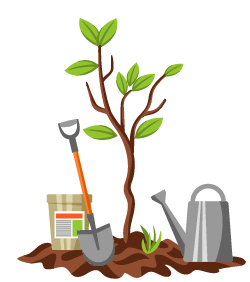 Landing
Basic conditions
- Apple trees prefer open, sunny spaces, but can be susceptible to sunburn during particularly hot weather. Therefore, choose a planting site with some shade, but still ensuring the crowns receive sunlight for most of the day.
- Soil quality isn't particularly important for the tree, as long as all fertilization and top dressing are done on time. The key is to ensure the soil isn't excessively saline or acidic. Sandy loam and clay loam, rocky slopes, and podzolic soils are excellent options.
- Groundwater levels should be considered before planting. Groundwater levels that are too deep can deprive the tree of moisture, as the root system isn't very deep, but groundwater levels that are too high are also unsuitable. The optimal depth is 1.9-2.2 meters.
- Planting holes are prepared in advance, but 2-4 weeks is sufficient. Dig holes up to 80 centimeters deep and 1 meter in diameter, fill the bottom with soil and fertilizer, then add a drainage layer, and fill with water (up to 50-60 liters).
- Before planting, you need to inspect the entire tree, cutting off all shoots and branches that have dried out, look sick, or are dead.
- Staking stakes are driven directly into the holes, ideally positioned on the north side of the tree trunks. This will not only provide support but also protect the tree from cold winds in winter.
- The Kuban Crimson graft site should be 5-8 centimeters above the soil surface. This will prevent the tree from rooting higher if the soil settles and the rootstock is added. Otherwise, all the properties and qualities of the rootstock will be lost.
- Before planting, trees can be soaked in water for 6-8 hours to absorb moisture, but only if planted in the spring.
- Place the tree on a drainage trench, spread the roots, cover with soil, compact it by hand, and water with 35-40 liters of water. Mulch the surface to retain moisture.
Landing dates
It's best to plant trees of this variety in the spring, when the soil has fully warmed up after the winter cold and the threat of frost has passed. In the warmest regions, autumn planting is also possible, but the survival rate of the apple trees will be somewhat reduced.
Tree care
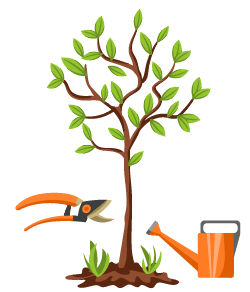 Tree care
Protection from frost and pests
Before the onset of cold weather, Kubanskoye must be properly prepared to preserve the apple tree. All watering should be stopped until early September to allow the sap to stop flowing in the trunk. Young trees are covered with a tent, while older trees are simply wrapped in burlap or old tights. The area around the trunk is covered with spruce branches, straw or hay, dry leaves, or even raked soil. All this should be removed in the spring before the sap begins to flow in the trunks.
Tree trunks are whitewashed with ordinary lime to repel insects that nest in the crevices of the bark. This also improves the aesthetic appearance of the garden. Solid oil, fuel oil, lard, and other pungent and unpleasant-smelling substances help repel rodents.
Loosening the soil, watering: proper agricultural technology
Dig the soil around the tree once or twice a year, and the rest of the time simply fluff it with a hoe. Leaves, debris, weeds, root suckers, and rotting fruit should also be regularly removed from under the tree trunks, otherwise disease is inevitable.
Apple trees are watered on a ten-day cycle. Water is applied when no natural precipitation has occurred for ten days. If rain falls, the ten days are counted from that point onward and watered again. Water is a convenient way to dilute fertilizers and other supplements and apply them along the crown for better absorption.
Pruning: simple crown shaping
Trees of this variety are not prone to becoming dense, so crown correction is not necessary. Initially, they are trained to a pyramidal, sparsely layered, or simply sparse shape, and then their natural branching is simply maintained. All branches protruding inward, growing vertically upward, crossing, or parallel are usually pruned.
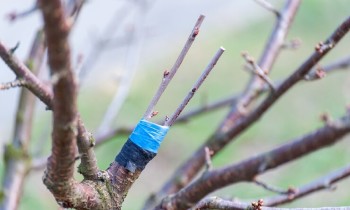
Sanitary pruning involves cutting off dry, diseased, and broken shoots. All cut areas must be sealed immediately. garden pitch or paint over with paint, oil and water-based paints will do.
Pollinator varieties
- Idared.
- Gala.
- Florina.
- Delicious golden.
- Glory to the victors.
- Florina.
- Borovinka.
Diseases and pests
- Cytosporosis.
- Fruit rot.
- Cancer.
- Scab.
- Powdery mildew.
- Scale insect.
- Fruit hyacinth.
- Moth.
- Green aphid.
- Leafhopper.
Ripening and fruiting of Kuban Crimson
The beginning of fruiting
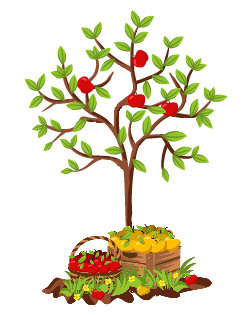 The beginning of fruiting
This variety is considered early-bearing, although on vegetative rootstocks it doesn't begin bearing fruit until the fifth year. However, on dwarf or semi-dwarf trees, fruit begins to ripen in the second or third year. In some cases, flowers may appear on the branches in the first few years after planting, but it's best to remove them immediately, as these are barren flowers and will not provide any benefit, but will drain the tree's sap.
Flowering time
The Kuban Crimson blooms mid-season, around the second half of May. Therefore, finding pollinators is usually easy. Then the tree produces medium-sized flowers of a white-pink hue, with delicate, oval-shaped petals and stamens at the level of the pistils. They are beautiful, densely covered with branches, and have a medium, yet recognizable, slightly spicy aroma.
Fruiting and growth
The tree grows quite slowly, barely gaining 20-30 centimeters per year, and that's before it begins to bear fruit. Once the apple tree begins to bear fruit, the growth rate slows even further. Therefore, a full harvest will take about 10-12 years. Gardeners claim that by then, the yield per tree reaches 60-80 kilograms.
The fruits ripen in the second half of September or October, when they should be picked for storage and processing. They hold firmly and don't fall from the branches, so there's usually no need to rush the harvest. This variety of apples can be transported over long distances in boxes with two or three layers. They can be stored until about April, sometimes in a special container. refrigerator even until May.
Top dressing
- Superphosphate.
- Nitrogen complexes.
- Humus.
- Peat.
- Calcium.
- Manure.
- Compost.
What to do if it doesn't bloom or bear fruit
- Restrict or activate watering.
- Remove insects.
- Cure diseases.
- Fertilize.
- Transplant to a sunny place.
Why do apples fall?
- Wind, frost, rain, hail.
- Overripe.
- Pests or diseases.
Leave a review of the Kubanskoye Bagryanoye apple tree variety so that even a novice gardener can receive useful information firsthand.