Liberty apple tree: characteristics of the variety and care
| Color | Reds |
|---|---|
| Ripening season | Autumn |
| Size of apples | Average |
| Taste | Sweet and sour |
| Crown type | Average tree height |
| Shelf life | High shelf life |
| Application | Universal variety |
| Winter hardiness | Average winter hardiness |
| Fruiting age | Up to 5 years |
 History of origin and regions of growth
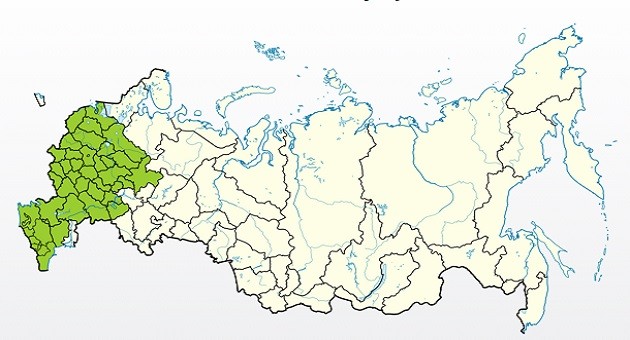
Growing regions
- North Caucasus.
- Crimea.
- Middle zone.
- Moscow region.
Origin
The variety was first bred in the United States at the New York Institute of Horticulture's breeding farm in 1955. It was created by hybridizing and crossing four varieties that were well-known at the time: Welsh, McIntosh, Rum Beauty, and MeCount. Additionally, the PR 154-12 seedling was used in the breeding process to enhance resistance to fungal and other infections.
In the mid-1980s, the new Liberty apple tree arrived in the Soviet Union, where it immediately gained a large following. The first application for approval and inclusion as an elite variety was submitted in 1989, but it was not until 2000 that it was decided to include it in the State Register of Breeding Achievements. The apple tree's official regionalization is the North Caucasus region, but in reality, it is grown throughout virtually all of central Russia, Belarus, and Ukraine.
Content
Description of the Liberty variety
 The early winter apple tree rightfully takes its place in the gardens of Russian gardeners. It is winter-hardy enough to grow in the harsh and variable climate of the temperate zone, and is resistant to all five races. scabiesThanks to the Vf gene, this variety is undemanding in terms of soil and care. The trees are compact, don't take up much space, and bear fruit regularly, producing good yields.
Liberty fruits are quite large, attractive, and have high marketable qualities. They are tasty, aromatic, juicy, and transport well, while the trees themselves bear fruit early. This variety is successfully grown both commercially and in private gardens.
Apples: What do they look like?
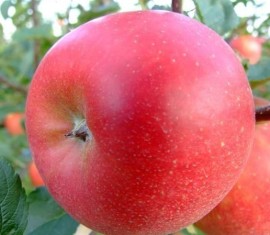
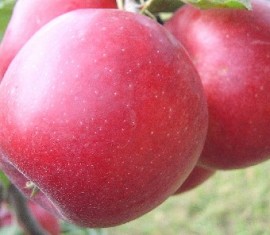
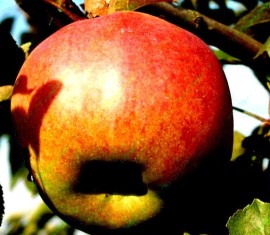
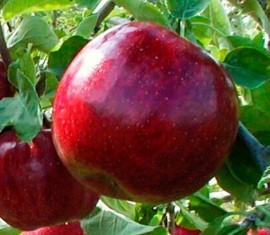
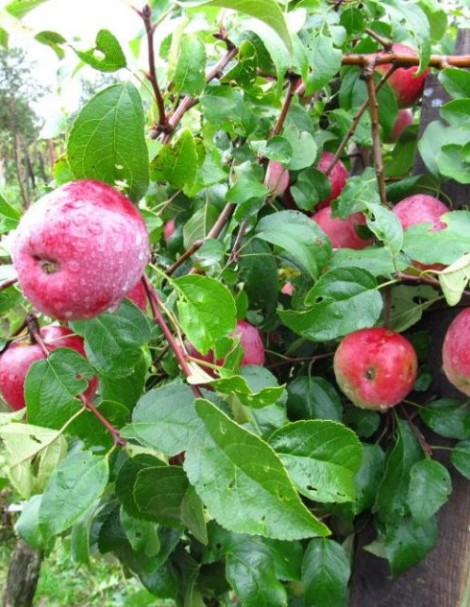
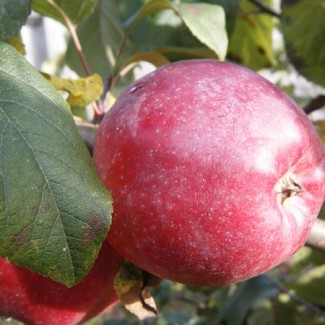
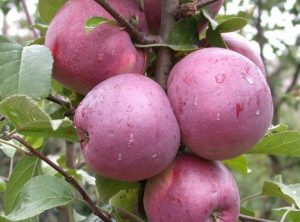 The fruits are medium-sized, reaching a maximum weight of approximately 140-179 grams, although in rare years they can be somewhat larger. They are round or round-conical in shape, symmetrical, predominantly uniform, uniform, smooth, and matte-shiny. The base color is yellow-green, slightly lemon-colored, with a dark cherry or raspberry-red blush, diffused, occupying more than 75-85% of the surface, sometimes completely obscuring the underlying color.
The skin is firm but not thick, smooth, and glossy. When fully ripe, it becomes covered with a dense, silvery-gray waxy coating. Subcutaneous spots are numerous and light, almost white, making them easily visible against a bright background. The fruit's chemical composition is most easily assessed using the following data:
- P-active substances (catechins) – 128 milligrams.
- Ascorbic acid (vitamin C) – 10.5 milligrams.
- Total sugars (fructose) – 8.4%.
- Pectins (fiber) – 8.7%.
- Titratable acids – 0.49%.
Liberty apples have a pleasant, fine-grained flesh with a delicate, creamy-white hue. It is medium-firm, crisp, slightly prickly, refreshing, and very juicy. The apple's flavor is considered dessert-like, balanced, and harmonious; it is sweet and sour, with a distinct wine undertone. Professional tasters give the apples 4.2-4.4 points on a 5-point scale.
Liberty apple tree: characteristics
 Crown and root system
 Crown and root system
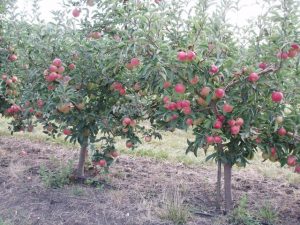
The variety is considered to be medium-sized and fast-growing, reaches a maximum of 2.5-3 meters, sometimes slightly larger. The crown is rounded or broadly lobed, moderately dense, compact, and easily shaped. Skeletal shoots extend from the conductor at a right or acute angle. They are round in cross-section, medium thick, long, and covered with bark ranging from dark carmine to brown. Fruiting occurs on rings and spears.
The leaves are rounded-elongated, medium-sized or small, dense, leathery, glossy, and highly shiny. The underside may have a loose, felty pubescence. The foliage is medium-sized, the blade is flattened, the tip is short-pointed, and the margins are doubly finely serrated, crenate, and serrate. The tree's stability is ensured by its medium-depth, extensive, and moderately robust root system, which is moderately adapted to the search for water and nutrients.
Productivity and pollination
Despite its relatively low tree height, this variety is generally considered high- or medium-yielding. Its fruitfulness largely depends on care and favorable weather and climate conditions.
From a single mature Liberty tree, skilled growers can harvest 100-110 kilograms of beautiful, tasty, and aromatic fruit per season. Occasionally, the yield can be slightly less or more, ranging from 35-40%.
The variety is non-self-fertile, meaning it requires external pollinators to produce fruit. Ideally, they grow within 45-90 meters. It's common to set up mobile apiaries near commercial orchards and spray the flowering trees with honey or sugar syrup. Some private growers also do this, significantly increasing fertility rates.
Winter hardiness and disease resistance
Experts classify Liberty trees as moderately to slightly above-average cold-hardy. They can survive mild winters, with temperatures dropping to -22-25°C. The key is to minimize sudden temperature fluctuations and drops, and to ensure the trees are securely and properly covered before winter.
Liberty has genetic immunity to all five types of scab, the main scourge of apple trees. Apple trees are moderately resistant to other fungal infections, so regular preventative treatment is necessary. Parasites can also damage apple trees, so it's important to spray them not only with fungicides but also with insecticides.
Rootstocks and subspecies
Liberty is grown on various rootstocks, the most popular being dwarf rootstocks. These produce even more compact standard trees, which begin bearing fruit earlier, but their winter hardiness is much lower than that of vegetative standard trees. There is an American-bred subspecies called "Sister Liberty." The trees are dwarfed, and the fruit is large, tasty, and purple-scarlet. Their shelf life is quite impressive, lasting almost until the next harvest. However, they are primarily popular in Belarus, and are still a novelty in Russia.
Features of growing Liberty
Landing
 Landing
Basic conditions
- This variety prefers well-lit and ventilated areas. First of all, be sure to avoid placing the seedlings in the shade, otherwise they will grow stunted and may even die.
- It's important to keep the groundwater level below 1.8-2 meters, otherwise the trees' roots can reach it. This will cause them to rot, which can be disastrous. Therefore, planting trees near rivers, lakes, ponds, streams, and lakes is also not recommended.
- The Liberty tree's location should be well-ventilated, but free of drafts. Trees are sensitive to strong winds, so this should be taken into account.
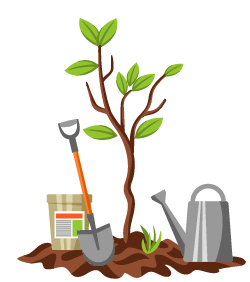
- It's important to prepare the holes in advance, at least 3-4 weeks before planting. Dig holes 60-70 centimeters deep and 90-100 centimeters in diameter. Line the bottom with topsoil mixed with fertilizer. Then add rocks, broken brick, or vermiculite for drainage, and add 35-40 liters of water. Leave the holes outdoors to mature.
- Leave 2.5-3 meters between holes and 3.5-4 meters between rows for tall rootstocks. Dwarf varieties can be planted 1-1.5 meters apart, leaving row spacings of up to 4-5 meters.
- Stakes, or better yet, trellises, are driven into the holes to tie the young trees to. If placed on the north side, they will serve not only as support but also as an additional shield from the winter cold.
- The root collar of the seedling must remain 6-9 centimeters above the soil surface to prevent it from rooting higher, otherwise the qualities and properties of the rootstock will be lost.
- Rake the drainage material into a pile in the center of the hole. Place the tree on it, spreading its rhizome out. Cover with soil, compacting it by hand. Mulch the surface with suitable materials, ensuring that the mulch does not come into contact with the bark.
Landing dates
Experts recommend starting spring planting around mid-April, before the buds begin to swell. It's best to wait until the soil has warmed completely. Liberty seedlings are sensitive to recurrent frosts, so planting should begin once spring has fully arrived.
The autumn method, from approximately the second half of September to the end of October (depending on the region), is only suitable for the southernmost regions, with warm and temperate climates. If this time is missed, it's better to bury the trees at a 45° angle until spring, and then transplant them to their permanent location.
Tree care
 Tree care
Protection from frost and pests
Average winter hardiness requires proper and timely covering of apple trees before winter. First, they need to be properly prepared, which requires stopping watering in early September. After leaf fall, the tree trunks are cleaned and pruned, then the trunks are wrapped with roofing felt, tar paper, or burlap. If winters are harsh, it's best to pile spruce branches on the root zone or pile up the soil. Young trees can be covered from top to ground using a tent-like method.
Besides parasha, to which Liberty is completely immune, there are other diseases and numerous parasites, so it's important to treat the garden with insecticides and fungicides on a regular basis. Insects can also be repelled by whitewashing, and rodents can be repelled by smearing the trunks with lard, grease, and even fuel oil.
Loosening the soil, watering: proper agricultural technology
The soil around the tree trunks should be gently loosened regularly to ensure water and air permeability. Digging should be done no more than twice a year, in the fall and spring. The rest of the year, simply hoe the soil, removing weeds and root shoots. It's also important to turn the soil the following day after watering to prevent it from compacting into a dense lump. After 10-12 years, you can sow the area around the tree trunks with lawn grass or herbs; these will provide natural aeration and prevent weeds from growing.
Watering Trees will need frequent watering as the soil dries out. It should never dry out completely, but remain slightly damp. Young apple trees need watering every 7-10 days; for older trees, 1-2 waterings per month is sufficient. The weather of the particular year plays a major role. If rainfall is regular, there's no point in frequent watering. Drip irrigation is a good way to irrigate the soil. glaze, eliminating the need to carry buckets. It's convenient to mix fertilizers and groundbaths with water and sprinkle them around the perimeter of the tree crowns.
Pruning: simple crown shaping
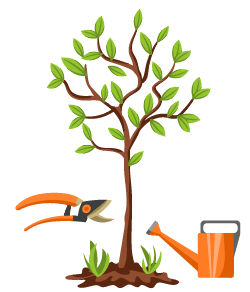
Formative pruning is carried out in the spring, starting in the first year after planting. La Liberty prefers a sparse, bushy, or cup-shaped form. However, you can customize the shape to your liking; the trees are quite adaptable. The main thing is to avoid removing more than a third of the topsoil at a time, otherwise the tree will become severely stressed and will take longer to recover.
Sanitary pruning is reserved for the fall, when the leaves have completely fallen. Broken, diseased, and dry shoots are then removed. Inward-growing, parallel, and crisscrossing shoots should also be trimmed. Don't forget to seal the wounds (cut areas). garden pitch or paint.
Pollinator varieties
- Florina.
- Priscilla.
- Titovka.
- Idared.
- Korobovka.
- Gloucester.
- Mackfree.
- Delicious golden.
Diseases and pests
- Cytosporosis.
- Fruit rot.
- Powdery mildew.
- Scale insect.
- Leafhopper.
- Fruit hyacinth.
- Hawthorn.
- Green aphid.
- Leaf roller.
Ripening and fruiting of Liberty
The beginning of fruiting
 The beginning of fruiting
This variety produces fruit very quickly, but it depends directly on the chosen rootstock. On dwarf and semi-dwarf varieties, fruit can be seen for the first time in the second year, while on tall trees, the process can take up to 3-4 years, which still classifies the trees as early fruiters. The initial harvests aren't particularly impressive in terms of fruit quantity, but a few dozen are still possible.
Flowering time
Liberty apple trees bloom mid-season. They open their large, beautiful buds in mid-May, so pollinators are always available, as many apple trees bloom around the same time. Their petals are delicate, medium-thick, pale pink or white, and the flowers are very fragrant, densely covering the branches.
Fruiting and growth
Considering the trees are naturally short, they reach their full height fairly quickly. They are forced to grow 45-60 centimeters per year before they begin bearing fruit, and slightly less after they begin producing apples. Fruitfulness increases quickly, but a full harvest should be expected approximately 6-8 years after planting, when the fruit production reaches its peak.
Apples begin to ripen in mid-September, and it's best to harvest them completely by the end of the month. Consumer maturity occurs somewhat later than technical (harvest) maturity, approximately 2-4 weeks later, when the sugars in the fruit have finished caramelizing and they become particularly tasty. It's best to transport the fruit in crates rather than in bulk; this way, they'll withstand any journey. Stored in a special refrigerator, the fruit can be stored for up to 5-6 months, but in a regular cellar, at a temperature no higher than 5-10°C and a specific humidity of up to 55-60%, they can be stored without losing flavor and consistency for no more than 2-3, sometimes 4.
Top dressing
- Superphosphate.
- Humus.
- Peat.
- Calcium.
- Manure.
- Compost.
- Nitrogen complexes (not in the first year).
What to do if it doesn't bloom or bear fruit
- Limit watering.
- Eliminate insects.
- Cure diseases.
- Fertilize.
- Move to a sunny place.
Why do apples fall?
- Wind, rain, hail, snow.
- Pests or diseases.
Leave a review of the Liberty apple tree variety so that even a novice gardener can receive useful information firsthand.