Apple tree Luch: characteristics of the variety and care
| Color | Reds |
|---|---|
| Ripening season | Summer |
| Size of apples | Average , Large |
| Taste | Sweet |
| Crown type | Columnar tree |
| Shelf life | Low shelf life |
| Application | Fresh , For recycling |
| Winter hardiness | Average winter hardiness |
| Fruiting age | Up to 5 years |
 History of origin and regions of growth
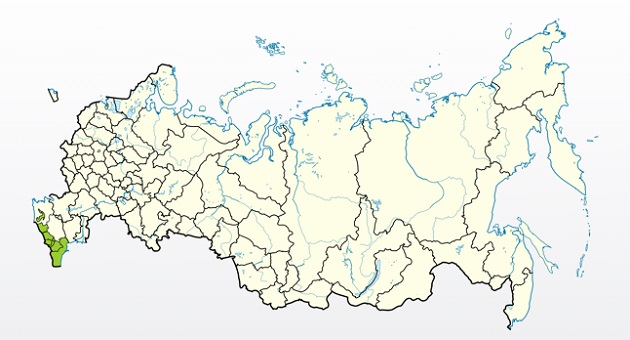
Growing regions
- North Caucasus.
- Crimea.
Origin
This variety was developed by the North Caucasus Federal Scientific Center for Horticulture, Viticulture, and Winemaking. In the early 1990s, the distinguished breeders Tatyana Grigoryevna Prichko and Svetlana Nikolaevna Artyukh, using mutation breeding, developed a completely new columnar apple seedling. The parent varieties were Kuban Spur and the well-known Melba.
The first application for the apple tree to be classified as an elite variety was submitted in 1994, and the variety was sent to various experimental farms for field trials. It wasn't until 2004 that the apple tree was added to the State Register and zoned for the North Caucasus region. In fact, the variety grows well in almost all of the southern regions of our country; it can even be found in the Moscow region and western Russia.
Content
Description of the Luch apple tree variety
 Small, low-growing trees that take up little space in the garden yet produce bountiful harvests are every gardener's dream. The columnar apple tree Luch fits this description perfectly. It's not particularly fussy, can tolerate quite drastic weather changes, and is resistant to most apple fungal and bacterial infections.
Despite its low drought tolerance and vulnerability to pests such as codling moth, it is recommended for intensive commercial orchards and small home gardens.
Apples: What do they look like?
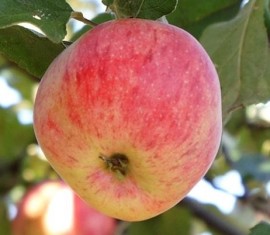
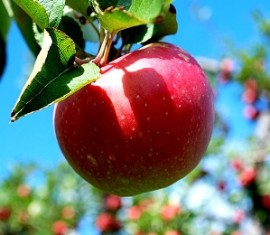
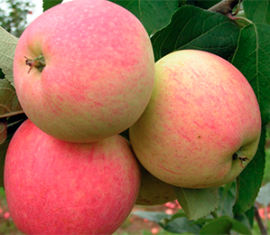
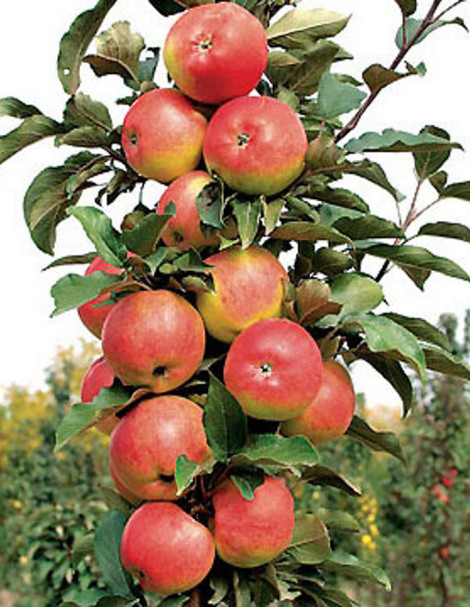
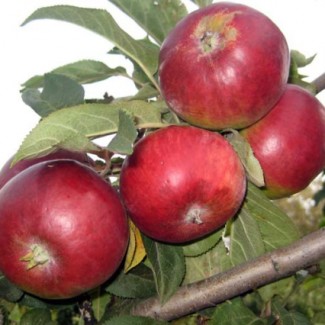
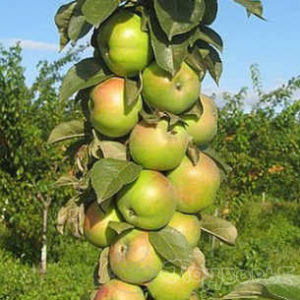 Most fruits grow large, even very large. They easily reach 220-280 grams, but can sometimes exceed 300. They are round, very flattened, and symmetrical, but some specimens are slightly slanted. The ribbing is smooth and virtually invisible.
The skin is dense, elastic, but quite thin. It is green or greenish-yellow, and can be slightly golden, light green, whitish, or even lemon-colored. The blush on the skin is diffuse, and on the dark side, it can be mottled and streaked, raspberry, dark cherry, reddish-carmine, or sometimes beetroot-colored. During ripening, the apples become covered with a dense, waxy, bluish-gray coating. The subcutaneous spots are large and indeed present; they are light and clearly visible against the dark surface of the fruit. The easiest way to assess the chemical composition of apples is by comparatively analyzing the following parameters:
- P-active substances – 174 milligrams.
- Ascorbic acid (vitamin C) – 14.7 grams.
- Sugar (fructose) – 12.5%.
- Titratable acids – 0.67%.
- Pectins (fiber) – 14.1%.
The flesh is snow-white, without any discernible nuance, very dense, prickly, crisp, and juicy. A powerful, distinctive, and easily recognizable aroma permeates throughout the body during harvesting and storage. The flavor is considered harmonious and balanced, with a sweet and sour balance, leaning heavily toward sweetness and a distinctive tartness only in the aftertaste. A tasting score for this fruit is no more than 4.3 out of 5 possible points.
Apple tree Luch: characteristics
Crown and root system
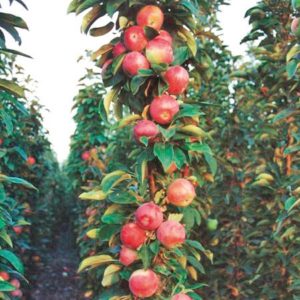 The trees are columnar, spur-like, characterized by extremely close internodes, making it difficult to discern the distance between buds. The crown is very compact, formed from several lateral shoots extending upward at a very acute angle to the trunk. They are covered with gray or gray-green bark, smooth and glossy, without pubescence. Fruiting occurs on one- or two-year-old fruiting canes, spears, and rings.
The leaves are large, mostly upward-facing, oval, and slightly elongated. They are long-pointed, often twisted into a helix, but can also fold into a boat-shaped form. The edges are serrated, serrate-crenate, and wavy. The leaf blade is rich green or dark green, coarsely nerved, heavily rugose, and has a dense pubescence on the underside. The root system is highly branched, fibrous, lacking a central taproot, and is superficial and poorly adapted to water-seeking.
Productivity and pollination
This indicator is average for Luch, so the variety is not yet becoming extremely popular.
One mature tree can yield 10-15 kilograms of aromatic fruit per season. However, it's important to understand that the standard planting density for this variety is no more than 1,000 trees per hectare. Therefore, in the 8th to 10th year, the maximum yield from this area will be 550-600 quintals.
The ray is completely self-sterile, so other apple varieties that bloom at the same time should be planted within 40-50 meters of it. This will ensure cross-pollination and a productive harvest. During fruit bloom, experienced gardeners use mobile apiaries and spray the trees with sugar or honey syrup to more effectively attract insects.
Winter hardiness and disease resistance
This variety is considered tolerant of low temperatures, but it's unlikely to be exposed to temperatures above average. It can withstand temperatures as low as -20-22°C fairly well, provided they're short-lived. However, if the temperature drops below this level or lasts longer than two weeks, providing protection from the cold becomes a matter of life and death. Trees can suffer severe frost damage, affecting not only buds and young shoots but also mature wood.
The majority of diseases, such as scabTrees are quite resistant to diseases such as cytosporosis, pit bitterness, and powdery mildew. However, preventative measures should still be taken, as leaves and fruits may be damaged during years of severe epiphytotics. Pests, particularly leaf rollers and hawthorn moths, pose a particular threat to the tree. Therefore, treating the garden with insecticides and fungicides should be routine when growing Luch.
Rootstocks and subspecies
This variety can be grown on various rootstocks, which will impart unique qualities to the tree. For example, trees grown on tall vegetative seedlings are the most frost-hardy, while dwarf trees will be especially compact with large, attractive fruits. The Luch variety itself is used as a rootstock to impart early maturity and early fruiting to the recipient trees.
Features of growing Luch
 Landing
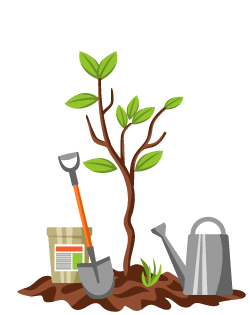 Landing
Basic conditions
- Apple trees of any variety require an open, sunny location. Their crowns must be exposed to sunlight for most of the day, otherwise they may fail to bloom at all or produce poor, sparse fruit, producing small, sour apples.
- Soil quality is crucial; it should be fertile, but not excessively so. Loams, sandy loams, and even black soil and rocky slopes are suitable. However, watering and fertilizing are essential, and overly saturated soils should be diluted with washed river sand.
- High groundwater levels aren't the best choice for planting Luch. Its root system isn't very deep, so it can't penetrate deep into the soil, but if moisture is present within 1.5-1.8 meters, it can reach the roots and cause rot.
- Leave at least 1.5-1.7 meters between trees in a row, and up to 2.5 meters between rows. This will prevent future tree rootstocks and crowns from clashing, and the branches themselves will be freely exposed to sunlight.
- It's best to prepare the holes in advance, last season, but you can also plant in ones dug 3-4 weeks ago. Add mineral and organic fertilizer to the bottom of 80-90 cm holes, cover with a layer of soil, or line with drainage material (rocks, vermiculite, nut shells). Fill the entire area with water (30-45 liters) and leave it outdoors.
- It's a good idea to dig or drive a special stake or plank into the holes to secure the tree. Ideally, place it on the north side, providing the sapling with additional frost protection.
- Root collar The beam is always left above the soil surface by approximately 5-8 centimeters if the properties of the rootstock need to be preserved.
- Place the seedling strictly vertically, cover with soil, and compact it, leaving no air pockets. It's best not to pack the soil around the trunk too tightly, otherwise the trees may not receive enough moisture and oxygen and die. After planting, mulch the surface with sawdust, peat, chopped grass, or humus.
Landing dates
Luch can be planted in either spring or fall. The key is to time the planting correctly so that frost doesn't damage the newly planted trees. In spring, this will be around late March or April, when the threat of frost is no longer present. In fall, this will be late September or October, when the leaves have finished falling, but the first serious frosts are still a long way off.
Tree care
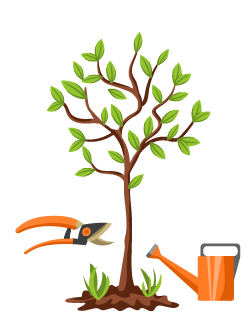 Tree care
Protection from frost and pests
Trees need to be carefully prepared for winter, especially in cold regions. The root zone can be lined with any material, such as spruce branches, bales of straw or hay, bundles of dry leaves, or even layers of foam from old appliance packaging. The trunks can be wrapped in old tights, special agrofibre, burlap, or any other fabric. In cold regions, trees can be covered with a tent-like structure; their compact crowns and low height make this quite feasible.
Trees require special treatments to protect against insects, regular spraying with insecticides, whitewashing Lime the trunks in the fall and spring, otherwise leaf rollers and other insects can make life miserable for any gardener. To repel hungry rodents, you can coat the trunks with fuel oil, grease, lard, drying oil, and even rancid sunflower oil.
Loosening the soil, watering: proper agricultural technology
You can dig the soil around the trunk twice a year or more. However, this must be done very carefully, as the Luch's roots are shallow near the surface, are highly branched, and are easily damaged. Throughout the growing season, you can simply hoe the soil, for example, the day after watering or fertilizing, to prevent the soil from becoming compacted into a granite monolith.
Soil moisture and aeration are extremely important for the Luch variety. Therefore, watering and loosening the soil frequently will be necessary, at least 10-20 times per season, especially in hot and dry weather. If this is not taken care of, the trees may completely drop their flowers, ovaries, or even half-ripe fruits, depending on the exact timing of the drought.
It's best to water trees using the drip method, but if that's not available, it's a good idea to apply 20-45 liters per mature tree once or twice a week, divided into two doses: in the evening and in the morning. When it rains, you can stop watering, then continue watering as the soil dries. It's also convenient to feed and fertilize the trees with water, as this will ensure better absorption of nutrients.
Pruning: simple crown shaping
The ray is formed from 2-3 skeletal shoots, which are replaced annually. First, a pair of strong branches growing almost vertically are selected, then the weaker ones are pruned, allowing the stronger ones to develop. This process is repeated year after year until fruiting is complete.
Dry or broken fruiting twigs and shoots will also need to be regularly pruned to prevent the tree from becoming overly dense. This variety does not require any rejuvenation, due to its short active lifespan of only 25 years.
Pollinator varieties
Reproduction
- Rooting.
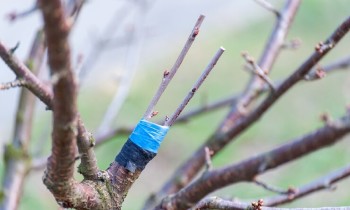
- Kidney grafting.
- Growing from seeds.
- Cuttings.
Diseases and pests
- Black crayfish.
- Scab.
- Bacterial burn.
- Powdery mildew.
- Green aphid.
- Codling moth.
- Leaf roller.
- Hawthorn.
Ripening and fruiting of the Ray
The beginning of fruiting
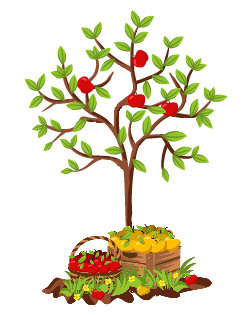 The beginning of fruiting
The variety's early fruiting attracts the attention of all gardeners who aren't prepared to wait 6-8 years for their first harvest. Luch blooms for the first time in the nursery during its first year. However, all buds are then removed to allow the tree to establish proper roots. By the second or third year, it's possible to harvest at least 4-5 kilograms of fragrant, fresh-tasting fruit.
Flowering time
This variety blooms early. By late April, buds can be seen on the tree, sometimes opening before early May. If the weather isn't warm and sunny, the blooming period may be delayed by 1-2 weeks. Flowering lasts about ten days, giving the bees time to complete their work. The flowers themselves are large, saucer-like, pinkish-white or even deep pink, and very fragrant.
Fruiting and growth
The tree grows quite quickly, reaching at least 35-50 centimeters per season, and even more in the first year, up to 65-75 centimeters. It also increases productivity very rapidly. By the sixth to eighth year, a single tree can yield at least 10-12 kilograms of beautiful and delicious fruit. Many experienced gardeners report that with good care, in very favorable years, they can easily harvest 25-30 kilograms of apples from a single trunk.
It's common to harvest the fruit as early as early or mid-August. In warm climates, they can ripen as late as July. You'll need to hurry, as fallen apples are only suitable for immediate consumption or processing. The fruit's shelf life isn't particularly impressive; they can be stored in the refrigerator or cellar for no more than 2-3 weeks, after which they must be fully processed.
Top dressing
- Peat.
- Compost.
- Ammonium nitrate.
- Humus.
- Chicken manure.
- Superphosphate.
- Manure.
- Mineral complexes.
What to do if it doesn't bloom or bear fruit
- Check for pests or diseases.
- Transplant into the sun.
- Water.
- Fertilize.
Why do apples fall?
- Wind, hail, hurricane, rain.
- Overripe.
- Pest damage.
- Diseases.
Please leave your feedback on the Luch variety, as many gardeners would like to grow similar varieties in their gardens.