Snowdrop apple tree: characteristics of the variety and care
| Color | Greens |
|---|---|
| Ripening season | Autumn |
| Size of apples | Average , Large |
| Taste | Sweet and sour |
| Crown type | Dwarf |
| Shelf life | Average shelf life |
| Application | Fresh , For recycling |
| Winter hardiness | High winter hardiness |
| Fruiting age | Up to 5 years |
 History of origin and regions of growth
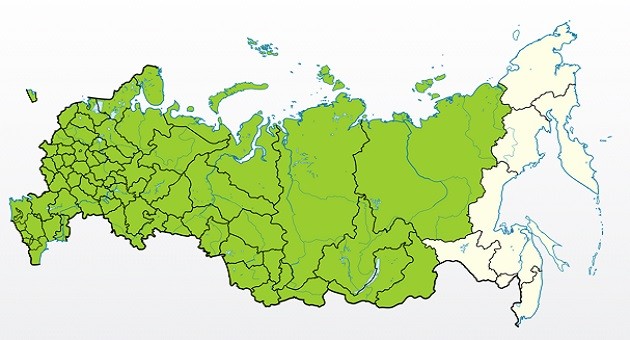
Growing regions
- Crimea.
- Samara region.
- Siberia.
- Tatarstan.
- Volga-Vyatka region.
- Middle zone.
- Tver region.
- Leningrad region.
- Mordovia.
- North Caucasus.
- Ulyanovsk region.
- Moscow region.
- Ural.
Origin
Many new winter apple trees have been developed in the Urals, and Podsnezhnik is one of those developed at the experimental station of the South Ural Research Institute of Fruit, Vegetable, and Potato Growing, Ural Federal Agrarian Research Center, Ural Branch of the Russian Academy of Sciences. The variety was developed by modern pomologist breeders:
- Vladimir Ilyich Putyatin.
- Antonina Grigorievna Bayandina.
- Mikhail Alexandrovich.
- Nina Fedorovna Mazunin.
The variety was developed in the early 1980s through open pollination of the Vydubetskaya Weeping apple tree. In 1987, the first application for admission to official testing was submitted, as well as for classification as an elite apple tree. It underwent extensive field testing, after which, in 2001, the variety was added to the State Register of Breeding Achievements and zoned for the Ural region. In fact, it can be cultivated throughout virtually the entire country, with rare exceptions.
Content
Description of the Snowdrop variety
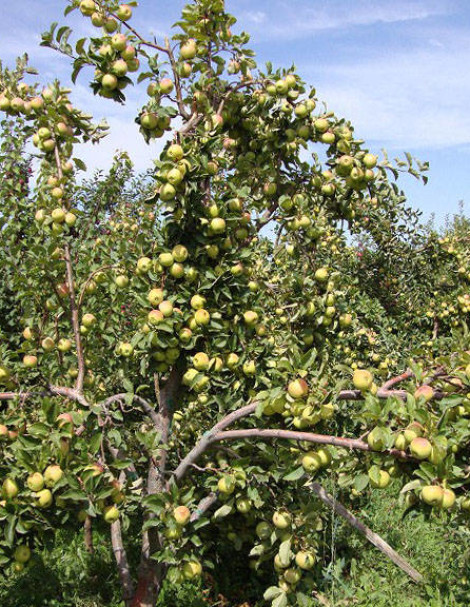
 This natural dwarf variety attracts gardeners with its compact size, allowing for more standard trees to be planted in the same space. However, this is not the variety's only advantage. The trees are very decorative and picturesque, frost-resistant, environmentally friendly, undemanding of soil, fertilizing, and watering, and respond well to fertilizer. They regularly bear fruit abundantly, although the variety's overall lifespan is short. Another drawback is the fragility of the branches, which are often unable to support the weight of the fruit on their own, requiring support.
The Snowdrop variety produces beautiful, fairly large fruits with high marketable quality. They ripen in early autumn, are easy to transport, and can be stored for several months in a standard cellar. They are suitable for processing and fresh eating. This apple tree is recommended for intensive commercial orchards, but it is also perfect for a small home garden.
Apples: What do they look like?
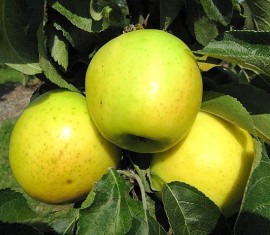
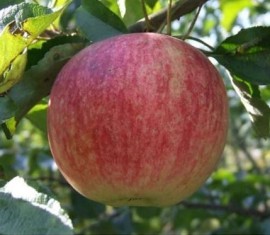
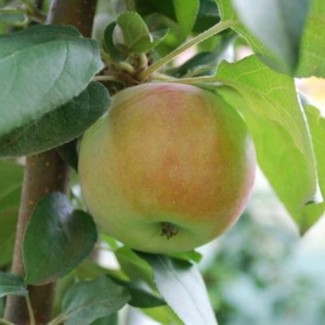
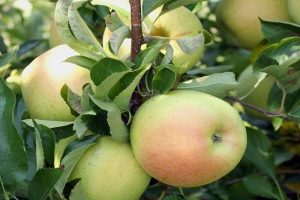 The fruits are considered medium-sized, typically weighing between 140 and 170 grams. However, with proper care and timely fertilizing, they can reach 220 to 260 grams on young stems. Their shape is round or round-conical, slightly turnip-shaped. Ribbing is subtle, visible only at the calyx; there is no lateral seam.
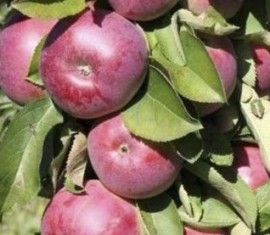
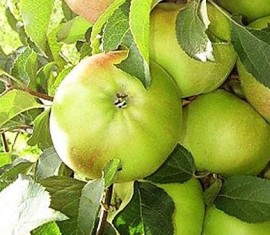
The skin is dense, fairly thick and firm, smooth, shiny, glossy, and dry. When fully ripe, it becomes covered with a loose, slightly bluish waxy coating. Its base color ranges from light green to light yellow or lemon. There is a blush, spotted and diffuse, sometimes slightly streaked, speckled, and of a crimson-red, red, or reddish-brown hue. Subcutaneous spots are few and light, barely noticeable. To assess the chemical composition, it is useful to know the following data per 100 grams:
- P-active substances (catechins) – 212 milligrams.
- Ascorbic acid (vitamin C) – 18.5 milligrams.
- Total sugars (fructose) – 9.2%.
- Pectins (fiber) – 14.4%.
- Titratable acids – 0.82%.
Snowdrops are distinguished by their dense, intensely aromatic, juicy, fine-grained, crisp, fresh, and prickly flesh. It's most often snow-white, but can have a slightly lemony flavor. The flavor is considered dessert-like, sweet and sour, harmonious, and balanced. Professional tasters rate it 4.3 out of 5.
Snowdrop apple tree: characteristics
Crown and root system
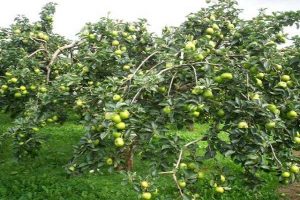 The tree is a natural dwarf, which can hardly grow up to 1.5-2 meters, very rarely up to 2.5The crown is flat-horizontal, flat-rounded, spreading-weeping, and of low to moderate density. The shoots are thin, long, and vine-like, often directed laterally or downwards, covered with light-brown or greenish-brown bark, requiring regular pruning and support. They are positioned at a right angle to the trunk. Fruiting is concentrated on the previous year's growth.
Snowdrop leaves are fairly large, oval-rounded, elongated, leathery, dense, highly glossy, and shiny. The tips are short and pointed, and the margins are doubly serrated, serrate-crenate, and sometimes slightly wavy. The root system is superficial, fibrous on most suitable rootstocks, highly branched, and poorly adapted to water-seeking.
Productivity and pollination
For a natural dwarf variety, the yield can be called outstanding.
With good care and favorable growing conditions, one adult tree of the Snowdrop variety can produce up to 70-85 kilograms of delicious and beautiful apples.
Apple trees are self-sterile, so they won't produce any fruit unless there's another variety within 40-60 meters of the tree that blooms at the appropriate time. On a commercial scale, it's common to plant pollinators at a rate of one per 40-50 square meters; in a private plot, you can simply interplant different varieties. It's a good idea to spray flowering apple trees with sugar or honey syrup, or to use mobile apiaries.
Winter hardiness and disease resistance
Its high tolerance to low temperatures makes the Snowdrop an excellent choice for the harsh regions of our country. It can easily withstand temperatures as low as -39°C to -42°C, even without significant damage during prolonged periods. With a creeping crown, it can be grown even in Siberia and the Far North. However, proper winter preparation and covering are essential. While the trunks are drought-tolerant, fruit quality can decline significantly without supplemental irrigation.
Resistance to parasitic and fungal infections is average, but trees are affected, for example, scab, quite rarely, if they are properly cared for. With regular spraying, the risk of disease is virtually zero. It's crucial to follow all the advice and recommendations on agricultural technology to get the most out of your garden.
Rootstocks and subspecies
There are no subspecies of apple trees, but they can be grown in various variations. For example, there are superdwarf varieties that barely reach 1-1.5 meters. A creeping (creeping) crown is an option for particularly cool regions. All of this has virtually no effect on the quantity or quality of the fruit produced.
Features of growing snowdrops
 Landing
 Landing
Basic conditions
- Like all apple trees, the Snowdrop prefers open, sunny locations where the crown receives maximum sunlight. Trees can grow in the shade, but they will bear fruit poorly or not at all.
- Ventilation in the planting area must be carefully managed. It should be well-ventilated, but drafts are unacceptable, otherwise the trees will die.
- Groundwater levels aren't critical for this variety, as its rhizomes are shallow. Therefore, these trees can be planted even near a river, stream, lake, or shallow well. However, it's not advisable to locate the garden in a marshy area, as this can lead to the development of numerous diseases.
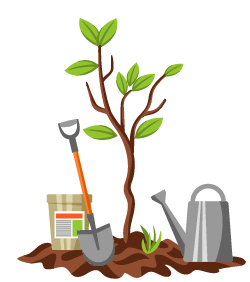
- Prepare the holes for snowdrop planting at least 4-6 weeks in advance, digging them 60-70 centimeters deep and 80-90 centimeters wide and long. Add some soil to the bottom, mixing it with minerals and organic matter. Then add rocks, broken brick, or vermiculite for drainage and fill with 25-40 liters of water. The holes should be left outdoors without covering them.
- You can leave a distance of 1.5-2 meters between trees, and make the distance between rows 2-3 meters, for ease of garden maintenance.
- To preserve the rootstock's properties, leave the seedling's root collar above the soil surface. Allowing for post-planting settlement, it's advisable to leave 5-7 centimeters.
- Trellis or stakes are driven directly into the hole, preferably on the north side of the tree trunks, then they will also protect from frost.
- The drainage material is raked into a pile in the center of the hole immediately before planting. The tree is placed on it, its rhizome spread out, covered with soil, and gently compacted by hand. The first watering requires approximately 30-40 liters of water.
Landing dates
Spring planting (April-May) is preferable for snowdrops, as it reduces the risk of damage from recurrent frosts. However, if the region's climate is moderate or warm, autumn planting (September-October) is also suitable. If you're late and the trees have already been purchased, it's acceptable to bury them at a 45° angle until they become warm.
Tree care
 Tree care
Protection from frost and pests
Trees are highly winter-hardy, but proper preparation and protection for the cold season are essential, especially for young trees. Therefore, watering is gradually reduced from mid-August, and stopped completely by September. Snowdrops are low-growing, so they can be easily covered from rootstock to tip using a tent-like method, or the trunk can be wrapped in burlap, roofing felt, or straw bales. In the harshest conditions, you can pile up soil or add spruce branches.
There are many commercial insect repellents available at gardening stores. However, many prefer the old-fashioned method of whitewashing tree trunks with lime to prevent pests from settling in the bark crevices. Strong-smelling substances such as fuel oil, rendered animal fat, and grease will also protect against rodents.
Loosening the soil, watering: proper agricultural technology
The shallow root system prevents deep digging around the tree, but regular loosening of the soil is necessary. Otherwise, the shoots will not receive oxygen and moisture from the surface. You can dig half a spade deep twice a year, and hoe the rest of the time.
Snowdrops will need to be watered regularly; they'll struggle to find enough water on their own, especially in dry and hot years. Apply 10-15 liters twice daily, every ten days. Irrigation and drip irrigation will eliminate the hassle of applying moisture. The day after regular watering, lightly loosen the soil to prevent it from becoming a compacted lump.
Pruning: simple crown shaping
Pruning will help achieve the most comfortable tree shape, and its climbing branches respond well to pruning. You can create a small, rounded tree, a creeping vine (arctic, minusinsk, melon), a bush-shaped tree, or a bush-and-plate tree.
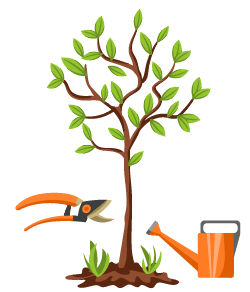
During sanitary pruning, duplicate branches, upward-protruding, dry, diseased, and broken ones are removed. These won't bear fruit, but the tree is still draining sap. Pruning is done in the fall after the sap has died down, and the branches are shaped in the spring, before bud break. The cut areas are sealed with paint or garden pitch.
Pollinator varieties
- Sokolovskoye.
- Currency.
- Carpet.
- Youth.
- Down to earth.
- Ranets.
- Minusinsk.
Diseases and pests
- Scab.
- Cytosporosis.
- Fruit rot.
- Powdery mildew.
- Scale insect.
- Leafhopper.
- Fruit hyacinth.
- Hawthorn.
- Green aphid.
- Leaf roller.
Ripening and fruiting of snowdrops
The beginning of fruiting
 The beginning of fruiting
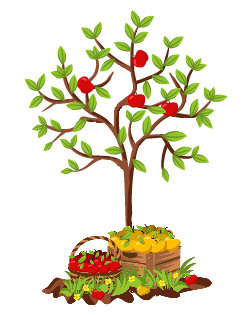
All dwarf trees are extremely early fruiting, so the first harvest can be harvested as early as 2-3 years after planting in open ground. The tree may produce buds and even bloom earlier, but it's best to pluck them before they form ovaries. More than half of these will likely be barren flowers, and the tree needs time to develop its rhizomes and foliage.
Flowering time
The tree blooms mid-season, around mid-May. By late April, buds, quite large and a rich crimson hue, appear on the branches. After some time, they open into large flowers with fleshy petals, a soft pink or snow-white. Flowering lasts 10-14 days, during which time pollination usually occurs.
Fruiting and growth
Trees grow very quickly, 50-70 centimeters per year, reaching their full height within a couple of years. The active lifespan of an apple tree is short, only 20-25 years, after which the trees will need to be replaced. Fruiting is abundant from the first years, with no regularity; each year, the Snowdrop produces a reliably good harvest of fruit. By the sixth or seventh year, fruitfulness peaks and remains so for the rest of the tree's life.
Ripening begins around mid-September, sometimes earlier, sometimes later. The fruits ripen uniformly, in a single wave, so they can be picked at once. Technical and consumer ripeness coincide, and the apples do not require aging for improvement. They are best transported in boxes with two or three layers and stored in a special refrigerator Store in a cellar at a temperature of 4-6°C. Ensure that the humidity in the room does not fall below 50-60%. The fruits retain their nutritional qualities until approximately January-February, after which the flesh loses its firmness, and the taste becomes sour, crumbly, and unpleasant.
Top dressing
- Superphosphate.
- Humus.
- Peat.
- Calcium.
- Manure.
- Compost.
- Nitrogen complexes (not in the first 4 years).
What to do if it doesn't bloom or bear fruit
- Increase watering.
- Remove insects.
- Cure diseases.
- Fertilize.
- Move to a sunny place.
Why do apples fall?
- Wind, rain, hail, snow.
- Pests or diseases.
- They are very overripe.
Leave a review of the Snowdrop apple tree variety so that even a novice gardener can receive useful information firsthand.