Dreamer apple tree: characteristics of the variety and care
| Color | Reds |
|---|---|
| Ripening season | Summer |
| Size of apples | Average |
| Taste | Sweet |
| Crown type | Average tree height |
| Shelf life | Low shelf life |
| Application | For recycling , Fresh |
| Winter hardiness | High winter hardiness |
| Fruiting age | From 5 years old |
 History of origin and regions of growth
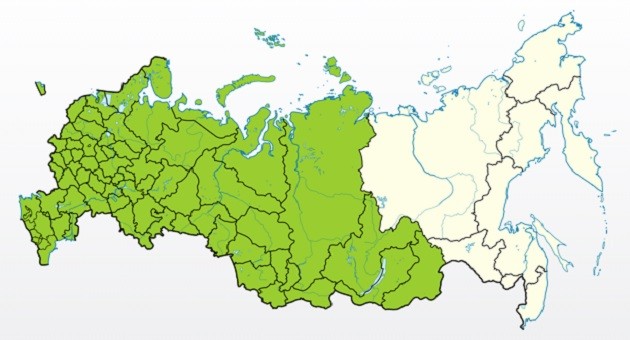
Growing regions
- Middle zone.
- Moscow region.
- Ural.
- Siberia.
- North Caucasus.
- Leningrad region.
- Crimea.
- Urals and Trans-Urals.
- Some northern regions.
Origin
The variety was created relatively recently, so it is not yet listed in the State Register of Breeding Achievements and has not been officially zoned. It was developed in Yekaterinburg under the guidance of renowned Russian scientist and breeder Leonid Andrianovich Kotov, a professor at the Sverdlovsk Horticultural Breeding Station of the Russian Academy of Agricultural Sciences. The parent varieties were Skoroplodnoe Zimnee and Yantar.
The first seedling was obtained at the beginning of the twenty-first century. It was only submitted for variety testing in 2005. While the new apple tree has not yet been fully studied, its outstanding properties and qualities have already won the hearts and gardens of many gardeners in the Sverdlovsk region and far beyond.
Content
Description of the Dreamer variety
 The tree is medium-sized, with a compact and attractive, rounded crown. It develops vigorously, growing fairly quickly and reaching fruiting age. Dreamer is resilient to various weather and climate conditions, withstands even the most severe frosts, and requires little care or special growing conditions. It produces good harvests regularly, without needing to rest, and has strong immunity to scab and other diseases.
The fruits ripen to fairly large, nearly uniform sizes. They are attractive in appearance, have high commercial quality, are aromatic, tasty, juicy, and transport well over long distances, with a long shelf life. They are recommended for both individual cultivation and intensive commercial gardens.
Apples: What do they look like?
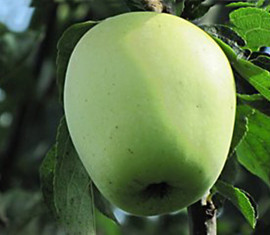
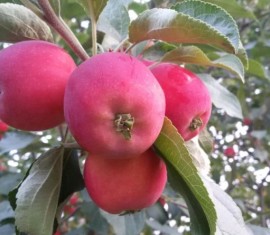
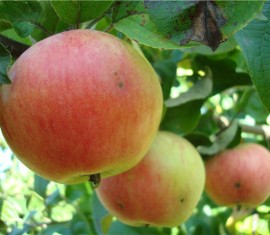
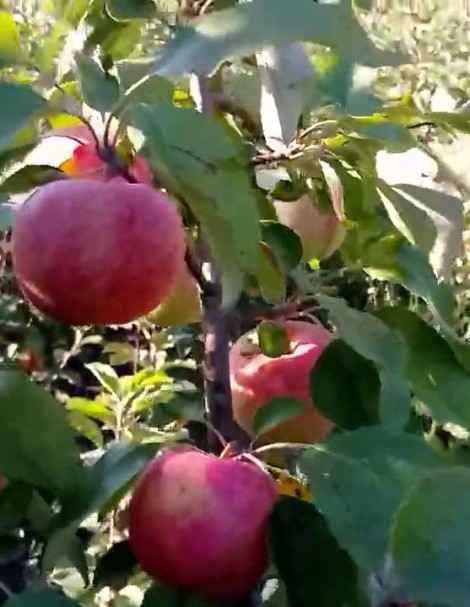
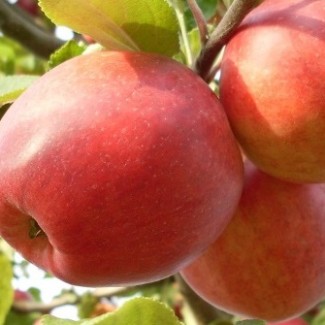
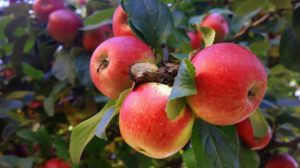 The fruits are uniformly sized, medium to larger than average. They easily weigh 110-130 grams, but in some cases can exceed 140-160 grams. The shape is round, usually spherical, but can be slightly elongated. They are symmetrical, with subtle ribbing and a complete absence of a side seam.
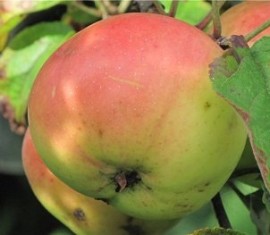
The skin is smooth, medium-dense, thin, yet strong and elastic, glossy, and shiny. When fully ripe, it may have a silvery-blue waxy-oily coating. The base color is green or greenish-green, becoming increasingly golden or golden-white as it ripens, and is rarely plump.
The blush can be dense, spotty, raspberry-pink, pink, or slightly reddish. Upon closer inspection, translucent streaks and specks can be detected. Subcutaneous dots are large but not densely spaced and light in color. To understand the chemical composition, it is customary to evaluate several individual parameters:
- P-active substances (catechins) – 342 milligrams.
- Ascorbic acid (vitamin C) – 14.2 milligrams.
- Fructose (total sugars) – 11.5%.
- Pectins – 9.2%.
- Titratable acids – 67%.
- Dry matter – 13.9%.
The flesh is fine-grained, crisp, and easy to peel. It is medium to firm, with a very pleasant, refreshing texture. It is yellowish or yellow-white in color, and can be slightly creamy or bright lemony. The flavor is sweet and sour, with a clear predominance of sweetness. It is considered harmonious and balanced, and is considered a dessert fruit. Experts give the Dreamer 4.7-4.8 out of 5 stars for taste and appearance.
Apple tree Dreamer: characteristics
Crown and root system
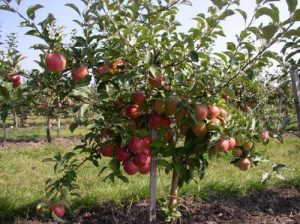 The variety's growth rate and vigor are considered average. It is a small, compact tree, reaching a maximum height of approximately 4.6-5.2 meters even without pruning. When young, the crown is pyramidal or elongated oval, sparse, but with age it becomes more rounded, broadly oval, and can even become drooping, spreading, and weeping. The shoots are medium-thick, straight, and round in cross-section, covered with reddish-brown and brownish-green bark with light pubescence.
The leaves are large, beautiful, and glossy, dense, leathery, and quite thick. They are short-pointed, with a crenate-serrate margin, finely serrated, and sometimes folded into a boat-like shape. The leaves are green or rich green, sometimes emerald or dark green. The root system is well-developed, adapted to seeking water and nutrients in the soil, fibrous, and branched, covering an area up to 6-8 meters in diameter.
Productivity and pollination
The tree's fertility rate is considered high, especially considering the compact size of the trees.
From one mature Mechtatelnitsa tree, good growers typically harvest approximately 85-120 kilograms of fragrant, sweet fruit per season. More precise figures will depend on various external factors, such as weather, climate, watering, fertilizing, and so on. Experimental growers report that they have even harvested 130-150 kilograms of fruit per tree in some years..
Experts consider the apple tree conditionally self-fertile, as it can yield approximately 15-20% of its potential yield even without external pollinators of suitable varieties. However, such results are unlikely to satisfy anyone, so it's common to plant standard apple trees interspersed. It's helpful to bring mobile apiaries into the garden during flowering, and to treat the trees themselves with sugar or honey syrup.
Winter hardiness and disease resistance
The Mechtatelnitsa's frost resistance makes it a sought-after variety in many regions, including Siberia, and some even manage to grow it in the Far East. It easily tolerates temperatures as low as -32-35°C with proper winter preparation. Even when temperatures drop for extended periods (more than 3-4 weeks), or in spring and fall, fluctuating from warm during the day to a sharp drop at night, the apple tree suffers no noticeable damage.
Scab resistance is due to genetic immunity, which gardeners often cite as a key factor when choosing varieties for planting in humid regions. The tree also exhibits resistance to other diseases, such as powdery mildew or black crayfishHowever, this does not mean that preventative measures such as spraying with fungicides and insecticides can be abandoned.
Rootstocks and subspecies
This apple tree is new, so it's too early to talk about subvarieties or subspecies. It is cultivated on various rootstocks, which may impart certain properties, such as greater winter hardiness, a compact crown, and slightly larger fruit size. Columnar varieties or creeping subspecies of Mechtatelnitsa are not yet known.
Features of growing Dreamer
 Landing
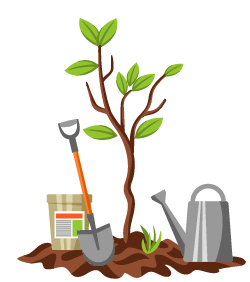 Landing
Basic conditions
- An open, well-ventilated, and sunny location is best for this variety. In the shade, apple trees grow poorly, become weak, sickly, and may not even bloom for decades. Without proper ventilation, fungi and insects can thrive in the crowns, but drafts should be avoided.
- It's best to have groundwater levels at least 2-2.3 meters below the surface. Otherwise, trees will root down into the groundwater and rot.
- Almost any soil is suitable, but choose loose, well-moistened soil that is not excessively wet. Apple trees dislike acidic or salty soils; these will need to be neutralized first before planting.
- The Dreamer prefers to have the holes prepared in advance, no later than 3-4 weeks before planting, or even better, the previous season. They are dug 60-75 centimeters deep and up to 80-90 centimeters in diameter, filled with soil and fertilizer at the bottom, followed by drainage if needed or another layer of soil, and filled with water (35-50 liters). The holes are left uncovered to mature.
- You can immediately dig in or drive in special stakes to tie the seedling to. These will provide support and protection from cold winds if placed on the north side.
- Root collar always remains above the surface, for the Dreamer 5-7 centimeters are enough so that it does not take root higher.
- Leave at least 3.5-4 meters between trees, and 5-6 meters between rows. This will make garden maintenance and fruit harvesting easier, and will also prevent root or crown conflicts between apple trees.
- Place the seedling in the center of the hole, sprinkle it with soil, compact it, water it with 30-40 liters of water, the surface mulch.
Landing dates
Dreamflower is best transplanted to the soil in the spring. This way, it has time to root well over the summer, adapt, and get used to its new environment. In warmer southern regions, it can be planted in the fall after the leaves have fallen, but it's important to allow at least 21-30 days before frost.
Tree care
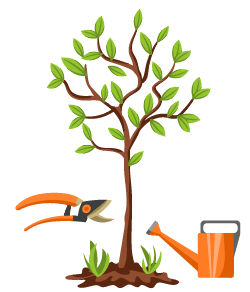 Tree care
Protection from frost and pests
The tree is resistant to low temperatures, but without any care it can still suffer severe damage or even die if the weather turns unexpectedly harsh. Therefore, it is essential to take measures to prepare and protect it. It is customary to stop watering midway through August The tree is planted in the spring or early September, allowing time for the sap to stop flowing in the trunk. The trunks are wrapped in burlap, agrofibre, tights, or roofing felt. Spruce branches or straw are thrown over the roots; in particularly harsh areas, soil is raked up, and the tree is wrapped in a tent-like covering.
Whitewashing in late fall and early spring will help get rid of insects that have settled in bark cracks for the winter. To prevent rodents from gnawing at apple tree shoots and bark, generously coat the trunks with lard, fuel oil, or grease. Commercially available treatments, readily available at any gardening store, are also helpful.
Loosening the soil, watering: proper agricultural technology
This apple tree doesn't want the soil around its trunk to compact into a tight ball, more like asphalt or stone. Therefore, it needs to be dug in the spring and fall, and carefully hoeed in between, removing weeds and root suckers. This is especially important the day after watering, as this compacts the soil.
The Dreamer doesn't need to be watered often; only 4-5 times during the growing season is enough. However, it should be generous, at least 45-60 liters per mature tree. The soil should be moist to a depth of at least 11-15 centimeters. Fertilizers are also conveniently applied with water; the apple tree will absorb them more easily.
Pruning: simple crown shaping
In most cases, a broom-shaped or sparsely tiered form is suitable for this variety. In both cases, the branches are spaced widely apart and always at different heights. Young trees from nurseries are often already pruned, so shaping should begin 1-2 years after planting, along with the first fertilizing. Simply maintain the chosen pattern by pruning shoots growing upward or inward.
Sanitary pruning is done in the fall and spring, removing all obviously unnecessary shoots. These include dead, damaged, or diseased ones. They won't be of any use, but they draw sap from the tree, so it's best to get rid of them. From the 14th to the 17th year, rejuvenation can be performed by cutting off two or three mature branches every few years.
Pollinator varieties
- Cinnamon striped.
- Folder.
- Melba.
- Korobovka.
- Borovinka.
- Sinap northern.
- Augusta.
- Cheburashka.
Reproduction
- Grafting by cuttings.
- Growing from seeds.
- Layers.
Diseases and pests
- Cytosporosis.
- Rust.
- Powdery mildew.
- Pit bitterness.
- Green aphid.
- Copperhead.
- Flower beetle.
- Codling moth.
- Scale insect.
Ripening and fruiting of the Dreamer
The beginning of fruiting
 The beginning of fruiting
This variety is considered an early-ripening variety, but there are much faster apple trees. The first flowers appear in the third or fourth year, but these are mostly empty blossoms, and in reality, only two or three apples may ripen per tree. Therefore, experienced growers pluck all the first blossoms to allow the tree time to develop foliage. The first proper harvest occurs in the fifth or sixth year, when the tree has at least somewhat matured. At this point, you can expect to yield 4-8 kilograms of fragrant and beautiful fruit.
Flowering time
In the first ten days of May, when apple trees bloom en masse, the Dreamer also opens its buds. A more precise determination can only be made experimentally, as the timing is influenced by weather, climate, region, and factors such as glaze Fertilizers, wind, rain, and other factors. The flowers of this variety are large, very delicate, and beautiful, gathered in clusters of 5-8, snow-white or pinkish in color, and intensely fragrant.
Fruiting and growth
The apple tree grows very quickly, reaching approximately 65-75 centimeters in height in a single season before fruiting begins. Once it begins bearing fruit, the growth rate slows, but the desired 35-50 centimeters are still achieved. Therefore, the tree quickly reaches its maximum height and begins producing a full harvest. By the 8th to 10th year, under favorable conditions, it can harvest over 100 kilograms.
These apples are summer apples, so you can enjoy their unique flavor as early as late July or early August. Everything depends on the weather. If the summer is rainy and cold, ripening can last until September. This variety boasts a long shelf life in the refrigerator or cellar, compared to other similar varieties. They can be stored well for 45-65 days without losing their marketability.
Top dressing
- Compost.
- Manure.
- Superphosphate.
- Ammonium nitrate.
- Chicken manure.
- Dolomite flour.
- Wood ash.
What to do if it doesn't bloom or bear fruit
Why do apples fall?
- Natural weather conditions (wind, rain, hurricane, hail).
- Pest damage.
- Overripe.
- Diseases.
Share your own experience with the Dreamer apple variety so that any gardener can learn about it before planting and achieve maximum results.