Apple tree Molodezhnoye: characteristics of the variety and care
| Color | Reds |
|---|---|
| Ripening season | Autumn |
| Size of apples | Average |
| Taste | Sweet and sour |
| Crown type | Average tree height |
| Shelf life | Average shelf life |
| Application | For recycling , Fresh |
| Winter hardiness | Average winter hardiness |
| Fruiting age | Up to 5 years |
 History of origin and regions of growth
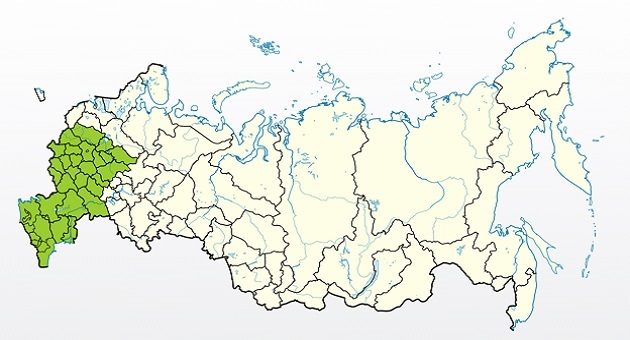
Growing regions
- Central Black Earth Region.
- Middle zone.
- Moscow region.
- North Caucasus.
- Crimea.
- Volga region.
Origin
The new variety was developed by the Federal Research Center "All-Russian Institute of Plant Genetic Resources named after N.I. Vavilov." It was created by crossing the Zhigulvskoe apple tree with the Boken apple tree at the Far Eastern Experimental Station. The authors of the Molodezhnoe (Malychenkovskoe) variety are credited to L.N. Balandina and V.V. Malychenko. The seedling was first obtained in 1964.
In 1984, the apple tree was submitted for official testing and classified as an elite variety. By 1988, it was decided to include it in the State Register of Breeding Achievements and zone it in the Volga and Central Black Earth regions. It can be successfully grown throughout the central part of Russia, far north and south; some even cultivate trees in the Urals or Western Siberia. Currently, there is no official registry entry for this variety.
Content
Description of the Molodezhnoe variety
 Apple trees have quickly become a common sight in many gardens because they truly have many advantages. They are highly environmentally resilient and thrive in virtually any conditions, are unfazed by polluted city streets, are easy to care for, and require little moisture or soil. They also don't grow too quickly or become excessively large, occupying large areas.
The fruits are large and attractive. They are rosy, fragrant, and delicious. They can be transported long distances or stored in a cellar for quite a long time. This variety is suitable for intensive commercial gardens, but is also recommended for home gardening.
Apples: What do they look like?
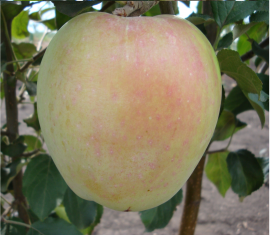
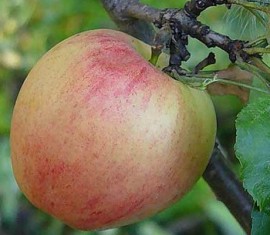
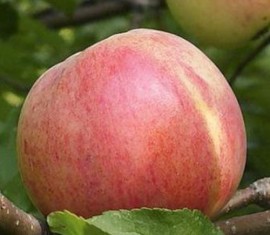
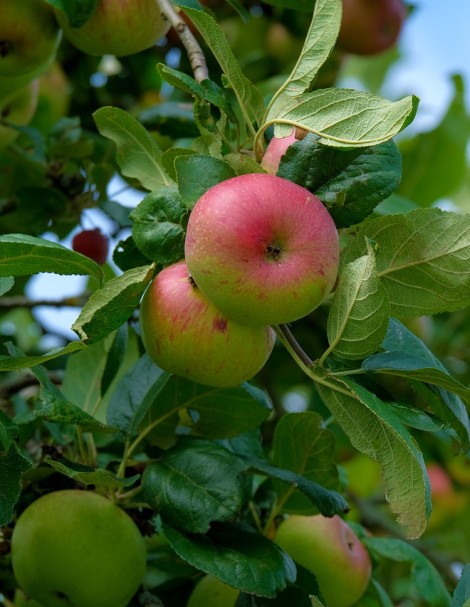
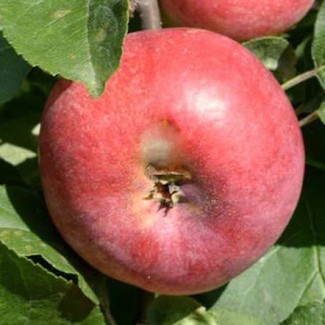
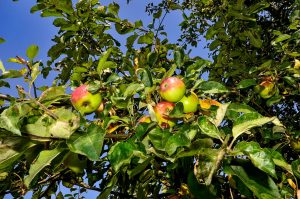 The fruits are larger than average, but usually large, weighing up to 150-230 grams. They are round or slightly rounded-conical in shape, smooth, with wide, prominent, though very flattened, ribs. They are uniform in size and can be symmetrical, but are more often slanted to one side.
The skin is strong, thin, yet elastic and offers good protection from mechanical damage, although not thick. It is smooth and shiny, and may develop a slight waxy coating during ripening, giving the apples a slightly bluish tint.
The base color is light green or light green, sometimes with a yellowish tint. The underlying blush is blurred and spotted, streaked, and mottled, and may be slightly striped, but generally has a uniform, lighter undertone on a darker skin. It is deep, red, or carmine red, and can be dark red, beetroot, or even reddish-brown, typically covering at least 85-95% of the skin's surface. Subcutaneous dots are large and small, uniform, and light in color, clearly visible on dark, speckled apples. Professionals recommend assessing the chemical composition by comparing the following data:
- P-active substances (catechins) – 128 milligrams.
- Ascorbic acid (vitamin C) – 9.2 milligrams.
- Fructose (total sugars) – 12.7%.
- Pectins – 15.7%.
- Titratable acids – 0.58%.
Molodezhny has a very pleasant texture. It's crisp and prickly, yet very juicy, tender, and fine-grained. It's most often snow-white or slightly creamy yellow, yellow, or even lemon-colored. It has a dessert-like flavor, sweet and sour with a hint of sweetness. The aroma is powerful, with a distinctive tartness. Experts rate it 4.4-4.7 out of 5 possible points.
Apple tree Molodezhnoe: characteristics
Crown and root system
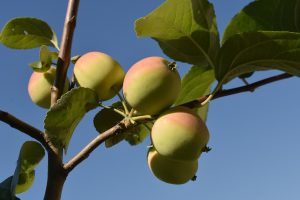 This medium-sized tree is distinguished by its moderate growth force. It can reach a height of 4.5-5 meters, but only produces 15-25 centimeters per year.The crown is round or oval-rounded, drooping, spreading, and becomes weeping with age. The shoots are long, thick, slightly curved, and set at right angles to the conductor. They are covered with gray or gray-brown bark that cracks and peels. Fruiting is concentrated on the rings, fruiting twigs, and spears (mixed).
The leaves are light green or deep green, bright, attractive, glossy, slightly wrinkled, and have a felt-like pubescence on the underside. They are oval or slightly oval-elongated, with serrated, crenate, and serrated margins and flat, moderately pointed tips. The root system is medium deep, and on wild specimens can be taproot, but is mostly fibrous. It is not very susceptible to frost and is poorly adapted to seeking water.
Productivity and pollination
Malychenkovskoye is considered a high-yielding variety, since with proper care it can easily compete even with the notorious Antonovka.
Thrifty growers typically harvest at least 220-250 kilograms of fragrant, beautiful apples from a single tree per year. In favorable years, with regular watering, fertilizing, and timely and proper crown pruning, these figures can easily exceed 290-300. Some farms, with standard planting density, have achieved 1.5-2 tons per hectare..
The variety is self-sterile, even completely sterile to itself. Therefore, to form ovaries and fruit, it requires external pollinators that are suitable for the flowering period. Ideally, they should be spaced no further than 45-60 meters apart, otherwise the wind will definitely not work. Many experienced gardeners plant Molodezhnoye interspersed with other varieties, 4-5 meters apart.
Winter hardiness and disease resistance
This variety was developed as a tree for the Far East, but it is not particularly tolerant of low temperatures. Even with temperatures down to -22-27°C, the variety is not affected by extremely high humidity levels. At 85-90% humidity for a short period of no more than 1-2 weeks, even the delicate buds are undamaged. Protecting the trees from frost and properly preparing them for winter is still necessary; this will prevent future problems.
Molodezhny has a high resistance to apple diseases. It is rarely affected. scab or powdery mildew, cytosporosis or moniliosisHowever, without mandatory preventative treatments, trees can suffer serious damage during years of severe epiphytotics. However, the foliage is most often affected, while the fruit remains suitable for processing or fresh consumption.
Rootstocks and subspecies
The variety doesn't yet have any subspecies, and judging by its exclusion from the State Register, it's unlikely they will appear. There are no columnar or dwarf varieties, and it's also impossible to train the variety as a creeping tree, although it's quite adaptable to other shapes. It can be grown on various rootstocks, including dwarf and semi-dwarf ones, which reduces the tree's height slightly.
Features of growing Youth
 Landing
 Landing
Basic conditions
- Almost any soil is suitable for apple trees, except for highly acidic or salty soil.
- It is best to choose sunny, open areas, since in the shade the trees grow thin, weak, and will never begin to bear fruit, refusing to bloom at all.
- Drafts should be avoided; they may not be severe, but they still have a negative impact on seedlings, especially in the first few years after planting. Therefore, plantings should be done under the protection of taller trees, fences, and building walls.
- Groundwater levels play a role in Molodezhny. They shouldn't be too deep, but they shouldn't be above 2-2.2 meters either. In the former case, trees may suffer from a lack of moisture, while in the latter, roots may begin to rot.
- Prepare the holes in advance, digging 60-70 centimeter deep and up to 1 meter in diameter, at least 2-4 weeks before planting. This can be done the season before planting, allowing the plants to mature better. Fertilizer is added to the bottom, then drainage is added, water is added, and the holes are left uncovered.
- Leave approximately 3-4 meters between trees to prevent crown or rhizome conflicts between mature trees. A slightly larger distance, up to 5 meters, can be left between rows, which will simplify harvesting and regular maintenance.
- Stakes are dug or driven into the holes to support the trees. They can be removed only in the fourth or fifth year, when the apple tree is well established and no longer susceptible to wind damage. A stake driven into the north side provides additional frost protection.
- Place the tree in the hole, supporting it with one hand, then fill it with soil and compact it by hand. It's important to ensure there are no air pockets around the roots. Water the tree with 30-45 liters of water, and mulch the surface to further retain moisture.
Landing dates
The tree is frost-hardy, but not excessively so, so the optimal time for planting is spring, around late March or early April. It's important to choose a time when the soil has warmed up well, there's no threat of frost, but the sap in the trunks hasn't yet begun to flow. In warmer regions, such as Crimea or the North Caucasus, trees can be planted in the fall, after the leaves have fallen, when there are still 3-4 weeks before frost sets in.
Tree care
 Tree care
Protection from frost and pests
To prepare for winter, stop watering no later than mid- or late August, or at the latest by early September, depending on the growing region. This will allow the sap to flow in time. The trunks are wrapped in suitable materials, from burlap to roofing felt, and the root area is covered with straw, hay, spruce branches, and even soil. All this should be removed in early spring before the buds swell.
To protect the bark and shoots from rodents, coat the lower part of the trunk with grease, fuel oil, or lard. These will repel them, but commercially available products can also be used. Trees are whitewashed twice a year, in early spring and late fall. It's a good idea to clean the trunk with a stiff brush beforehand to remove any cracks where insects can nest.
Loosening the soil, watering: proper agricultural technology
The tree trunk area should be dug at least twice a year. It's also a good idea to time this with spring and fall maintenance. At this time, weeds, plant shoots, and root suckers are removed, and all debris, fallen leaves, and apples should be collected immediately around the trunks. During the growing season, hoe the soil as needed, for example, the day after watering, to prevent it from compacting into a hard lump.
Trees need to be watered frequently during hot and dry periods. At least once every 10-12 days is ideal. If there's precipitation, count the time from that date and water again. Young seedlings are watered in this manner throughout the first and second years, and then approximately 6-9 times per season can be achieved. Fertilizers and fertilizers are added at the same time, diluted with water for better absorption.
Pruning: simple crown shaping
The Malychenkovskoye, like most other apple trees, prefers a sparse, tiered form, with skeletal shoots spaced widely apart and at varying heights. It doesn't tend to become overgrown, so maintaining it in good condition is easy. The tree responds well to training and can be molded into virtually any shape, from a cordon to a bowl or broom.
In spring and fall, a sanitary pruning is performed, cutting off all dry, diseased, damaged, or diseased branches. It is also customary to remove any branches that protrude into the crown or vertically upward. The cut areas are sealed with soil, garden varnish, or oil-based or water-based paint.
Reproduction
- Growing from seeds.
- Budding.
- Kidney grafting.
- Clones.
- Grafting by cuttings.
Pollinator varieties
- Antonovka.
- Jonared.
- Snow Calville.
- Lithuanian pepinka.
- Ligol.
- Delicious golden.
- Miltosh.
Diseases and pests
- Powdery mildew.
- Scab.
- Bacterial burn.
- Moniliosis.
- Cyosporosis.
- Black crayfish.
- Hawthorn.
- Aphid.
- Scale insect.
Ripening and fruiting of the Youth
The beginning of fruiting
 The beginning of fruiting
This variety is considered an early-bearing variety, as the first harvest can be obtained as early as 4-5 years after planting. It won't produce large quantities of fruit, but they will weigh approximately 3-5 kilograms, which is enough to give you an idea of the variety's characteristics.
Flowering time
Apple trees bloom in mid- to late May, but sometimes a little earlier or later. This is directly influenced by the region's climate and the weather in a given year. The buds are usually red or even beetroot pink, but as they open, they turn pale pink, slightly reddish, or white with red veins. They are fragrant, clustered in dense clusters, and cover the branches. The tree blooms for approximately 10-16 days, sometimes a little longer in cool and rainy weather.
Fruiting and growth
The tree doesn't grow very quickly, so it will take 10-12 years, or even longer, for the crown to reach its full potential. Fruit yields will also increase gradually, increasing only slightly from year to year. Around the 15th to 18th year, fruiting will reach its full potential, reaching its peak. So, be patient. This fruiting will remain so for another 40-65 years, so the wait will be well worth it.
The fruits ripen in the first half of September, sometimes in the middle or even at the end of the month. Everything depends on the regional weather and climate. In some areas, harvesting is common as late as mid-October. Fortunately, the fruits hold very well to the branches and only fall if they become diseased, infested with parasites, or shaken off mechanically. Unpicked apples can hang on the tree even after the first frost. They can be stored in a cellar or refrigerator for up to 2-3 months, travel well, and are suitable for making juices, compotes, and jams.
What to do if it doesn't bloom or bear fruit
- Transplant into the sun.
- Protect from drafts.
- Limit or activate watering.
- Eliminate pests.
- To stop diseases.
Why do apples fall?
- Weather phenomena.
- Pests or diseases.
Top dressing
- Manure.
- Compost.
- Humus.
- Superphosphate.
- Chicken manure.
- Mineral and nitrogenous complexes.
- Ammonium nitrate.
Share your own experience with the Molodezhnoye apple tree variety so that even novice gardeners have no questions about cultivating these trees.