Nedzvetsky apple tree: characteristics of the variety and care
| Color | Reds |
|---|---|
| Ripening season | Autumn |
| Size of apples | Small ones |
| Taste | Sweet and sour |
| Crown type | Tall tree |
| Shelf life | Low shelf life |
| Application | Ornamental tree , Fresh , For recycling |
| Winter hardiness | High winter hardiness |
| Fruiting age | From 5 years old |
 History of origin and regions of growth
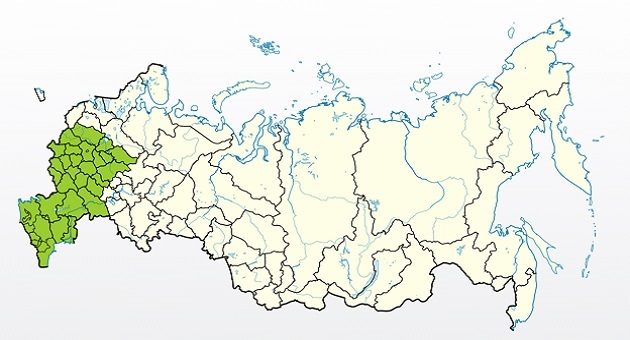
Growing regions
- Middle zone.
- Some northern regions.
- Crimea.
- North Caucasus.
Origin
The variety was discovered by Vladislav Efimovich Nedzvetsky, a Russian amateur botanist, explorer, writer, and traveler. At the dawn of the twentieth century, while traveling through the Chinese province of Xinjiang, he discovered a remarkable plant with red foliage and small fruits with pinkish flesh. The plant so captivated the botanist that he collected the fruits, removed the seeds, dried them, and took them home with him.
Some time later, Vladislav Efimovich gave these seeds to the renowned German breeder Georg Dieck. It was this scientist who planted and cultivated a new apple variety, which he named Malus niedzwetzkyana. Since then, this ornamental apple tree has spread throughout the world, and its subspecies are numerous and diverse.
Content
Description of the Nedzvetsky apple variety
 This apple tree immediately caught the fancy of gardeners due to its exceptional ease and undemanding nature. It is quite tolerant of low temperatures, as well as sudden fluctuations in temperature, high humidity, and drought. Accustomed to the variable climate of the Tien Shan, it easily adapted to the vast expanses of our country, delighting gardeners not only with its unusual appearance but also with the unique taste of its small, high-quality, and edible fruits, rich in vitamins, macro-, and microelements.
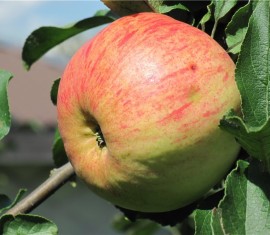
Apples: What they look like
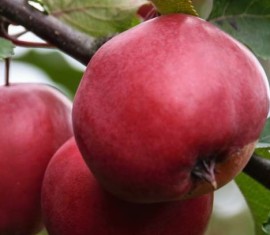
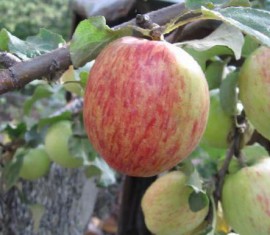
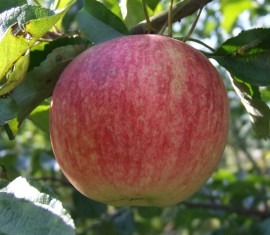
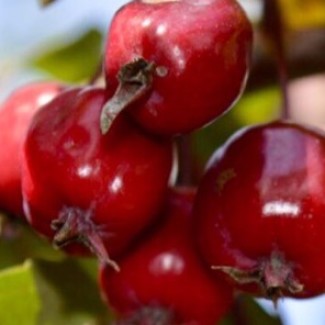
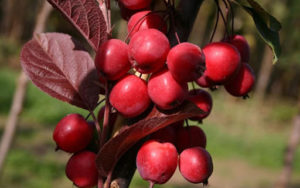 The fruits of this tree are predominantly small to very small. Their diameter does not exceed 2.5-3 centimeters, and their weight can range from 10-25 grams. With the right rootstock and timely feeding and fertilizing, larger fruits can be achieved, weighing up to 30-40 grams and reaching a diameter of up to 4-5 centimeters, but this is a difficult and thankless process. The apples are generally uniform, round, with slight ribbing, and may be slightly flattened.
The skin is very dense, thick, and rather rough, initially green, turning greenish-yellow over time. At maturity, 80-99% of the skin is covered with a blush of beetroot red or purple. Subcutaneous spots are numerous, gray or grayish-green, and difficult to see on the pod surface due to a dense, waxy, bluish-gray coating. The flesh is dense, firm, and crisp, pale pink or reddish in color, with a distinct astringent, slightly bitter flavor, reminiscent of wild berries.
Nedzvetsky apple tree: characteristics
Crown and root system
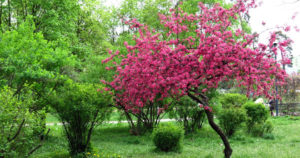 Trees of this variety are considered vigorous, although in gardens they usually grow only up to 6-8 meters, no more.However, in the wild, there are known cases of them stretching over ten meters. Such dimensions are usually excessive for landscape decoration, so owners control their growth through pruning. Depending on the subspecies, the crown can be pyramidal, dome-shaped, spherical, columnar, spreading, or broadly oval. It can cover an area of up to 5-6 meters in diameter, which should be taken into account when planning plantings.
The leaves are oval to elliptical, sometimes slightly elongated, with a long, pointed tip and a wavy, finely serrated edge. They are dense, predominantly shiny and glossy, leathery, and range in color from greenish-red to crimson to reddish-purple. The root system is medium-deep, highly branched, and adapted to seeking moisture.
Productivity and pollination
Although these apple trees are grown primarily for their beauty rather than for fruit, they can produce quite a substantial harvest. A single mature tree typically yields at least 35-50 kilograms of small, yet very beautiful and fragrant fruits. They cling tightly to the branches and can be a delight to behold even in the middle of winter, and also serve as food for birds during frosty weather.
The variety is relatively sterile. This means that a few solitary apples may form on the tree, but this is not a guarantee. For the flowers to develop into fruit, a pollinator is essential, and any apple tree with the appropriate flowering time can serve as such. Ideally, pollinators should be located no further than 50-100 meters from Nedzvetsky; an apiary nearby is ideal.
Winter hardiness and disease resistance
The apple tree, first discovered in the harsh conditions of the Tien Shan mountains, is distinguished by its exceptional resistance to low temperatures. It can easily withstand temperatures as low as -27-30°C, as well as sudden changes from thaws to severe frosts. At lower temperatures, or in the case of young tree trunks, it is best to protect them from frost using special methods.
Essentially, this variety is considered a wild apple tree, so it's not very susceptible to various apple tree diseases. These resilient trees are accustomed to any vicissitudes, and even after losing almost half their green mass, they can quickly recover completely, in just a couple of years. However, pests can pose a threat to the trees. They can be attacked by large colonies of aphids, weevils, leaf rollers, and hawthorn moths. However, with timely and regular insecticide treatments, there's no need to worry about insects.
Rootstocks and subspecies
The optimal option for growing this variety is to use wild Siberian or common wild apple tree rootstocks. This provides the rootstocks with additional winter hardiness and maximum protection against fungal infections and parasitic attacks. Ideally, scions or buds are grafted onto a wild Nedzvetsky apple tree rootstock, which is the tallest but also the most resilient variety, demonstrating the highest survival rate.
Features of growing Nedzvetsky
 Landing
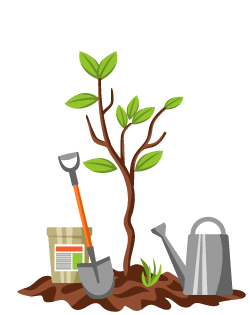 Landing
Key Features
- The planting site for this variety should be sunny, as it prefers its crown to be illuminated for most of the day. In the shade, apple trees become susceptible to diseases and can even dry out.
- Soil requirements aren't particularly critical, as Nedzvetskyi tolerates even fairly saline or extremely acidic soils with ease. Black soil, loam, clay, and sandy loam are all generally suitable for the tree. The only thing to consider is the depth of the groundwater. If it's higher than 1.5-2 meters, it's best to choose a different planting location.
- It's important to consider the width and volume of the tree's crown when planning your future garden, as only a few plants thrive in the shade, and this tree's crown occupies a large area. It's also important to understand that after 6-8 years, replanting a mature standard tree will be difficult, if not impossible.
- Tree holes should be prepared in advance, at least 2-3 weeks before planting. However, it's best to do this in the fall or spring. To do this, dig holes 70 centimeters deep and 80 centimeters in diameter. Add topsoil, pre-mixed with fertilizer, to the bottom, then add a 10-centimeter layer of drainage (broken brick, stones, vermiculite, or gravel), add 20-40 liters of water, and leave uncovered until planting time. It's recommended to add wood ash to the fertilizer, as apple trees love it.
- At least 5-6 meters should be left between trees and other plants so that they do not shade them later and do not cause root conflicts.
- The root collar of the seedling should protrude above the soil surface by at least 12-15 centimeters to prevent it from rooting higher. Otherwise, all the properties of the rootstock will be completely negated.
- Wooden or metal stakes are immediately dug into the holes for support. These will help the young trees remain upright.
- Holding the trunk upright, place the seedling on the drainage mat, spreading the roots. Cover with soil, compacting it layer by layer with your hands, but not too tightly. Water the top with 20-30 liters of water, and mulch the surface with humus.
If after some time you notice that soil If the soil around the seedling has settled and a depression has formed around the trunk, simply fill it with soil, making sure that the root collar does not end up below the horizon.
Landing dates
The correct time for planting apple trees depends on the climate and weather conditions in the region. In warmer regions with a mild climate, any time is acceptable, but autumn planting is preferable, when the leaves have completely fallen and the sap flow in the trunk has ceased. It's important to choose a time when the first frost is at least 2-4 weeks away, as young, immature trees may die.
If you're planning to plant apple trees in more northern, harsher climates, spring is the best option. The optimal time is late March or early April, before the buds begin to open. It's also important to time this so that the risk of recurrent frosts has passed.
Protection from frost and rodents
In warm climates, such as Crimea, the North Caucasus, or southern Russia, the tree requires no winter protection. However, if winters in your region are variable or frosty, it's best to try to protect Nedzvetsky apple trees. To do this, simply wrap the trunks with agrofibre, burlap, roofing felt, or roofing felt, and cover the root zone with mats of dry grass or straw. In some cases, it's acceptable to cover young trees with a tent-like covering.
To prevent insects from wintering in the bark or at the roots, tree trunks are whitewashed with regular lime to a height of 1-1.5 meters. To repel rodents, it's a good idea to coat them to the same height with grease, lard, or commercially available products available at gardening stores.
Tree care
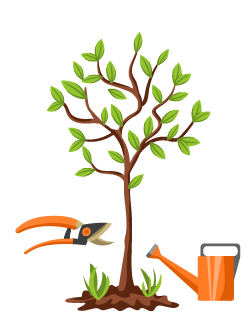 Tree care
Loosening the soil, watering: proper agricultural technology
It's recommended to dig around the trees twice or once a year to allow oxygen to reach the roots. However, trees aged 15-20 years can simply be covered with sod or even gravel. This will prevent the growth of weeds, basal shoots, shrubs, or other trees. Otherwise, you'll need to regularly hoe the soil under the tree, 2-4 times per season.
The Nedzvetsky apple tree doesn't require regular watering; it can easily find moisture in the soil on its own. However, if the summer is truly dry and hot, then watering can be arranged approximately 3-4 times during the growing season. Fertilizers can also be added at this time; watered plants absorb these nutrients much better than they would on their own.
Pruning: simple crown shaping
This tree is so flexible that you can prune it as you please. It can look beautiful as a standalone tree, or as part of a hedge or other garden composition. It can be shaped into any form, from a cordon to a palmette or weeping form.
Don't forget about sanitary pruning, which is usually performed every fall and spring. At this time, remove all diseased, dead, or damaged shoots and branches. It's also a good idea to immediately adjust the shape if necessary, for example, by removing thickening branches or suckers (those growing vertically).
Pollinator varieties
Reproduction
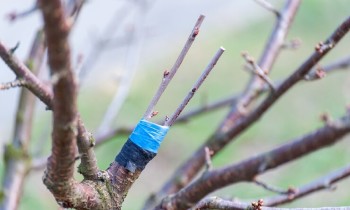
- Grafting by cuttings and buds.
- Growing from seeds.
Diseases and pests
- Scab.
- Powdery mildew.
- Hawthorn.
- Green aphid.
- Weevil.
- Leaf roller.
Ripening and fruiting of the Nedzvetsky apple tree
The beginning of fruiting
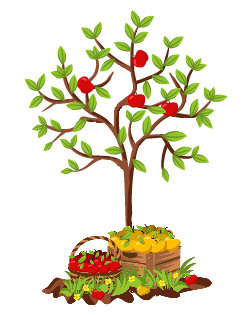 The beginning of fruiting
The tree begins to produce its first buds around the fourth or fifth year of its life, but many fruits do not ripen at this point. The first significant harvest is not obtained until the fifth or sixth year, so the variety can hardly be considered an early-bearing variety.
Flowering time
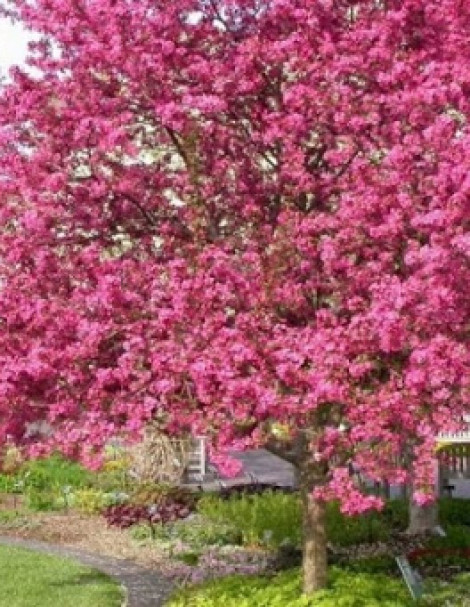
Flowers begin to bloom on the tree after the first leaves appear, around early to mid-May. However, if the weather is poor and the spring is prolonged and cold, the blooming period may shift to later in the month. The flowers are very large, saucer-shaped, with thick, fleshy petals, long pistils, and stamens. They are predominantly pink, but sometimes dark red or crimson, making the apple tree's bloom a unique spectacle. It typically lasts 10-16 days, depending on the climate and weather, allowing you to fully enjoy this beautiful phenomenon.
Fruiting and growth
Nadzvetsky is considered a medium-vigorous tree, but it can reach a good 35-60 centimeters in a year. This is quite a lot, and by the 10th to 12th year, the tree reaches its full height. The yield grows along with the crown, with a maximum yield of approximately 50-65 kilograms of fragrant and beautiful small fruits.
It's common to harvest around October or even November, as the apples don't fall from the branches at all and can still delight with their bright spots against the white snow even in the middle of winter. After the first frost, their flavor even becomes less bitter and tart, and sweeter. True, the apples don't keep for long, only 1-2 months, but only if they're picked in time.
Top dressing
- Superphosphate.
- Nitrogen fertilizers.
- Mineral complexes.
- Compost.
- Manure.
What to do if it doesn't bloom or bear fruit
- Check for pests and diseases.
- Wait.
- Transplant.
- Limit watering and fertilizing.
Why do apples fall?
- Natural factors.
- Pests.
- Diseases.
Leave your feedback on the winter-hardy Nedzvetsky apple variety to share your experience and knowledge with others.