Titovka apple tree: characteristics of the variety and care
| Color | Striped |
|---|---|
| Ripening season | Autumn |
| Size of apples | Large |
| Taste | Sweet and sour |
| Crown type | Tall tree |
| Shelf life | Low shelf life |
| Application | For recycling , Fresh |
| Winter hardiness | High winter hardiness |
| Fruiting age | Up to 5 years |
 History of origin and regions of growth
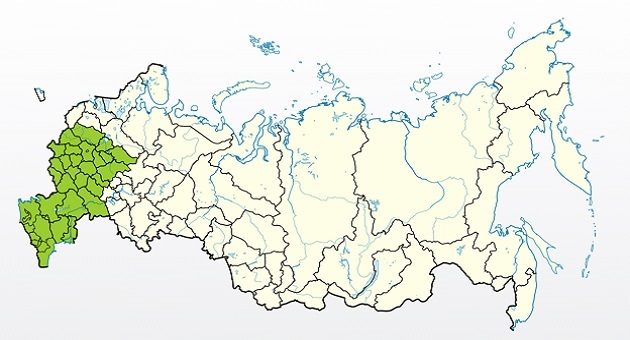
Growing regions
- Middle zone.
- North Caucasus.
- Some northern regions.
Origin
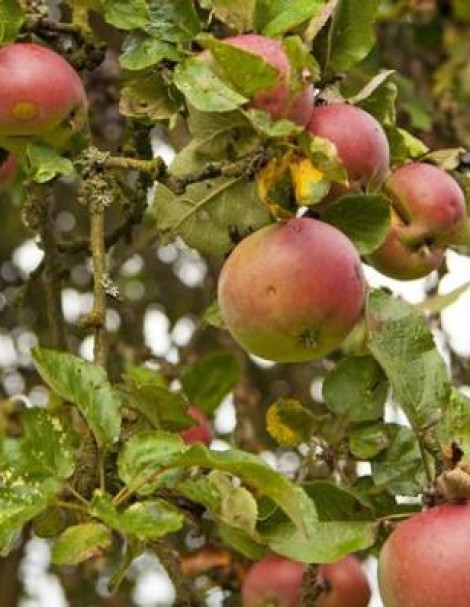
No one knows exactly how the variety known as Titovka originated. It was first discovered and described by the renowned Russian historian, botanist, and founder of Russian pomology, Andrei Timofeevich Bolotov, back in the late eighteenth century. Previously, the variety was quite widespread throughout the central part of Russia and was even grown in some more northern regions.
Interestingly, the painted, beautiful, and delicious fruits that reached the Moscow market came primarily from the Kursk and Oryol provinces.
At the end of the twentieth century, the variety was removed from the zoning system and the State Register, deemed recommended for cultivation and promising. This means it's unlikely to be found in large commercial gardens. However, Titovka is still a frequent guest in the garden plots of amateur gardeners and collectors.
Content
Description of the Titovka apple tree variety
 Old apple varieties, whether native or bred, are no longer often seen in gardens across our country. They are increasingly being supplanted by new, more productive hybrids capable of producing record yields in a short time. However, Titovka stubbornly holds its own, as it boasts high winter hardiness and produces large, beautiful fruits. However, their taste leaves much to be desired, and fruit drop rates are a major disappointment for gardeners.
Apples: What they look like
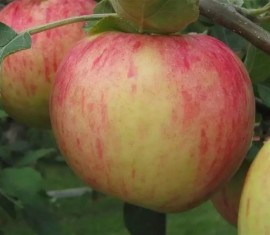
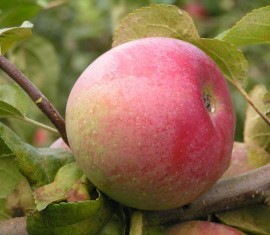
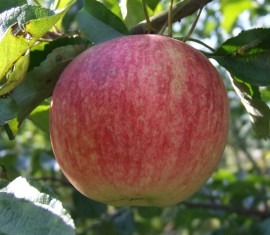
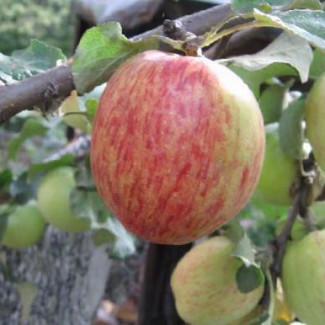
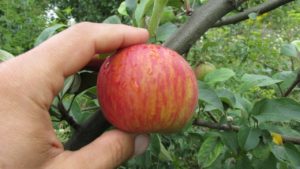
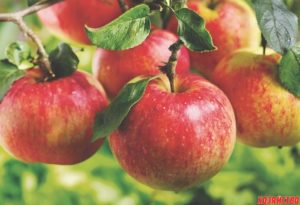 The fruits of this tree are unusual, almost cylindrical in shape; they are round and very elongated, very large. On average, the apples weigh 150-200 grams, making them still in demand on the market. They have clearly visible, wide ribs, giving them a lopsided appearance.
The apple skin is dense, firm, glossy, and smooth, with a light waxy coating that rubs off easily with the slightest touch. Their base color is green, but may yellow or become creamy as they ripen. The blush is bright, blurred, and streaky, consisting of wide, bright red stripes on a pinkish undertone. This is what gave the apples their "painted" appearance. The chemical composition can be characterized by the following indicators per 100 grams:
- P-active substances (catechins) – 206 milligrams.
- Vitamin C (ascorbic acid) – 17.7 milligrams.
- Total sugars (fructose) – 10.7%.
- Pectins (fiber) – 13.8%.
- Titratable acids – 0.67%.
The fruit's flesh is fairly coarse-grained, loose, and slightly juicy. It can be white or slightly yellowish, and may be streaked with pink under the skin. It has a wine-sweet flavor with a bright, tart aftertaste. There's no official tasting rating, as the variety is considered degenerate, but people report average flavor.
Titovka apple tree: characteristics
Crown and root system
 Trees are considered vigorous because without pruning and shaping they can easily reach 8 meters or more in height. When young, the crown is sparsely dense, usually pyramidal, but over the years it can take on a more rounded and spreading shape, often irregular, due to the uneven growth rate of the branches. The shoots mostly extend from the trunk at an acute angle, making the apple tree vulnerable to frequent chipping. Given the exceptional fragility of the wood, this is a very serious drawback.
The shoots are dark brown or brownish; with age, the bark on the trunk cracks and begins to crumble. The leaves are quite large, oval and elongated. They are dark green or just green, leathery, dense, and may be pubescent. The root system is deeply rooted, usually with a central taproot, adapted to seeking water even at great depths, and is highly branched.
Productivity and pollination
This variety was once considered exceptionally productive, with a single tree capable of yielding at least 100-120 kilograms of beautiful fruit. Compared to, for example, Antonovka, this yield pales in comparison, but it's still not bad.
With proper care and suitable conditions, Titovka will bear fruit annually without a break until it's about 40-50 years old, after which it may become capricious. Like most apple trees, it is conditionally self-fertile. This means that regardless of the presence of pollinators, the tree will inevitably bear fruit. However, to increase yield, gardeners recommend interplanting the variety with other varieties and providing access to insects.
Winter hardiness and disease resistance
This truly enormous tree, sometimes covering an area of up to 7-9 meters in diameter, is also surprisingly resistant to low temperatures. Frosts down to -30-35°C are completely unaffected, even without special measures. In harsher climates, the trees may experience slight frost damage, but quickly recover during the growing season, with little impact on the harvest.
The variety is relatively resistant to fungal infections. Powdery mildew or scab If it is already affected, it's quickly and heavily, but this only happens in extremely humid conditions. Prolonged rains and poor crown ventilation contribute to this. Pests often damage fruit, leaves, and wood, which requires careful monitoring, immediately taking all measures to save the trees.
Rootstocks and subspecies
There are currently no distinct subspecies of Titovka, with the exception of the so-called Titovka Seedling, which was discovered by the Belarusian pomologist V. P. Strelyaev in 1928 in the village of Toporino. This subspecies is less winter-hardy, but its fruits can easily be stored until March. Otherwise, all characteristics are the same as those of the common Titovka var.
Features of growing Titovka
 Landing
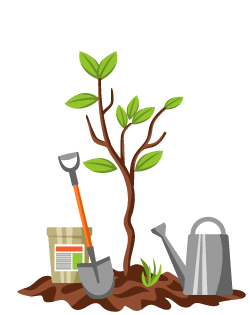 Landing
Basic conditions
- Like all apple trees, this variety thrives in sunny locations, especially at elevated elevations, away from groundwater. This is due to its deep roots, which easily reach moisture and can cause rot. Avoid planting Titovka near rivers and lakes, in marshy areas, or in low-lying areas, otherwise fungal diseases cannot be avoided.
- The tree also dislikes shady areas, at least initially. It needs full sun for a few years, but eventually it will block out all other plants growing beneath its canopy.
- The holes can be prepared in advance, in the fall, using the standard method, or they can be dug 2-3 weeks before planting. They should be 80-90 centimeters deep and the same in diameter. The bottom is lined with soil mixed with fertilizer, filled with water, and left uncovered.
- Ideally, leave plenty of space between trees, at least 6-7 meters, and up to 5 meters between rows. However, since Titovka is hardly a paragon of taste in most cases, it's best to plant it singly, in a large area where it won't be intrusive. This is the perfect tree for hanging a swing or placing a table under its sparse shade. The main thing is to consider the fragility of its branches and choose the thickest and most reliable ones.
- Stake stakes are driven into the holes immediately for support. These can be removed in the fourth or fifth year, when the apple trees begin to bear fruit. By then, the trees will have established roots and will no longer need support.
- Drainage material, such as vermiculite, gravel, broken brick, or something else, is placed at the bottom of the hole. A 10-15 centimeter layer is sufficient.
- Place the seedling so that the root collar protrudes 5-6 centimeters above the surface, otherwise growth and development may be slowed. Cover the trees with soil, compact it well, water with 30-40 liters of water, and mulch with humus or compost.
Landing dates
Like most trees, Titovka can be planted either in the spring, around April, or in the fall, around late September or October, when the leaves have completely fallen. You're unlikely to be able to purchase seedlings with a closed root system, as they haven't been grown commercially for a long time.
Protection from frost and rodents
In temperate climates, trees don't require any frost protection; they thrive and don't require shelter. Initially, you can cover the root area with spruce branches, straw mats, or hay. In more northern regions, similar measures can be taken even with mature trees.
To prevent hungry rodents from eating the young, tender bark of seedlings, you can simply coat it with a thick layer of grease or lard. Mice or hares are unlikely to appreciate such a treat, but it won't do any good against insects. Therefore, every fall, trees should be whitewashed with lime to a height of approximately 1-1.5 meters.
Tree care
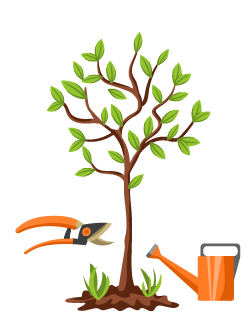 Tree care
Loosening the soil, watering: proper agricultural technology
If your goal is to achieve good harvests, you need to regularly dig up the area around the roots of the tree to soil The air was full of oxygen. It also wouldn't hurt to hoe the soil, while also removing all unwanted vegetation, from weeds to root shoots.
Watering is also helpful during prolonged dry and hot weather. It's not necessary, but if there's been no rain for more than three weeks, you'll need to apply water yourself at a rate of 50-60 liters per mature tree. Fertilizers and fertilizers can be added directly to the water if needed.
Pruning: simple crown shaping
Titovka doesn't tend to develop a dense crown, so pruning won't require much effort. Simply trim the trunk and skeletal branches regularly, preventing excessive growth unless you desire that. The first pruning can be done the year of planting; the trees are very hardy and will easily withstand stress.
Regular sanitary pruning is essential, removing dead, diseased, and damaged branches. If any fruit break off during ripening, don't be afraid to cut them off immediately. Simply seal the cut areas with garden varnish or water-based paint.
Reproduction
- Clones (offshoots).
- Grafting by cuttings or buds.
- Rooting by cuttings.
- Growing from seeds.
Diseases and pests
- Scab.
- Powdery mildew.
- Fruit rot.
- Black crayfish.
- Cytosporosis.
- Leaf roller.
- Scale insect.
- Green aphid.
- Hawthorn.
- Codling moth.
- Flower beetle.
Ripening and fruiting of the Titovka apple tree
The beginning of fruiting
 The beginning of fruiting
Titovka is one of the few old, tall varieties considered early fruiting. Flower buds appear as early as 2-3 years after planting, and you can decide whether to pick them or not. By 4-5 years, the tree can yield up to 5 kilograms, or even more, of beautiful fruit.
Flowering time
This variety typically blooms in May, like most apple trees. This typically occurs early in the month, but if the weather is poor and there are prolonged frosts in the spring, the apple tree may not bloom until the end of the month. Its flowers can be white or slightly pink; they are large, quite fragrant, and beautiful.
Fruiting and growth
These apple trees grow very quickly, approximately 50-80 centimeters during the growing season. Therefore, they begin bearing fruit very quickly. By the 10th to 12th year, a single tree can yield 40-50 kilograms of apples, and by the 15th year, as much as 90. However, this only applies with good care, regular fertilizing, and watering.
Apples ripen in early September. It's crucial to pick them early, as the fruit doesn't hold tightly to the branches. As soon as they begin to overripe, they'll fall to the ground. Then they'll have to be processed very quickly, within 2-3 days. If picked early, they can be stored in the cellar for 1-1.5 months.
Top dressing
- Bird droppings.
- Manure.
- Compost.
- Humus.
- Ammonium nitrate.
- Urea.
- Superphosphate.
- Mineral complexes.
What to do if it doesn't bloom or bear fruit
- Water or stop watering.
- Apply fertilizer.
- Check for pests or diseases.
Why do apples fall?
- Overripe.
- Lack or excess of water.
- Natural phenomena (wind, rain, hail).
- Diseases.
- Pests.
Leave your feedback on the Titovka apple tree in the comments and share your experiences with other gardeners.