Olympic apple tree: characteristics of the variety and care
| Color | Reds |
|---|---|
| Ripening season | Winter |
| Size of apples | Average |
| Taste | Sweet and sour |
| Crown type | Average tree height |
| Shelf life | Average shelf life |
| Application | Fresh , For recycling |
| Winter hardiness | High winter hardiness |
| Fruiting age | From 5 years old |
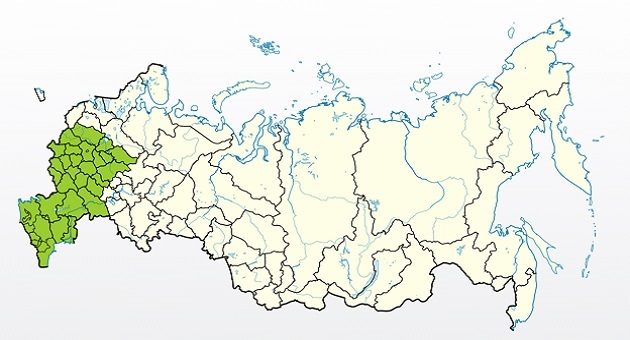 History of origin and regions of growth
Growing regions
- Oryol region.
- Moscow region.
- Middle zone.
- Kursk region.
- Tambov region.
- North Caucasus.
- Lipetsk region.
- Voronezh region.
- Leningrad region.
Origin
Another creation of the Oryol Fruit Growing Station in the village of Zhilina, which belongs to the Federal State Budgetary Scientific Institution "All-Russian Research Institute of Fruit Crop Selection." Development of this variety began in the late 1960s or early 1970s. The final version, named "Olympic," was obtained through open pollination of the well-known and widely popular "McIntosh" variety.
The cultivar's creators are the eminent pomologists and breeders Maria Vasilyevna Mikheeva, Nina Glebovna Krasova, and Evgeny Nikolaevich Sedov. The new apple tree was only officially tested in 1979. It persevered through all its trials and performed well. Only two decades later, in 1999, was Olimpiyskoye included in the State Register of Breeding Achievements and zoned for the Lower Volga region. In fact, the cultivar can be successfully grown throughout the European part of the country, as well as further south and north.
Content
Description of the Olympic variety
 This variety had a lot to offer gardeners, as it boasts numerous advantages. The apple tree is quite compact, its crown is neat, and it doesn't require constant pruning. Olimpiyskoye is a high-yielding, early-bearing apple, resistant to cold and sudden temperature changes, and has good environmental resilience, making it suitable for cultivation even in metropolitan areas and near industrial giants.
The fruits are attractive in appearance, have truly excellent marketability, and are aromatic and tasty. Despite their weak scab resistance and somewhat loose flesh, they are recommended for both commercial orchards and private gardens.
Apples: What do they look like?
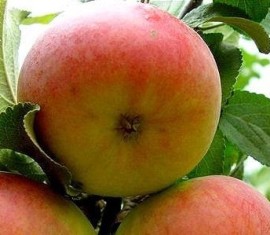
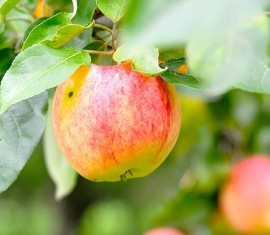
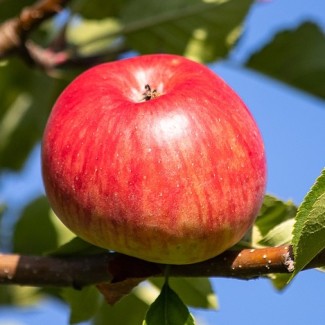
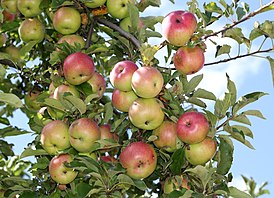 They typically ripen on branches that are smaller than average, average, or slightly larger than average. The average weight of one apple is 110-130 grams, but with good care and in favorable years, it can reach 140-160 grams. The shape is round, slightly elongated, turnip-shaped, or cylindrical. The fruits are of average uniformity, often symmetrical, have no lateral suture, and the ribbing is barely visible near the calyx.
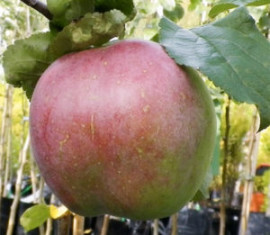
The skin is dense, even thick, slightly rough, matte, and slightly dull, but may not be very shiny. It has no bloom even when ripe, and appears somewhat dry. Its base color is green or greenish-yellow, slightly lemon-colored. The blush is striped and streaked, brownish-red or dark burgundy, dense, and covers 75-90% of the surface, more intense on the sunny side. Subcutaneous spots are barely visible, grayish, and numerous. Experts recommend assessing the chemical composition by the following indicators:
- P-active substances (catechins) – 314 milligrams.
- Ascorbic acid (vitamin C) – 15.9 milligrams.
- Fructose (total sugars) – 10.7%.
- Pectins – 11.3%.
- Titratable acids – 0.53%.
The apples have medium-dense, pleasantly textured flesh, coarse-grained, juicy, very tender, and easy to bite into. It has a lemon or greenish hue and a pleasant, subtle aroma with spicy notes. The flavor is considered sweet and sour, harmonious, dessert-like, and balanced. On a professional tasting scale of 5, it scores 4.2-4.4.
Olympic apple tree: characteristics
Crown and root system
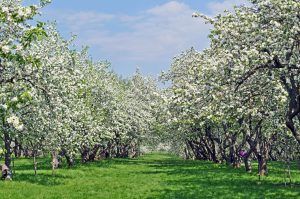 The variety naturally has a rounded, moderately dense crown that is not prone to overgrowth. The tree reaches a maximum height of approximately 4-4.5 meters if left unpruned. Branches are medium-length, curved, and set at a nearly right angle to the trunk, preventing them from splitting under load. They are rounded in cross-section and covered with smooth gray or grayish-brown bark. Fruiting occurs on fruiting shoots, both simple and compound.
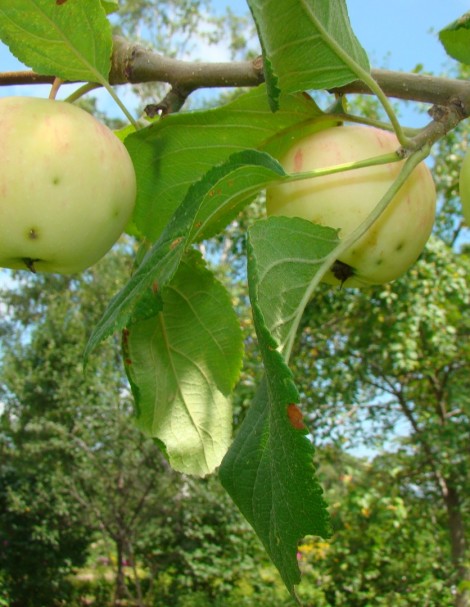
The leaves are slightly elongated, ovate, and short-pointed, with a propeller-like tip. They are leathery, dense, and highly glossy, yet wrinkled, with coarse ribbing and a green or dark green color. The root system is fibrous on most rootstocks, deepened to a medium depth, with numerous small offshoots near the surface, and moderately adapted to water-seeking.
Productivity and pollination
The variety is considered high-yielding, but it can't even compete with Yubiley Moskvy.
One mature tree typically yields approximately 95-110 kilograms of fragrant, delicious fruit per season. In the best years, with careful management, productivity can be increased to 100-130 kilograms, but more is unlikely..
Self-fertility is considered conditional. Without outside pollinators, you can expect to obtain no more than 15-35% of the potential harvest. Therefore, gardeners have long since adopted the practice of planting varieties that bloom at appropriate times within 100-150 meters of each other. Spraying trees with sugar syrup in the spring is also a good idea, and installing portable apiaries in the garden is also a good idea.
Winter hardiness and disease resistance
The trees have proven to be very resilient to various weather conditions and frosts. They easily survive harsh weather conditions, such as temperatures dropping to -32-35°C, even for extended periods (more than 2-4 weeks). During variety testing in the late 1960s, the soil froze to -12°C at a depth of 40 centimeters, but the apple trees suffered only minor damage and soon recovered. Therefore, many gardeners successfully cultivate Olimpiyskoye even in the Urals and Western Siberia.
There are varying opinions regarding the variety's susceptibility to fruit and foliar scab. The State Register lists it as resistant to the disease, but many reports point to moderate resistance and even mild susceptibility during years of severe epidemics. Timely preventative measures will help against other diseases and protect against insect pests.
Rootstocks and subspecies
Olimpiyskoye can be grown on various rootstocks, slightly altering its properties and qualities. However, there are no subspecies of this variety. Therefore, if you are offered a columnar or dwarf variety, it's best to refrain from purchasing it.
Features of growing Olympic
 Landing
 Landing
Basic conditions
- This variety thrives in elevated, sunny, open spaces. It can grow in the shade, but will be spindly, weak, and unhealthy, and may refuse to flower or produce fruit.
- Trees should be planted in a location with good ventilation but no drafts. Strong winds can destroy seedlings in their first year.
- It's advisable to monitor the groundwater level, which shouldn't rise above 2.2-2 meters above the surface. Tree roots can sink into the water and rot. If there's no other place, you can create a barrier by digging a sheet of slate, a layer of roofing felt, or tar paper at a depth of 1.5-1.8 meters, or planting trees on an artificial embankment.
- Planting holes for seedlings should be prepared at least 3-4 weeks in advance. However, it's best to dig them 5-8 months in advance. They should be 70-80 centimeters deep and approximately 90 centimeters in diameter to allow for adequate rhizome space.
- Leave a distance of 3-4 meters between trees, but between rows you can leave a distance of 5 meters to simplify maintenance and harvesting.
- It's a good idea to immediately drive special stakes or planks into the holes to support the young apple trees. If placed on the north side of the tree, they will also provide protection from cold winds and help them survive the winter.
- The root collar must remain above the surface when planting, otherwise any qualities of the rootstock will be lost.
- The seedling is placed vertically, its roots are spread out, covered with soil, and watered generously (35-40 liters). The surface is mulched for additional moisture retention.
Landing dates
It's best to plant in spring in regions with relatively harsh winters, or in autumn if the winters are warm and mild. Since Olimpiyskoye is mostly planted in temperate climates, late March and early April, before the buds begin to open, are ideal. If you purchased seedlings with a closed root system, they can be transplanted into open soil at any time during the growing season.
Tree care
 Tree care
Protection from frost and pests
This variety doesn't require special shelter, but if the climate is harsh, it's best to protect your plantings. First- and second-year trees can be covered with a tent, and older trees can have their trunks wrapped in burlap, old tights, agrofibre, or spunbond. This will prevent scorching winds from damaging the buds, bark, and wood. The root area is covered with soil and covered with bales of straw, mats of hay, or spruce branches.
Rodents often chew young shoots and the bark of seedlings in winter, but this can be avoided. Experienced gardeners recommend coating apple trees with lard, fuel oil, grease, or any other strong-smelling substances. Regular preventative spraying is essential to prevent diseases, and whitewashing the trees with lime to a depth of more than one meter is recommended to prevent insects.
Loosening the soil, watering: proper agricultural technology
During the first few years, the Olimpiyskoye tree requires digging around the trunk, but this becomes unnecessary. Twice a year, with hoeing in between, is necessary for the first 5-8 years. After that, simply sow herbs or lawn grasses under the tree and cover the area with sod, and the problem will be solved.
The variety only needs watering in the driest years, unless we are talking about young trees. They need water quite intensively, once every 10-14 days. You can also add various fertilizers along with the water; this way, they will be absorbed much more easily and efficiently. Don't forget to dig up the area around the roots the next day after glaze day, otherwise the soil may become compacted into a solid lump.
Pruning: simple crown shaping
Trees are not prone to excessive overgrowth, so it's sufficient to create a sparse, layered form in the first year and then simply maintain it. Subsequently, once a year, you'll need to prune shoots that extend inward or vertically upward, and remove any dead, old, broken, or diseased or pest-infested ones.
Pollinator varieties
- Cliff.
- Stroevskoe.
- Korobovka.
- Antonovka.
- Approx.
- Gala.
- Borovinka.
- In memory of the Yesaul.
- Elstar.
Reproduction
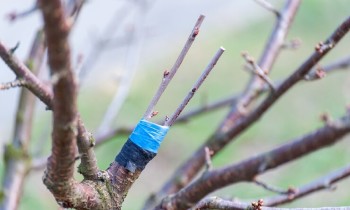
- Grafting cuttings.
- Clones.
- Growing from seeds.
- Kidney grafting.
- Layers.
Diseases and pests
- Scab.
- Powdery mildew.
- Spotting.
- Rust.
- Green aphid.
- Flower-eating mite.
- Copperhead.
- Codling moth.
- Hawthorn.
Ripening and fruiting of the Olympic
The beginning of fruiting
 The beginning of fruiting
Apple trees are considered early fruiting trees, but they are unlikely to bear their first fruits early. Even if the flowers bloom in the third or fourth year, they will likely remain barren and will not develop into ovaries. Therefore, it's best to pluck them immediately, allowing the tree to develop roots and branches first. The first fruiting is expected in the fifth or sixth year, when the tree has reached a fairly large size. At this point, you can expect to harvest 5-7 kilograms of apples.
Flowering time
Like all winter apple trees, the Olimpiyskoye apple tree begins to open its buds only in mid-May or even later. The timing is greatly influenced by external factors, such as weather, overall temperature, precipitation patterns, watering, fertilizer availability, and so on. The flowers are usually gathered in clusters of 6-8; they are medium-sized, fragrant, beautiful, and saucer-shaped. In bud, they appear deep pink or even with a slight purple tint, but once fully open, they turn a very delicate pale pink.
Fruiting and growth
The tree grows quite quickly, capable of reaching 45-60 centimeters per year. Therefore, it can reach its full height within a short time. The Olimpiyskoye tree gradually increases its productivity. Only by 12-14 years can the harvest reach its full potential, reaching 60-70 kilograms of apples. The maximum yield will have to wait until 14-16 years. However, this wait is certainly compensated by the tree's long active lifespan, which ranges from 60-75 years or even longer.
Technical (harvestable) ripeness usually occurs around the end of September, and sometimes, in poor weather, early frosts, and prolonged rains, even as late as early October. These dates don't coincide with consumer ripeness. Apples reach their tastiest only 2-3 weeks after being stored. At this point, the sugars in the fruit caramelize, making them much sweeter, juicier, and more enjoyable. The fruit's shelf life is average; they'll barely last until early spring, and even then, only if you have a dedicated refrigerator. Once stored, they should be eaten or processed by early February.
Top dressing
- Nitrogen fertilizers.
- Superphosphate.
- Ammonium nitrate.
- Manure.
- Compost.
- Humus.
- Chicken, pigeon droppings.
- Urea.
- Minerals.
What to do if it doesn't bloom or bear fruit
- Believe in parasites.
- Check for any diseases.
- Increase watering.
- Feed.
- Transplant.
Why do apples fall?
- Wind, hail, hurricane, frost, snow.
- Parasitic lesions.
- They are very overripe.
Share your own experience with the Olimpiyskoye apple tree variety so that any gardener can learn about it before planting and achieve maximum results.