Rozhdestvenskoye apple tree: characteristics of the variety and care
| Color | Reds |
|---|---|
| Ripening season | Autumn |
| Size of apples | Average |
| Taste | Sweet and sour |
| Crown type | Average tree height |
| Shelf life | High shelf life |
| Application | Universal variety |
| Winter hardiness | Average winter hardiness |
| Fruiting age | Up to 5 years |
 History of origin and regions of growth
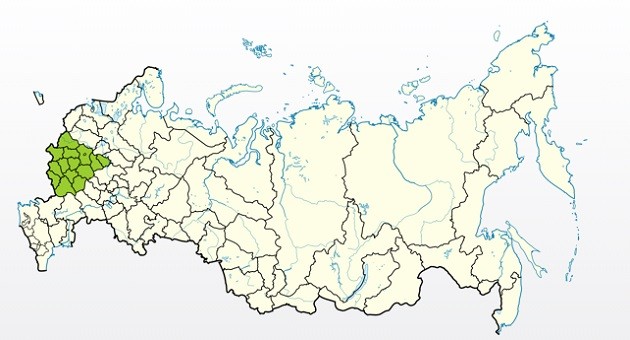
Growing regions
- Ivanovo region.
- Tula region.
- Bryansk region.
- Voronezh region.
- Vladimir region.
- Kursk region.
- Ryazan region.
- Moscow region.
- Tambov region.
- Kaluga region.
- Smolensk region.
- Belgorod region.
History of origin
Breeding work to create scab-resistant apple trees at the genetic level is constantly being conducted by the All-Russian Research Institute of Fruit Crop Breeding. In 1985, E. N. Sedov, Z. M. Serova, V. V. Zhdanov, and E. A. Dolmatov, crossing the Welsey variety with BM41497, developed a variety called Rozhdestvenskoye. It received its name due to the late ripening period and good shelf life of its beautiful and aromatic fruits.
That same year, the variety was sent to various farms for experimental testing. By 2001, it had been added to the State Register and zoned. This variety, which carries the Vf gene (immunity to scab), is considered triploid, meaning it matures fairly early, has no periodicity in fruiting, and is resistant to various fungal infections.
Content
Description of the Rozhdestvenskoye apple tree variety
 This young, domestically grown variety isn't yet widespread enough to be considered universally popular, but it's rapidly gaining ground. Pomologists recommend planting Rozhdestvenskoye in more than just private gardens.
These trees are ideal for intensive commercial orchards, provided they are grafted onto intercalated, dwarf rootstocks, such as dwarf and semi-dwarf varieties. Their main advantages include high and consistent yields, early fruiting, good shelf life, and transportability, but most importantly, their delicate dessert flavor and beautiful appearance.
Apples: color, size and weight
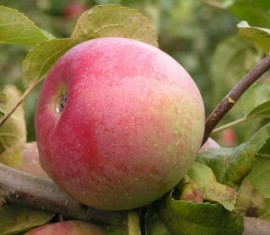
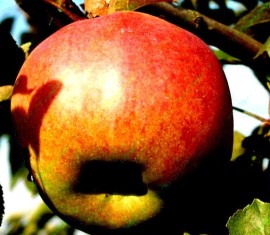
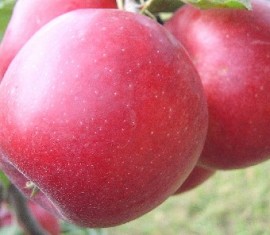
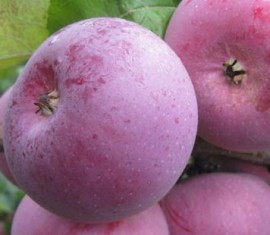
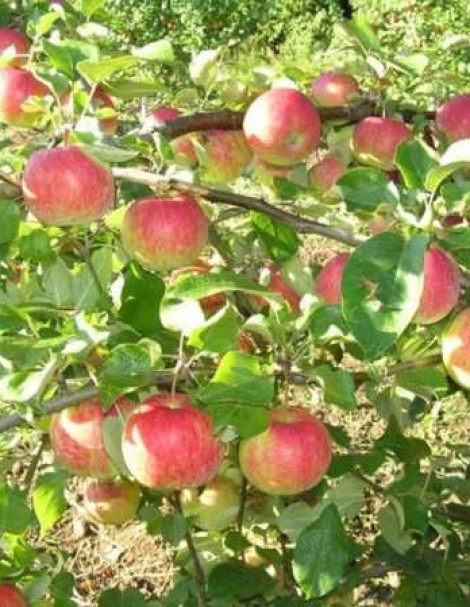
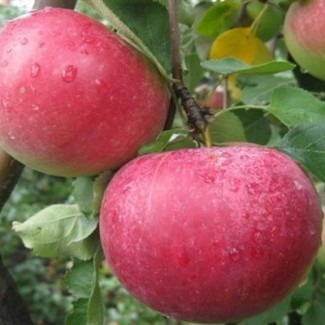
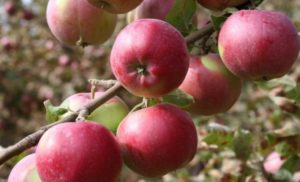 Rozhdestvensky fruits are usually medium-sized, weighing no more than 135 grams, but can occasionally reach 170 grams. They are round, slightly flattened, and often have pronounced ribbing. The skin is dense, smooth, and glossy, a beautiful green hue with a red blush flecked with raspberry or cherry spots. Subcutaneous spots are gray-green, light in color, and clearly visible, as well as numerous. Chemical properties can be expressed as follows per 100 grams of product:
- P-active substances (catechins) – 112 milligrams.
- Vitamin C (ascorbic acid) – 9.1 milligrams.
- Total sugars (fructose) – 10.4%.
- Titratable acids – 0.48%.
- Pectins (fiber) – 14.2%.
Rozhdestvensky apples have white flesh, sometimes with a slight creamy tint. It's firm and crisp, yet prickly and tender. Its flavor is harmonious, dessert-like, sweet and sour, and its aroma is subtle and distinctively apple-like. It receives a tasting score of 4.4 out of 5 for its appearance and 4.3 out of 5 for its taste.
Rozhdestvenskoye apple tree: characteristics
Crown and root system
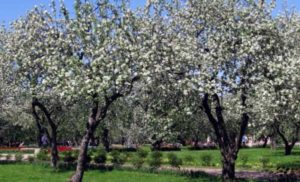 Trees of this variety are considered medium-sized. They grow very quickly, initially gaining height and only then beginning to develop a crown, which has a broad pyramidal shape. The advantage of these plants is that most of the branches extend from the trunk at a right angle, preventing them from breaking off even during heavy harvests. Young shoots have a brownish hue, which matures to a steel-gray. The bark cracks and begins to peel rapidly with age.
The leaves are oval, slightly tapering toward the tip, reminiscent of an egg. Their tips are elongated, pointed, curled, and twisted downward. They are moderately pubescent, lacking a natural gloss; they are matte, lightly pubescent along the upper and lower surfaces, and covered with wrinkles. The tree bears fruit primarily from simple and compound ringlets. The root system is fairly extensive and superficial.
Productivity and pollination
The variety was specifically bred to produce high yields each year. It succeeded with a vengeance.
Under favorable weather conditions, one tree can produce at least 110-130 kilograms of apples.
Comparing it to the Antonovka, which yields 250-300 kilograms, is pointless, as the tree itself is more compact and takes up much less space in the garden. This significantly increases the overall yield per planted area. Record results haven't been recorded yet, but everything in due time.
The hybrid is considered conditionally self-fertile, but without other apple trees nearby (50 meters) for cross-pollination, large harvests are unlikely. Therefore, in orchards, including commercial ones, it is common to alternate plantings with other varieties. It is also recommended to locate apiaries nearby so that bees can easily find the plants, which do not emit a strong scent during flowering.
Winter hardiness and disease resistance
The trees' frost resistance is quite high, as the material was specially frozen in special chambers at -40°C during breeding. The variety's performance is comparable to that of the Antonovka variety, so if you really want to, you can grow Rozhdestvenskoye even in Urals, especially if you provide it with reliable frost protection over the winter, but only on vegetative rootstock. It's also important to remember that this variety isn't very drought-tolerant, as it has a shallow root system that doesn't extend deep into the soil. Therefore, regular watering will be required during hot summers to ensure good yields.
As already noted, trees have a genetic immunity to scab and powdery mildew, meaning the risk of infection is reduced to zero. Insects pose the main threat to the tree. However, if all preventative measures are carried out promptly, the appearance of leaf rollers will be prevented. scale insects, green aphids and other pests can be easily avoided.
Rootstocks and subspecies: features
| Rootstocks | Peculiarities |
| Dwarf | This option allows you to save space in the garden by growing a tree no taller than 2 meters. The crown width, however, does not exceed 2-3 meters in diameter. All the fruit's nutritional qualities are preserved. |
| Semi-dwarf | Trees on this rootstock grow taller, up to 3 meters. However, their fruit can be somewhat larger, weighing up to 150-170 grams. It's important to consider the shallowness of the root system, which significantly impacts winter hardiness. However, by covering the rhizome (root zone), this can be avoided. |
| Columnar | Contrary to popular belief, the Rozhdestvenskoye apple tree is not grown on columnar rootstock. Therefore, if you hear such a statement from a seller, it's best to avoid purchasing the seedlings. |
Features of growing Christmas
 Landing
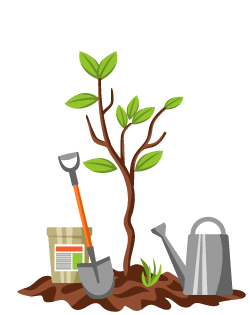 Landing
This variety is not particularly capricious; it takes root well in almost any soil, so it will require a standard set of measures when planting.
Key Features
- A sunny location is chosen for the apple trees to avoid the fruits becoming smaller due to constant shading.
- It's best to keep the groundwater level below the soil surface, otherwise the tree's roots may rot. However, excessively dry areas are not the best choice. Ideally, the distance to water should be 2.5-3 meters, and the apple trees themselves should be planted on a drainage layer made of gravel, nut shells, vermiculite, or ordinary broken brick.
- Holes for the variety are dug in advance, at least 2-4 weeks before planting. It's even better if they are dug and fertilized in the fall for spring planting. Ideally, the holes should be 70-80 centimeters deep and up to 1 meter in diameter. To prepare the holes, take several buckets of compost, mix them with the soil removed from the hole, then return them to the original location and fill with 30-40 liters of water. A small amount of potassium fertilizer and superphosphate can be added.
- Immediately dig in stakes to support the seedlings, preferably on the north side, which can be removed no earlier than 3-4 years.
- It is advisable to leave a distance of 3-4 meters between trees, regardless of the rootstock, so that their crowns and roots do not conflict in the future.
- The root collar should be approximately 4-7 centimeters above the surface.
- The seedling is placed in the hole, its roots spread out, and covered with soil, gently shaking it constantly to remove air bubbles. A ridge is then formed around the trunk, and 30-50 liters of water are added to this ridge.
Landing dates
Like other apple trees, Rozhdestvenskoye can be planted twice a year if the root system is exposed. Once the root system is buried, you don't have to worry about timing at all and can plant trees year-round.
- In the spring, in late March or early April, before the sap begins to flow in the trunks and the buds begin to open. However, you'll have to wait until the threat of frost has passed.
- In autumn, it's best to wait until the leaves have completely fallen, around the end of October. It's best to leave at least 3-4 weeks before frost, otherwise the tree may not have time to take root.
Protection from frost and rodents
The variety's winter hardiness isn't particularly high, although it was bred to spread apple trees north of the temperate zone. However, its root system is located just below the soil surface and can easily freeze. Therefore, it's crucial to adequately protect the tree from frost, especially in the early stages. You can use roofing felt, tar paper, spruce branches, hay or straw bales, as well as specialized commercial materials available at gardening stores.
But all of the above-mentioned measures attract hungry rodents, who try to move closer to human habitation and enjoy feasting on young tree bark. To deter them from fruit trees, tree trunks are coated with special mixtures, such as lard or grease. To protect against insects, it's common to whitewash trees in the fall.
Tree care
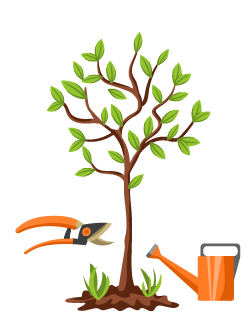 Tree care
Loosening the soil, watering: proper agricultural technology
Regularly tilling the soil will help oxygenate it, so it should be done at least twice a year. It's also a good idea to regularly remove root suckers, weeds, and other plant shoots, which rob the apple tree of some of its nutrients.
The tree's drought tolerance is low, so it needs to be watered generously when needed. This should be adjusted for weather conditions. When rainfall is regular, watering can be stopped, but in dry weather, it's best to water 40-50 liters twice a month.
Pruning: simple crown shaping
The health of apple trees, as well as their yield, can directly depend on proper pruning. Moreover, the technique depends on the type of rootstock, weather and climate conditions, and the age of the trees.
- Formative and rejuvenating pruning is usually performed in the spring. This will help the tree properly enter the growing season and produce better fruit later.
- Sanitary pruning is preferably carried out in the fall, when the movement of sap in the trunks has completely stopped.
When shaping the crown, it's important to prevent it from becoming too dense, so remove any branches growing inward. Also, remember to regularly prune away any old, diseased, or dead branches.
Reproduction
- Layers (clones).
- Growing from seeds (rarely).
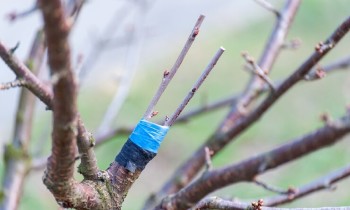
- Grafting by cuttings or buds.
- Rooting cuttings.
Diseases and pests
- Bark beetle.
- Scale insect.
- Green aphid.
- Leaf roller.
- Flower beetle.
- Hawthorn.
- Copperhead.
- Moth.
Ripening and fruiting of the Rozhdestvenskoye apple tree
The beginning of fruiting
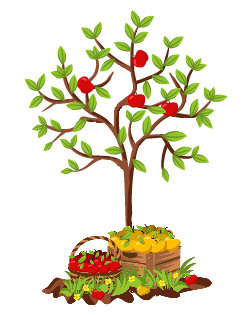 The beginning of fruiting
From planting Rozhdestvensky apples in open ground until they bear a few apples, it usually takes about three years, but the first decent harvest won't arrive until the fourth or fifth year. By then, a single tree can yield 5-10 kilograms of fruit.
Flowering time
Blooming time for this variety varies, as it depends not only on the planting region but also on weather and other external factors. However, blooming typically occurs from mid- to late May, and lasts 10-14 days. The flowers are large, gathered in small umbels, white or pale pink, and have a pleasant but faint scent.
Fruiting and growth
Achieving substantial harvests won't be difficult. As early as the fifth or sixth year, a young tree can yield up to 50-70 kilograms of apples. Although the tree's growth is modest, only 5-15 centimeters, by the eighth or tenth year it is fully formed, first increasing in height and only then developing a crown. This often leads to mistakes when gardeners plant trees too densely.
To ensure apples keep well, it's customary to pick them in late September. However, they can successfully remain on the branches until mid-October. However, if they're overripe, there's a risk they'll fall to the ground, in which case the entire harvest will need to be harvested at once. recycleThe fruits have a very high shelf life and easily retain all their consumer qualities until the following spring.
Top dressing
- Manure.
- Mineral complexes.
- Bird droppings.
- Wood ash solution with microelements.
- Superphosphate.
- Compost.
- Humus.
What to do if it doesn't bloom or bear fruit
- Apply fertilizer.
- Watering should be done.
- Check for pests or diseases.
- Make a cut.
Why do apples fall?
- Overripe.
- Not enough moisture.
- Natural phenomena (wind, rain, hail).
- Pests or diseases.
Leave a review of the Rozhdestvenskoye apple tree in the comments below to share your experience with other gardeners.