Veteran apple tree: characteristics of the variety and care
| Color | Reds , Striped |
|---|---|
| Ripening season | Autumn |
| Size of apples | Average |
| Taste | Sweet and sour |
| Crown type | Average tree height |
| Shelf life | High shelf life |
| Application | Universal variety |
| Winter hardiness | Average winter hardiness |
| Fruiting age | Up to 5 years |
 History of origin and regions of growth
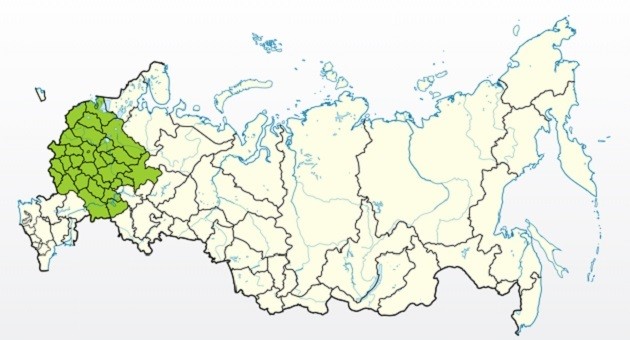
Growing regions
- Central region.
- Central Black Earth Region.
- Belarus.
History of origin
This variety was bred in the early 1960s by a group of Russian pomologists (E. N. Sedov, N. G. Krasova, M. V. Mikheeva) at the All-Russian Research Institute of Fruit Crop Breeding. It was obtained from seeds of the American King variety, open-pollinated with domestic cultivated apple trees.
By 1972, the Veteran was sent for experimental testing. By 1980, it was classified as an elite aircraft, and six years later, it was finally released into the regional market.
Content
Description of the Veteran apple variety
 This winter apple variety is prized and loved not only by individuals growing orchards on small plots but also by those managing commercial intensive orchards. Its main advantages include early fruiting, relatively high yields, and excellent consumer and commercial quality.
Apples: What they look like
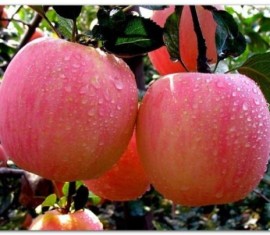
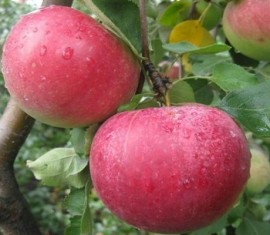
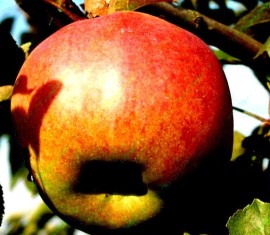
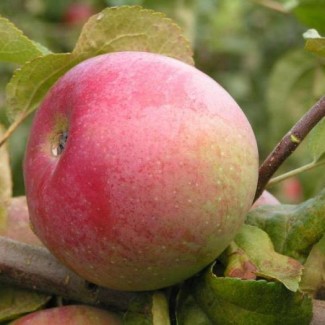
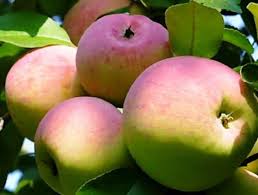 The fruits of this variety are usually medium-sized, but can also be quite large (90-180 grams). They are round, slightly flattened, and sometimes heavily ribbed, lopsided, and have a characteristic split into halves.
Apple skin is very dense, strong, and resistant to mechanical damage, with a greenish-yellow or even golden-yellow color. The blush is fairly transparent, but sometimes clearly visible; it's blurred, pink or orange in color. Subcutaneous punctures are few in number, but they are light gray and large, making them easily visible. Chemical properties can be characterized by the following composition per 100 grams of product:
- P-active substances (catechins) – 307 milligrams.
- Ascorbic acid (vitamin C) – 17.5 milligrams.
- Total sugars (fructose) – 9.5%.
- Pectins (fiber) – 10.8%.
- Titratable acids – 0.64%.
Veteran apple flesh is typically yellowish in color, but can even have a brownish tint. It's tender, crisp, balanced, and harmonious, with a sweet and sour flavor. It receives a tasting score of 4.3 out of 5 for its appearance and 4.5 out of 5 for its flavor.
Veteran apple tree: characteristics
Crown and root system
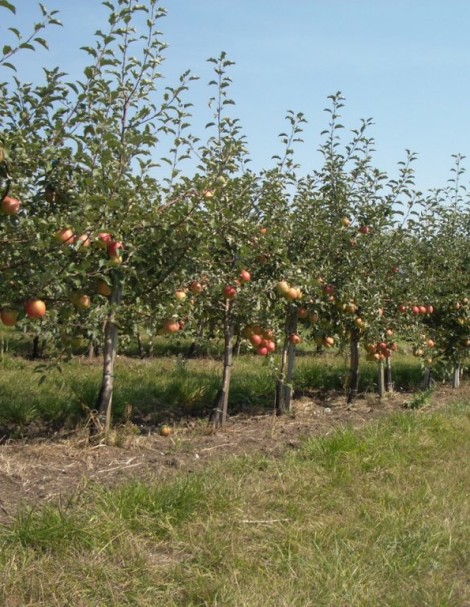
 EThis tree is considered medium-sized; even without additional formative pruning, it does not grow more than 4-5 meters. Crown It has a fairly compact, spherical or slightly oval shape. It is not prone to spontaneous thickening, which promotes rapid fruit ripening. The roots on young shoots and the main trunk are brownish-brown; over the years, they can become rough, crack, and begin to fall off.
The leaves are rounded, elongated, elliptical in shape with a pointed tip. They are slightly serrated, matte, leathery, and wrinkled. The apple tree's root system is quite extensive, and depending on the rootstock, it may or may not have a central taproot.
Productivity and pollination
Among winter apple varieties, Veteran can be considered a high-yielding variety, producing a truly prolific crop of apples per year. At maturity, a single tree can easily yield around 65-85 kilograms, or even more if properly cared for and protected from pests. Its yield increases gradually, reaching its full potential in its 12th to 15th year.
I consider this variety conditionally self-fertile, but don't expect a large harvest in this case. For maximum yield, it's best to plant other varieties with similar flowering times nearby for cross-pollination. Experienced gardeners recommend setting up a portable apiary nearby during the blooming period, or even establishing a garden nearby.
Winter hardiness and disease resistance
On vegetative rootstock, the variety tolerates the variable climate of the temperate zone quite well, but for more northern regions, frost-resistant grafting material will have to be selected. Even then, there's no guarantee the tree will survive. Temperatures below -20-25°C are a stretch for the variety, and only for short periods if well-protected.
Veteran apple trees have average resistance to fungal infections. This means that if preventative measures are regularly carried out, such as removing fallen leaves and rotting fruit from under the tree and treating it with appropriate chemicals, infection is unlikely. However, in the wettest years, the tree may well become infected with powdery mildew or scab and it will be quite difficult to cure it.
Rootstocks and subspecies: features
By growing the variety on a variety of rootstocks, you can obtain a tree of varying heights and frost resistance. For example, the dwarf M9 can produce a very robust tree, not exceeding 2 meters, and even form a creeping standard. Fruiting and all the apple qualities remain the same as those of the parent plant.
Features of growing Veteran
 Landing
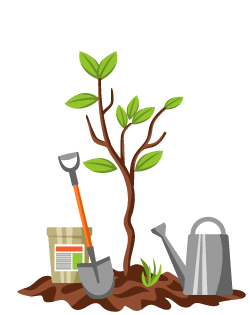 Landing
Basic conditions
- For apple trees, choose a fairly sunny site, not shaded by taller trees. If you plant the Veteran in the shade, you could end up with very small, sour apples, or even no apples at all.
- High groundwater levels or open bodies of water are not the best neighbors for this tree. The rhizome extends quite deep into the soil and can rot from excess moisture, which will kill the tree.
- Planting holes are prepared in advance. To do this, remove some of the soil, mix it with fertilizer, and then fill it back in, adding 30-40 liters of water. The entire planting hole is left outdoors for at least 2-4 weeks, but ideally for the entire winter.
- Leave at least 5 meters between rows of trees, and 3 to 4 meters between seedlings. This will prevent their crowns and roots from competing for nutrients in the future.
- Place drainage material (vermiculite, broken brick, or nutshells) at the bottom of the hole, and then place the tree on it. Don't forget to immediately dig in the stakes for support.
- Cover the tree with soil in layers, compacting each layer gently with your hands to eliminate any air bubbles. Water the top with 20-30 liters of water and mulch with chopped grass, compost, or manure.
Landing dates
There's little difference between planting Veteran trees in spring or fall; they thrive equally well. The key is to ensure that in the first case, there's no risk of recurrent frost, and in the second case, the leaves have finished falling, but there are at least 4-5 weeks left before the cold weather sets in.
Protection from frost and rodents
Young apple trees require care and attention to ensure they grow strong and survive the first few years after being planted outdoors. Therefore, it's best to cover them for the winter with spruce branches, hay, or straw bales. The trunks are wrapped with roofing felt, roofing felt, special agrofibre, or even regular nylon tights.
To prevent insects from settling among the roots of apple trees, which often overwinter and then readily consume the wood, foliage, and fruit, the trunks and lower skeletal branches are whitewashed with lime in the fall. Greasing the trees with lard or grease is very effective against rodents.
Tree care
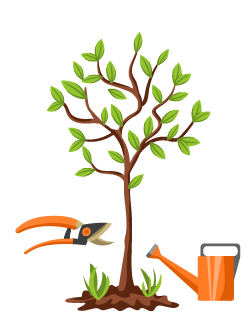 Tree care
Loosening the soil, watering: proper agricultural technology
Apple trees need to be watered regularly, but not to the point of overwatering, to prevent moisture from stagnating at the roots. Watering usually begins in the spring, when the buds open, and is done at least twice a month. In early September, it's best to stop watering completely to allow the tree to prepare for winter.
Loosening the soil for Veteran is directly related to watering. So, after each application of water, the following day, thoroughly loosen the soil with a hoe or shovel. At the same time, it's a good idea to remove grass, root suckers, and shoots from shrubs or other trees from the tree's trunk area. After this, you can apply mulch, which will not only help control weeds but also conserve moisture.
Pruning: simple crown shaping
Formative pruning is most often done in the spring. It should only begin two or three years after planting. Then, remove a third of the central trunk, and trim all remaining branches 5-8 centimeters shorter. Only one branch out of three should be left, choosing the thickest and most robust one. These branches should be spaced in tiers, widely spaced.
You should also remove branches growing inward, sticking up vertically, or touching the ground. During sanitary pruning, all damaged, old, diseased, or dead branches are removed. You can rejuvenate the tree by regularly removing two or three older shoots.
Pollinator varieties
- Antonovka ordinary.
- Delicious golden.
- Ambrosia.
- Idared.
- Jonathan.
- Arlette.
- Gloucester.
Reproduction
- Clones (layering).
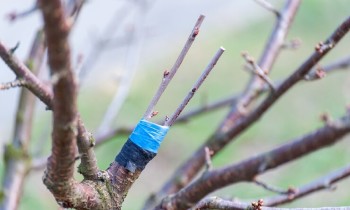
- Grafting by cuttings or buds.
- Growing from seeds.
Diseases and pests
- Cytosporosis.
- Scab.
- Powdery mildew.
- Leaf roller.
- Flower beetle.
- Scale insect.
Ripening and fruiting of the Veteran apple tree
The beginning of fruiting
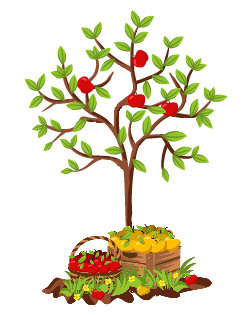 The beginning of fruiting
The variety is considered early-bearing, although fruit production is unlikely in the second year. By the third year, a few flowers may appear, but it's best to pluck them before the apples develop. By the fourth or fifth year, you'll have your first harvest, weighing approximately 5-15 kilograms.
Flowering time
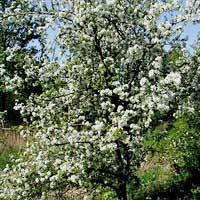
Like most apple trees, the Veteran blooms in May. However, depending on weather and climate conditions, this may occur early, mid, or late in the month. The variety's flowers are quite large and white, but can have a slight pink tint. Flowering typically ends within a week, occurring simultaneously and abundantly. This reduces the variety's appeal for more northern regions, as if frost returns during this period, the entire harvest may be lost.
Fruiting and growth
You'll have to wait about 6-8 years for full harvests of 60-80 kilograms, but it's worth the wait. Veteran grows gradually, but more and more each year until it reaches its peak. The tree grows at an average rate of 15-20 centimeters per year, allowing it to gain height in the first ten years, after which it begins to expand its spherical crown.
The fruit ripens around early to mid-September. It's easy to spot when the apples turn a beautiful, rosy color. They also remain on the branches for a long time, although they ripen evenly, all at once. There's no need to rush harvesting, but delaying too long can reduce the shelf life. The fruit usually lasts until March or even April without losing its flavor.
Top dressing
- Manure.
- Bird droppings.
- Humus.
- Potassium and nitrogen fertilizers.
- Wood ash solution with microelements.
- Superphosphate.
What to do if it doesn't bloom or bear fruit
- Apply fertilizer.
- Increase watering.
- Transplant.
- Check for pests or diseases.
- Perform pruning.
Why do apples fall?
- Insufficient watering.
- Natural phenomena (wind, rain, hail).
- Overwatering.
- Pests or diseases.
Please leave your feedback on the Veteran apple tree in the comments below. This way, everyone can learn from your experience and draw their own conclusions.