Slava Primorye apple tree: characteristics of the variety and care
| Color | Reds |
|---|---|
| Ripening season | Autumn |
| Size of apples | Average |
| Taste | Sweet and sour |
| Crown type | Average tree height |
| Shelf life | Low shelf life |
| Application | For recycling , Fresh |
| Winter hardiness | High winter hardiness |
| Fruiting age | Up to 5 years |
 History of origin and regions of growth
Growing regions
- Khabarovsk Krai.
- Jewish Autonomous Region.
- Amur region.
- Sakhalin Oblast.
- Primorsky Krai.
- Khabarovsk Krai.
Origin
The Primorsky Fruit and Berry Experimental Station of the Primorsky Research Institute of Agriculture, headed by Grigory Ivanovich Semenov, recently developed a new variety, named Slava Primorya. It was isolated after open pollination of hybrid No. 6 with various winter-hardy crops. It is zoned for Primorsky Krai, but is actually grown throughout virtually the entire Far East.
Content
Description of the Slava Primorya variety
 This variety is prized by most gardeners in the region for its excellent adaptability to growing conditions. This strong, resilient tree with a compact crown is resistant to even the most severe frosts, requires little special care, and produces fruit well and annually even with minimal care.
Slava Primorye apples are beautiful and delicious, possessing high commercial and consumer qualities, although they fall off quickly and are unlikely to last long. They are recommended for home gardens and small farms focused on juice or compote production.
Apples: What do they look like?
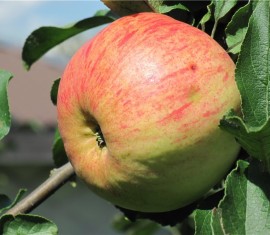
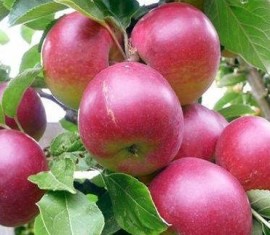
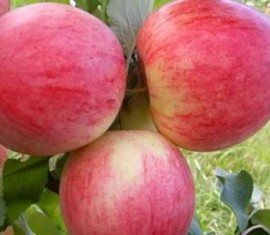
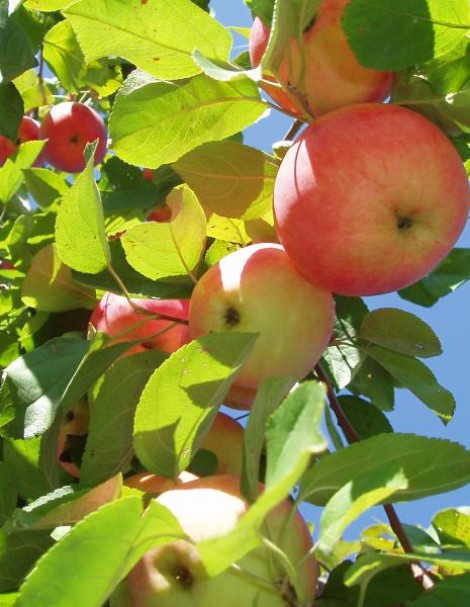
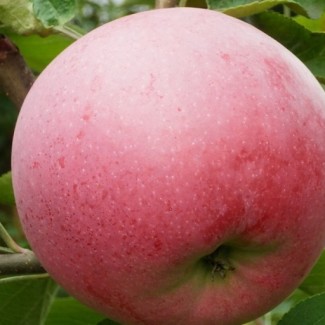
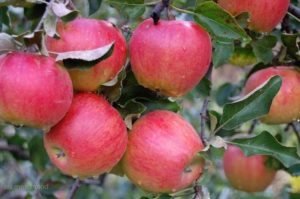 The size of the fruits of this variety is impressive for a Far Eastern apple, but they can safely be considered medium-sized. Fruits typically weigh 145-170 grams, though very rarely, individual specimens can reach 180-200 grams. They are generally uniform, symmetrical, and often rounded, but can be slightly conical. Ribbing is moderate, more visible near the calyx, and completely smoothed elsewhere, with no lateral seam.
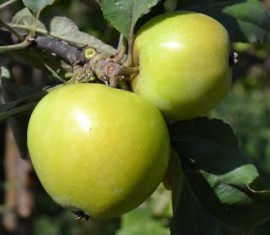
The skin is dense, firm, thick, and not very elastic. It is green or greenish-yellow when ripe. The blush is dark red, pinkish-red, or slightly crimson, streaked and sometimes slightly blurred, dense, and covers at least 70-85% of the surface. Subcutaneous punctures are numerous, densely spaced, grayish-green or gray, and clearly visible. Professionals recommend assessing the chemical composition using the following initial data:
- P-active substances – 3170 milligrams.
- Ascorbic acid (vitamin C) – 7 grams.
- Sugar (fructose) – 13.4%.
- Titratable acids – 0.78%.
- Pectins (fiber) – 14.2%.
The flesh is usually white or white-green, dense, fine-grained, and very juicy. The flavor is sweet and sour, with a strong sourness. The aroma is medium to weak, but distinctive, easily recognizable, and pleasant. The flavor is considered a dessert flavor; an unofficial tasting score is 4.4-4.5 out of a possible five.
Apple tree Slava Primorye: characteristics
Crown and root system
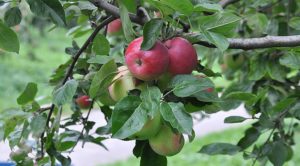 The tree is considered vigorous, although it never grows taller than 5-6 meters. Most gardeners prefer to prune Slava to 3.5-4 meters for easier care and harvesting. The crown is dense, rounded or rounded-oval, and can be broadly oval, becoming spreading over the years, and sometimes even weeping. Branches are medium in length and thickness, straight, and appear robust, covered in green or greenish-brown bark with pubescence in some areas. Fruiting occurs on ring-shaped stems.
The leaves are medium-sized, oval, slightly elongated, dense, leathery, and green or dark green. The tips are long and pointed, sometimes curled, and the margins are serrated, jagged, crenate, and sometimes wavy. The root system is robust, deeply rooted, and taproot, but depending on the rootstock, it can be fibrous and well adapted to water-seeking.
Productivity and pollination
For Far Eastern and generally northern apple trees, the variety's early fruiting and productivity are excellent.
From one mature tree trunk, thrifty homeowners who provide their orchard with high-quality and timely care typically harvest 75-90 kilograms of apples per season. It is believed that a minimum yield of about 110 centners and a maximum of 250 can be harvested from one hectare..
A particular advantage of this variety is its complete independence from other pollinators. The apple tree is quite capable of self-pollination and produces good harvests even when there are no other apple trees in the area that bloom at the appropriate time. Many gardeners say that the presence of other varieties will increase yields, but only slightly.
Winter hardiness and disease resistance
The tree has very good resistance to low temperatures and will survive frosts down to -30-35°C even without special protection, even if they last longer than 3-5 weeks. However, it's still best to properly prepare apple trees for winter, especially in challenging growing regions like the Far East or Siberia.
Slava Primorya is considered to have a very high resistance to various fungal infections of apple trees. However, it is not immune to bacterial bark canker. Several other diseases and pests can also damage the trees, so it is best to carry out preventative treatments with insecticides and fungicides in a timely manner.
Rootstocks and subspecies
The variety is considered a semi-cultivated cultivar; no subspecies are known, at least not officially reported. Slava can be grown on various rootstocks, from standard rootstocks to pear or even rowan hybrids. This can achieve several different results, for example, in tree size, fruit size, ripening speed, and winter hardiness.
Features of growing Slava Primorye
 Landing
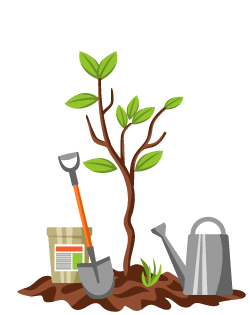 Landing
Basic conditions
- A sunny location is best for planting this variety. In the shade, trees grow poorly, slowly, become weak, often refuse to bloom or bear fruit, and sometimes even die.
- Ensure good ventilation in the planting areas, otherwise air may stagnate in the crowns. This can lead to the development of various diseases. However, drafts should also be avoided, as this will ruin the plantings in the first year.
- Groundwater level plays a key role in choosing a planting site. If it's higher than 2.4-2.5 meters, it's best to choose a different site. The tree's root system is deep and often penetrates deep into the soil, where it will inevitably find water and begin to rot. If options are limited, you can dig several layers of roofing felt, tar paper, or slate at a depth of two meters to create a sort of "root divider" that directs the roots laterally.
- It's best to prepare the holes a year before planting the apple trees, giving them time to mature. Dig holes 80-90 centimeters in diameter and the same depth, fill the bottom with soil mixed with fertilizer (minerals, organic matter), line with drainage (stones, bricks, vermiculite), and top with water (45-60 liters).
- It's recommended to leave at least 4-4.5 meters between holes in a row, and up to 5-5.5 meters between rows. You can adjust the spacing yourself depending on the chosen rootstock. For example, for dwarf rootstocks that don't grow taller than 2 meters, 1.8 meters between trees and 2.2 meters between rows is sufficient.
- The root collar must remain above the soil surface during planting to preserve the rootstock's properties. If the tree roots higher, all its unique qualities will be lost forever.
- Before planting, inspect the root system, cut off all damaged, diseased or dry roots, and soak the trees in warm water for 7-9 hours; this will help them take root better.
- Place the seedling in the hole, spreading the roots over a mound of drainage material. If you're not using drainage material, then make a mound of soil and arrange the shoots so they lie freely. Cover the rhizome with soil, compacting it in layers. water water, and mulch the surface if necessary to retain moisture.
Landing dates
There's little difference in when to plant apple trees in warm regions with mild to moderate climates. However, in northern regions, spring is a better choice, allowing the tree more time to establish itself and adapt to the environment before the cold weather sets in. Choose a nice, warm day in late March or early April, but only when the soil has warmed up completely and the risk of frost has passed.
Tree care
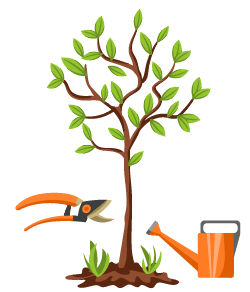 Tree care
Protection from frost and pests
Slava Primorye can tolerate low temperatures for quite a long time, but they still need to be protected from frost. Bundles of straw, spruce branches, hay, and leaves are placed on the root zone. It's important that everything is completely dry. If you allow rot to occur, the apple trees will be in trouble. Trunks are wrapped with roofing felt, tights, burlap, and even tarpaulin. Young and dwarf varieties can be covered with a tent-like covering.
Tree trunks are usually whitewashed to a height of 1.1-1.3 meters with lime diluted with water in early spring or late fall. This will help get rid of insects that have settled in bark crevices or around the rhizomes, which can cause a lot of trouble for the gardener in the future. Repellent rodents are also easy to do: simply coat the trunks with lard, fuel oil, grease, or anything else with a strong, unpleasant odor.
Loosening the soil, watering: proper agricultural technology
Trees are dug around the trunk area twice a year if necessary. The roots usually run deep, so there's no need to worry too much about damaging them. At the same time, remove weeds, root suckers, and shoots from various plants. At other times, simply hoeing the soil is sufficient. In the 7th to 9th year, you can sow herbs like cilantro, parsley, dill, marjoram, or others around the roots to promote natural aeration, or you can lay sod and forget about it altogether.
Slava may require watering in the hottest and driest years. Under normal natural rainfall conditions, it finds water in the soil on its own. If there has been no rain for more than three weeks and the weather is hot, then you can apply 20-35 liters in two doses (morning and evening). It would be a good idea to set up a drip system. watering, but such systems are not readily available to everyone. Various fertilizers and fertilizers are usually added with the water, which is much better absorbed by the trees.
Pruning: simple crown shaping
The apple tree has a fairly dense crown, so pruning to shape it will need to be done regularly. You can choose almost any shape from the start; Slava can easily be "twisted into ropes." However, the most common option is a sparse, tiered version, which leaves a central conductor and 2-4 skeletal branches, spaced at different heights and widely spaced. Pruning begins in the 2nd or 3rd year, and then it will be necessary annually. At the same time, you should trim off any shoots protruding into the crown. spinning tops, growing vertically.
Sanitary pruning to remove dead, damaged, or diseased branches is usually done in early spring or late fall, when the sap in the trunk has stopped flowing. Branches are sawed or cut off with sharp tools, and the cut areas are sealed with garden pitch. Rejuvenation can begin around the 10th to 12th year, if necessary.
Pollinator varieties
- Amur red.
- Precise.
- Reliable.
- Augustovskoye Far Eastern.
- Aborigine.
- Ranets.
- Sakhalin Pendula.
- Amur filling.
- Juicy greenery.
Reproduction
- Rooting.
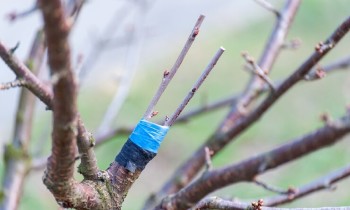
- Kidney grafting.
- Growing from seeds.
- Cuttings.
Diseases and pests
- Black crayfish.
- Scab.
- Gray rot.
- Bacterial burn.
- Anthracnose.
- Spider mite.
- Green aphid.
- Geometrid moth.
- Codling moth.
- Leaf roller.
- Weevil.
- Fleas.
Ripening and fruiting of Slava Primorye
The beginning of fruiting
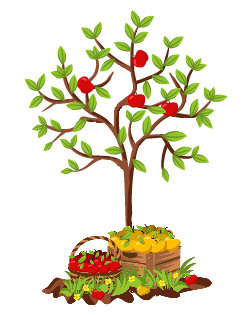 The beginning of fruiting
The tree is an early-bearing tree; you won't have to wait decades to see the first fruits. It reaches maturity in the third to fifth year, blooming for the first time and forming ovaries. The first harvests are unlikely to be full-fledged; they will weigh no more than 5-15 kilograms, depending on external factors, but will be of similar quality.
Flowering time
Slava begins to bloom quite early, as it needs time to produce fruit and allow it to fully ripen during the very short Far Eastern summer. Therefore, flowers may appear on the tree as early as early May, and by mid-May they have completely fallen, forming apples. The variety's flowers are large, gathered in small inflorescences, with snow-white or slightly pinkish petals and a moderate fragrance.
Fruiting and growth
In one year, the tree can easily grow approximately 35-50 centimeters in height before fruiting begins. This growth then slows slightly, but only slightly, to just 30-45 centimeters. Slava also develops fruiting quickly, producing full harvests by the sixth to ninth year. At this point, harvests can easily exceed 50-75 kilograms, and subsequently, even more.
The fruits don't ripen all at once, but one at a time, which is considered the variety's main drawback. This significantly prolongs the harvest, and overripe ones usually fall to the ground, so you'll need to monitor their "readiness." This can be determined by the thick waxy coating on the apples' surface. Around early September or even late August, you should begin checking the fruits for harvesting. The apples don't have a long shelf life, only 35-55 days, and only in specially equipped refrigerators. Therefore, it's best to eat or process the fruit immediately to prevent it from going to waste.
Top dressing
- Peat.
- Compost.
- Ammonium nitrate.
- Humus.
- Chicken manure.
- Superphosphate.
- Manure.
- Mineral complexes.
What to do if it doesn't bloom or bear fruit
- Check for pests or diseases.
- Transplant into the sun.
- Water.
- Fertilize.
Why do apples fall?
- Wind, hail, hurricane, rain.
- Overripe.
- Pest damage.
- Diseases.
Please leave your feedback on the Slava Primorya variety, as many gardeners would like to grow similar ones in their gardens.