Brusnichnoe apple tree: characteristics of the variety and care
| Color | Reds |
|---|---|
| Ripening season | Autumn |
| Size of apples | Average |
| Taste | Sweet and sour |
| Crown type | Average tree height |
| Shelf life | Low shelf life |
| Application | For recycling , Fresh |
| Winter hardiness | High winter hardiness |
| Fruiting age | Up to 5 years |
 History of origin and regions of growth
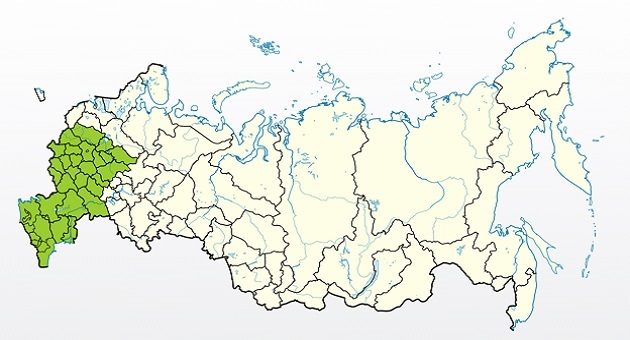
Growing regions
- Middle zone.
- Southern regions.
- North Caucasus.
- Some northern regions.
Origin
In the late 1960s, work was underway at the Moscow All-Russian Institute of Selection and Technology's experimental station to develop universal apple varieties for Russia's central regions. Under the guidance of renowned Russian scientist A.V. Perov, an unknown variety, Slava Pobeditelyu, was pollinated by the laboratory, already popular for its unique commercial and consumer qualities. The new variety proved suitable for most central regions and grew and yielded fruit quite well in more northern latitudes.
In 1977, the variety was classified as elite and sent for field trials to various farms. It has not yet been entered into the State Register and is not officially zoned, but it has spread to many regions of the country.
Content
Description of the Brusnichnoe apple variety
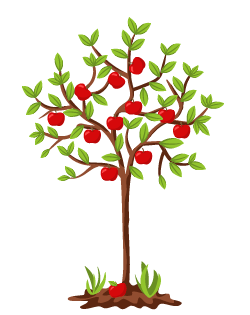 Trees of this variety offer a host of advantages, making them popular in markets and nurseries. They are relatively low-maintenance, quickly reach fruiting age, and produce good yields of delicious and aromatic fruit. Add to this the semi-dwarf variety's distinctive compactness and its consistent fruiting without rest periods, and it's easy to see why many people prefer the Brusnichny variety. Despite some drawbacks, such as low resistance to fungal infections, it is recommended for cultivation in intensive commercial gardens and small home gardens.
Apples: What they look like
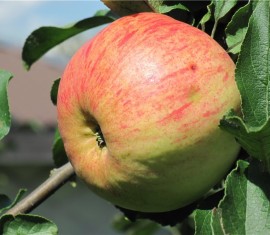
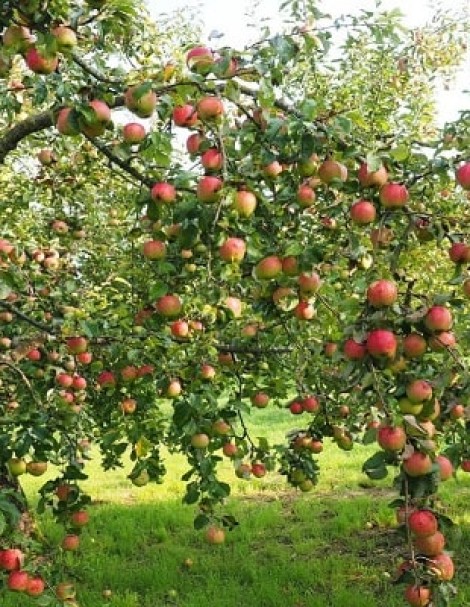
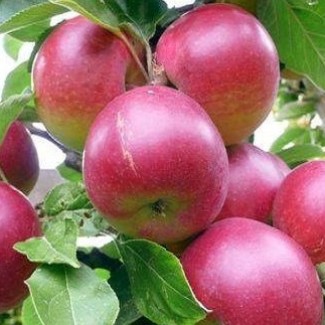
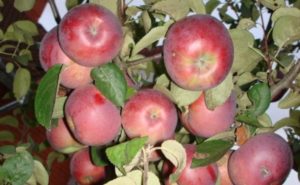 The fruits of this variety are generally medium-sized or even slightly smaller than average. Their weight can range from 75 to 120 grams. They are uniform, round, and sometimes slightly oblong, as if elongated like a barrel, with subtle ribbing.
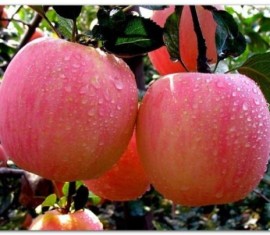
The skin is dense, strong, and quite thick, making it particularly suitable for transportation. It is smooth and glossy, with a greenish-yellow base color. It is virtually invisible, as more than 96% of the skin is covered with a dense blush of bright, cherry-red, or blood-red, with a blurred, streaky, and spotty pattern. During ripening, the skin becomes covered with a dense, bluish-gray waxy coating. Numerous subcutaneous dots, grayish or gray-green, are quite visible on the surface. The chemical composition can be characterized by the following indicators per 100 grams:
- P-active substances (catechins) – 368 milligrams.
- Ascorbic acid (vitamin C) – 2 milligrams.
- Total sugars (fructose) – 15.1%.
- Pectins (fiber) – 6.7%.
- Titratable acids – 0.87%.
The flesh is quite dense, some say even somewhat coarse, crisp, prickly, coarse-grained, juicy, and has a pleasant, distinctive aroma. It has a light creamy or yellowish hue, and the flavor is sweet and sour, considered a dessert-like, harmonious, and balanced. The tasting score is 4.4 and 4.5 out of 5 for taste and appearance.
Brusnichnoe apple tree: characteristics
Crown and root system
 The variety is classified as a natural semi-dwarf, so it does not grow very tall. It can grow to a maximum of 2.5-3 meters without formative pruning.However, most gardeners prefer to limit the growth of standard trees to 2-2.5 meters for ease of maintenance and harvesting. The crown is round or oval in shape when young, sometimes even pyramidal, but with age it becomes spreading and even weeping. The branches are thin, long, and flexible, covered with smooth, reddish-brown bark, which may begin to crack over time. The shoots extend from the trunk at an angle close to right angles, preventing them from breaking off even in strong winds and heavy harvests.
The leaves are large, elongated, ellipsoid, short-pointed, leathery, dense, matte, and slightly pubescent on the back. They have a slightly wavy, finely serrated, and finely serrated margin, with coarse ribbing. The tree's root system is superficial, usually shallow, and may or may not have a central taproot, depending on the rootstock. It is extensively branched and well adapted to seeking moisture, making the tree drought-resistant.
Productivity and pollination
Brusnichnoe is considered a high-yielding and promising variety. A single mature tree can yield at least 120-160 kilograms of fragrant and beautiful fruit during the growing season, given proper care and favorable weather conditions..
Apple trees are considered conditionally self-fertile. This means that some fruit can be harvested even if there are no nearby trees of another variety with a suitable flowering time. However, to ensure a 100% harvest, you will still need to provide pollinators; they should be located no further than 100-150 meters from the main plant. It is also beneficial if the orchards are located close to an apiary.
Winter hardiness and disease resistance
These trees do not have any unusual winter hardiness, so they cannot be grown in the Far East or in Siberia It's unlikely to work. However, they can withstand temperatures down to -33-39°C quite well. However, you'll have to cover them properly to prevent the bark, buds, and even the wood from freezing. In the temperate zone, Moscow region In the Leningrad region, the variety thrives, despite frequent temperature fluctuations from severe frosts to thaws.
In rainy summers, when there is too much precipitation, trees are extremely susceptible to infection by various fungal infections, such as scabies Powdery mildew is considered the main drawback of these apple trees. Cytosporosis, fruit rot, moniliasis, bitterness, and other "delights" await the variety, so special attention should be paid to treating the trees with fungicides.
Rootstocks and subspecies
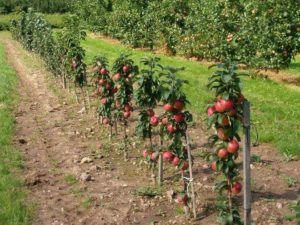
Brusnichnoe is grown on standard rootstocks, as well as on dwarf and semi-dwarf varieties. Regardless of the variety, they perform approximately equally well in both height and yield. The variety can also be grown on a columnar rootstock. This way, it will reach no more than 1.5 meters in height, yet is almost as productive. However, the lifespan of such apple trees is much shorter, no more than 15-20 years, after which they will need to be uprooted and replaced.
Features of growing lingonberry
 Landing
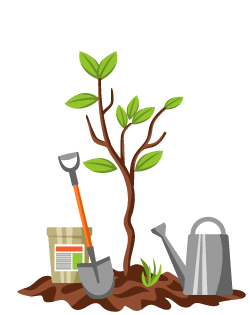 Landing
Basic conditions
- To ensure fast growth and abundant fruit production, an apple tree needs to be planted correctly. It needs to be sunny for most of the day, otherwise the harvest, if any, will be small.
- It's a good idea to select sites with good ventilation, but without drafts. Drafts can destroy seedlings before they even have a chance to develop.
- It's best to keep the groundwater level at the planting site low (no more than 2-2.5 meters). Otherwise, the trees will reach the groundwater with their tips and begin to rot, resulting in the death of the seedling.
- Planting holes for lingonberry are dug 2-4 weeks in advance, but they can be prepared in the fall or spring. To do this, dig holes approximately one meter deep and the same in diameter. Add some topsoil mixed with fertilizer to the bottom, then add gravel or broken brick as a drainage layer, and then add 35-50 liters of water. Leave the entire hole outdoors until planting time.
- It is enough to leave no more than 2.5 meters between trees in a row, and only two meters between trees.
- Root collar The rootstock must remain approximately 5-7 centimeters above the soil surface. This will prevent the tree from rooting above it, thereby negating all the properties of the rootstock.
- Before planting, the root system is inspected; all dry, damaged, or diseased shoots are cut off with garden pruning shears and soaked for 4-6 hours in warm water.
- Holding the apple tree by the trunk, place it in the hole and cover it with soil, compacting it with your hands, but not overly packing the earthen lump.
- The surface is watered with approximately 25-30 liters of water, and then mulched with humus, compost or chopped grass.
Landing dates
Brusnichnoe can be planted in either fall or spring. However, experienced gardeners still recommend the latter option. This way, the trees show the highest survival rates and begin bearing fruit earlier and more abundantly. In any case, it's best to plant before sap flow begins in the trunk or after it has completely ceased with the end of leaf fall.
Protection from frost and rodents
Despite their good resistance to low temperatures, in climates harsher than Crimea or the Caucasus, winter protection measures will be necessary. For moderate frosts, simply wrapping the trunks with agrofibre, burlap, or another suitable material will suffice. For harsher conditions, the root zone is lined with straw mats and the trees are covered using a tent-like method, fortunately, the short trunks allow for this.
To prevent insects from damaging the bark and leaves, whitewash the trunks twice a year. This should be done to a height of 70-110 centimeters. To protect trees from hungry rodents during the winter, the trunks can be coated with melted garden oil or grease. Commercially produced repellents, available at gardening stores, are effective.
Tree care
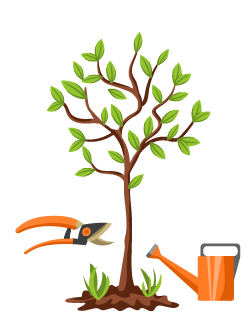 Tree care
Loosening the soil, watering: proper agricultural technology
Almost all apple trees prefer loose, oxygen-rich soil, and Brusnichnoe is no exception. Therefore, at least twice a year, the area around the tree trunk should be dug up to a depth of about half a spade to a spade. This must be done with extreme care to avoid damaging the roots located close to the surface. The rest of the year, you can lightly hoe the soil, removing root suckers, weeds, and any other plant shoots that can rob the tree of nutrients. Along with water, it's a good idea to apply fertilizer and other supplemental fertilizer to accelerate growth and fruiting.
Watering the Brusnichnoe variety is a very delicate matter. Young trees need water at least three times a month to promote rapid growth of foliage and rhizomes. However, it's important not to overwater, as this can lead to the development of fungal infections. A mature tree should be watered approximately four to five times per season, and only in hot and dry weather.
Pruning: simple crown shaping
In the first year after planting, to give the tree the correct shape, it is immediately pruned by one-third. This means shortening not only the central basal branch, but also the main skeletal branches, which are usually shaped at the nursery. After that, all that remains is to maintain the shape by regularly removing shoots growing inward or vertically upward (super shoots).
Don't forget about sanitary pruning, which is also done once or twice a year. This involves removing all dead, diseased, or damaged branches. This is done in the spring before the sap begins to flow and buds begin to open, or in late autumn, after the leaves have fallen and the sap has again frozen for the winter.
Pollinator varieties
- Spartan.
- Malba.
- Welsey.
- Suislepskoe.
- Gloucester.
- Borovinka.
- Champion.
Reproduction
- Clones (layering).
- Rooting cuttings.
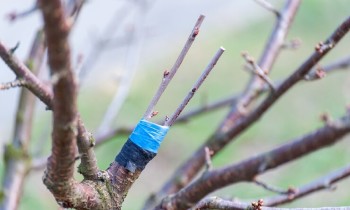
- Grafting by buds and cuttings.
- Growing from seeds.
Diseases and pests
- Scab.
- Powdery mildew.
- Cytosporosis.
- Moniliosis.
- Fruit rot.
- Tinder fungus.
- Moniliosis.
- Hawthorn.
- Scale insect.
Ripening and fruiting of lingonberry
The beginning of fruiting
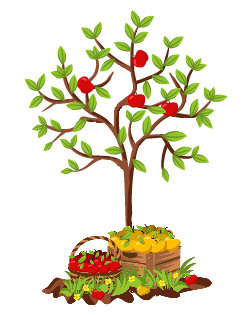 The beginning of fruiting
This tree is an early-bearing crop. It begins bearing fruit quite early, no later than 2-3 years after planting in open ground. Flowers may begin to bloom even in the nursery, but they must be ruthlessly plucked to allow the apple tree to develop foliage and rhizomes. In the first few years, you'll only be able to harvest 5-15 kilograms of apples, but that's still a good yield.
Flowering time
The buds of the Brusnichny lily begin to bloom around the second half of May. Therefore, finding suitable pollinators is usually easy. Flowering lasts approximately 10-14 days, and is uniform and abundant. The flowers are large, saucer-shaped, and have fleshy petals of white or white-pink color, fragrant.
Fruiting and growth
This variety grows very slowly, reaching its maximum height only in the 9th to 10th year after planting. Its absolute maximum is only 7-12 centimeters per year. Therefore, you'll have to wait quite a while for a good harvest, and the desired 150 kilograms won't be possible until the 8th to 10th year. However, after that, the tree will produce fruit abundantly and regularly, without any resting periods.
The fruit of this autumn apple tree is harvested around the second half of September or the very beginning of October. They hold on to the branches quite well, but can fall off if they take too long to ripen. These apples cannot be stored longer than 25-30 days, even under ideal temperature and humidity conditions, so it's best to completely process them within that time.
Top dressing
- Superphosphate.
- Mineral complexes.
- Peat.
- Compost.
- Manure.
- Humus.
What to do if it doesn't bloom or bear fruit
- Check for pests and diseases.
- Transplant.
- Limit watering.
Why do apples fall?
- Overripe.
- Natural factors.
- Pests.
- Diseases.
- Excess moisture.
Leave your feedback on the winter-hardy Brusnichnoe variety to share your experience and knowledge with others.