Apple tree Gift for children: characteristics of the variety and care
| Color | Reds |
|---|---|
| Ripening season | Autumn |
| Size of apples | Average |
| Taste | Sweet |
| Crown type | Average tree height |
| Shelf life | Low shelf life |
| Application | Fresh , For recycling |
| Winter hardiness | Average winter hardiness |
| Fruiting age | Up to 5 years |
 History of origin and regions of growth
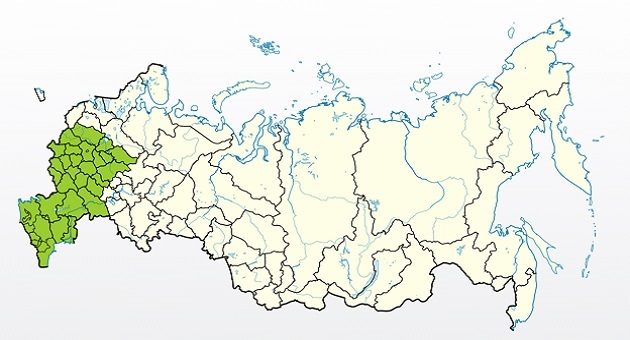
Growing regions
- Middle zone.
- Leningrad region.
- Middle Volga region.
- North Caucasus.
- Crimea.
- Some northern regions.
- Moscow region.
Origin
The variety was developed by Sergei Pavlovich Kedrin, a renowned Russian breeder in the early twentieth century. In 1936, the first hybrid seedling was obtained, derived from two well-known and popular varieties: Pepin Saffronny and Michurinskaya. The main goal was to impart a sweet, candy-like flavor to the apples, while also ensuring good winter hardiness, which was successfully achieved.
Currently, the State Register of Breeding Achievements contains no information about the "Podarok Detyam" variety. The apple tree also has no official regionalization. However, it can be grown almost anywhere in our country. It has gained greatest popularity in the central and European regions, as well as in the northern and southern regions.
Content
Description of the Gift for Children variety
 This mid-autumn ripening apple tree is recognized as one of the best for home cultivation in the Moscow and Leningrad regions. It is environmentally sustainable, easy to care for, requires little soil, and is winter-hardy, even tolerant of fairly harsh growing conditions. However, its yield leaves much to be desired, and its resistance to fungal infections is low, which are considered the main drawbacks of the "Gift for Children." It is being actively replaced by new, more advanced varieties.
The fruits are quite large, attractive in appearance, intensely aromatic, and, most importantly, have a unique, sweet, candy-like, honey-like flavor. They don't keep well, and they're not particularly easy to transport, but they're eagerly eaten fresh by adults and children, and they make delicious preserves, juices, jams, compotes, and pies.
Apples: What do they look like?
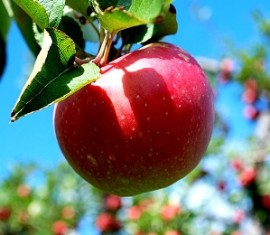
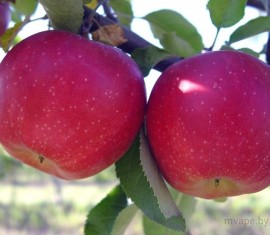
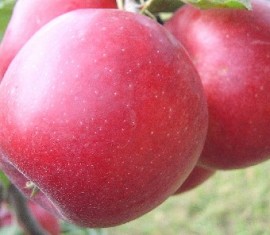
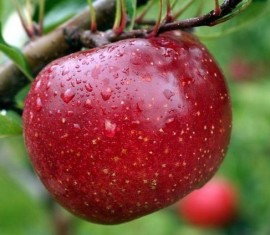
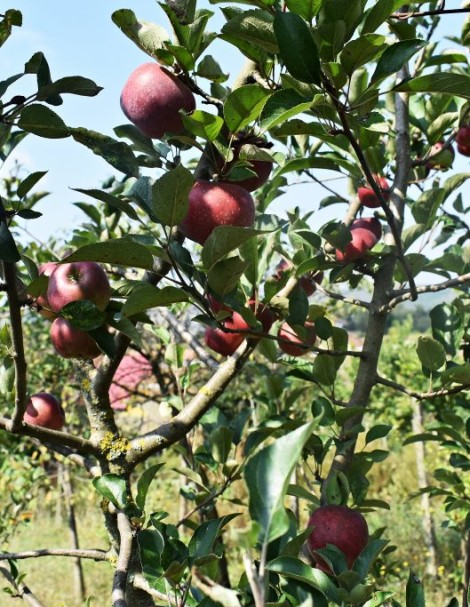
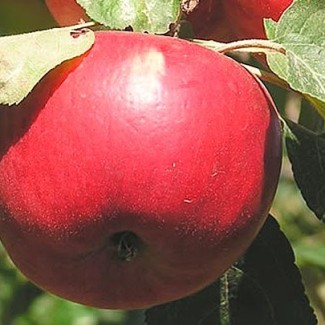
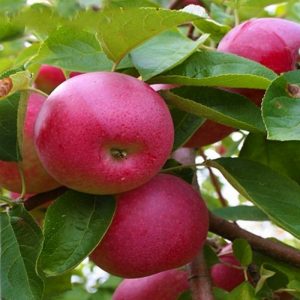 The fruits of the 'Gift for Children' variety are round, mostly symmetrical and uniform, but can sometimes be slanted to one side. They are spherical or round-conical, resembling a turnip, and can be flattened along the central axis. The fruits are medium to medium-large in size, weighing approximately 140-160 grams. In some years, they can reach 160-180 grams. The ribbing is very smooth and difficult to see.
The skin is firm, dense, thick, but not tough, and smooth. When ripe, it may develop a waxy, rather dense, bluish-silver coating. The underlying color is greenish-white or yellow when ripe. The blush is streaked, spotted, mottled, bright red, raspberry-red, carmine, or red-pink, occupying 45-70% of the fruit's surface. Subcutaneous spots are rusty, surrounded by a light rim; they are numerous and clearly visible, despite the skin being quite variegated. Experts recommend monitoring the chemical composition, according to some selective data:
- P-active substances (catechins) – 205.2 milligrams.
- Ascorbic acid (vitamin C) – 12.9 milligrams.
- Fructose (total sugars) – 16.1%.
- Pectins – 11.7%.
- Titratable acids – 0.49%.
The apples have snow-white, crisp, and crunchy flesh, but sometimes it can have a slight lemony or creamy tint. They are coarse-grained, slightly juicy, but intensely sweet, with a bright, candy-honey flavor without the spice. The taste is considered dessert-like, unbalanced, and inharmonious. According to professional tasters, the apples score only 4-4.3 points on a 5-point scale for taste and appearance.
Apple Tree Gift for Children: Characteristics
Crown and root system
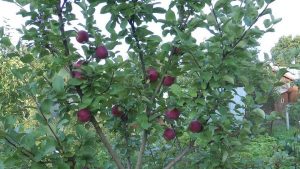 The gift is considered a medium-sized apple tree, because It can reach a height of no more than 3.5-4.2 meters without appropriate shapingThe crown is rounded or pyramidal when young, expanding with age, becoming weeping, spreading, and drooping. Branches are moderately dense, long, curved or straight, and drooping, covered with gray-brown or steel-gray bark, smooth, and slightly pubescent in places. Branches are positioned at right angles to the main stem, and fruiting is mixed.
The leaf blade is oval-elongated, rounded, fairly large, leathery, dense, highly glossy, and shiny. It is slightly wrinkled, coarsely nerved, with serrated, doubly serrated, and crenate margins, with long-pointed tips that can curl into a helix. The leaves are green or light green, wavy, and can fold into a boat-like shape or curve downwards. The root system is extensive, often fibrous, but on some rootstocks can be taproot, medium-deep, and adapted to the search for nutrients and moisture.
Productivity and pollination
Its fruiting is characterized by uniform regularity, which is why it is loved and appreciated by amateur gardeners. Even in years with challenging weather, it produces a consistent harvest with slight fluctuations.
From one mature tree trunk, thrifty owners can usually harvest 85-90 kilograms of apples per season, and sometimes even up to 100. On average, with a standard planting density, a hectare of orchard yields approximately 75-82 centners of fruit..
A gift for children, this cultivar is completely self-sufficient. It doesn't require any external pollinators to produce fruit; wind and bees are sufficient. This variety can be a valuable pollinator for other apple trees with suitable bud opening times. Therefore, one to two trees per hectare can be planted where trunks with active pollen are needed for cross-pollination.
Winter hardiness and disease resistance
Apple trees are resilient to low winter temperatures and can survive extended periods of temperatures dropping to -35-39°C. However, high humidity or sudden changes from severe frost to thaw can cause damage to trees, sometimes irreparable, from which they are unlikely to recover. Therefore, it's important to prepare for winter and cover the trunks.
To fungal infections, such as scabies Apple trees are moderately resistant to pests and other diseases. During years of severe epiphytotics, they are attacked suddenly, like an avalanche, and in large numbers. The affected foliage and fruit ultimately have to be completely picked and disposed of, as eating them is not recommended. Pests also frequently damage trees, so it's important to always remember to take preventative measures to minimize various risks.
Rootstocks and subspecies
Subspecies of the Gift for Children variety have not been developed, but it can be grown on various rootstocks. The most popular is the semi-dwarf or dwarf variety. The tree's crown develops into a very compact form, and although the tree loses some winter hardiness, the fruit grows large and beautiful.
Features of growing a Gift for Children
 Landing
 Landing
Basic conditions
- This variety thrives in virtually any soil. It grows well in rich, fertile black soil, loam, and even sandy loam. The key is to ensure good soil aeration to allow air to reach the roots. Poor soils can be fertilized, with once every two to three years being sufficient.
- Trees should be planted in a sunny location, as they can die in the shade. Even with minimal shade, seedlings usually refuse to bloom or bear fruit.
- Drafts are contraindicated when growing Podarok, although stagnant air should not be allowed either.
- It's essential to consider the groundwater level. If it reaches the surface above 2-2.2 meters, the roots may begin to rot, which will inevitably kill the tree.
- It's best to dig holes well in advance of the previous season, or at least 2-4 weeks before planting the apple trees. Dig them 80 centimeters deep and up to 1 meter in circumference. Add mineral and organic fertilizers mixed with the topsoil to the bottom, and cover with 10-15 centimeters of drainage material (vermiculite, stones, bricks, and even polystyrene foam). Fill the holes with 35-40 liters of water and leave them outdoors.
- Leave approximately 3-4 meters between trees for standard rootstocks and 2-3 meters for dwarf rootstocks. Leave slightly more space between rows to make maintenance and fruit harvesting as easy as possible.
- The root collar should always be left 6-9 centimeters above the ground level to prevent the tree from sending out roots higher. If this happens, none of the rootstock's properties will be preserved.
- The seedlings are inspected, excess, dry or broken roots are cut off, and they are placed in water for 4-8 hours.
- Place the trees on a pile of drainage material in the center of the hole, straighten the shoots so that they are not crushed anywhere, cover with soil, water (15-20 liters), and mulch the surface.
Landing dates
The trees are very hardy and thrive in almost any conditions, so they can be planted in both late fall and spring. Choose a warm, dry day, for example, late March or early April, or late September or October. The further north the growing region and the harsher the climate, the preferable is the first option. Their closed root system, meaning that the trees have their own root ball when purchased, allows them to be planted in the garden at any time of year, as long as the sap continues to flow in the trunks (the growing season).
Tree care
 Tree care
Protection from frost and pests
It's a good idea to properly prepare the Gift for winter by stopping watering before the start of autumn, at the end of August. This will allow the tree time to prepare for winter and survive the cold weather without any problems. It's a good idea to wrap the trunks with any available material, from roofing felt to old nylon tights. Straw, hay, spruce branches, and dry leaves can also be effectively spread around the roots.
Whitewashing the trunks, followed by scrubbing the bark with a stiff brush, helps eliminate many insects that breed in the cracks and spend the winter there. To repel rodents, use lard, fuel oil, or grease, liberally smeared on the lower part of the apple tree trunk.
Loosening the soil, watering: proper agricultural technology
You can dig once or twice a year; that's plenty. It's also a good idea to regularly clear the area of fallen leaves, weeds, and rotting fruit, as these can all contribute to the development of diseases. Hoeing the soil throughout the growing season is essential to ensure aeration. Over the years, many gardeners have been sowing herbs or grasses in the tree trunk area, which themselves make the soil airy and permeable to oxygen.
When young, the Gift will need to be watered quite frequently, at least once every 2-3 weeks. However, this should only be done when there is no natural precipitation. If it rains, you can start counting down the required time from that point on. Fertilizer and other nutrients are added along with the water. The day after watering, it's a good idea to loosen the soil to prevent it from becoming compacted.
Pruning: simple crown shaping
It's not recommended to prune one-year-old seedlings in the first year after planting, as this will cause excessive stress on the tree. The first pruning is done in the second year, but it's still not recommended to remove more than a third of the green mass. Most often, three to four skeletal branches are left, maintained in their natural branching pattern, and this completes the pruning process.
In spring and fall, inspect the tree to remove branches that protrude inward, upward, or that are broken, diseased, damaged, or dried out. These aren't beneficial, but overcrowding the tree can drain its sap.
Pollinator varieties
Diseases and pests
- Cytosporosis.
- Scab.
- Moniliosis.
- Powdery mildew.
- Hawthorn.
- Green aphid.
- Leaf roller.
- Scale insect.
Ripening and fruiting of the Gift to Children
The beginning of fruiting
 The beginning of fruiting
Old apple trees aren't usually known for their early fruiting, but Podarok stands out. Already in its third or fourth year, it can produce up to 2-6 kilograms of pleasant, sweet, though not particularly juicy, fruit. However, the tree can bloom earlier, in which case it's best to remove the buds to allow the rhizome and crown to develop.
Flowering time
The buds begin to bloom in early to mid-May, when the weather usually warms up. They are gathered in small, fairly large inflorescences, pinkish or pinkish-reddish in color. Once fully open, they become snow-white, large, and fragrant, with just a hint of pink. The petals are open, individual, delicate, and fleshy, with long peduncles.
Fruiting and growth
The "Gift for Children" tree grows quite quickly, although it doesn't achieve record-breaking growth rates. It grows approximately 35-50 centimeters per year until it begins bearing fruit. After that, the growth rate slows slightly. However, the tree isn't very tall, so it won't take long for it to reach its full height. It quickly increases its fertility, reaching its peak in just 6-8 years.
This is an autumn variety, and in warmer regions, the apples begin to ripen on the vines in September, but not all at the same time. By about mid-month, they are fully ready for picking and eating or processing. In more northern regions with harsh conditions, you'll have to wait until early October. The fruits may fall from the vines, making them completely unsuitable for storage. The fruit's shelf life is short, only 45-60 days in a good cellar or dedicated refrigerator. After that, they become completely wilted, crumbly, and lose their sweetness and distinctive flavor.
Top dressing
- Dolomite flour.
- Eggshells (calcium-containing complexes).
- Humus.
- Manure.
- Compost.
- Superphosphate.
- Mineral and nitrogenous complexes.
- Chicken or pigeon droppings.
- Ammonium nitrate.
What to do if it doesn't bloom or bear fruit
- Wrap up.
- Limit or increase watering.
- Remove insects.
- Cure diseases.
Why do apples fall?
- Weather troubles.
- Early frosts.
- Pests or diseases.
- Overripening.
Please share your own experience with the "Gift for Children" apple tree variety, so that even novice gardeners have no questions about cultivating these trees.