Caring for columnar apple trees: rules for fertilizing, pruning, and watering
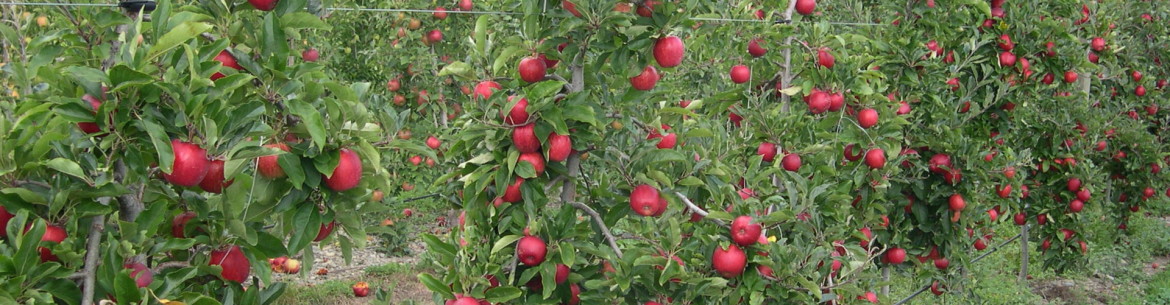
Today, apple trees can be found in almost every garden. However, owners of smaller plots face a problem: due to their spreading crowns, they are unable to plant more than two trees. For this reason, columnar fruit trees, characterized by the absence of lateral branches, have become increasingly popular. While they are easy to care for, they do require regularity and commitment.
Content
General characteristics
This variety of apple tree was first discovered by a Canadian gardener in 1964. The tree had a straight, voluminous trunk covered in fruiting shoots, but no lateral branches. Noticing that the shoots produced a bountiful harvest, the gardener grafted the cuttings onto a common apple tree. Thus, the first columnar cultivar, named "Vozhak," was launched.
The interesting tree attracted the attention of other gardeners, and in a relatively short time, several different varieties were developed, each with a distinct fruit flavor. Breeders discovered that the plant's unique primary traits can be passed down through generations via seeds.
 Modern columnar apple tree varieties have the following characteristics:
- height – 2.5 m;
- thickness – ½ m;
- absence of elongated branches;
- rapid ripening of fruits.
Columnar apple trees can be of three types:
- small;
- average;
- vigorous.
With strict adherence to agricultural technology, flowering of these varieties can be observed already in the first season after planting.
Landing features
To grow a healthy, abundantly fruiting tree, you need to choose the right seedling, as well as the time and place for planting it.
Principles of seedling selection
 The recommended age for planting seedlings is no more than one year. This is due to their rapid adaptation and ability to bear fruit. When choosing a seedling, pay attention to the condition of its root system: it should be free of rot. Also, avoid purchasing trees with dried-out roots. Ideally, purchasing a container-grown tree is ideal; in this case, it can be planted even in summer.
It is best to give preference to seedlings with tags that contain information about the variety, age, cold resistance and growing region.
Choosing a location
The site for a columnar apple tree should be sunny and open, yet protected from drafts and strong winds. The recommended groundwater level is at least 200 cm. Growing along buildings or fences is ideal. An orchard of dwarf varieties can be planted directly in a greenhouse. Columnar trees require nutrient-rich, well-drained soil.
The right time for planting
You can plant seedlings in both spring and autumn, following these principles:
- In the spring. Planting occurs in warm soil, but before the sap begins to flow, that is, before the buds appear. The trees are planted in holes prepared in the fall: dug and fertilized. Over the winter, the fertilizer has time to dissolve in the settled soil, allowing the seedling roots to immediately enter the nutrient medium.
- The ideal time for fall planting is after the leaves have fallen, about a month before the onset of cold weather. At this time, the most important thing is for the seedling to establish roots before frost.
In summer, it is permissible to plant seedlings purchased in a special container with a closed root system.
Planting in autumn
When planting large numbers of columnar crops, it is recommended to plant them in rows. The distance between trees in a row should be at least 50 cm, with a row spacing of 100 cm. The optimal hole size is 90 x 90 cm. The holes should be prepared two weeks before planting to allow the soil to settle. Otherwise, the root collar will be exposed above ground, which will result in the death of the tree.
When forming holes, the top nutrient layer of soil is set aside, after which the following components are added to it:
- 4 buckets of humus;
- 100 g superphosphate;
- 100 g of potassium composition.
If the soil is highly acidic, dolomite flour is added to it.
If the soil is heavy, line the bottom of the hole with a drainage layer of sand and crushed stone. Some of the nutrient-rich soil mixed with fertilizer is added to the prepared holes; two weeks before planting, it settles and compacts.
After the allotted time, add the remaining soil mixture to the planting holes, and plant the seedlings in the resulting mound. The root collar should be positioned just above the soil surface. The root system is then spread out, and the holes are filled with soil from the lower, infertile soil layer. Water the seedlings with 20 liters of water under each stem. After the soil has completely absorbed the moisture, a layer of mulch is applied to the surface. Sawdust, grass clippings, or peat are good options.
To be on the safe side, you can tie the seedlings to nearby supports.
Spring planting
In the spring, seedlings are planted in holes prepared in the fall, where the soil has settled and become nutrient-rich. Apple trees planted at this time adapt quickly and usually begin blooming later that season. Spring planting follows the same procedure as in the fall.
Rules for caring for a columnar apple tree
Comprehensive care for columnar fruit crops includes timely fertilizing, watering, pruning, spraying, and soil cultivation. Each season of the year requires specific garden care.
Spring care rules
With the arrival of spring, it's important to prune trees promptly and treat them to protect them from harmful insects and diseases. These procedures should be performed before the buds open, that is, on bare branches. Nitrogen-containing fertilizer should also be applied to the soil during this period.
Apple trees planted the same year should have all buds that form removed. Two-year-old trees should have 10 buds, and in their third year, the tree can be gradually loaded. Columnar trees require timely watering, followed by loosening the soil around the trunk.
When growing apple trees on columnar rootstocks, it's best to plant green manure around the trunk to enrich the soil with nutrients. These will need to be mown as they grow.
Summer care
In summer, apple tree care includes watering, fertilizing, and weed control. At this time, it is best to use drip irrigation without mulchingIf watering with a hose or buckets, the soil must be mulchIn addition to watering, a columnar garden requires a shower: flushing the entire above-ground part at least 2-3 times a month.
By mid-summer, watering frequency is reduced, and by August, it's stopped completely. This allows the apple trees to form buds for the next season and prepare for winter. In the summer, the orchard should be fertilized intensively, as this is when the trees grow, bloom, and set fruit. The following fertilizers are used for this purpose:
- urea;
- complex compositions for fruit trees;
- chicken manure;
- cow dung;
- ammonium nitrate.
After planting the tree, fertilizing is carried out a month later, and by mid-July the procedure is repeated 4 more times.
From mid-summer onward, trees are fertilized only with potassium-phosphorus compounds. The use of nitrogen fertilizers during this period is unacceptable due to their negative impact on fruit growth and development.
Autumn care principles
Autumn garden maintenance includes treating for fungal diseases and harmful insects, fertilizing, and pruning. Damaged and old branches are removed before the first frost to prevent freezing and rotting of the cut sections. The procedure is as follows:
- cut off the largest branches;
- thin out the dense crown, leaving straight and strong branches;
- remove shoots that extend from the trunk at a right angle, otherwise they will break under the weight of the fruit;
- the cut sites are treated with disinfectants;
- All cut branches are collected in a pile and burned outside the garden to prevent the spread of diseases.
For autumn fertilization of the soil, the following amount of fertilizers will be required per 1 m2:
- 20 g ammonium nitrate;
- 3 kg of humus;
- 2 kg of potassium salt;
- 60 g of phosphorus preparations.
Fertilizer application to the soil in the fall is not performed every season, but once every 2–3 years.
In the fall, fruit trees are whitewashed with a mixture of lime, clay, and copper sulfate in a ratio of 2.5:1:0.3 kg per 10 liters of water. Whitewashing will prevent frost cracks from appearing on the trunks. This procedure will need to be repeated in March.
Garden cultivation
In the spring before the sap begins to flow and in the fall after the leaves have fallen, columnar apple trees need to be treated to protect them from various diseases and harmful insects. This includes spraying not only the trees but also the soil around the trunk. Gardeners typically use Bordeaux mixture (1%), Nitrafen, and urea (7%).
Watering mode
Columnar apple trees have fibrous root systems that require regular watering. Proper watering follows these principles:
- give preference to the drip method;
- do not allow excess moisture, which will block the access of oxygen to the roots, as a result of which the tree will die;
- moisten the soil once every 4 days, on dry days – at least once every 2 days;
- in case of severe drought, water the apple trees generously with a hose twice a month;
- stop watering in September so that the trees can prepare for autumn.
Young trees are watered more often than mature ones.
Fertilization
Because apple trees' roots are close to the surface, solid fertilizers are best. They should be applied to a depth of 3 cm, then thoroughly watered and covered with mulch. The first application should be done approximately 20 days after planting, during bud formation, and then every 3-4 weeks.
When choosing a fertilizer, it is necessary to take into account the degree of soil fertility.
In the spring, add organic matter to the soil, such as slurry or chicken manure. Before bud break, apple trees are sprayed with a 7% urea solution. The subsequent fertilizing protocol is as follows:
- During bud formation, nitrogen compounds are used, which are necessary for the full development of leaves;
- during the period of budding, trees are supported with potassium, phosphorus and magnesium;
- During the ripening process of fruits, phosphorus-potassium compounds are used to increase their juiciness and taste.
Preparing for winter
In the fall, the trunks of columnar trees are covered with wood shavings or spruce branches. The material must be completely dry and unable to accumulate moisture. Straw is not recommended as a cover, as it attracts rodents. The upper part of young apple trees is covered with four layers of thick paper or burlap, and then wrapped with twine, as they are not very cold-tolerant at an early age.
Columnar apple trees are covered for the first 5–6 years, until their root system becomes stronger.
Trees over 8 years old tolerate low temperatures well: healthy specimens can overwinter without shelter even when temperatures drop to -35°C. Mature trees are also resistant to rodent attacks, as their rough bark does not attract mice and hares.
Pruning rules
Columnar apple trees generally don't require regular pruning. However, there are a few guidelines to follow when doing so.
Algorithm of the procedure
When pruning a columnar apple tree, remember: the more shoots you remove, the more vigorously the remaining ones will grow. If pruning is done correctly, the tree will grow 10 to 15 cm annually, with three lateral buds appearing.
In the spring, all lateral shoots on one-year-old trees are pruned, leaving no more than two buds. Later, at 2-3 years of age, gardeners form fruiting branches from these young branches.
Time for pruning
Columnar apple trees do not require pruning to shape the crown; only lateral shoots need to be removed. This procedure is carried out in early summer or fall, after the leaves have completely fallen.
During the pruning process, it is unacceptable to touch the central conductor, since the absence of a growth point will stimulate the intensive growth of lateral branches.
Spring pruning
Pruning is performed in the spring before the sap begins to flow, removing crossing and damaged shoots. In the second year of life, the apple tree's fruiting units are formed, leaving 10 blossoms. When pruning mature trees, twice as many blossoms as expected are left. If long lateral shoots develop, only one, at least 20 cm long, is left.
Pruning in autumn
In autumn, pruning is performed only in cases of extreme necessity, for example, if branches are damaged.
Features of reproduction
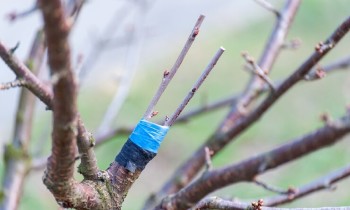
 Columnar apple trees are propagated by grafting a varietal scion onto the most suitable rootstock. These varieties can also be propagated using air layering. To do this, select a pencil-thin scion in the spring and make a 5 mm cut at its base. A piece of cloth soaked in a growth stimulant is then applied to it. The cloth is covered with damp peat and then covered with a black plastic bag. The structure is secured to prevent air from entering. In the fall, roots form at the cut site, after which the branch is separated from the parent tree and transplanted into the ground.
To ensure a healthy and abundant fruiting orchard of columnar apple trees, experts recommend purchasing seedlings from nurseries rather than growing them yourself.
Possible diseases and pests
Columnar apple trees are susceptible to the same insects and diseases as regular varieties. Specifically:
- leaf rollers;
- red tick;
- moth: apple, fruit, rowan;
- aphid;
- codling moth;
- scale insect;
- weevil;
- witch's broom;
- powdery mildew;
- scab;
- fruit rot etc.
Biofungicides, as well as copper sulfate and Bordeaux mixture, are used to treat trees and for preventive purposes.
Popular varieties
The most common varieties of columnar apple trees include:
- Nectar;
- President;
- Vasyugan;
- Dialogue;
- Ostankino;
- Malyukha;
- Gin;
- Triumph;
- Arbat;
- Amber necklace.
Columnar apple trees make it possible to organize a garden and reap a bountiful harvest in small spaces. With proper care and proper agricultural practices, these neat trees will delight their owners for many years to come.