Apple tree Aport Dubrovsky: characteristics of the variety and care
| Color | Reds |
|---|---|
| Ripening season | Autumn |
| Size of apples | Large |
| Taste | Sweet and sour |
| Crown type | Average tree height |
| Shelf life | Average shelf life |
| Application | For recycling , Fresh |
| Winter hardiness | Average winter hardiness |
| Fruiting age | From 5 years old |
 History of origin and regions of growth
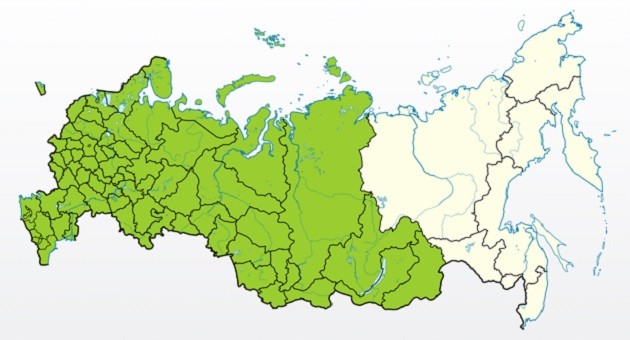
Growing regions
- Crimea.
- Middle zone.
- Leningrad region.
- North Caucasus.
- Ural.
- Moscow region.
- Siberia.
Origin
The parent variety is believed to trace its lineage back to ancient times. It is mentioned in sources dating back to the 11th and 12th centuries AD. Documents from the 17th century already refer to the variety as old or ancient. In fact, the Aport Dubrovsky subvariety is a clone grown on the semi-dwarf rootstock 62-396.
The new apple tree was bred by amateur gardener Afanasy Efimovich Ukhalov, who lives near Yekaterinburg. Its name was chosen deliberately and bears only a passing resemblance to the famous literary character. The pomologist's farm is located in the village of Verkhneye Dubrovo, where the apple tree's name originated. The apple tree has no official regionalization, nor is it included in the state register of breeding achievements, although it has long been beloved for its remarkable qualities.
Content
Description of the Aport Dubrovsky variety
 This variety boasts many positive traits, making it highly prized by gardeners in our country even though it's old. The tree is very compact, with a neat, small crown that doesn't tend to spread or become dense. It's easy to maintain, grows well even in challenging conditions, is winter-hardy, tolerates air pollution and environmental contaminants, and has moderate disease resistance. A drawback is its tendency to fruit intermittently with age.
A special advantage of the Aport Dubrovsky apple tree is its exceptionally large fruits, especially in the first few years after fruiting begins. They are very large, beautiful, incredibly tasty, sweet, and aromatic. This variety is recommended for private cultivation in home gardens and for commercial plantings.
Apples: What do they look like?
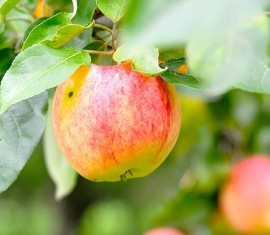
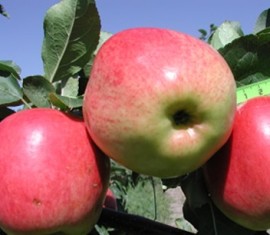
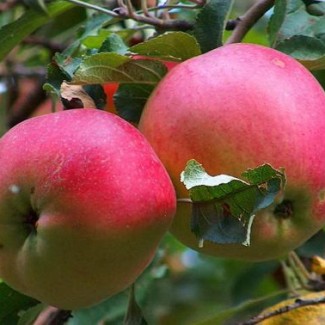
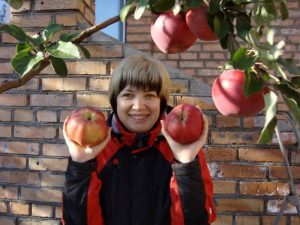
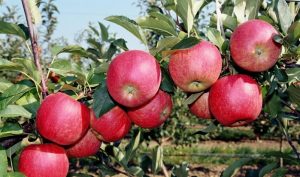 This is one of the largest-fruited apple varieties available on the agricultural market today. The fruits typically grow to 250-340 grams in weight. At the very beginning of fruiting, over the course of approximately 3-5 years, they can reach 550-600 grams, which is very large, so the branches of this tree require support. They are rounded or spherical in shape, and can be slightly elongated or flattened, but not significantly. The ribbing of the fruits is quite pronounced, and the lateral seam is sometimes visible.
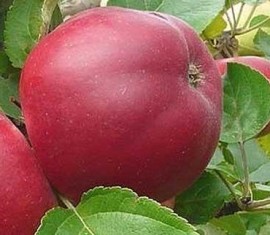
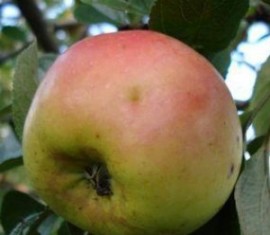
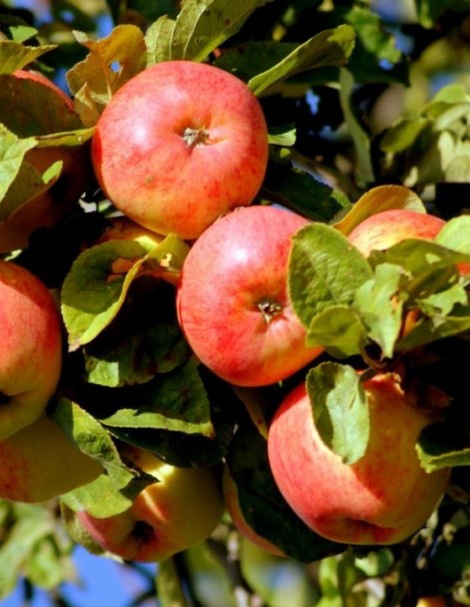
The skin of the fruit is of medium density and elasticity, easily cracking and susceptible to even minor mechanical damage. It is smooth and shiny, and when ripe, may become covered with a loose, whitish-silver waxy coating. The apples are generally yellow-green, but 65-80% of this is covered with a striped-spotted, blurred-striated crimson or pink blush, sometimes tinged with red. Subcutaneous punctures are numerous; they are medium-small, dark gray or slightly greenish, and clearly visible on the surface. The chemical composition of the apples is essentially the same as that of the parent variety, but there are some distinctive features:
- P-active substances (catechins) – 120 milligrams.
- Ascorbic acid (vitamin C) – 10.9 milligrams.
- Total sugars (fructose) – 11.9%.
- Pectins (fiber) – 15.4%.
- Titratable acids – 0.8%.
The main feature of the Dubrovsky Aport pulp is its incredibly powerful, distinctive aroma. It easily overpowers the aroma of any other apple, making it hard to miss. The flesh is dense, fine-grained, tender, yet crisp and easily peeled. It is very juicy, with a delicate green or slightly light green hue, sometimes snow-white or lemon-colored. The flavor is considered balanced and harmonious, a classic sweet and sour combination, with a primary sweet note and a hint of tartness. According to professional tasters, it scores 4.6-4.8 out of 5.
Apple tree Aport Dubrovsky: characteristics
Crown and root system
 The trees are characterized by moderate growth, they can stretch no more than 2-2.5 meters, as they are grown exclusively on semi-dwarf rootstock. The crown is pyramidal or oval when young, but with age it can become broadly oval but not spreading, with a maximum diameter of 1.8-2.2 meters. Branches are not densely spaced, rounded in cross-section, fairly thin, straight, and set at a nearly right angle from the trunk. They are covered with brown or brownish bark without much pubescence.
The leaves are medium-sized, wide, oval, and short-curved with a curled tip. They are predominantly light green or green in color, with rough, wrinkled, and matte ribs, and a felt-like pubescence on the underside. The blade has serrate-crenate margins, serrated, sometimes strongly wavy, and sometimes folded into a boat-like shape. The root system is fibrous, highly branched, and well-dug, adapted to the search for nutrients and water.
Productivity and pollination
Aport Dubrovsky is considered a high-yielding variety, although it is far from the same Antonovka.
One mature, fully formed tree of this variety can yield approximately 145-160 kilograms of large, attractive, delicious, and nutritious apples per season. With excellent care and proper fertilizing without excessive nitrogen, this yield can be increased by 15-20%.
The Dubrovsky apple tree is conditionally self-fertile. A certain percentage of the fruit, approximately 35-60%, will set even if there is no pollinator within 50-90 meters. Therefore, it is advisable to interplant the trees with varieties that bloom at the right time in spring.
Winter hardiness and disease resistance
The variety's hardiness can be questionable, as frosts down to -25-28°C lasting more than a week can seriously damage the trees. The standard trees are also susceptible to recurrent frosts and early autumn frosts. However, with proper winter preparation and proper shelter, they can easily tolerate even much lower temperatures.
Trees have no immunity to diseases of various etiologies. They are affected scab And powdery mildewThey are easily damaged by insect pests. Therefore, proper and timely prevention, spraying, and treatments play an important role in growing these apple trees. Suitable insecticides and fungicides are readily available at agricultural supply stores.
Rootstocks and subspecies
This variety is a subspecies of Aport, grown exclusively on semi-dwarf rootstock. It has no distinct varieties, and neither columnar nor creeping varieties exist.
Features of growing Dubrovsky's Aport
 Landing
 Landing
Basic conditions
- It's crucial to plant trees in a sunny area. Otherwise, the fruit will become smaller and you won't see any dramatic results.
- It's important to consider the groundwater level. It should be at least two meters deep, otherwise root rot may occur, leading to the death of the tree.
- Aport doesn't tolerate drafts; it immediately becomes ill and then dies, but its crown also won't tolerate stagnant air. Maintaining the right balance is crucial.
- You can prepare the holes 3-4 weeks before planting, but it's best to do this the previous season. Dig them up to 1 meter in diameter and 80-90 centimeters deep. Place the topsoil, pre-mixed with fertilizer (organic and mineral fertilizers) at the bottom. Place drainage (rocks, vermiculite, polystyrene foam, broken or chipped brick) on top, and then fill with water (45-60 liters). Leave the prepared holes uncovered.
- Leave at least 2-2.2 meters of space between trees in all directions so that in the future they will not be disturbed by the crowns or crowns of other plants.
- The tree's root collar should be left 4-6 centimeters above the surface to prevent it from rooting higher. If this happens, the rootstock's qualities will be lost, and you'll end up with a regular Aport, which is also not a bad thing.
- Be sure to dig or drive stakes into the holes immediately, or even better, trellises to support the trees. This will be necessary not only for young seedlings. In the future, branches laden with large fruits will require reliable support, otherwise they will simply break off.
- Place the tree on a mound of drainage material and cover it with soil, having first spread out the rhizome. Compact the soil by hand only; excessive compaction is not recommended. Water the tree with 35-45 liters of water and apply mulch to the soil surface.
Landing dates
This variety is quite delicate in terms of winter hardiness, although it is grown even in Siberia and the Urals. However, it is best planted in the spring, when the threat of frost has completely passed. Only in temperate or warm regions can trees be planted in September-October, after the sap in the trunks has stopped flowing.
Tree care
 Tree care
Protection from frost and pests
All trees of this variety are low-growing even when mature, making them easy to shelter with a tent in harsh climates. However, this isn't always necessary; in warmer climates, you can simply wrap the trees with roofing felt, burlap, or tar paper, and pile bales of straw, hay, or spruce branches on the roots. During severe frosts, rake 10-15 centimeters of soil onto the root zone, which is removed in early spring before the sap begins to flow.
To repel hungry rodents from tender trunks and shoots in winter, coat the lower parts of the trunks with lard, tallow, old drying oil, fuel oil, or grease. Whitewashing with a thick lime solution, applied to a height of 1-1.2 meters, is also effective against insects. This will also make the garden look neat and attractive.
Loosening the soil, watering: proper agricultural technology
To achieve outstanding yields from your Aport tree, you need to understand that it will require some effort. You need to dig around the trunk twice a year, in the fall and early spring. At this time, remove weeds, root suckers, and shoots from various plants. Care must be taken to avoid damaging the small root shoots that grow near the surface. During the growing season, in the summer, you'll simply need to hoe the soil after each watering the following day. At the same time, remove any accumulated debris (twigs, leaves, fruit, etc.) from under the trunks.
Apple trees require frequent watering, especially when young. The ten-day rule works particularly well for the Dubrovsky apple tree. This means applying water around the crown of the tree every ten days. If it rains, the next watering period is calculated from that date. Fertilizer should be added along with the water, but not earlier than three to four years after planting.
Pruning: simple crown shaping
These trees aren't particularly prone to overgrowth. Therefore, if the sapling was trained in a nursery, simply maintain its natural branching. When pruning yourself, trim the trunk and leave the branches in tiers of 2-4, spaced well apart. A sparse or sparsely tiered form works well for Aport Dubrovsky.
Sanitary pruning is usually done in the fall, but branches broken by snow or strong winds, for example, can also be removed in the spring. All damaged or diseased shoots, as well as dry and weak ones, should be regularly removed. Those that protrude vertically or grow inward, actively thickening the crown, are pruned. Fruits on these branches usually do not ripen, making them completely useless. The cut areas, called wounds, are sealed with garden pitch, paint, or even just soil.
Pollinator varieties
- Idared.
- Spartacus.
- Gala.
- Liberty.
- Champion.
- Borovinka.
- Antey.
- Ligol.
- Belarusian sweet.
- Gloucester.
- Silver hoof.
Diseases and pests
- Cytosporosis.
- Rust.
- Pit rot.
- Powdery mildew.
- Black crayfish.
- Scab.
- Rust.
- Scale insect.
- Leafhopper.
- Green aphid.
- Hawthorn.
Ripening and fruiting of Aport Dubrovsky
The beginning of fruiting
 The beginning of fruiting
The mother variety begins bearing fruit within five years of planting, and the semi-dwarf Dubrovsky even earlier. Already in its second or third year, it produces very large and beautiful apples, weighing over half a kilogram. You won't get many in the first few years, but you'll definitely get a few dozen to sample.
Flowering time
Buds on the tree begin to open as early as early May, sometimes as late as mid- or even late May. Everything here depends directly on the weather and climate, the cold of the previous winter, care, and other factors. The flowers are large, slightly pinkish, with fleshy, large, and delicate petals. They are very fragrant, making it easy for bees to find the trees during the blooming process. The blooming period lasts approximately 12-16 days, offering a truly spectacular display.
Fruiting and growth
The tree grows quite rapidly, gaining a good 35-50 centimeters per year, especially before the fruit begins to ripen. Its fruitfulness increases steadily each year. Full harvests can be reaped as early as 7-9 years of age. The active fruiting period can reach 25-35 years, which is unusual for dwarf and semi-dwarf trees. However, fruiting is consistently consistent. The apple tree bears fruit for 2-3 years, after which it takes a resting period. If not properly cared for, it can bear fruit every two years.
The variety is considered late because the apples don't begin to ripen until late September, and often even early October, and they ripen all at once. They hold firmly to the branches and are not prone to shedding, but if not picked in time, they won't keep for long. In a regular cellar, they can last 2-3 months, while in a special cellar, refrigerator Up to 3-4. They are easy to transport, even over long distances, and are also suitable for processing.
Top dressing
- Humus.
- Peat.
- Bor.
- Calcium.
- Manure.
- Compost.
- Superphosphate.
- Ammonium nitrate.
What to do if it doesn't bloom or bear fruit
- Limit or increase watering.
- Eliminate insects.
- Cure diseases.
- Transplant to a sunny place.
Why do apples fall?
- Wind, frost, rain, hail.
- They are very overripe.
- Pests or diseases.
Leave a review of the Aport Dubrovsky apple tree variety so that even a novice gardener can receive useful information firsthand.