Spartak apple tree: characteristics of the variety and care
| Color | Reds |
|---|---|
| Ripening season | Autumn |
| Size of apples | Average , Large |
| Taste | Sweet and sour |
| Crown type | Average tree height |
| Shelf life | Low shelf life |
| Application | Fresh , For recycling |
| Winter hardiness | High winter hardiness |
| Fruiting age | Up to 5 years |
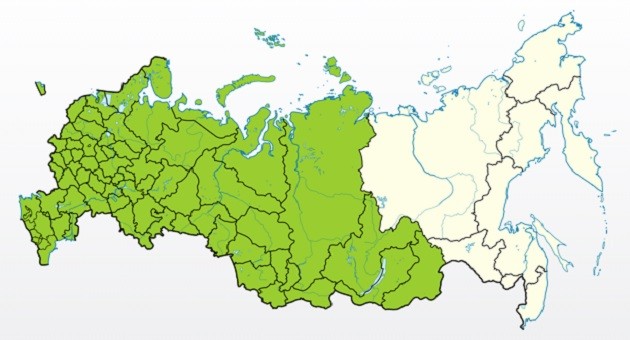 History of origin and regions of growth
Growing regions
- Middle zone.
- Leningrad region.
- Middle Volga region.
- Ulyanovsk region.
- Siberia.
- North Caucasus.
- Krasnoyarsk Krai.
- Crimea.
- Some northern regions.
- Moscow region.
- Republic of Khakassia.
- Ural.
Origin
The cultivar was first bred by the renowned Soviet breeder Sergei Pavlovich Kedrin back in 1936. He selected it from seedlings obtained by open pollination of the then-well-known Sharopai cultivar (Aport Santalova, Aport Zilovka). It is believed that the "parent" plant may have been the common Skryzhapel. The selection was conducted at the Kuibyshev Experimental Horticulture Station (now the Samara Region State Budgetary Institution, the Research Institute of Horticulture and Medicinal Plants "Zhigulevskie Sady").
An application for testing was submitted in 1947, but it was accepted only a year later. It took another 11 years for the Spartak apple tree to be included in the State Register of Breeding Achievements in 1959 and zoned for the East Siberian, Ural, and Middle Volga regions. In reality, it is easily cultivated over a much larger area.
Content
Description of the Spartak variety
 This autumn variety immediately attracted the attention of gardeners across the country, but is especially popular in the Volga region. A medium-sized tree, early ripening, requiring little attention, undemanding in terms of care, moisture, and soil, it also bears fruit regularly and abundantly. It tolerates prolonged winter frosts and summer heat well, is resistant to sudden temperature changes, and is rarely affected by parasitic diseases.
Spartak's fruits have high commercial and consumer qualities. They are attractive, fairly large, and have a pleasant flavor and strong aroma. Despite their limited resistance to scab and other fungal infections, they are considered an ideal choice for intensive gardens, but they also offer abundant yields and are easy to care for in private gardens.
Apples: What do they look like?
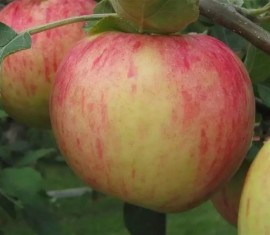
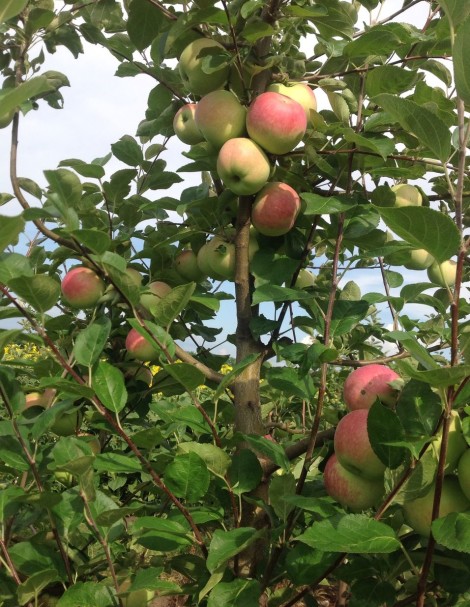
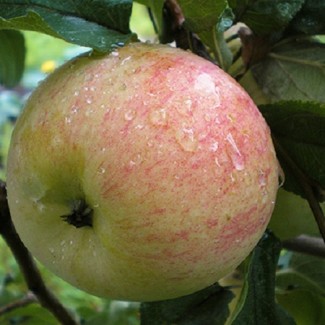
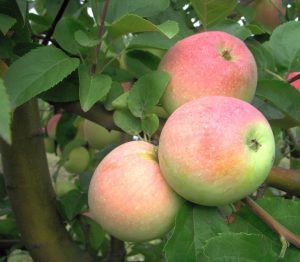 The fruits are mostly medium or slightly larger in size, smooth, symmetrical, and uniform. They can weigh up to 270-310 grams on young trees, and up to 100-150 grams on older and more mature trees. The shape of the fruit is round, spherical, sometimes slightly flattened, or turnip-shaped, without any obvious tilt to one side. Ribbing is virtually invisible anywhere on the apple.
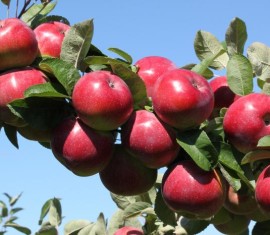
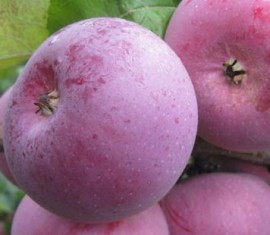
The skin is medium-dense, firm, and elastic, but not too thick. It is smooth and highly shiny. When ripe, it may develop a waxy-oily coating of medium density and thickness, usually virtually colorless. The base color is greenish-yellow or honey-yellow. The blush is initially quite pale, vaguely spotted, streaked, and mottled, but as it ripens, it acquires a more intense, bright red, crimson-red, carmine, or bright pink hue. Subcutaneous punctures are numerous, medium-sized, greenish-rusty, and can be whitish or whitish-green. Professionals prefer to evaluate the chemical composition based on a selection of several indicators:
- P-active substances (catechins) – 276.2 milligrams.
- Ascorbic acid (vitamin C) – 13.8 milligrams.
- Fructose (total sugars) – 14.1%.
- Pectins – 12.5%.
- Titratable acids – 0.57%.
The medium-dense, very juicy, fine-grained flesh, very tender, and pleasant texture immediately draws the palate in. It has a harmonious, sweeter, yet characteristically tart, spicy apple flavor, balanced and dessert-like. On a professional tasting scale, it scores at least 4.7-4.8 points for appearance and unique flavor.
Spartak apple tree: characteristics
Crown and root system
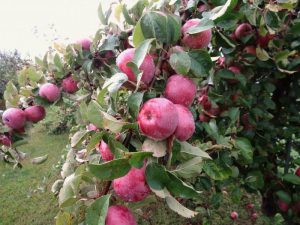 Spartak is considered a medium-sized or even low-growing apple tree. It can grow up to 4-5.5 meters maximum without formative pruning.The crown density is medium to high, the shape is oval, oval-pyramidal, broadly oval, or in old age, sometimes spreading, drooping, and weeping. The shoots are long, straight, extending from the trunk at an acute angle, prone to splitting, and covered with reddish-brown bark with a light pubescence. Fruiting is mixed, on all types of growth (rings, spears, fruiting twigs).
The leaf blade is elongated, oval, oblong, and long-pointed, with a twisting, screw-like tip. The margins are serrated, doubly serrated, somewhat wavy, and may appear crumpled; the ribbing is coarse. The leaves are dark green, green, or emerald, dense, leathery, moderately glossy, and tomentose on the reverse side. The root system is medium-deep, fibrous, and branched, with a moderate number of small branches, and is superficial.
Productivity and pollination
In addition to its early fruiting, Spartak is also distinguished by its medium-to-high yield, without any tendency toward periodicity. This means that throughout the tree's active life, from the beginning to the end of fruiting, it will produce a stable quantity of apples annually.
With proper care in favorable years and climate zones, one mature tree can produce at least 110-130 kilograms of beautiful, sweet, tasty, juicy apples..
The variety is self-fertile, but with this type of pollination, no more than 25-30% of apples typically set fruit. Therefore, it's essential to have suitable pollinators nearby to maximize yields. Advanced gardeners spray the trees with sugar or honey syrup in the spring and also bring mobile apiaries closer to the orchard.
Winter hardiness and disease resistance
Spartak's tolerance of low temperatures is impressive. It can easily withstand temperatures as low as -25-27°C, without even requiring additional shelter. However, if such temperatures persist for more than 2-4 weeks, the trees can suffer serious damage. They dislike high humidity and sudden changes from severe frost to thaw.
In years of fairly strong epiphytotics, apple trees can be heavily affected scab and other apple fungi. Typically, not only the leaves but also the fruit are affected, and then the entire harvest will have to be disposed of. Fruit rot and cytosporosis, On the contrary, this variety rarely encounters pests. Regular preventative treatments will minimize the risk of any damage.
Rootstocks and subspecies
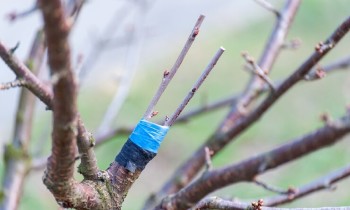
No Spartak subspecies have been created, although trees can be grown on different rootstocks. This will impart slightly different characteristics, which has little impact on fruit quality. Columnar varieties and absolute (natural) dwarfs do not exist. On dwarf and semi-dwarf rootstocks, the apple tree grows to a maximum height of 2.2-3.1 meters, although its frost resistance decreases, but the fruit may be larger.
Features of growing Spartak
 Landing
 Landing
Basic conditions
- Apple trees thrive in fertile soil, but with regular feeding and fertilization, they will even grow on rocky slopes, sand, or clay. The main requirement is that the soil not be excessively acidic or salty.
- A sunny location is the key to good, rapid tree growth, early fruiting, and abundant harvests. While it can thrive in the shade, it often becomes weak and refuses to bloom or bear fruit.
- Choose a planting site where the groundwater level isn't too high, as the roots can sometimes go deep and rot. Avoid planting Spartak near shallow wells, rivers, lakes, streams, or other bodies of water, whether natural or artificial. If you have no other options, you can build a mound and plant the trees in it.
- Drafts can kill apple trees before they even begin to bear fruit. The location should be well-ventilated, but not exposed to northerly winds.
- Leave approximately 4.5-5 meters of space between trees, as well as between rows. This will not only make subsequent harvesting easier but also prevent the apple trees from shading each other.
- Planting holes are dug 3-6 weeks in advance, or even better, the previous season. Experienced gardeners always prepare the garden site in advance. They can be 70-80 centimeters deep and up to one meter in diameter. Fertilizer (organic and mineral) is added to the bottom, drainage is added on top, and then watered. The holes are left uncovered.
- The root collar should always be above ground level during planting, otherwise the apple tree will take root higher and neutralize the properties of the rootstock.
- Place the seedling on a mound of drainage material (nut shells, stones, broken brick, vermiculite), spread it out, and cover with soil, tamping it down lightly. Mulch the surface to retain moisture, after watering it with 35-50 liters of water.
Landing dates
The best planting time should be determined individually for each region, taking into account specific weather and climate conditions. In southern regions with a mild climate, Spartak can be planted in spring or fall; there's no difference, as long as the soil is still warm and frost hasn't set in for the next 3-4 weeks.
In northern regions, it's best to plant in the spring, after the soil has warmed up completely, around late March or early April. The closed root system allows for planting at any time during the tree's growing season.
Tree care
 Tree care
Protection from frost and pests
Spartak requires standard winter protection measures; nothing out of the ordinary is needed. Trunks are wrapped in burlap, roofing felt, or roofing felt; strips of any fabric can be used. Young, low-growing trees can be covered with a tent-like covering, from the ground up. In the coldest regions, well-dried leaves, straw, hay, even soil, and spruce branches can be piled on the roots.
In the fall, or perhaps even early spring, the trunk is cleaned with a stiff brush to remove loose bark where insects can nest. Then, it is whitewashed with a thick lime solution to prevent recurrence. A thick coating of lard, fuel oil, or grease on the trunk will repel rodents. Their pungent odor is sure to repel hares, mice, and hamsters.
Loosening the soil, watering: proper agricultural technology
Regular weeding and loosening of the trunk area will help the rhizomes receive oxygen, which is essential for normal apple tree growth. This area can be dug twice a year, but hoeing is best done 6-8 times per season. Weeds, fallen leaves, and rotting fruit should also be removed. All this "stuff" can negatively impact Spartak's health.
Young apple trees need to be watered fairly frequently. Once every 7-10 days is ideal, especially if the weather is hot and dry. After rain, you can wait the same amount of time and water again. Watering should be stopped no later than early September, or even better, by the end of August, to allow the tree time to prepare for winter. Fertilizers and fertilizers are added along with the water, so they are better absorbed by the roots.
Pruning: simple crown shaping
The first pruning of a tree is done immediately after planting. Then, all lateral shoots are removed, leaving 3-4 main branches. These should be shortened to no more than 3-4 buds. This creates a sparse crown, which will subsequently branch out regularly without becoming overly dense. It's best to leave shoots that don't protrude into the crown or vertically upward, and that grow at as wide an angle to the trunk as possible.
In spring or fall, or even both, a sanitary inspection and pruning are necessary. Broken, diseased, and dry branches that are no longer useful are removed. Cuts should not be left unattended; they must be sealed with garden pitch or any other available material.
Diseases and pests
- Powdery mildew.
- Scab.
- Moniliosis.
- Black crayfish.
- Hawthorn.
- Aphid.
- Leaf roller.
- Scale insect.
Ripening and fruiting of Spartacus
The beginning of fruiting
 The beginning of fruiting
The first modest buds appear on the branches approximately 2-3 years after planting. However, it's best to pluck them immediately, as they are barren flowers. The first harvest can be collected in the 3-4 year, but you'll have to wait quite a while for a full crop. In the first few years, the apple tree produces approximately 4-8 kilograms of fruit, the size of which is quite impressive (270-300 grams).
Flowering time
The average fruiting period makes it easy to find pollinators for apple trees. They bloom as early as mid-May and continue to bloom until approximately the end of the month. Depending on climate or weather conditions, the timing may shift slightly. The process lasts at least 10-15 days, giving wind and bees plenty of time to complete the task.
Fruiting and growth
Spartak grows quickly, reaching at least 45-60 centimeters in height per year. However, this growth rate only lasts until the first fruiting, after which the tree slows slightly. Then, the growth rate is more average, approximately 25-30 centimeters. The number of fruits increases each year, but a full harvest will take at least 9-10 years. The active lifespan of the apple tree is over 55-65 years.
Apples begin to ripen in early September, but not all at the same time. Ripeness can be judged by the intense color saturation; the apples become beautiful, bright, and mottled. Typically, it takes about 2-3 weeks, sometimes a little longer, from the beginning to the full ripening of all the fruits. During this time, you can selectively harvest the fruit for processing or storage. Apples can be transported over any distance, but they should not be stored for more than 50-70 days, after which they lose their flavor, juiciness, and pleasant texture.
Why do apples fall?
- Weather.
- Frosts.
- Pests or diseases.
- Overripe.
What to do if it doesn't bloom or bear fruit
- Protect from the cold.
- Limit or activate watering.
- Eliminate insects.
- Cure diseases.
Top dressing
- Manure.
- Compost.
- Humus.
- Superphosphate.
- Chicken manure.
- Mineral and nitrogenous complexes.
- Ammonium nitrate.
Share your own experience with the Spartak apple tree variety so that even novice gardeners have no questions about cultivating these trees.